

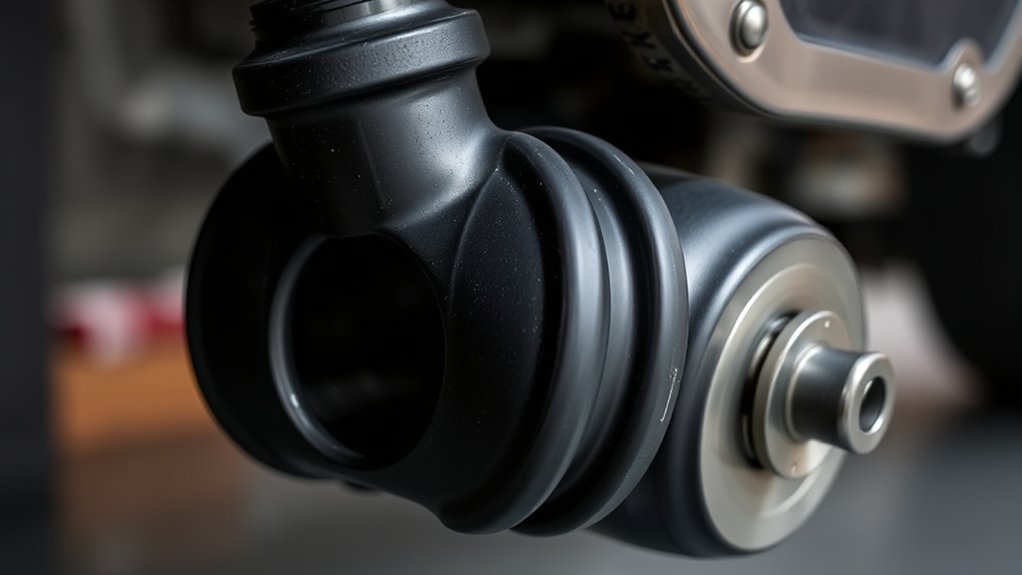
Your CV axle boot is a crucial protective cover that seals the CV joint, keeping grease inside while preventing dirt, moisture, and debris from entering. This boot plays an essential role in maintaining the smooth movement of the joint and extending its lifespan.
Without a properly functioning CV axle boot, the joint is vulnerable to damage that can lead to costly repairs or failure.
If the boot cracks or tears, grease will leak out, and contaminants will get in. This exposure can cause significant joint damage and result in poor vehicle performance.
Understanding the role of the CV axle boot, recognizing signs of wear, and performing regular maintenance are key to keeping your drivetrain running strong and reliable.
Key Takeaways
- The CV axle boot is a protective cover that seals and shields the CV joint from dirt, debris, and moisture.
- It retains grease inside the joint, ensuring smooth movement and preventing lubrication loss.
- The boot prevents contamination that can cause joint corrosion and premature axle failure.
- Made from durable materials like rubber or TPE, it withstands flexing, temperature changes, and environmental exposure.
- A functioning CV boot maintains drivetrain integrity, stable handling, and safe power transfer in the vehicle.
Understanding the CV Axle Boot and Its Role
Although you might not notice it often, the CV axle boot plays an essential role in protecting your vehicle’s constant velocity (CV) joints. This rubber or plastic cover shields the joints from dirt, debris, and moisture, which can cause damage over time. When you drive, your CV joints allow your wheels to turn smoothly while accommodating suspension movement.
Without the boot, contaminants would quickly wear down these joints, leading to costly repairs. You’ll find the boot wrapped tightly around the CV joint, sealed with clamps to keep grease inside and keep harmful elements out. By understanding this small but critical part, you’ll appreciate how it helps maintain your vehicle’s drivetrain durability and prevents premature joint failure.
Why Your CV Axle Boot Is Key to Car Performance
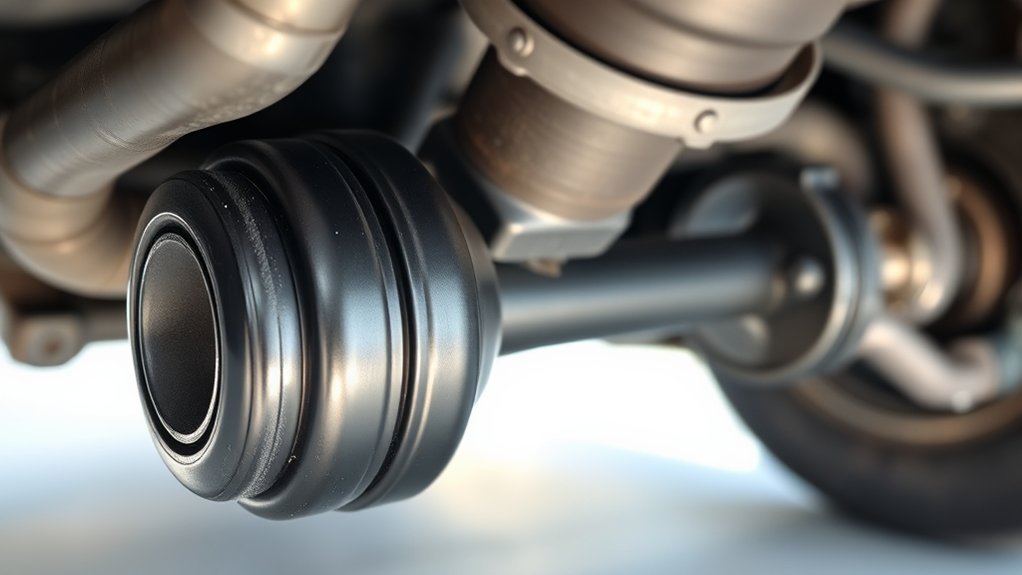
Because the CV axle boot protects essential components from damage, it directly impacts your car’s performance. When the boot stays intact, it keeps grease in and dirt out, allowing the CV joint to move smoothly.
If the boot cracks or tears, contaminants get in, leading to joint wear and eventual failure. This can cause vibrations, noise, and even loss of drive power.
You rely on the CV axle boot to maintain ideal function and safety in your vehicle.
| CV Axle Boot Role | Impact on Performance | Result if Damaged |
|---|---|---|
| Protects grease | Smooth joint operation | Joint wear |
| Keeps dirt out | Maintains joint health | Noise and vibrations |
| Prevents corrosion | Longer axle lifespan | Reduced power transfer |
| Seals the joint | Efficient power flow | Potential breakdown |
| Absorbs movement | Stable handling | Unsafe driving conditions |
What CV Axle Boots Are Made Of
You’ll find CV axle boots made from materials like rubber, neoprene, and thermoplastic, each offering different levels of durability. The compound used directly affects how well the boot withstands heat, chemicals, and wear.
Choosing the right material helps keep your axle protected and your car performing smoothly.
Common CV Boot Materials
When you examine CV axle boots, you’ll notice they’re typically made from durable materials designed to withstand constant movement and harsh conditions. The most common material is rubber, valued for its flexibility and resistance to cracking. Some boots use thermoplastic elastomers (TPE), which offer excellent elasticity and better resistance to chemicals and temperature changes compared to traditional rubber.
Neoprene is another popular choice, known for its toughness and ability to handle exposure to oils and road debris. Additionally, some high-performance boots feature polyurethane, prized for its strength and abrasion resistance. Each of these materials guarantees your CV boot can flex with the axle’s movement while protecting the joint inside from dirt, moisture, and damage.
Choosing the right material helps maintain your vehicle’s reliability and performance.
Durability Of Boot Compounds
Although CV axle boots come in various materials, their durability ultimately determines how well they protect your vehicle’s joints. The compounds used in these boots need to withstand constant flexing, temperature changes, and exposure to dirt, salt, and water. Most boots are made from rubber or thermoplastic elastomers, which offer flexibility and resistance to cracking.
Some boots also include additives to enhance UV and ozone resistance, preventing premature wear. When you choose a boot with durable compounds, it maintains its shape and seals tightly for longer periods, keeping grease in and contaminants out. This durability means fewer repairs and less risk of joint damage, helping your vehicle run smoothly without unexpected breakdowns caused by boot failure.
Material Impact On Performance
The durability of a CV axle boot largely depends on the materials it’s made from, which directly influence how well it performs under stress. Most boots are made from either rubber, thermoplastic, or polyurethane. Rubber boots offer flexibility and good resistance to wear but can crack over time, especially in extreme temperatures.
Thermoplastic boots provide enhanced durability and resist environmental damage better, making them a popular choice for newer vehicles. Polyurethane boots are tough and resistant to tears, but they tend to be less flexible, which can affect performance in vehicles with more suspension movement.
When you choose a CV axle boot, consider the material based on your driving conditions. The right material helps prevent tears and leaks, ensuring your axle stays protected and your vehicle runs smoothly.
Spotting Damage on Your CV Axle Boot
If you want to keep your vehicle running smoothly, you need to regularly check your CV axle boot for signs of damage. A compromised boot can lead to grease leaks and dirt intrusion, causing serious drivetrain issues. To spot damage early, look for:
- Cracks or tears on the boot’s surface
- Grease splattered around the wheel or undercarriage
- Visible holes or worn spots on the boot
- Loose or missing clamps securing the boot
If you notice any of these signs, address the problem immediately. Catching damage early prevents costly repairs and keeps your CV joints well protected. Regular inspections help you maintain your vehicle’s performance and safety on the road.
Common Causes of CV Axle Boot Failure
You’ll often see CV axle boots fail because of normal wear and tear from driving. Harsh environmental conditions, like extreme temperatures and road debris, can also cause damage over time.
Understanding these common causes helps you catch problems early and avoid costly repairs.
Wear And Tear
Although CV axle boots are designed to be durable, constant movement and exposure to harsh conditions can cause them to wear down over time. You’ll notice cracks, tears, or splits that lead to grease leaking out and dirt getting in. This wear and tear happens because the boots flex and stretch every time you turn or accelerate.
Over time, the repeated motion weakens the material, making it prone to failure. To keep your CV axle boots in good shape, watch out for these common wear-related issues:
- Frequent bending during steering and suspension movement
- Repeated exposure to road debris causing small abrasions
- Constant vibration and torque stress from driving
- Aging rubber that loses flexibility and becomes brittle
Paying attention to these signs helps you avoid costly repairs down the line.
Environmental Damage
Wear and tear aren’t the only threats to your CV axle boots—environmental factors play a big role in their failure too. Exposure to extreme temperatures can make the rubber brittle, causing cracks that let dirt and moisture in. Driving through mud, salt, or water speeds up this damage, especially in winter or off-road conditions.
Chemicals and road debris can also puncture or degrade the boot, compromising its protective seal. If you don’t clean and inspect your boots regularly, these elements can lead to premature failure. Protecting your CV axle boots from harsh environments helps maintain their flexibility and durability, preventing costly repairs down the road.
Simple upkeep can extend their life, so don’t overlook the impact of the conditions your vehicle faces every day.
What Happens When Your CV Axle Boot Fails
When your CV axle boot fails, dirt, moisture, and debris quickly invade the joint, causing the grease inside to leak out. Without proper lubrication, the CV joint experiences increased friction and wear. Over time, this leads to joint damage and eventual failure, which can seriously affect your vehicle’s performance and safety.
You might notice:
- Clicking or popping noises when turning
- Vibrations during acceleration
- Grease splattered around the wheel area
- Loss of smooth power transfer to the wheels
Ignoring these signs can result in costly repairs or even the need to replace the entire axle. Protecting your CV axle boot is essential for maintaining smooth driving and avoiding unexpected breakdowns.
How You Can Check Your CV Axle Boots at Home
You can easily check your CV axle boots at home with a quick visual inspection. Look for cracks, tears, or grease leaks around the boot, which are clear signs of damage. Catching these early can save you from costly repairs down the road.
Visual Inspection Tips
Although CV axle boots are tucked beneath your vehicle, you can still check them yourself with a few simple steps. Start by parking on a flat surface and safely lifting your car with a jack. Locate the CV axle boots near the wheels, then inspect them closely.
Use a flashlight to spot any irregularities and gently squeeze the boots to feel for cracks or stiffness.
Here are some visual inspection tips to follow:
- Look for dirt or grease buildup around the boot’s edges
- Check for any tears, splits, or holes in the rubber
- Notice if the boot feels brittle or overly soft when pressed
- Make certain the boot remains securely clamped without loose bands
Regular checks help catch issues early before they worsen.
Signs of Damage
How can you tell if your CV axle boots are damaged without professional tools? Start by looking closely for visible cracks, tears, or holes in the rubber boots. These signs mean dirt and moisture can get inside, causing damage.
Also, check for grease leaking around the boot area—grease spots on the inside of your wheel or undercarriage often indicate a torn boot. When you turn the steering wheel, listen for clicking or popping noises; these sounds can signal worn joints due to boot failure.
When to Replace Your CV Axle Boot and Why It Matters
Since CV axle boots protect critical components from dirt and moisture, catching damage early is essential to prevent costly repairs. You should replace your CV axle boot as soon as you notice any cracks, tears, or leaks. Ignoring damage can lead to grease loss, contamination, and eventual joint failure.
Timely replacement keeps your vehicle running smoothly and avoids more expensive fixes down the road.
Watch for these key signs that signal it’s time to replace your CV axle boot:
- Visible cracks, tears, or grease leaks around the boot
- Clicking or popping noises when turning sharply
- Excessive grease splattered near the wheel or suspension
- Vibrations or unusual handling during acceleration
Acting quickly conserves your money and ensures your drive stays safe and reliable.
CV Axle Boot Replacement Cost and Process
Replacing a CV axle boot typically costs between $150 and $300, depending on your vehicle and labor rates. The cost covers the boot itself, grease, and the mechanic’s time. If the boot tears and you catch it early, replacing just the boot is affordable.
However, if dirt and debris get inside, you might need a full CV axle replacement, which is pricier.
The replacement process starts with lifting your car and removing the wheel. The mechanic then detaches the axle from the hub and transmission, removes the damaged boot, cleans the joint, and packs it with fresh grease.
Finally, they install the new boot, secure it with clamps, and reassemble everything. This process usually takes one to two hours.
Tips to Extend the Life of Your CV Axle Boots
To keep your CV axle boots in good shape, you should regularly inspect them for cracks, tears, or leaks. Catching damage early helps prevent dirt and moisture from entering, which can cause joint failure. Besides inspections, there are practical steps you can take to extend their life and avoid costly repairs.
Here are some tips to help you maintain your CV axle boots:
- Avoid harsh driving conditions like off-roading or deep water crossings.
- Keep your suspension and steering components in good condition to reduce stress on the boots.
- Clean the boots during routine maintenance to remove debris and buildup.
- Replace damaged boots promptly to prevent further damage to the CV joint.
Following these tips helps ensure your CV axle boots last longer and your vehicle runs smoothly.
Frequently Asked Questions
Can a Damaged CV Axle Boot Affect My Car’s Fuel Efficiency?
Yes, a damaged CV axle boot can lower your car’s fuel efficiency. It lets grease leak and dirt in, causing joint wear. That increases friction, making your engine work harder and use more fuel.
Fix it soon!
Are CV Axle Boots the Same for Front-Wheel and All-Wheel-Drive Cars?
No, CV axle boots differ between front-wheel and all-wheel-drive cars because their axle designs vary.
You’ll need to get the correct boot that matches your vehicle’s drivetrain to guarantee proper fit and protection.
How Long Does It Typically Take to Replace a CV Axle Boot?
It typically takes you about 1 to 2 hours to replace a CV axle boot, depending on your experience and tools.
You’ll need to remove the axle, clean the joint, install the new boot, and reassemble everything carefully.
Can I Drive With a Torn CV Axle Boot Temporarily?
You can drive with a torn CV axle boot temporarily, but you shouldn’t. Dirt and moisture will quickly damage the joint, leading to costly repairs.
Get it fixed as soon as possible to avoid bigger problems.
Do CV Axle Boots Require Lubrication After Installation?
Think of the CV axle boot like a sealed jar—it’s already packed with grease when installed. You don’t need to add lubrication afterward, but if it cracks, you’ll want to replace or grease it promptly to avoid damage.
Conclusion
Your CV axle boot is like a shield, protecting essential parts from dirt and damage. Without it, your car’s performance can quickly suffer. By regularly checking for cracks or tears and replacing the boot when needed, you’ll keep your vehicle running smoothly and avoid costly repairs.
Think of it as giving your car a little daily care that pays off big—keeping you safe and on the road longer. Don’t overlook this small but important part! Maintaining your CV axle boot is crucial for the longevity of your vehicle and helps prevent expensive mechanical issues down the line.

