

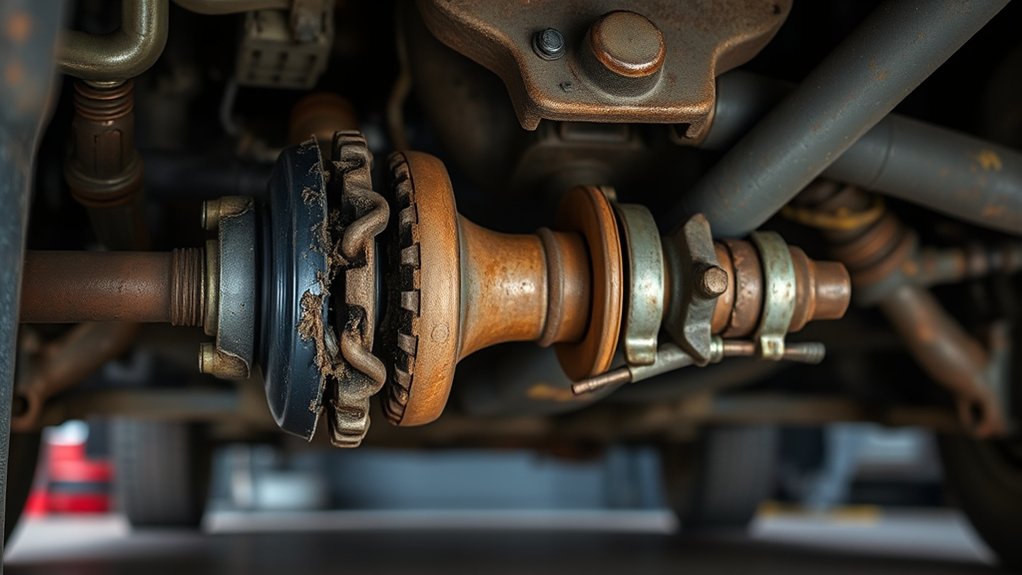
You can’t drive a bad CV axle safely for long without risking serious damage and unsafe handling. A faulty CV axle can cause clicking noises, vibrations, and grease leaks, all signs that the axle is failing. How long you can drive depends on the severity of the damage and your driving conditions.
If the damage is minor, you might manage a few hundred miles, but ignoring these symptoms is dangerous. Continuing to drive with a bad CV axle increases the risk of complete failure, which can lead to costly repairs and safety hazards. It’s important to recognize the warning signs early.
Clicking sounds when turning or noticeable vibrations during driving indicate immediate attention is needed. Grease leaks around the axle boot also suggest that the CV joint is compromised. Understanding when and why to act quickly can save you from further damage and keep your vehicle safe on the road.
Key Takeaways
- Driving a bad CV axle safely depends on damage severity and driving conditions, with no fixed safe duration.
- Minor damage may allow a few hundred miles, but warning signs indicate imminent failure.
- Persistent clicking, vibrations, and grease leaks signal the need for immediate repair or replacement.
- Continuing to drive increases risks of further damage, loss of control, and costly repairs.
- Early inspection and timely replacement improve safety and prevent additional vehicle damage.
What Is a CV Axle and Why Is It Important?
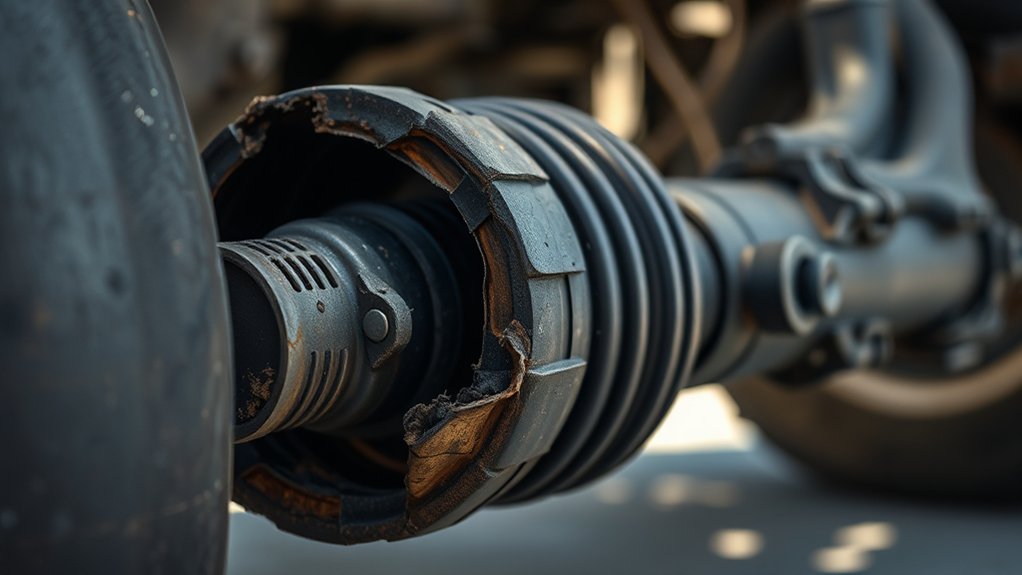
What exactly does a CV axle do, and why should you care? The CV axle connects your car’s transmission to the wheels, transferring power so you can move smoothly. It’s essential because it allows the wheels to turn and flex while maintaining constant speed, even when you’re steering or driving over bumps.
Without a functioning CV axle, your vehicle won’t get power to the wheels properly, leading to poor handling or even complete loss of motion.
You rely on the CV axle every time you drive, especially during turns or uneven terrain. Its joints need to stay lubricated and intact to work correctly. If it fails, you risk damaging other parts or getting stranded, so understanding its role helps you appreciate why maintenance matters.
How to Spot Common Signs of a Failing CV Axle
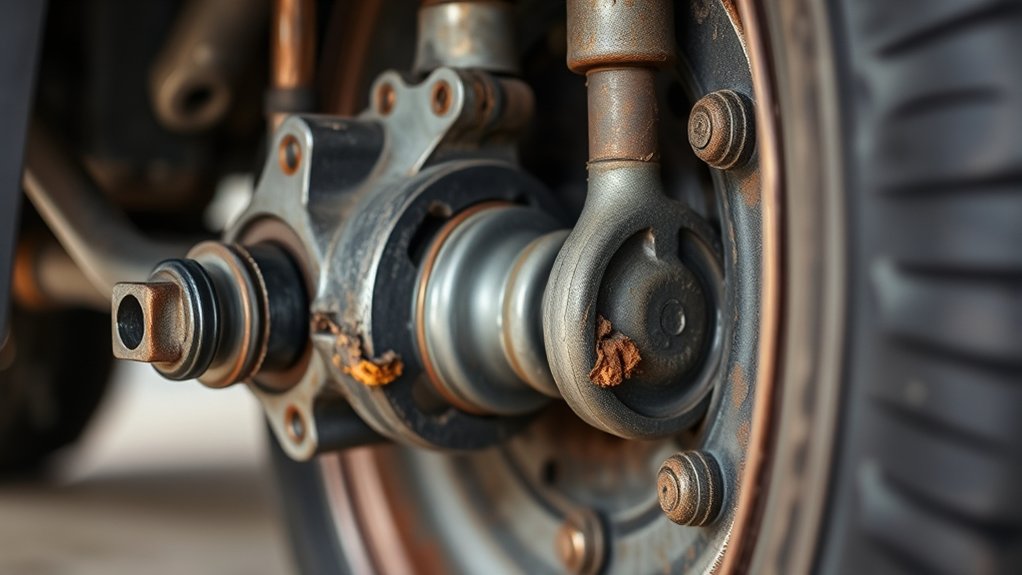
If your CV axle starts to fail, you’ll likely notice several clear signs before it completely breaks down. One common symptom is a clicking or popping noise when you turn, especially during sharp turns. You might also feel vibrations or shuddering while driving, which can worsen with acceleration.
Inspect the CV boots for cracks or grease leakage—damaged boots let dirt in, accelerating wear. Additionally, you could experience difficulty steering or a clunking sound during acceleration or deceleration. If you spot any of these signs, it’s essential to address them promptly to avoid further damage.
Paying attention early can save you from costly repairs and keep your vehicle safe on the road.
What Happens When Your CV Axle Goes Bad?
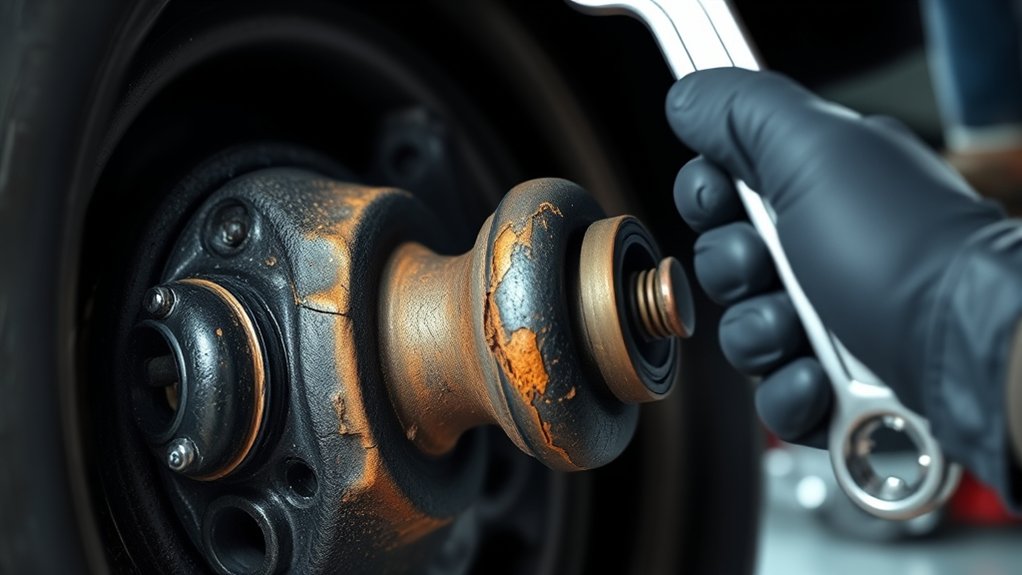
When a CV axle fails, your vehicle’s performance and safety can quickly decline. You’ll likely notice vibrations or shaking, especially during acceleration or turns. Steering may feel less responsive, making it harder to control your car smoothly.
You could hear clicking or popping noises as the axle struggles to transfer power to the wheels. Over time, a damaged CV axle can cause uneven tire wear and potentially harm other suspension components. If the axle breaks completely, your vehicle might lose power to the wheels, leaving you stranded.
Even if symptoms seem minor at first, the damage usually worsens quickly. Addressing a failing CV axle promptly keeps your car running reliably and helps you avoid more costly repairs down the road.
Why Driving on a Bad CV Axle Is Risky
Why should you avoid driving on a bad CV axle? Because it puts your safety and your car’s health at serious risk. A failing CV axle can suddenly break, leaving you stranded or causing a dangerous accident.
Driving on a bad CV axle risks your safety and can lead to sudden breakdowns or accidents.
It also puts extra strain on other drivetrain components, leading to costly repairs. Ignoring the problem won’t make it go away—it’ll only get worse, faster.
Here’s why driving on a bad CV axle is risky:
- Loss of control: Sudden axle failure can cause your wheel to lock or stop turning.
- Increased vibration: Makes handling unstable and uncomfortable.
- Damage to transmission: A bad CV axle stresses the transmission system.
- Noise distractions: Constant clicking or popping can divert your attention.
- Complete breakdown: Risk of being stranded in unsafe conditions.
How Long Can You Drive on a Bad CV Axle?
Knowing how long you can drive on a bad CV axle helps you weigh the risks before deciding to keep going. The truth is, there’s no exact timeline because it depends on how severe the damage is and your driving conditions. If the axle is just starting to fail, you might get a few hundred miles before things worsen.
However, if you hear clicking noises or feel vibrations, it’s a sign the axle could fail anytime. Continuing to drive risks more damage and sudden breakdowns. It’s best not to push it too far.
Planning a repair or replacement as soon as possible keeps you safe and avoids costly consequences. Don’t treat a bad CV axle like a minor issue—it needs prompt attention.
What Affects CV Axle Lifespan?
Several factors influence how long your CV axle will last, and understanding them can help you extend its lifespan. Your driving habits, the road conditions you encounter, and how well you maintain your vehicle all play vital roles. Neglecting these aspects can lead to premature wear or failure.
Here are key factors that affect your CV axle’s lifespan:
- Driving Style: Aggressive acceleration and sharp turns strain the axle.
- Road Conditions: Rough, uneven roads increase wear and tear.
- Maintenance: Regular inspections and timely repairs prevent damage.
- Weather Exposure: Extreme temperatures and moisture can degrade CV boots.
- Quality of Parts: OEM or high-quality axles last longer than cheap replacements.
Keeping these in mind helps you avoid costly repairs and keeps your vehicle running smoothly.
Simple Steps to Check Your CV Axle at Home
Wondering how to quickly check your CV axle without a mechanic? Start by inspecting the rubber boots around the axle joints. Look for cracks, tears, or grease leaks—these are signs the boot’s compromised.
Next, lift your vehicle safely using a jack and secure it with jack stands. Grab the axle near the wheel and try to wiggle it. Excessive play or clicking noises when you turn the wheel by hand can indicate wear.
Also, listen for clicking sounds while driving, especially during sharp turns. Finally, check for vibrations or shuddering during acceleration. If you notice any of these signs, your CV axle might be failing.
Performing these simple checks at home helps you catch problems early and stay safe on the road.
When to Replace Your CV Axle to Avoid Costly Repairs
If you’ve spotted cracks in the rubber boots, heard clicking noises during turns, or felt unusual vibrations, it’s time to contemplate replacing your CV axle. Acting quickly can save you from costly repairs later. You should replace your CV axle when you notice:
- Persistent clicking sounds while steering
- Excessive grease leakage around the axle
- Noticeable vibration during acceleration
- Torn or damaged CV boots exposing joints
- Difficulty steering or unusual resistance
Ignoring these signs can worsen damage, leading to more expensive fixes. Replacing your CV axle promptly ensures your vehicle stays safe and reliable. Always consult a mechanic if you’re unsure, but don’t delay once these symptoms appear.
Taking timely action helps you avoid breakdowns and unexpected repair bills.
What Happens If You Ignore a Bad CV Axle?
If you ignore a bad CV axle, you’ll likely face worsening vehicle handling that can put your safety at risk. The damaged axle can also cause further mechanical issues, leading to more expensive repairs.
It’s important to address the problem early before it affects your car’s performance and safety.
Vehicle Handling Risks
How does a bad CV axle affect your vehicle’s handling? When your CV axle is damaged, you’ll notice your car doesn’t respond the way it should. Steering can become unpredictable, making it harder to control your vehicle safely.
You might feel vibrations or hear clicking noises during turns, signaling that the axle struggles to transfer power smoothly.
Ignoring a bad CV axle puts you at risk of:
- Reduced steering accuracy
- Unusual vibrations through the steering wheel
- Difficulty maintaining control during turns
- Sudden loss of power to wheels
- Increased risk of wheel lock-up or skidding
Pay attention to these signs—your vehicle’s handling is essential for safe driving, and a faulty CV axle compromises that.
Potential Mechanical Damage
Ignoring a bad CV axle can lead to serious mechanical damage that affects your vehicle’s overall performance. When the CV axle fails, it can cause uneven power distribution to your wheels, putting extra stress on your transmission and differential. Over time, this strain can result in costly repairs or even complete failure of these components.
Additionally, a broken CV axle may cause your wheel to lose alignment, wearing down tires unevenly and affecting suspension parts. If the axle shaft snaps while driving, you risk losing control, which can be dangerous. Addressing a bad CV axle promptly prevents further damage and keeps your vehicle running smoothly.
Don’t wait—fixing the issue early saves you from expensive repairs and unsafe driving conditions.
Tips to Maintain Your CV Axles and Prevent Damage
To keep your CV axles in top shape, you need to regularly inspect their boots for cracks or tears. Damaged boots let dirt and moisture in, causing the joint to wear out quickly. You should also listen for clicking noises when turning, as this signals a failing joint.
Don’t ignore unusual vibrations while driving—they often mean axle issues. Keeping your suspension and alignment in check reduces stress on the axles. Finally, avoid harsh driving conditions like sudden acceleration or heavy loads that strain your CV joints.
Here are some tips to maintain your CV axles and prevent damage:
- Inspect CV boots every oil change
- Replace torn boots immediately
- Avoid aggressive driving habits
- Check for unusual noises or vibrations
- Keep suspension and alignment well-maintained
Frequently Asked Questions
Can a Bad CV Axle Affect My Car’s Fuel Efficiency?
Yes, a bad CV axle can lower your car’s fuel efficiency because it causes vibrations and uneven power delivery. You’ll notice your engine working harder, which wastes fuel, so you shouldn’t ignore a damaged CV axle.
Are There Specific Car Models More Prone to CV Axle Issues?
Like a magnet attracts metal, front-wheel-drive cars—especially older Hondas and Subarus—tend to face CV axle issues more often. You’ll want to keep an eye on these models to avoid unexpected breakdowns.
How Much Does CV Axle Replacement Typically Cost?
You’ll typically pay between $300 and $800 to replace a CV axle, depending on your car model and labor costs. Luxury or rare vehicles might cost more, so it’s smart to get a detailed quote beforehand.
Can Weather Conditions Accelerate CV Axle Wear?
Yes, harsh weather conditions like rain, snow, and road salt can accelerate your CV axle wear. They cause corrosion and damage the protective boots, so you’ll want to inspect and maintain your axle more frequently in bad weather.
Regular checks help catch issues early before they lead to costly repairs. Protecting the axle boots from cracks and tears is essential for prolonging their lifespan. Staying vigilant during harsh seasons can save you time and money in the long run.
Is It Safe to Drive With a Bad CV Axle in an Emergency?
In a pinch, you can drive with a bad CV axle, but don’t push your luck. It’s like walking on thin ice—any sudden move might break it, causing more damage or leaving you stranded.
Conclusion
So, you want to keep driving with a bad CV axle? Brilliant plan—if your goal is a surprise roadside breakdown or a pricey tow. Sure, you *could* risk it, but why gamble with your safety and wallet?
Instead, take a quick look, catch those warning signs, and replace the axle before your car decides to throw a tantrum. Trust me, your future self (and mechanic) will thank you for not living on the edge.
When it comes to how long you can drive a bad CV axle safely, the answer is simple: not long. Prioritize timely repairs to avoid further damage and costly fixes down the road.

