

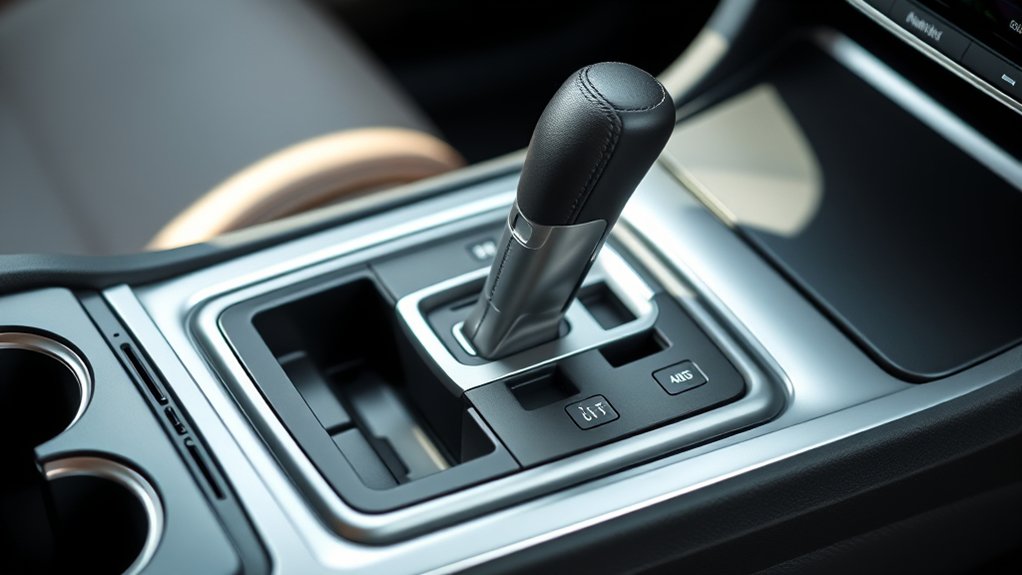
You call the gear shifter in an automatic car the “shift lever” or “gear selector,” essential components in the vehicle’s transmission system. These parts allow you to select gears such as Park, Reverse, Neutral, and Drive, enabling smooth and safe driving. Understanding the gear shifter’s function is key to operating an automatic car efficiently.
Positioned on the center console or steering column, the shift lever moves to signal the transmission. It often includes safety features like shift locks and brake interlocks to keep you secure.
If you want to understand how it works, the different types, and how to use it safely, there’s more to explore.
Key Takeaways
- The gear shifter in an automatic car is commonly called a “shift lever” or “gear selector.”
- It is usually located on the center console or the steering column.
- The shift lever allows selection of gears like Park, Reverse, Neutral, Drive, and Low.
- It operates via mechanical linkage or electronic sensors to control the transmission.
- Safety features often include shift lock systems requiring brake press before shifting out of Park.
What Is the Gear Shifter Called in an Automatic Car?
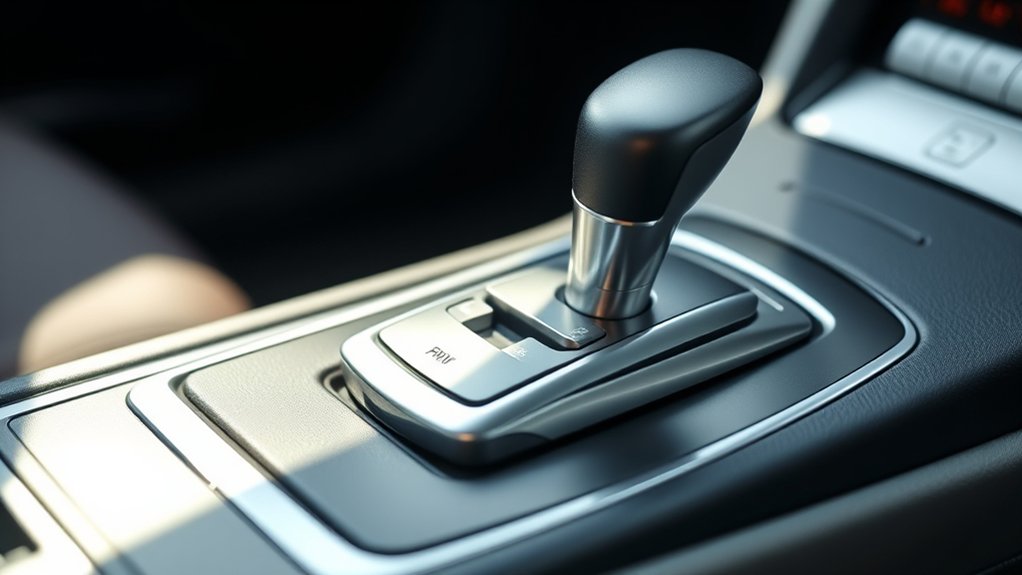
Although it may seem straightforward, the gear shifter in an automatic car is commonly called the “shift lever” or simply the “gear selector.” When you sit behind the wheel, this is the control you use to choose between park, reverse, neutral, and drive modes. You’ll often see it located on the center console or sometimes attached to the steering column.
While the names might vary slightly depending on the car model or manufacturer, they all refer to the same essential component. Knowing the correct term helps when you read your vehicle’s manual or talk to a mechanic. So, whenever you hear “shift lever” or “gear selector,” you’ll know these terms describe the device you move to change your automatic car’s gear settings.
How Does the Gear Shifter Work in an Automatic Transmission?
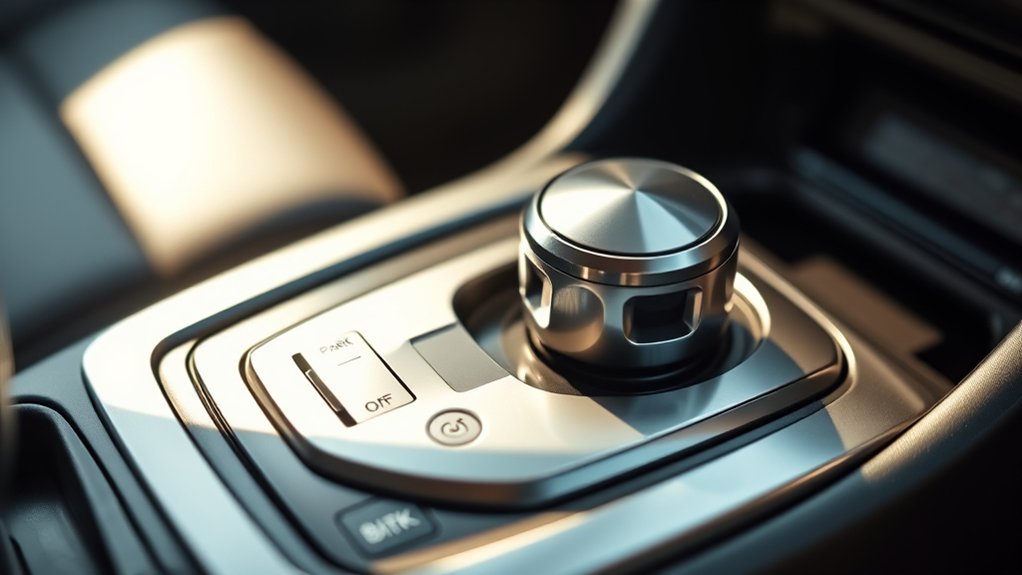
You use the gear shifter to select different driving modes, and it sends signals to the automatic transmission system. The transmission then adjusts gear ratios automatically based on your choice and driving conditions.
Understanding how this mechanism works helps you grasp how your car manages power and speed seamlessly.
Gear Shifter Mechanism
How exactly does the gear shifter in an automatic car translate your movements into smooth gear changes? When you move the gear lever, it sends signals through a mechanical linkage or electronic sensor to the transmission system. This interaction controls which gear the car selects, without you needing to manually engage a clutch.
Here’s what happens inside the gear shifter mechanism:
- You move the lever into positions like Park, Reverse, Neutral, or Drive
- Mechanical linkages or electronic sensors detect the lever’s position
- A shift cable or electronic signal communicates with the transmission
- The transmission adjusts gears accordingly based on your input
- Safety features prevent shifting into inappropriate gears accidentally
This coordination ensures seamless gear changes every time you drive.
Automatic Transmission Function
What happens inside an automatic transmission when you shift gears? When you move the gear shifter, it sends a signal to the transmission system, which uses a combination of hydraulic pressure and electronic controls to select the appropriate gear.
Instead of manually engaging gears like in a manual car, the automatic transmission relies on a torque converter to smoothly transfer power from the engine to the wheels. The system automatically adjusts gear ratios based on speed and load, optimizing performance and fuel efficiency.
You don’t need to worry about clutch pedals or timing; the transmission handles all that seamlessly. So, when you shift from Park to Drive, the transmission engages the right gear for smooth acceleration without any extra effort on your part.
What Are the Different Gear Positions on an Automatic Gear Shifter?
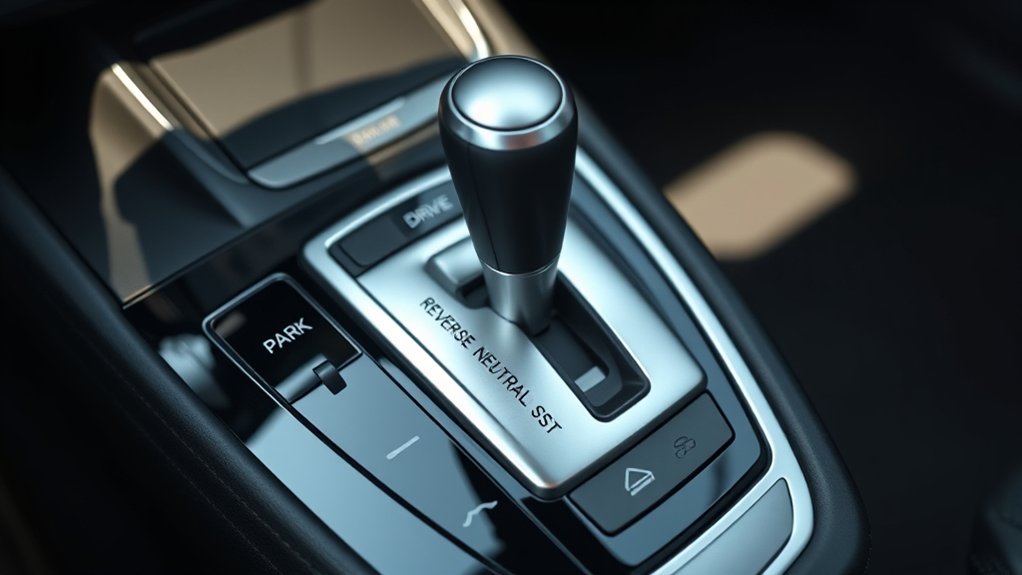
Although automatic gear shifters may look simple, each position serves a specific purpose that helps control your vehicle’s movement and performance. Understanding these positions lets you drive smoothly and safely.
Each gear position plays a vital role in controlling your vehicle’s movement and ensuring a smooth, safe drive.
Here are the common gear positions you’ll find:
- P (Park): Locks the transmission, preventing the car from moving.
- R (Reverse): Moves the car backward.
- N (Neutral): Disengages the engine from the wheels, allowing the car to roll freely.
- D (Drive): Enables forward movement and automatic gear changes.
- L or 1/2 (Low gears): Keeps the transmission in lower gears for more power or engine braking on hills.
Knowing these positions helps you manage your car’s behavior in different driving situations effectively.
Using the Gear Shifter Correctly in an Automatic Car
When you get behind the wheel, using the gear shifter correctly guarantees your car responds smoothly and keeps you safe. Always press the brake pedal firmly before shifting out of Park to prevent unintended movement. Move the shifter deliberately through each gear position without forcing it, allowing the mechanism to engage properly.
Avoid shifting between Drive and Reverse while the car is still moving to protect the transmission. When stopping temporarily, use Neutral instead of Drive to reduce strain. Before parking, shift into Park and engage the parking brake to secure your vehicle.
Common Types of Automatic Gear Shifters and Their Features
Since automatic gear shifters come in various designs, understanding their differences helps you choose the one that best suits your driving style. Here are some common types you’ll encounter:
Automatic gear shifters vary in design, so knowing their differences helps you find the perfect fit for your driving style.
- Column Shifter: Mounted on the steering column, freeing up center console space.
- Floor Shifter: Positioned between the driver and passenger seats, offering a traditional feel.
- Push-Button Shifter: Uses buttons instead of a lever, providing a sleek, modern interface.
- Rotary Dial Shifter: A knob that you turn to select gears, saving space and adding style.
- Electronic Lever Shifter: Combines traditional lever movement with electronic controls for smooth gear changes.
Each type offers unique advantages, so consider your comfort and convenience when picking your vehicle’s gear shifter.
How Electronic Gear Shifters Differ From Traditional Automatic Gear Shifters
You’ll notice electronic gear shifters have a sleek design that operates differently from traditional levers. They often take up less space, giving your car’s interior a cleaner look and more convenience.
Let’s explore how these changes affect your driving experience.
Design And Operation
Although traditional automatic gear shifters rely on mechanical linkages to change gears, electronic gear shifters use sensors and electronic controls to perform the same task more efficiently. When you use an electronic shifter, it sends signals to the transmission control unit, which then engages the appropriate gear without direct mechanical movement. This design offers smoother operation and quicker response times compared to traditional systems.
Here’s how electronic gear shifters differ in design and operation:
- Use of sensors instead of physical cables
- Electronic signals control gear selection
- Integration with vehicle safety systems
- Ability to include multiple shifting modes
- Minimal mechanical wear and tear
You’ll notice a more seamless and precise gear change experience with electronic shifters.
Space And Convenience
How much space can you save with an electronic gear shifter compared to a traditional automatic one? Electronic shifters are compact, freeing up valuable space in your car’s center console. Unlike bulky mechanical levers, they offer sleek designs that improve convenience and cabin aesthetics.
You gain more storage, cup holders, or even wireless charging pads.
Here’s how they differ emotionally and practically:
| Feature | Traditional Shifter | Electronic Shifter |
|---|---|---|
| Space Usage | Large, clunky | Minimal, sleek |
| Ease of Use | Mechanical feel | Smooth, intuitive |
| Cabin Aesthetics | Basic, functional | Modern, stylish |
| Convenience | Limited | Enhanced with extra space |
| Driving Experience | Traditional tactile feel | Futuristic, effortless |
You’ll feel the difference every time you drive.
Key Safety Features in Automatic Gear Shifters
Because automatic gear shifters control the vehicle’s movement, they come equipped with key safety features designed to prevent accidents and guarantee smooth operation. These features help you avoid unintended gear changes and assure the car responds only when you intend it to. For example, many shifters include shift lock systems that require you to press the brake before switching out of park.
Others have neutral start switches that prevent the engine from starting unless the gear is in park or neutral. Additionally, you’ll find indicators that clearly show the current gear, helping you stay aware. Here are five key safety features to look for:
- Shift lock release to prevent accidental gear changes
- Brake pedal interlock requiring brake press to shift
- Neutral safety switch preventing engine start in gear
- Clear gear position indicators
- Reverse lockout to avoid shifting into reverse while moving
Evolution of Automatic Gear Shifter Design
You’ve probably noticed how automatic gear shifters have changed over the years. From the bulky sticks of early models to sleek, modern selectors, the design has evolved a lot.
Let’s look at how these shifts in style and function improve your driving experience.
Early Automatic Shifter Styles
Although automatic transmissions simplified driving, their early shifter designs were far from intuitive. When you first encounter these vintage shifters, you’ll notice they often required more effort and attention than today’s models. Unlike the straightforward PRNDL layout you’re used to, early styles varied widely and sometimes confused drivers.
Here are some early automatic shifter styles you might find interesting:
- Push-button selectors mounted on the dashboard
- Rotary dials that turned through gear options
- Column-mounted levers with long, slender handles
- Floor-mounted levers with mechanical, heavy feel
- Lever patterns that didn’t clearly mark park or neutral
These designs reflect the experimentation phase before settling on the user-friendly layouts you now expect.
Modern Gear Selector Innovations
Early automatic shifters came with a variety of designs that often left drivers guessing, but modern gear selectors have come a long way in both form and function. Today, you’ll find electronic push-buttons, rotary dials, and sleek lever designs that maximize cabin space and improve ease of use.
These innovations not only look futuristic but also enhance safety by preventing accidental shifts. You’ll appreciate how these new selectors simplify your driving experience while adding a touch of style.
| Innovation Type | Description | Benefit |
|---|---|---|
| Electronic Buttons | Push-button shifting | Space-saving, intuitive |
| Rotary Dials | Twist to select gear | Ergonomic, modern aesthetic |
| Traditional Lever | Refined mechanical lever | Familiar, tactile feedback |
| Touchscreen | Digital gear control | Minimalist, customizable |
| Shift-by-Wire | Electronic signal control | Precise, safer operation |
Common Problems With Automatic Gear Shifters
When your automatic gear shifter starts acting up, it can disrupt your driving experience and signal underlying issues. You might notice the shifter feels loose, sticks in a gear, or won’t move smoothly between positions.
Sometimes, the gear indicator on the dashboard doesn’t match the shifter’s position, which can be confusing and unsafe. Other times, you might hear unusual noises when shifting or experience delayed gear engagement.
A mismatched gear indicator or strange shifting noises can signal serious transmission issues.
These problems can stem from mechanical wear, electrical faults, or issues with the transmission system itself.
Common problems include:
- Shifter getting stuck or hard to move
- Inaccurate gear position indicator
- Delayed or slipping gear engagement
- Unusual clicking or grinding noises
- Loose or wobbly shifter handle
How to Fix Common Automatic Gear Shifter Issues
If your automatic gear shifter is causing trouble, you can often fix common issues without a mechanic. First, check if the brake pedal switch is working; your car won’t let you shift out of park unless you press the brake.
Next, inspect the shift lock release—there’s usually a small slot near the shifter where you can insert a key or screwdriver to manually override it. If the shifter feels stuck or stiff, lubricate the mechanism with a suitable spray.
Also, examine the shift cable for damage or disconnection under the hood. If the gear indicator on the dashboard doesn’t match the shifter’s position, recalibrating or replacing the sensor might help.
These quick steps can save you time and money.
Frequently Asked Questions
Can I Shift an Automatic Gear Shifter Without Pressing the Brake?
No, you can’t shift an automatic gear shifter without pressing the brake because most cars have a safety feature called the shift lock. It prevents accidental gear changes, keeping you and your vehicle safe.
How Does Temperature Affect Automatic Gear Shifter Performance?
Temperature affects your automatic gear shifter by thickening the transmission fluid in cold weather, making shifts slower or stiffer.
In hot weather, fluid thins, which can cause slipping or overheating, so keep your system maintained.
Are Automatic Gear Shifters Compatible With Manual Transmission Cars?
You wouldn’t find automatic gear shifters fitting manual cars—they’re built differently. Imagine trying to fit a square peg in a round hole; each transmission type demands its own unique shifting system, so they just don’t match.
What Maintenance Is Required for Automatic Gear Shifters?
You should regularly check and change the transmission fluid, keep the shifter clean, and guarantee linkages are lubricated.
If shifting feels rough, have a professional inspect the transmission and cables to prevent costly repairs.
Can a Faulty Gear Shifter Cause Transmission Damage?
Like a misaligned compass, a faulty gear shifter can steer your transmission wrong. If you don’t fix it promptly, you’ll risk serious damage, costly repairs, and a rough driving experience you definitely won’t want.
Conclusion
Now that you know the gear shifter is called a selector lever, you can shift smoothly, shift safely, and shift confidently. You’ll move from park to drive, glide through reverse, and cruise in neutral with ease.
Just remember to use it properly, respect its safety features, and stay aware of common issues.
By mastering your automatic gear shifter, you’ll drive smarter, drive safer, and drive with peace of mind every time. Understanding the selector lever is key to safe and efficient automatic transmission operation.

