

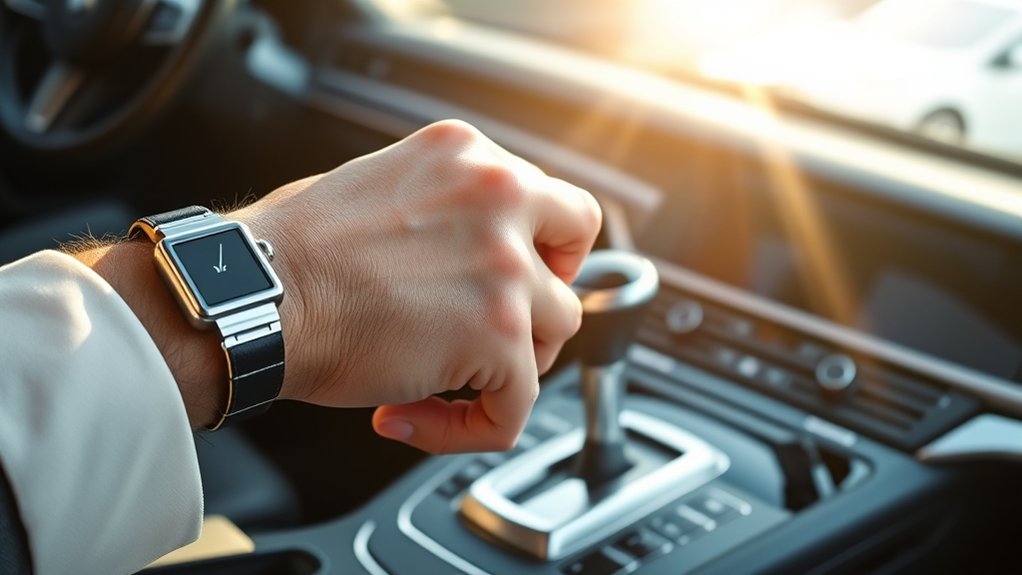
To use the M gear in your car effectively, start by ensuring you’re driving at a safe, moderate speed and pressing the brake firmly. The M gear, also known as manual mode, allows you to take more control over your vehicle’s gear shifts.
This is especially useful for situations like driving on hills or when you want to optimize engine braking.
Shift the gear lever smoothly into M mode to engage manual control. Use the gear lever or paddle shifters to shift up as RPMs approach the red zone.
Downshift gently to match slowing speeds, which helps maintain control and reduces wear on your brakes.
Practice smooth, deliberate shifts and stay alert to the road conditions. With time, you’ll master the use of M gear confidently and enjoy a more engaging driving experience.
Keep going to uncover more tips that will help you handle M gear like a pro.
Key Takeaways
- Ensure safe speed and road conditions before smoothly shifting the gear lever to the M (manual) position.
- Use paddle shifters or gear lever taps to shift up near high RPM and down while easing off the accelerator.
- Select lower gears on hills for engine braking and better control, avoiding excessive brake use.
- Shift gears smoothly and responsively to prevent engine lugging or over-revving and protect transmission.
- Practice in a safe, open area to develop confidence and skill with gradual speed and gear changes.
What Is the M Gear and How Does It Work?
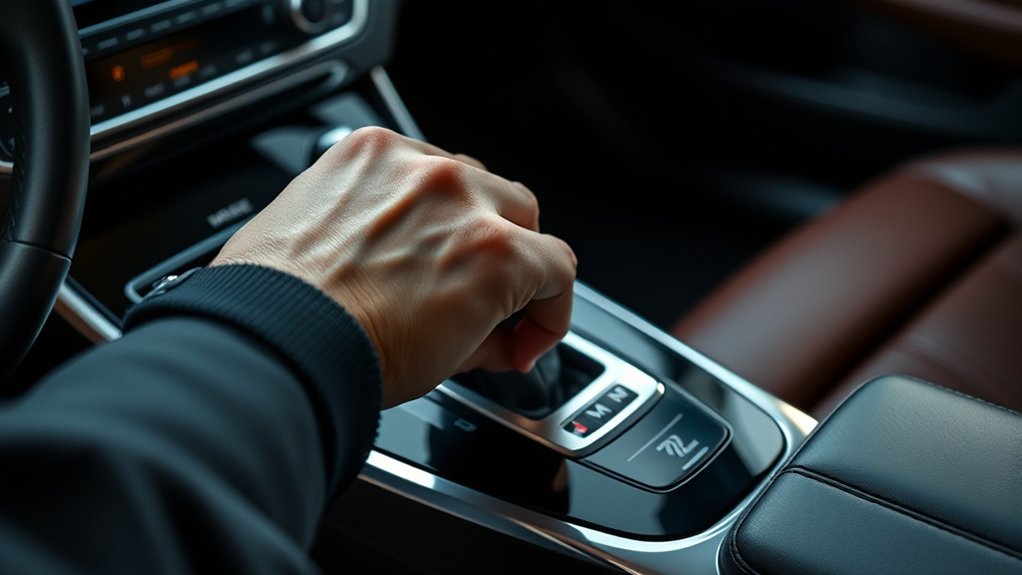
Although it may seem complex at first, the M gear lets you take control of your car’s transmission manually. Instead of the automatic system deciding when to shift gears, you get to choose. This gives you more control over your driving experience, especially during situations that require precise handling.
When you switch to M gear, you can shift up or down using the gear lever or paddle shifters, depending on your car. The system responds instantly, allowing you to optimize performance or fuel efficiency. It works by overriding the automatic mode but still protects the engine from harmful shifts, like downshifting at too high a speed.
This way, you enjoy manual control without risking damage to your car’s transmission.
When Should You Use the M Gear?
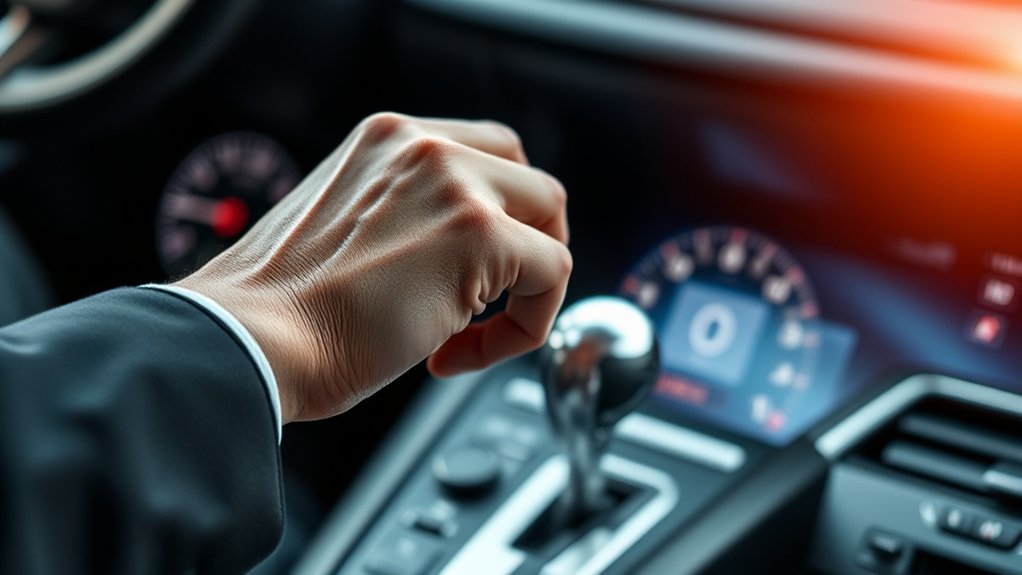
Whenever you want more control over your vehicle’s performance, using the M gear is a smart choice. You should engage it when driving on winding roads, as it lets you hold gears longer for better acceleration and engine braking.
It’s also helpful during steep climbs or descents, giving you the ability to prevent unnecessary shifting and maintain steady power. If you’re towing heavy loads, the M gear helps you manage torque and avoid frequent gear changes that could strain your transmission.
Additionally, using M gear can improve your driving experience in slippery conditions by letting you select a lower gear for better traction. Overall, switch to M gear whenever you need precise control over speed and power beyond what automatic mode offers.
How to Switch Safely From Automatic to M Gear
Before you switch from automatic to M gear, make sure your vehicle is at a safe speed and the road conditions allow for manual control. Changing gears abruptly can cause jerks or engine strain, so follow these steps carefully:
Ensure your speed and road conditions are safe before switching from automatic to manual gear to avoid jerks or strain.
- Bring your speed to a moderate level – Avoid switching at very high or low speeds to maintain smooth control.
- Press the brake pedal firmly – This prevents sudden acceleration or deceleration during the shift.
- Move the gear lever to the M position – Do this confidently but smoothly, ensuring the car recognizes the manual mode.
Once switched, the car will allow you to control gear shifts manually. Always stay alert and be ready to revert to automatic if conditions change unexpectedly.
How to Shift Up Gears Manually in M Mode
Once you’ve engaged the M gear, you’ll need to shift up gears manually to match your driving speed and engine performance. Watch your tachometer closely; when the engine RPM approaches the upper limit (usually marked in red), it’s time to shift up.
To do this, gently tap the gear selector or paddle shifter toward the “+” sign, depending on your car’s setup. Avoid forcing the shift to prevent damage. Shifting up at the right moment keeps the engine running efficiently and improves fuel economy.
As you accelerate, smoothly move through higher gears to maintain control and avoid over-revving. Remember, each gear change should feel deliberate and responsive, giving you full command over your car’s power delivery in M mode.
How to Downshift Smoothly in M Mode
Although downshifting in M mode requires careful timing, mastering it lets you control your car’s speed and engine response effectively. To downshift smoothly, follow these steps:
- Ease off the accelerator to reduce speed slightly before shifting down.
- Tap the brake gently if necessary to help match your current speed to the lower gear.
- Shift down promptly but smoothly, allowing the engine RPM to rise without sudden jerks.
These actions help prevent engine lugging and reduce wear on the transmission. Remember, smooth downshifting keeps your ride comfortable and your car responsive. Practice these steps in a safe area until you feel confident, and you’ll enjoy better control on hills, curves, or when slowing down.
Avoid abrupt movements to protect your drivetrain and maintain vehicle stability.
How to Control Speed and RPM for Smooth Driving
Mastering downshifting sets the stage for better control over your car’s speed and RPM in M mode. To keep your driving smooth, pay close attention to the tachometer and adjust your gear shifts before the RPM gets too high or too low. Shift up when the RPM approaches the redline to avoid engine strain, and downshift as RPM drops near the lower limit to maintain power without lugging the engine.
Use gentle throttle inputs to balance acceleration and deceleration, preventing jerky movements. Anticipate traffic flow and road conditions so you can shift gears proactively rather than reactively. By syncing your gear changes with RPM and speed, you’ll enjoy smoother acceleration, improved fuel efficiency, and reduced wear on your transmission.
This control comes with practice, so stay attentive and patient.
How to Use the M Gear on Hills and Inclines
When driving on hills, you’ll use the M gear to control your speed going downhill without riding the brakes. It also helps prevent rollback when you’re starting on an incline.
Mastering these techniques keeps you safer and more confident on slopes.
Controlling Speed Downhill
How can you maintain control and prevent your car from speeding up while driving downhill? Using the M gear effectively helps you manage your speed without over-relying on the brakes. Here’s how:
- Select a lower gear: Shift to a lower gear in M mode before you start descending. This uses engine braking to slow the car naturally.
- Monitor your speed: Keep an eye on your speedometer and adjust the gear if you feel the car is gaining too much momentum.
- Avoid constant braking: Instead of riding the brakes, use the M gear to control your speed. This prevents brake overheating and maintains better control.
Preventing Rollback Uphill
Why does your car sometimes roll backward on a hill, and how can the M gear help you prevent it? When you stop on an incline, gravity pulls your car backward, especially if you’re on a steep slope. Using the M gear lets you control the gear manually, so you can select a lower gear that provides more engine braking.
This reduces the chances of rollback when you release the brake. To prevent rollback, shift to a lower gear before you start moving uphill. As you release the brake, gently press the accelerator to engage the engine’s power without rolling back.
The M gear gives you precise control over your car’s power and speed, making uphill starts safer and smoother.
How to Know When It’s Time to Shift Gears in M Mode
Although shifting gears in M mode gives you greater control, knowing the right moment to change gears can be tricky at first. You’ll want to pay close attention to your car’s feedback to shift smoothly and efficiently.
Here are three key indicators to help you decide when to shift:
- Engine Sound: Listen for the engine revving too high or straining—it’s time to upshift to avoid over-revving.
- Tachometer Reading: Shift gears when the RPM approaches the redline but before it hits it, usually around 2,500-3,000 RPM for most cars.
- Acceleration Feel: If the car feels sluggish or struggles to accelerate, downshift to gain more power.
Common Mistakes Beginners Make in M Mode and How to Fix Them
What trips up many new drivers using M mode is misunderstanding when and how to shift gears properly. You might shift too early or too late, causing the engine to lug or over-rev. To fix this, pay close attention to your tachometer and engine sound.
Another common mistake is riding the clutch or holding the gear lever too long, which wears parts prematurely. Shift decisively and avoid resting your hand on the shifter.
Avoid riding the clutch or lingering on the gear lever to prevent premature wear.
Also, beginners often forget to downshift when slowing down, leading to poor control and increased brake wear. Remember to downshift smoothly to maintain engine braking. Finally, don’t ignore your car’s specific gear range—forcing shifts beyond limits can damage the transmission.
Stay attentive, and you’ll avoid these errors.
How to Practice Using the M Gear Confidently
To build confidence with the M gear, start practicing in a safe, open area where you can focus without distractions. Begin by making gradual speed adjustments to get a feel for how the gear responds. This controlled approach helps you gain better control and understanding before driving in more challenging conditions.
Start in Safe Area
Where should you begin when learning to use the M gear? Start in a safe area where you can focus without distractions or pressure. This gives you the confidence to get comfortable with the gear controls.
Here’s how to get started:
- Find an empty parking lot or quiet street – Make sure the area has minimal traffic and plenty of space to practice.
- Familiarize yourself with the gear shifts – Practice shifting up and down gently while the car is stationary or moving slowly.
- Focus on smooth clutch and accelerator control – This helps prevent stalling and jerky movements as you get used to manual gear changes.
Starting in a safe area lets you build skill and confidence before driving in more demanding situations.
Gradual Speed Adjustments
Although mastering the basics in a safe area is essential, you’ll gain real confidence by practicing gradual speed adjustments with the M gear. Begin by selecting a low gear and smoothly accelerating, paying close attention to how the engine responds.
As you increase speed, manually shift up through the gears, feeling the timing and power changes. Don’t rush; let each shift happen naturally to avoid jerking or engine strain.
When slowing down, downshift step-by-step to match your decreasing speed, which helps maintain control and engine braking. Repeating this process in various conditions will build your skill and confidence.
Over time, you’ll instinctively know when to shift, making your use of the M gear both precise and smooth.
Frequently Asked Questions
Does Using M Gear Affect My Car’s Fuel Efficiency?
Yes, using the M gear can affect your car’s fuel efficiency because it often keeps the engine at higher RPMs. You’ll likely use more fuel compared to automatic mode, especially if you shift aggressively or frequently.
This is because higher RPMs generally mean the engine is working harder. In turn, this increases fuel consumption.
However, if you use the M gear carefully and avoid excessive revving, the impact on fuel efficiency can be minimized.
Can I Use M Gear in All Automatic Cars?
Only about 60% of automatic cars have an M gear option. You can’t use M gear in all automatics because it’s designed for models with manual shifting capability, so check your car’s transmission features first.
Will Using M Gear Cause More Wear on My Transmission?
Using M gear won’t necessarily cause more wear if you shift properly and avoid over-revving. But aggressive or improper use can stress your transmission, so be cautious and don’t rely on it constantly to prevent unnecessary wear.
Is M Gear Suitable for City Driving?
M gear isn’t usually ideal for city driving because it requires more manual shifting, which can be tiring in stop-and-go traffic.
You’ll find drive mode more convenient and smoother for everyday urban commutes.
How Does M Gear Differ From Manual Transmission?
M gear lets you manually shift gears but keeps the clutch and shifting automated, unlike a manual transmission where you control both clutch and gear changes.
You’ll enjoy control without the full manual driving effort.
Conclusion
Using the M gear is like taking the reins of a powerful stallion—you’re in control, guiding every shift with intention. Just as a rider feels the rhythm of the horse, you’ll learn to sense the engine’s pulse, mastering when to shift and when to hold steady.
With practice, the M gear becomes more than a setting; it’s your connection to the road, turning every drive into a dance of precision and confidence. Embracing the M gear allows you to experience enhanced control, improved driving dynamics, and a more engaging ride.
By mastering the M gear, you unlock the full potential of your car, making every journey safer and more enjoyable.

