

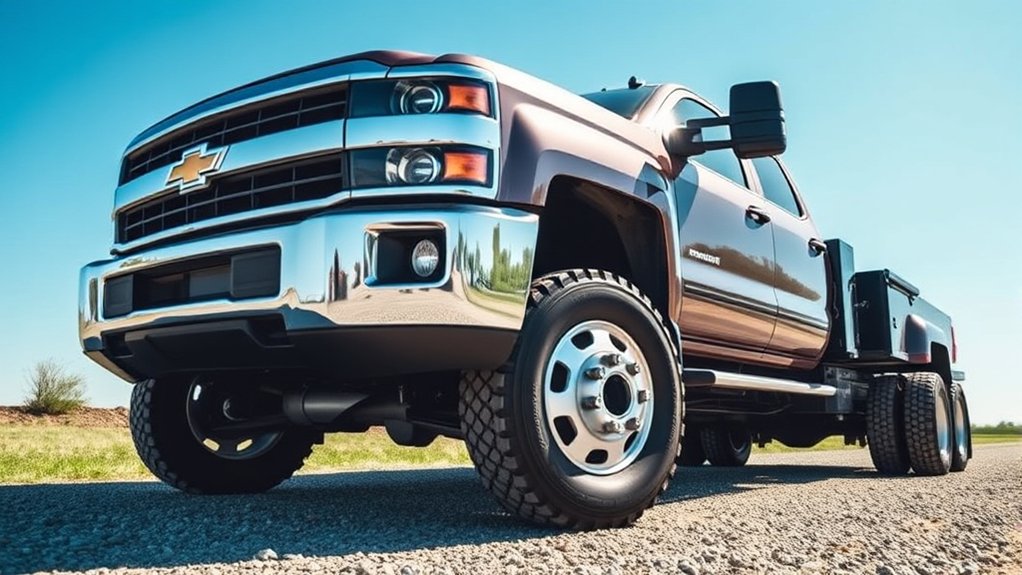
You won’t find a Chevrolet Silverado 5500 with seven axles because it’s designed to have no more than three axles. This includes one front axle for steering and up to two rear axles for load and power.
The Chevrolet Silverado 5500’s axle configuration is tailored to meet typical heavy-duty requirements efficiently.
This setup balances performance, stability, and efficiency for most heavy-duty needs. Adding more axles would require major modifications and isn’t supported by the factory.
Such changes could also affect the vehicle’s handling and regulatory compliance.
If you’re curious about how axle count influences the Silverado 5500’s capabilities, keep exploring the details. Understanding the axle setup helps clarify why seven axles are neither practical nor necessary for this model.
Key Takeaways
- The Chevrolet Silverado 5500 does not come with a seven-axle configuration from the factory.
- Typical Silverado 5500 models have up to three axles: one front and up to two rear axles.
- Seven-axle trucks are specialized vehicles used in heavy equipment hauling, not standard vocational trucks like the Silverado 5500.
- Adding more than three axles to a Silverado 5500 requires extensive modifications and is unsupported by its design.
- Silverado 5500 axle setups balance power and stability, focusing on practical load capacities rather than extreme multi-axle configurations.
How Many Axles Does the Chevrolet Silverado 5500 Have?
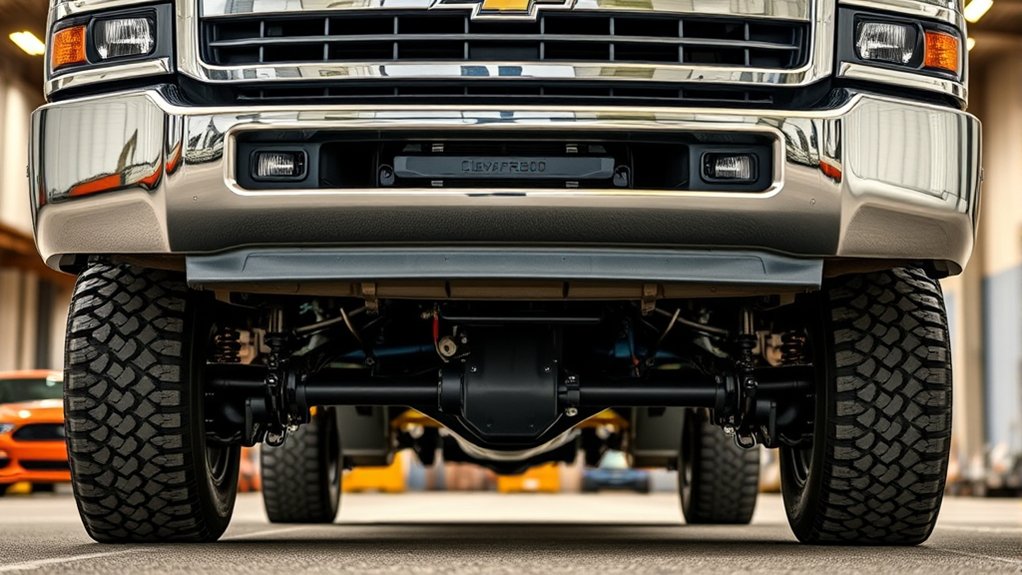
How many axles does the Chevrolet Silverado 5500 actually have? This heavy-duty truck typically comes with two axles—one in the front and one in the rear. You won’t find seven axles on this model; that would be unusual for a vehicle in its class.
The front axle handles steering, while the rear axle supports the truck’s load and provides power. Some Silverado 5500 configurations might offer a tandem rear axle setup, meaning two axles at the back, which is common in commercial trucks to carry heavier payloads.
But even then, you’re looking at three axles total, not seven. So, if you’re picturing a massive rig with seven axles, that’s not the Silverado 5500 you’d be dealing with.
Why Silverado 5500 Axle Count Matters for Performance
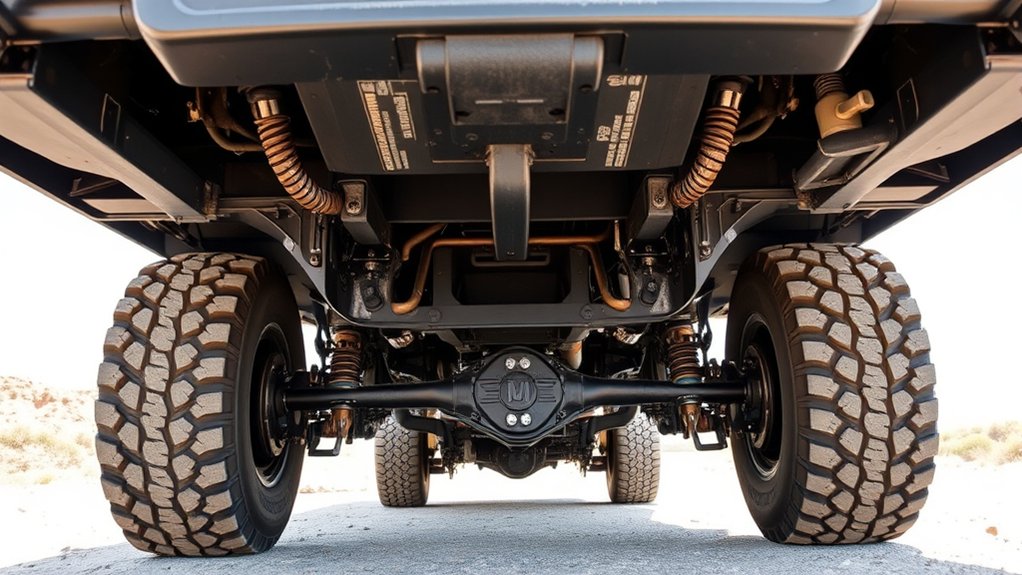
Although the Silverado 5500 typically has two or three axles, the number of axles directly affects its performance, especially when it comes to load capacity, stability, and maneuverability. You’ll find that more axles allow the truck to handle heavier loads, distributing weight more evenly to prevent damage and increase safety. This enhances stability on the road, reducing sway and improving control when you’re hauling tough cargo.
On the other hand, fewer axles can make the truck more agile, helping you navigate tight spaces and urban environments with ease. Understanding how axle count impacts these factors helps you choose the right Silverado 5500 setup for your specific driving and hauling needs.
What Axle Configurations Are Available on the Silverado 5500?
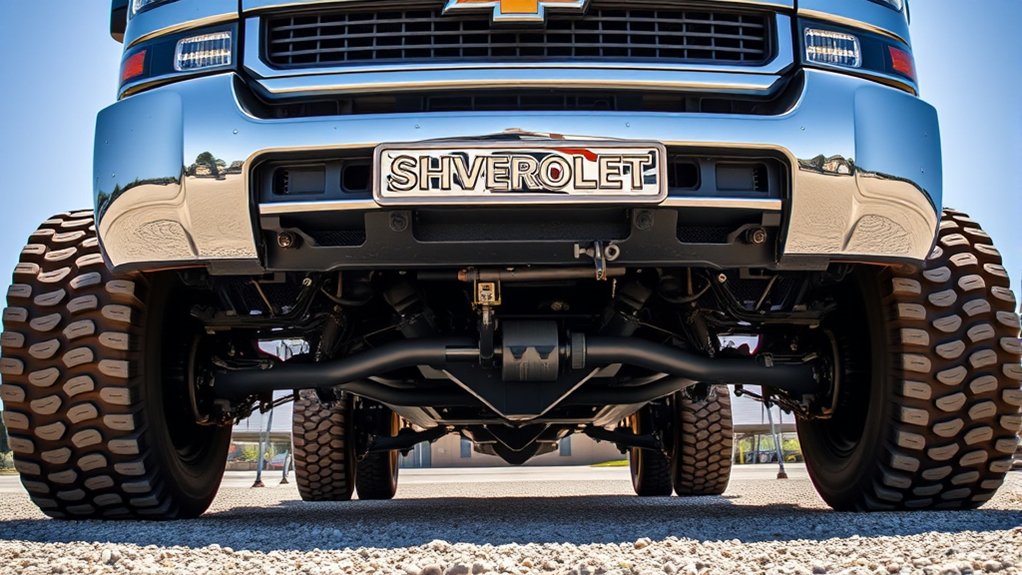
You’ll find the Silverado 5500 comes with standard axle options designed for everyday heavy-duty tasks.
If your work demands more strength, there are upgraded configurations built to handle tougher loads.
Let’s look at what these axle setups offer and how they fit your needs.
Standard Axle Options
When considering the Chevrolet Silverado 5500, you’ll find it offers several axle configurations tailored to different commercial needs. Typically, the Silverado 5500 comes with a standard dual rear axle setup, giving you the strength and stability needed for medium to heavy-duty tasks. The front axle is usually a single steering axle, designed to handle the truck’s weight while providing precise control.
This combination balances load capacity and maneuverability, making it ideal for various work environments. You won’t find configurations with more than three axles in the standard lineup, as the Silverado 5500 focuses on versatility and efficiency for moderate payloads. If you need additional axles, those options fall under specialized or heavy-duty categories, not the standard offerings.
Heavy-Duty Configurations
If your work demands extra power and stability, the Chevrolet Silverado 5500 offers heavy-duty configurations with enhanced axle setups. You won’t find a 7-axle option here, but GM provides robust 4×2 and 4×4 models with dual rear axles designed to handle significant payloads. These configurations typically feature a tandem rear axle setup, giving you increased load capacity and improved traction for tough jobs.
The Silverado 5500’s heavy-duty options support various vocational needs, from towing to hauling, thanks to reinforced suspensions and durable drivetrain components. When you choose a Silverado 5500, you get a balance of power and reliability in a manageable axle configuration that fits most commercial applications without the complexity of excessive axles.
Can the Silverado 5500 Be Configured With More Than Three Axles?
You might wonder if the Silverado 5500 can handle more than three axles. While the truck offers flexible configurations, it does have axle limitations you need to take into account.
Let’s explore what options are available and how they affect your setup.
Axle Limitations Explained
Although the Chevrolet Silverado 5500 is designed to handle heavy-duty tasks, it doesn’t come with the option to add more than three axles. This limitation mainly stems from the truck’s chassis design and federal regulations on axle configurations. The Silverado 5500 is engineered to balance payload capacity, maneuverability, and structural integrity within these constraints.
Adding more axles would require significant modifications to the frame and suspension, which Chevrolet hasn’t implemented. Plus, more axles can complicate steering and increase maintenance. If you need a vehicle with more than three axles, you’ll likely have to look beyond the Silverado 5500 to specialized heavy-duty trucks designed for those configurations.
Understanding these axle limitations helps you set realistic expectations for this model’s capabilities.
Configuration Options Available
While the Chevrolet Silverado 5500 offers a range of configurations to suit various heavy-duty needs, it doesn’t support setups with more than three axles. You can choose from single or tandem rear axle options, depending on your payload and towing requirements, but adding more than two rear axles isn’t available from the factory. This limitation keeps the truck within legal weight and size regulations while maintaining maneuverability.
If you need a vehicle with more than three axles, you’d have to look beyond the Silverado 5500 to specialized trucks designed for that purpose. For most commercial and industrial applications, the Silverado 5500’s axle configurations provide sufficient capacity and versatility without the complexity or cost of extra axles.
How Axle Count Affects Silverado 5500 Load Capacity
Because axle count directly impacts how much weight a truck can safely carry, understanding this aspect is essential when evaluating the Chevrolet Silverado 5500’s load capacity. Each additional axle distributes weight more evenly across the chassis, allowing the truck to handle heavier loads without risking damage or violating road regulations.
For the Silverado 5500, configurations typically include two or three axles, which correspond to varying load ratings. When you opt for more axles, you increase the gross vehicle weight rating (GVWR), meaning you can haul larger payloads efficiently. However, it’s important to match the axle count with your specific hauling needs since over-axling can add unnecessary weight and reduce fuel efficiency.
Knowing how axle count affects load capacity helps you make smarter decisions for your workload.
How Axles Impact Silverado 5500 Stability and Handling
When you add more axles to the Silverado 5500, you improve its stability and handling by distributing weight more evenly and enhancing traction. This means the truck stays steadier on the road, even when carrying heavy loads or maneuvering turns. With extra axles, you can expect better control, reduced sway, and increased safety.
Here’s how axles impact your Silverado 5500’s performance:
- Enhanced weight distribution lowers stress on each axle and tire.
- Improved traction helps maintain grip on slippery or uneven surfaces.
- Better cornering stability reduces body roll during turns.
- Increased braking efficiency with more wheels gripping the road.
These benefits make the Silverado 5500 more reliable and easier to handle under demanding conditions.
Comparing Silverado 5500 Axles to Other Heavy-Duty Trucks
If you’re weighing your options among heavy-duty trucks, comparing the axle configurations of the Silverado 5500 to competitors can help you understand how it stacks up regarding load capacity and maneuverability. The Silverado 5500 typically comes with 2 to 3 axles, designed for strong payload support without sacrificing agility.
In contrast, some heavy-duty trucks may have 4 or more axles, boosting load capacity but reducing flexibility in tight spaces.
| Truck Model | Axle Count | Key Advantage |
|---|---|---|
| Chevrolet Silverado 5500 | 2-3 | Balanced load & maneuverability |
| Freightliner M2 | 3-4 | Higher payload capacity |
| International HV Series | 4+ | Maximum load support |
This comparison helps you pick the right balance for your needs.
How Silverado 5500 Axle Count Influences Maintenance Costs
You’ll find that the number of axles on your Silverado 5500 directly affects its durability and how often you need maintenance. More axles can mean higher upkeep costs, but they also help distribute weight better, reducing wear.
Understanding this balance helps you manage expenses and keep your truck running smoothly.
Axle Count And Durability
How does the axle count on the Chevrolet Silverado 5500 affect its durability and maintenance costs? More axles generally mean better weight distribution, which can enhance durability by reducing stress on individual components. However, more axles also mean more parts to inspect and maintain, potentially increasing your maintenance costs.
You’ll want to balance these factors based on your workload and usage.
Here’s what you should consider about axle count and durability:
- Additional axles improve load stability, reducing wear and tear.
- More axles can extend tire life by distributing weight evenly.
- Increased mechanical complexity means more components that require upkeep.
- Proper maintenance of axles ensures longevity despite the higher initial maintenance effort.
Understanding this helps you decide if the Silverado 5500’s axle setup fits your durability needs and budget.
Maintenance Frequency Impact
Because the Chevrolet Silverado 5500 features multiple axles, its maintenance frequency tends to increase compared to simpler axle setups. You’ll need to inspect and service each axle regularly to keep the truck running smoothly. More axles mean more tires to check for wear and proper inflation, more brake components to maintain, and additional suspension parts to monitor.
This means your maintenance schedule will be more involved, requiring more frequent attention to avoid breakdowns. Neglecting any axle can lead to uneven wear or mechanical failures, impacting overall performance. By staying on top of maintenance, you guarantee safety and prolong your Silverado 5500’s service life.
Cost Variation By Axle
What drives the maintenance costs for a Chevrolet Silverado 5500? The number of axles plays a major role. More axles mean more components to maintain, which naturally increases expenses.
When you add extra axles, you’re looking at higher costs for tires, brakes, bearings, and suspension parts.
Here’s how axle count influences your maintenance costs:
- Tire replacement: More axles require more tires, increasing costs.
- Brake servicing: Additional axles mean more brake pads and discs to maintain.
- Suspension upkeep: Each axle adds complexity to suspension maintenance.
- Bearing and hub repairs: More axles mean more bearings to inspect and replace.
Understanding this helps you budget accurately and plan your Silverado 5500’s upkeep without surprises.
How Common Are Seven-Axle Trucks in Heavy-Duty Trucking?
Although seven-axle trucks are not the norm in heavy-duty trucking, you’ll encounter them in specialized applications that demand extreme weight capacity and stability. These trucks are rare compared to standard five- or six-axle configurations because most freight loads don’t require such heavy-duty setups. You’ll usually see seven-axle trucks in industries like heavy equipment hauling, oversized load transport, or construction projects where legal weight limits and road restrictions necessitate extra axles.
While they offer superior load distribution and improved traction, their complexity and higher costs limit their widespread use. So, unless you’re dealing with exceptionally heavy or oversized cargo, you’re unlikely to come across seven-axle trucks regularly in everyday heavy-duty trucking operations.
How to Choose the Right Axle Setup for Your Silverado 5500
When selecting the right axle setup for your Silverado 5500, you need to take into account the type of loads you’ll be carrying and the driving conditions you’ll face. Choosing the wrong axle can affect performance, fuel efficiency, and safety. Start by evaluating your payload requirements and the terrain where you’ll operate.
Choosing the right axle setup for your Silverado 5500 is crucial for performance, efficiency, and safety.
Take into account whether you need additional axles for weight distribution or stability.
Here are key factors to consider:
- Payload capacity: Match axles to the maximum weight you haul regularly.
- Terrain type: Off-road or rough conditions may require heavier-duty axles.
- Maneuverability: More axles might reduce turning radius.
- Legal regulations: Ensure your setup complies with local axle and weight laws.
These points will help you choose the ideal axle configuration for your Silverado 5500.
Where to Find Silverado 5500 Axle Specs and Custom Options
After figuring out the right axle setup for your Silverado 5500, the next step is knowing where to find accurate axle specifications and explore custom options. Start by checking Chevrolet’s official website and the Silverado 5500 owner’s manual—they provide detailed specs like axle ratios, load ratings, and dimensions.
You can also visit authorized Chevy dealerships for expert advice and access to OEM parts tailored to your needs. For custom axle options, look into specialized aftermarket suppliers or performance shops that offer upgrades like heavy-duty axles, reinforced differentials, or custom gear ratios.
Online forums and Silverado enthusiast groups are great resources too, sharing real-world experiences and recommendations. Using these sources guarantees you get reliable info and the right parts to optimize your truck’s performance.
Frequently Asked Questions
What Engine Options Are Available for the Chevrolet Silverado 5500?
You’ll find the Chevrolet Silverado 5500 offers a 6.6L V8 gas engine and a 6.6L Duramax turbo diesel V8. Both deliver strong performance, letting you tackle heavy-duty tasks with confidence and power.
How Fuel-Efficient Is the Chevrolet Silverado 5500?
You won’t find the Silverado 5500 super fuel-efficient since it’s built for heavy-duty work. However, its diesel engine offers decent mileage for its class, helping you balance power and fuel economy on tough jobs.
What Safety Features Come Standard on the Silverado 5500?
Like a knight’s armor, the Silverado 5500 comes standard with stability control, airbags, and a rearview camera.
You’ll also get hill start assist and trailer sway control to keep you safe on every journey.
Can the Silverado 5500 Be Used for Off-Road Applications?
Yes, you can use the Silverado 5500 for off-road applications, especially when equipped with proper tires and suspension. It’s built tough, but you’ll want to customize it for serious rugged terrain and heavy-duty work.
With the right modifications, it handles rough environments well. Suspension upgrades and off-road tires are key to enhancing its capability.
Keep in mind, it’s designed primarily for heavy-duty tasks, so tailoring it for off-road use ensures better performance and durability.
What Is the Warranty Coverage for the Chevrolet Silverado 5500?
You get a warranty so solid it could outlast a century! Chevrolet offers 5 years or 60,000 miles powertrain coverage and 3 years or 36,000 miles bumper-to-bumper, keeping your Silverado 5500 protected and reliable.
Conclusion
You won’t find seven axles on the Chevrolet Silverado 5500—it’s built with up to three axles, designed to balance power and practicality. Think of it like a well-tuned orchestra; too many instruments, and the harmony gets lost.
By understanding axle options, you can pick the perfect setup for your load and budget. So, choose wisely to keep your Silverado performing at its best without overloading the stage.
When considering the Chevrolet Silverado 5500, remember it offers up to three axles, not seven, ensuring optimal performance and reliability for your work needs.

