

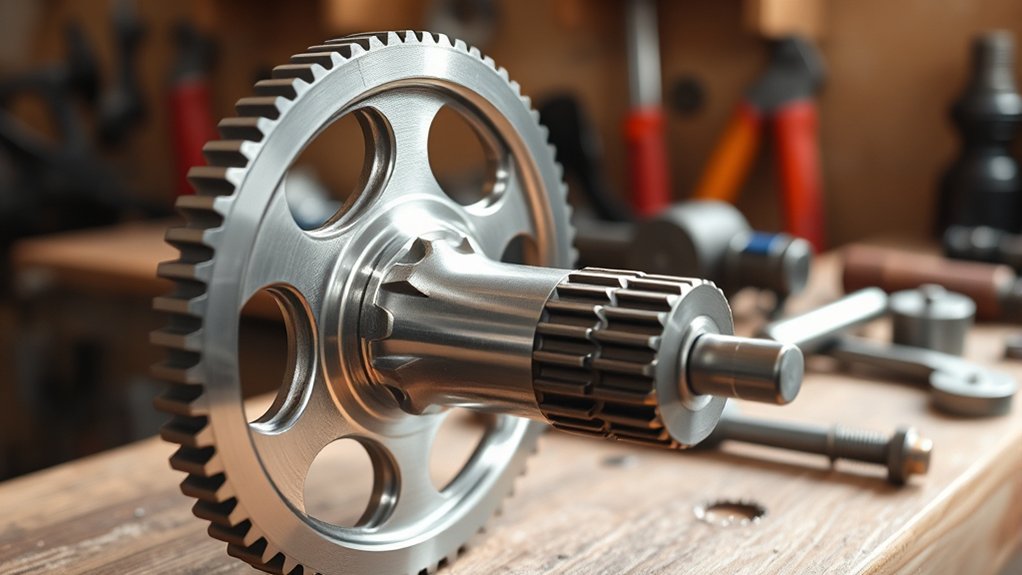
A wheel and axle is a simple machine that consists of a larger wheel attached to a smaller axle. This setup helps you move or lift objects with less effort by using mechanical advantage.
The wheel and axle reduce friction and distribute force evenly, making tasks easier and more efficient.
When you turn the wheel, the axle rotates as well, allowing smooth motion and better control. You encounter this machine daily—in bicycles, doorknobs, and cars—where it helps save energy and improve performance.
Understanding how the wheel and axle work can help you recognize these machines in everyday life. It also gives you the knowledge to use them effectively when tackling tasks or building things.
Key Takeaways
- A wheel and axle is a simple machine where a larger wheel is connected to a smaller axle, causing both to rotate together.
- It reduces the force needed to move or lift objects by providing mechanical advantage through the wheel-to-axle size ratio.
- Common uses include bicycles, doorknobs, rolling chairs, and vehicles, where it helps convert force into smooth, efficient motion.
- To use it, apply force to the wheel or axle, which then multiplies and transfers that force to perform work more easily.
- Regular maintenance like cleaning and lubricating ensures smooth rotation and prolongs the wheel and axle’s functionality.
What Is a Wheel and Axle and Why It Matters

How does a wheel and axle make work easier? It lets you move or lift things with less effort by spreading the force over a larger area. You’ll find a wheel connected to a smaller axle, and when you turn one, the other moves too.
This setup changes how force is applied, making tasks smoother and quicker. You rely on this simple machine every day, even if you don’t notice it—bicycles, doorknobs, and rolling chairs all use wheels and axles. Understanding this tool helps you see how engineers design devices to save energy and time.
When you grasp why it matters, you can better appreciate the clever ways humans solve problems using basic mechanics.
How the Physics of Wheel and Axle Makes Work Easier
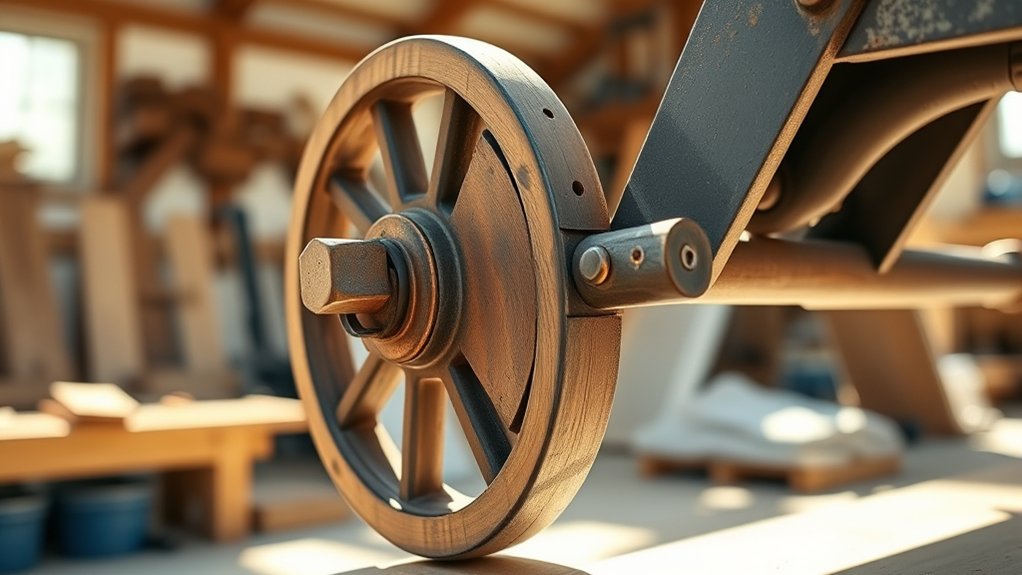
You’ll see how the wheel and axle give you a mechanical advantage by reducing the force needed to move objects. It spreads out the force more efficiently, making your work lighter and smoother.
Understanding how rotational motion plays a role helps you use this simple machine to your advantage.
Mechanical Advantage Explained
Why does a wheel and axle make lifting or moving objects feel easier? It’s all about mechanical advantage—the ratio that shows how much the wheel and axle multiply your input force. When you turn the larger wheel, it covers more distance than the smaller axle, allowing you to apply less force to move a heavier load.
Here’s a quick look at how mechanical advantage works with different wheel and axle sizes:
| Wheel Radius (cm) | Axle Radius (cm) | Mechanical Advantage (MA) |
|---|---|---|
| 10 | 2 | 5 |
| 15 | 3 | 5 |
| 20 | 4 | 5 |
| 12 | 6 | 2 |
| 18 | 3 | 6 |
The bigger the wheel compared to the axle, the easier your work becomes.
Force Distribution Benefits
Where does the ease of moving heavy objects with a wheel and axle really come from? It’s all about how the device spreads out force, letting you do less work.
When you turn the wheel, the axle distributes force evenly across its surface, reducing the effort needed to move something heavy. This clever distribution helps you:
- Minimize friction by concentrating force where it’s most effective
- Balance loads evenly, preventing strain on any single point
- Amplify your input force, making tough tasks manageable
Rotational Motion Efficiency
How does the wheel and axle make work feel so much easier? It’s all about rotational motion efficiency. When you apply force to the wheel, it turns around the axle, which reduces the effort needed to move or lift objects.
The wheel’s larger radius means you cover more distance with less force. Meanwhile, the axle transmits that force, creating a mechanical advantage that multiplies your input. This setup minimizes friction and converts your effort into smooth, continuous motion.
Common Examples of Wheel and Axle in Everyday Life
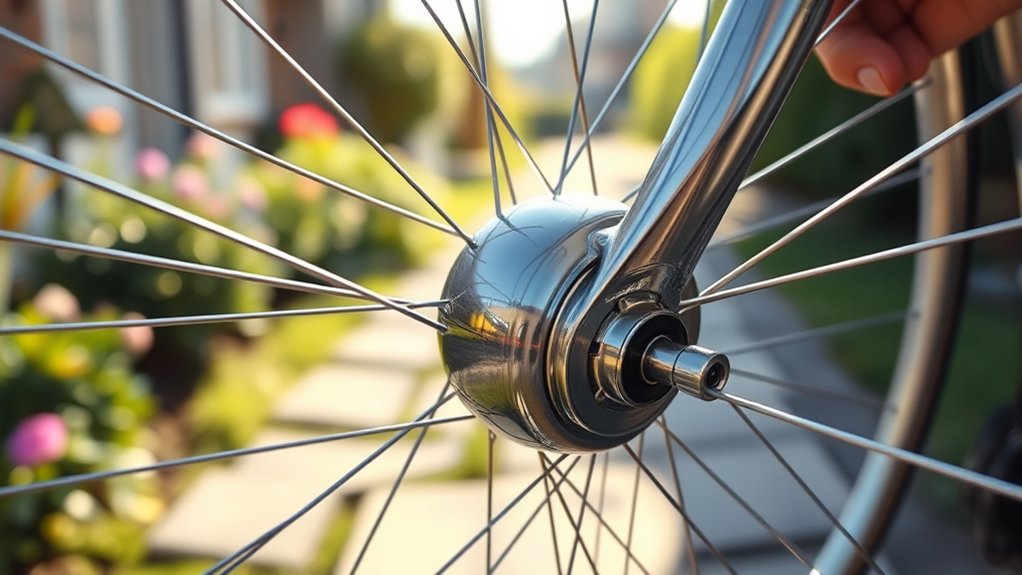
Have you ever noticed how many everyday objects rely on a wheel and axle to function smoothly? These simple machines make your daily tasks easier by reducing effort and increasing efficiency. For instance, when you ride a bicycle, the wheels and axles work together to help you move forward with less force.
Everyday objects use wheels and axles to make tasks easier and boost efficiency effortlessly.
Similarly, a doorknob uses a wheel and axle mechanism to open doors effortlessly. Even your office chair has wheels attached to axles, allowing you to glide around without strain.
Here are some common examples you encounter:
- Bicycle wheels for smooth riding
- Doorknobs for easy door operation
- Rolling office chairs for effortless movement
Next time you use these items, you’ll appreciate the wheel and axle’s role in everyday life.
How to Spot the Wheel and Axle in Everyday Tools
You can find wheels and axles in many household tools, from rolling chairs to screwdrivers. Look closely for parts that rotate around a central rod or shaft—that’s the axle.
Once you spot these mechanical components, you’ll understand how they make tasks easier.
Common Household Examples
Where do you usually encounter wheel and axle mechanisms in your home? You’ll find them in many everyday tools that make tasks easier by amplifying force or motion. Recognizing these examples helps you appreciate how simple machines improve your daily life.
For instance:
- Doorknobs: Turning the knob rotates the axle inside, allowing the latch to move.
- Rolling office chairs: The wheels reduce friction, letting you glide smoothly.
- Garden hose reel: The handle acts as the wheel, turning the axle to wind the hose efficiently.
Identifying Mechanical Components
Everyday tools like doorknobs and garden hose reels contain distinct parts that work together as a wheel and axle. To identify these components, look for a larger circular part (the wheel) connected to a smaller central rod (the axle). When you turn the wheel, the axle rotates too, making tasks easier by amplifying force.
For example, on a doorknob, the round knob is the wheel, and the metal shaft inside acts as the axle. In a garden hose reel, the handle you turn is the wheel, and the rod it’s attached to is the axle. Spotting these parts helps you understand how simple machines improve everyday tools by reducing effort and increasing efficiency.
Next time you use something, try to find its wheel and axle!
How Wheel and Axle Provide Mechanical Advantage
How does a wheel and axle make work easier? It provides mechanical advantage by allowing you to apply less force while achieving greater output force. When you turn the wheel, the axle rotates too, but because the wheel has a larger radius, it moves a greater distance with less effort.
This difference in radius between the wheel and axle is what creates the mechanical advantage.
Here’s how it works for you:
- The larger the wheel compared to the axle, the less force you need to apply.
- You trade distance for force, turning the wheel farther but with less effort.
- It multiplies your input force, making tasks like turning or moving objects easier.
This simple setup helps you accomplish more with less strain.
How to Use a Wheel and Axle to Lift or Move Heavy Objects
The mechanical advantage you get from a wheel and axle lets you lift or move heavy objects with less effort. To use it effectively, attach the axle to the object you want to move or lift. Then, apply force by turning the wheel.
Because the wheel’s larger radius requires less force to rotate, you’ll multiply your effort through the axle, which moves the load. For example, when using a hand truck or a pulley system with a wheel and axle, push or pull the wheel to raise or shift heavy items smoothly. Always verify the wheel spins freely and the axle is securely fixed to avoid accidents.
How Bicycles and Cars Use the Wheel and Axle for Motion
You use the wheel and axle every time you ride a bike or drive a car, where they work together to create smooth motion. The mechanics behind these parts help transfer force efficiently, making transportation easier and faster.
Understanding this can show you how vehicles move with less effort and more control.
Wheel and Axle Mechanics
Ever wondered why bicycles and cars move so smoothly and efficiently? It’s all thanks to the clever mechanics of the wheel and axle. When you pedal a bike or accelerate a car, the wheel and axle work together to convert your input into motion with minimal effort.
The axle acts as a pivot, allowing the wheel to rotate easily, while the difference in size between the wheel and axle creates a mechanical advantage.
Here’s how the mechanics help you:
- Reduce friction, so wheels spin smoothly.
- Amplify force, making it easier to move the vehicle.
- Maintain balance and stability during motion.
Understanding these basics helps you appreciate the smart design behind everyday transportation.
Role in Vehicle Movement
Since the wheel and axle work together to reduce friction and amplify force, they play an essential role in how bicycles and cars move efficiently. When you pedal a bike, the axle connects the pedals to the wheels, transferring your energy to make the wheels spin. This setup allows you to move forward smoothly without much effort.
In cars, the engine turns the axle, which rotates the wheels and propels the vehicle. The wheel and axle system helps convert rotational force into motion, letting you steer and accelerate with control. Without this simple machine, vehicles wouldn’t glide as easily or respond quickly to your inputs.
Efficiency in Transportation
How do bicycles and cars use the wheel and axle to move so efficiently? You rely on this simple machine to convert rotational force into smooth motion, reducing friction and effort. When you pedal a bike or press the gas pedal in a car, the wheel and axle work together to transfer power efficiently, allowing you to travel faster and farther with less energy.
Here’s how they boost efficiency:
- They minimize friction between moving parts, making motion smoother.
- They amplify force, so you use less energy to move heavier loads.
- They provide stability and balance, improving control and safety.
How to Maintain and Care for Wheel and Axle Parts
Proper maintenance of wheel and axle parts guarantees they operate smoothly and last longer. To care for them, regularly inspect for signs of wear, rust, or damage. Keep the axle and wheel clean by removing dirt and debris, which can cause friction and wear.
Lubricate moving parts with appropriate grease or oil to reduce friction and prevent corrosion. Tighten any loose bolts or fittings to ensure stability during use. Store equipment in a dry place to avoid moisture buildup that leads to rust.
How to Troubleshoot Common Wheel and Axle Problems
Keeping your wheel and axle parts well-maintained can prevent many issues, but sometimes problems still arise. When you notice trouble, start by inspecting each part closely. Look for signs of wear, damage, or misalignment.
Regular inspections of wheel and axle parts help catch wear, damage, or misalignment before problems worsen.
Here’s how to troubleshoot common problems:
- Squeaking or grinding noises: Check for dirt or lack of lubrication. Clean the parts and apply appropriate grease.
- Wobbling wheel: Tighten loose nuts or bolts and ensure the axle is straight.
- Wheel not turning smoothly: Examine the bearings for damage or debris, and replace them if necessary.
Creative DIY Projects Using Wheel and Axle
Although wheel and axle systems might seem simple, they open up a world of creative DIY possibilities you can try at home. You could build a small cart or wagon to transport tools or kids’ toys, combining functionality with hands-on learning. Another fun project is crafting a spinning toy or a homemade clock mechanism, which helps you see the physics in action.
You might even design a pulley system using wheels and axles to lift lightweight objects, making chores easier. These projects not only sharpen your problem-solving skills but also give you practical items you can use daily. By experimenting, you’ll gain a deeper appreciation of how these basic machines work and discover new ways to apply them creatively in your own space.
How Knowing About Wheel and Axle Can Help You Design Smarter
When you understand how wheel and axle systems work, you can design more efficient and innovative products. This knowledge lets you optimize movement, reduce effort, and enhance durability in your designs.
You’ll be able to create solutions that save energy and improve user experience, whether for machines or everyday tools.
Knowing the mechanics helps you:
- Choose the right size ratio for speed or torque, tailoring performance to your needs
- Select materials that balance strength and weight, ensuring longevity without bulk
- Integrate the system seamlessly into your design, maximizing space and function
Why Understanding Wheel and Axle Makes Everyday Tasks Easier
Understanding just a few key principles of wheel and axle systems can make many daily tasks feel easier and faster. When you grasp how these simple machines reduce friction and multiply force, you can apply that knowledge to everyday activities like opening jars, riding a bike, or moving heavy furniture.
For example, using a rolling cart with wheels takes much less effort than dragging items across the floor. You’ll also notice how tools with round handles or rotating parts allow you to work more efficiently. By recognizing these mechanics, you can choose or modify tools and methods that save energy and time.
In short, understanding wheel and axle systems empowers you to tackle tasks smarter, not harder, making your daily routine smoother and more effective.
Frequently Asked Questions
Who Invented the Wheel and Axle?
You can’t credit a single person with inventing the wheel and axle since it dates back to ancient Mesopotamia around 3500 BCE. People then developed it gradually, improving transportation and machinery over time.
What Materials Are Best for Making a Wheel and Axle?
Strong steel and sturdy wood suit your wheel and axle best, balancing strength and smooth spinning.
You’ll want lightweight metals or durable plastics for speedier spins, ensuring your creation’s crafted carefully for consistent, clever performance.
How Does the Wheel and Axle Compare to Other Simple Machines?
You’ll find that the wheel and axle reduces effort like levers and pulleys but offers smoother, continuous motion.
Unlike inclined planes or wedges, it’s great for moving loads efficiently over distances with less friction.
Can Wheel and Axle Systems Be Powered by Electricity?
You know what they say, “where there’s a will, there’s a way.” Yes, you can power wheel and axle systems with electricity, making tasks easier and faster by converting electrical energy into mechanical motion efficiently.
What Are the Historical Milestones in the Development of Wheel and Axle?
You’ll find the wheel and axle evolving from ancient Mesopotamian carts around 3500 BCE, through Roman innovations in transportation, to Industrial Revolution machinery improvements.
Each milestone boosted efficiency and shaped how you use them today.
Conclusion
You might see a wheel and axle as just simple parts, but they’re powerful tools that make tough work feel effortless. While they seem ordinary, their clever physics turn heavy loads into easy tasks. By understanding how they work, you’ll not only spot them everywhere but also use them creatively to solve problems.
So, next time you twist a doorknob or ride a bike, remember—you’re harnessing smart design to make life smoother and smarter. The wheel and axle are fundamental components in many machines, demonstrating how simple tools can have a big impact. Recognizing their role helps you appreciate the importance of basic mechanics in everyday life.

