

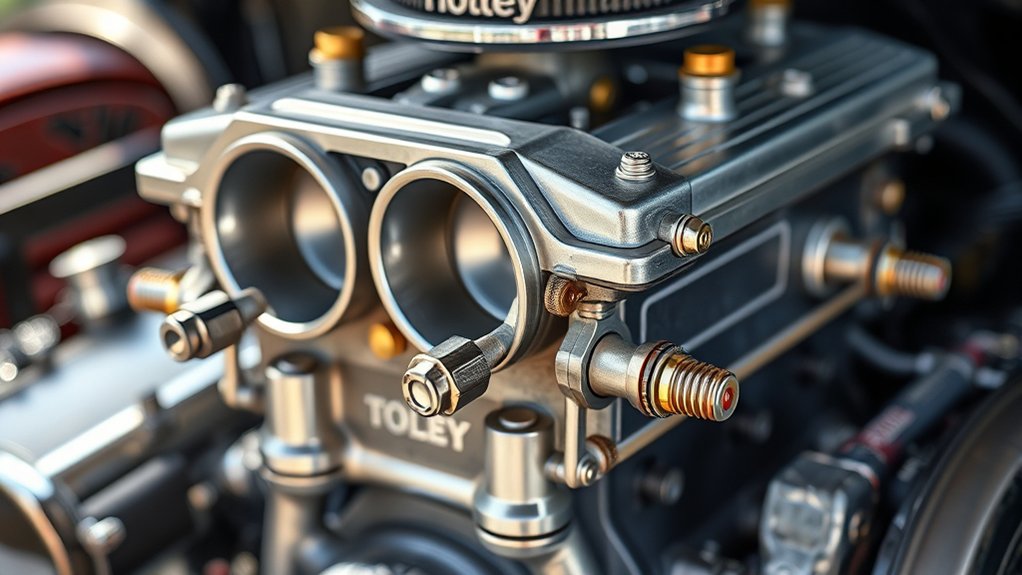
To identify a Holley carburetor, start by examining its distinctive square or rectangular base with rounded fuel bowls. The large circular air horn on top is another key feature to look for. These unique design elements make Holley carburetors recognizable among other brands.
Next, search for the “HOLLEY” logo, which is typically stamped near the throttle body or fuel bowl. This branding is a clear indicator of authenticity. After locating the logo, find the model number stamped near the throttle linkage or base.
Compare the model number with official Holley guides to verify your carburetor’s exact type. Also, pay attention to the choke and throttle features, as these can vary between models.
Following these steps will help you confidently identify your Holley carburetor and understand its specific variations.
Key Takeaways
- Examine the carburetor’s shape, size, and distinctive rounded fuel bowls to spot typical Holley design features.
- Locate and clean the stamped model number near the throttle linkage or on the base for clear identification.
- Identify the “HOLLEY” logo, usually bold block letters inside an outline, found near the fuel bowl or choke housing.
- Note vintage or modern design cues, such as metal type and presence of electronic components, to determine the model era.
- Cross-reference all stamped numbers and markings with official Holley guides or online databases for accurate verification.
How to Identify a Holley Carburetor by Shape and Size
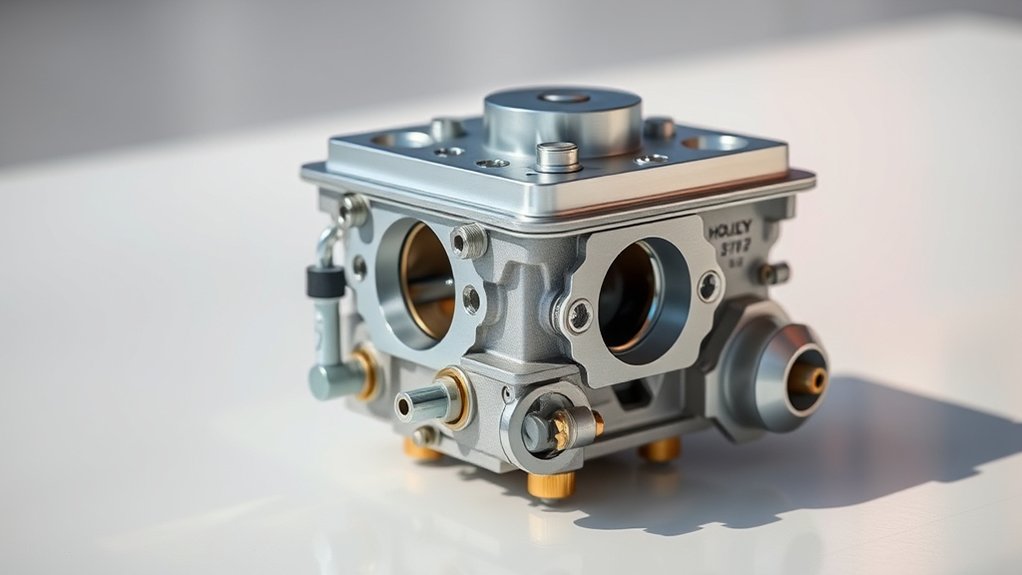
Although carburetors come in various designs, you can quickly identify a Holley carburetor by its distinctive shape and size. When you look at it, you’ll notice a square or rectangular base plate that often measures roughly 2.5 to 3 inches across. The Holley’s body usually features a prominent, rounded fuel bowl on each side, giving it a wider profile compared to other carburetors.
You’ll also see a large, circular air horn on top with a noticeable venturi opening right in the center. The overall size tends to be bulkier, reflecting its high-performance design. By focusing on these physical characteristics, you can confidently distinguish a Holley carburetor from others without needing to check model numbers or casting marks.
How to Find the Holley Carburetor Model Number and Casting Marks
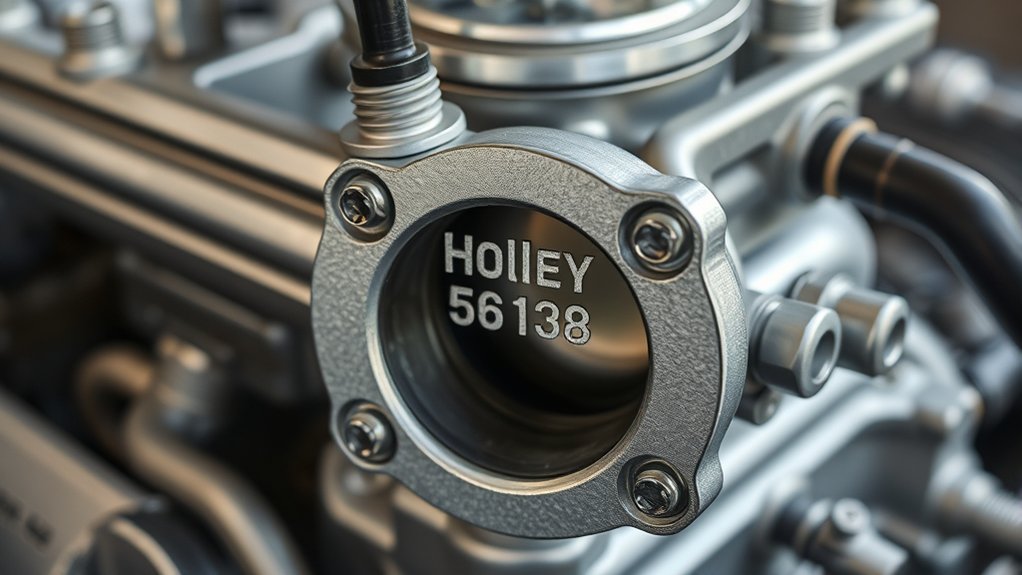
To identify your Holley carburetor, start by locating the model number stamped on the main body near the throttle linkage.
Check for casting marks, usually found on the base or sides, which can give clues about its production date and specifications.
Knowing where to find these details helps you confirm the exact model you’re working with.
Locating Model Number
Where exactly can you find the model number on your Holley carburetor? Look on the main body, usually on the passenger side or the rear. It’s often stamped or cast directly into the carburetor’s metal surface.
You might see a four-digit number, sometimes accompanied by letters. This number identifies the carburetor’s specific model and specifications. If you don’t spot it immediately, check near the throttle linkage or fuel bowl area.
Use a flashlight and clean the surface if it’s dirty or greasy; that’ll help the numbers stand out. Remember, the model number is vital for identifying your carburetor’s exact type, so take your time to find it carefully. Once located, write it down for reference when ordering parts or verifying compatibility.
Identifying Casting Marks
Once you’ve located the model number on your Holley carburetor, the next step is to examine the casting marks. These marks are usually stamped or cast into the main body, often near the model number or on the sides of the carburetor. Look closely for letters, numbers, or symbols that indicate the manufacturing date, plant location, or specific design features.
Casting marks can help you verify authenticity and narrow down the production year. Use a flashlight if necessary to see the marks clearly, as dirt or grease might obscure them. Cross-reference these marks with Holley’s official guides or online databases to guarantee accurate identification.
This attention to detail helps you confirm your carburetor’s exact type and history.
How to Spot the Holley Logo on Your Carburetor
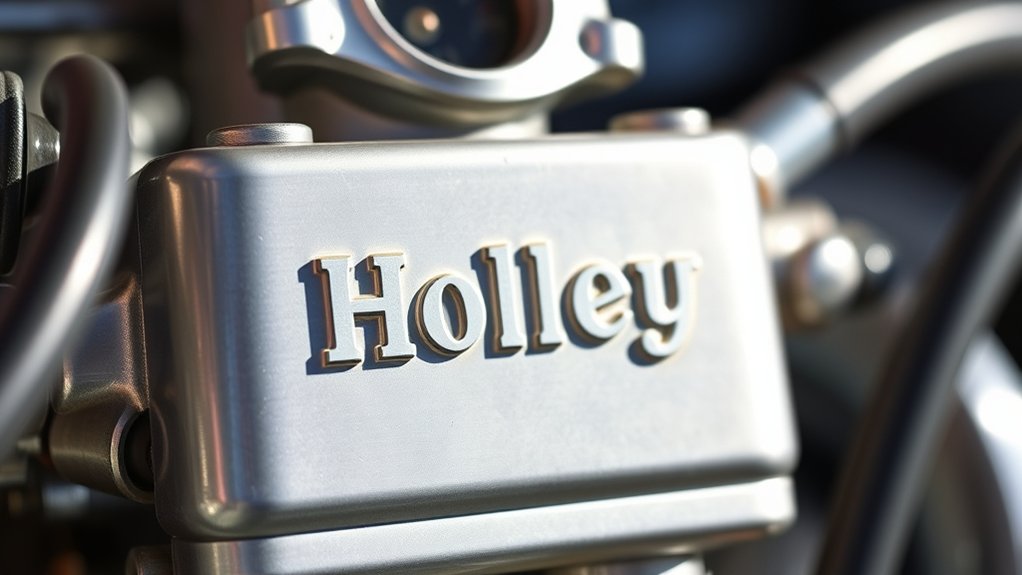
You’ll usually find the Holley logo stamped or cast on the carburetor’s main body or fuel bowl. Keep an eye out for the distinctive script or block lettering that spells out “Holley.”
Recognizing this design will quickly confirm you’re looking at an authentic Holley carburetor.
Logo Location on Carburetor
Although Holley carburetors come in various models, the distinctive Holley logo is always stamped in specific locations, making identification easier. When you look at the carburetor’s throttle body, check near the fuel bowl or on the main casting. The logo is often found on the front or side, close to where the fuel line connects.
Sometimes, it’s also stamped on the choke housing or near the base plate. Keep in mind the logo placement is consistent enough that once you know where to look, you’ll quickly spot it. Don’t overlook the top cover of the carburetor, either—it can have the logo molded or stamped.
Recognizing Logo Design
How can you quickly recognize the Holley logo on your carburetor? Look for a bold, capitalized “HOLLEY” stamped or cast directly onto the carburetor body. The font is distinctive—block letters, often slightly rounded at the edges, making it easy to spot.
Sometimes, the logo appears inside a rectangular or oval-shaped outline, but it’s usually straightforward. The lettering stands out clearly against the metal surface, whether aluminum or cast iron. If the logo looks worn or faint, clean the area gently to reveal the markings.
Avoid confusing it with other brand stamps, which typically have different fonts or symbols. By focusing on this clear, bold “HOLLEY” text, you’ll confidently identify your carburetor’s brand without second-guessing.
How to Identify Holley Carburetor Bowls and Fuel Inlets
When examining a Holley carburetor, paying close attention to the bowls and fuel inlets can reveal key identifying features. You’ll notice that Holley carburetor bowls typically have a distinctive square or rectangular shape with rounded edges, unlike some competitors’ rounded or oval designs.
The fuel inlet on a Holley is usually located on the side of the bowl, and it often features a threaded brass fitting for secure fuel line attachment. Also, Holley bowls often have visible part numbers or casting marks stamped or cast into the metal, which helps confirm authenticity.
How to Recognize Holley Choke and Throttle Linkage Features
You’ll want to pay close attention to the choke linkage when identifying a Holley carburetor, as it often features a distinct, sturdy design. The throttle linkage is another key area, typically showcasing smooth, precise movements that set Holley apart. Recognizing these characteristics will help you confirm the carburetor’s authenticity.
Choke Linkage Characteristics
Although choke linkage systems can vary across carburetor brands, Holley choke and throttle linkages have distinct features that make them identifiable. When you examine a Holley choke linkage, look for its robust metal construction paired with a simple, direct connection between the choke lever and the throttle shaft. Holley uses a spring-loaded choke mechanism that ensures smooth operation and quick response during engine warm-up.
You’ll notice a distinctive curved choke arm, often attached with a small clip or pin, allowing easy adjustments. The linkage is designed for durability and precise control, avoiding overly complex parts. By focusing on these choke linkage traits—sturdy metal arms, spring tension, and straightforward connections—you can confidently recognize a Holley carburetor’s choke system without confusion.
Throttle Linkage Design
Since throttle linkage plays a crucial role in controlling engine performance, recognizing Holley’s design features can help you identify their carburetors quickly. Holley throttle linkages typically feature a straightforward, robust design with a solid metal shaft and carefully machined arms. You’ll notice the linkage moves smoothly, connecting the throttle lever to the accelerator pedal or linkage system.
Holley often uses a single throttle lever with a return spring, ensuring quick response and reliable operation. The linkage components are usually stamped or cast with Holley markings or part numbers, aiding identification. When you inspect, look for a clean, functional setup without excessive complexity or aftermarket modifications.
Recognizing these throttle linkage traits will make spotting a genuine Holley carburetor easier during your engine work or restoration.
How to Spot Holley-Specific Jets and Metering Blocks
When examining your carburetor, pay close attention to the jets and metering blocks, as Holley designs these components with distinct features that set them apart. Holley jets usually have a unique, tapered shape and are often stamped with part numbers or size indicators.
The metering blocks are typically modular and bolted directly to the carburetor body, showing a precise, clean layout with visible rivets or screws. You’ll notice Holley metering blocks often have separate fuel and air circuits clearly defined, which helps regulate fuel flow accurately.
The block’s surface may feature cast or stamped markings, including Holley’s name or logo. By identifying these subtle but consistent details, you’ll confidently spot genuine Holley jets and metering blocks during your inspection.
How to Tell Holley Carburetors Apart From Other Brands
Recognizing Holley jets and metering blocks sets a solid foundation for distinguishing Holley carburetors from other brands. When you look closer, Holley carburetors feature unique design elements and markings that stand out. You’ll find the Holley logo cast or stamped on the body, often near the fuel inlet.
Their throttle plates usually have a distinct shape, and the fuel bowls are squared off compared to competitors’ rounded designs. Additionally, Holley carburetors use a specific pattern for their vacuum ports and linkage setups.
Look for these key indicators to tell Holley apart:
- Holley logo on the carburetor body
- Square-shaped fuel bowls
- Distinct throttle plate design
- Unique vacuum port arrangement
- Characteristic stamped model numbers on the baseplate
These signs make it easier to identify Holley at a glance.
Key Differences Between Vintage and Modern Holley Carburetor Designs
How can you tell a vintage Holley carburetor from a modern one? Vintage models often feature simpler, more rugged designs with fewer emissions controls. You’ll notice classic stamped metal parts and a straightforward fuel bowl layout.
Modern Holleys, on the other hand, incorporate advanced materials like aluminum and include updated features such as electronic chokes and integrated idle fuel shutoff solenoids. They’re designed to meet stricter emission standards, so expect additional vacuum ports and sensors. Also, modern carburetors usually have smoother lines and refined casting, reflecting improved manufacturing technology.
When you compare the two, vintage Holleys emphasize durability and simplicity, while modern versions focus on efficiency, performance, and environmental compliance. Knowing these differences helps you identify which era your Holley carburetor belongs to quickly and accurately.
Common Holley Carburetor Variations by Vehicle Type
Although Holley carburetors share core design principles, their variations often depend on the type of vehicle they’re built for. When identifying a Holley carburetor, you’ll notice differences tailored to specific vehicle needs, such as engine size, fuel delivery requirements, and performance goals.
Recognizing these variations helps you pinpoint the right model quickly.
Here are common Holley carburetor variations by vehicle type:
- Passenger Cars: Often feature smaller, two-barrel models for fuel efficiency.
- Muscle Cars: Equipped with four-barrel carburetors for high performance.
- Trucks: Built with heavy-duty components for durability and torque.
- Racing Vehicles: Customized with high-flow parts and adjustable tuning.
- Marine Engines: Designed with corrosion-resistant materials and specialized fuel systems.
Knowing these distinctions makes identification much easier.
How to Use Holley Carburetor Part Numbers for Accurate Identification
When you want to identify a Holley carburetor accurately, the part number is your best tool. Look for a stamped or cast number on the carburetor body, often found on the flange or main body. This number reveals the carburetor’s specifications, like CFM rating, application, and design features.
Once you locate it, note the entire sequence carefully, including any prefixes or suffixes, as they can indicate specific models or revisions. Use this exact number to cross-reference Holley’s official documentation or parts catalogs. By doing this, you avoid guesswork and confirm the carburetor’s identity quickly.
How to Use Online Resources and Forums to Confirm Your Holley ID
Since identifying a Holley carburetor can sometimes be tricky, turning to online resources and automotive forums can save you time and provide valuable insights. You can cross-check part numbers, compare photos, and learn from experienced enthusiasts who’ve dealt with similar models. Online communities often share tips that aren’t found in manuals.
Here’s how to use these resources effectively:
- Search dedicated Holley ID databases and websites for detailed specs
- Join automotive forums like Holley’s official forum or classic car groups
- Post clear photos and part numbers to get expert feedback
- Use social media groups focused on vintage carburetors for quick advice
- Bookmark reliable sites for ongoing reference and updates
This approach confirms your Holley ID with confidence.
How to Troubleshoot Common Mistakes When Identifying Holley Carburetors
Online resources can guide you, but misidentifying a Holley carburetor still happens more often than you’d expect. To troubleshoot common mistakes, start by double-checking the stamped numbers on the carburetor body—they’re often small and easy to misread. Don’t rely solely on visual cues like the shape or size since many models look similar.
If you find conflicting information online, cross-reference multiple trusted sources or forums. Pay attention to the carburetor’s date code; it can help narrow down the model year. Also, verify you’re not confusing factory modifications or rebuilds with original specs.
If something feels off, take clear photos and ask experienced enthusiasts for input. This careful approach helps you avoid costly errors and confirms you’ve identified your Holley correctly.
Frequently Asked Questions
What Maintenance Tips Keep Holley Carburetors Running Smoothly?
You should regularly clean the carburetor, check and replace gaskets, adjust the idle mixture,
inspect float levels, and make certain all linkages move freely.
Don’t forget to use quality fuel and store it properly to avoid buildup.
How Do Holley Carburetors Impact Engine Performance?
Imagine your engine breathing deeply—Holley carburetors sharpen fuel flow, boosting throttle response and power.
You’ll feel smoother acceleration and improved efficiency, turning your ride into a finely tuned machine ready to roar down the road.
Are Holley Carburetors Compatible With Modern Fuel Types?
Yes, Holley carburetors work with modern fuels, but you’ll need to verify compatibility with ethanol blends. You might have to adjust jets or use additives to prevent corrosion and maintain peak engine performance with today’s fuel types.
Checking the specific fuel blend and making necessary adjustments ensures your carburetor functions optimally. Regular maintenance can help avoid issues caused by ethanol’s corrosive effects. Always consult Holley’s guidelines for the best results.
What Are Common Upgrade Options for Holley Carburetors?
You know what they say, “Don’t fix what isn’t broken.” But with Holley carbs, you can upgrade jets, add a vacuum secondary, install a high-performance air cleaner, or switch to electric choke to boost performance and drive smoother.
How Long Do Holley Carburetors Typically Last?
Holley carburetors typically last 10 to 20 years with proper care. If you keep them clean and tuned, you’ll avoid common issues and can enjoy reliable performance for a long time before needing major rebuilds or replacements.
Conclusion
Now that you’ve revealed the secrets of your Holley carburetor, identifying it becomes as clear as a polished chrome finish. Like a detective piecing together clues, you’ll spot logos, model numbers, and unique shapes with ease. Keep these tools handy, and you’ll navigate the carburetor maze like a pro, turning every engine bay into your personal workshop.
Remember, each detail tells a story—don’t miss a single one! With a keen eye and the right knowledge, identifying a Holley carburetor step by step is straightforward. This process ensures you understand your carburetor’s specifics and can maintain or restore it effectively.

