

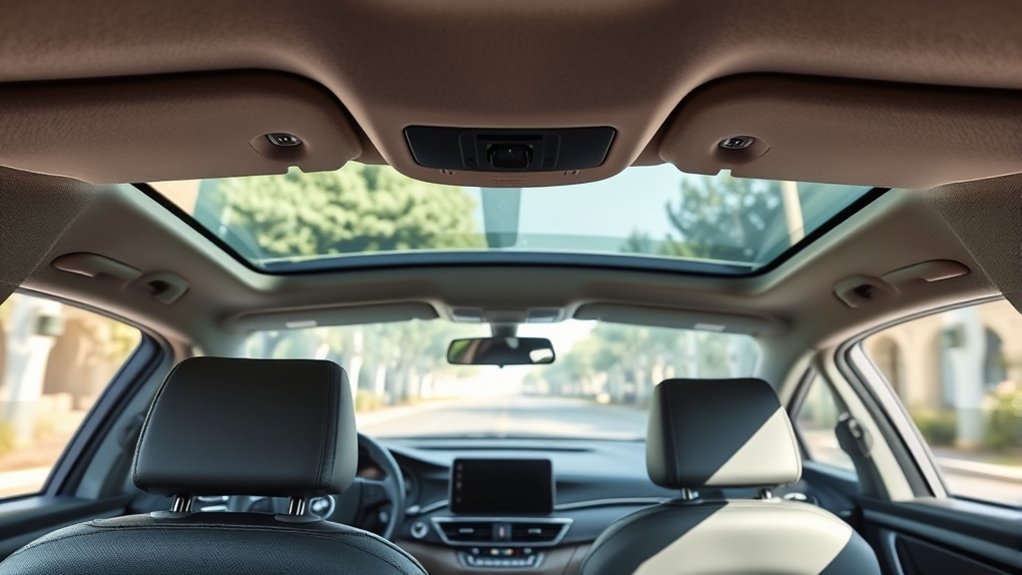
You can legally mount your car camera in California in several specific spots to ensure safety and compliance with state laws. Knowing the proper placement is essential for both clear recording and avoiding legal issues. These legal spots help you capture important footage without obstructing your view or vehicle controls.
You can place your camera within the upper 5 inches behind your rearview mirror on the windshield. It is also allowed on the dashboard, provided it doesn’t block your view or controls.
Another option is mounting it behind or near the rearview mirror frame.
Additionally, you can mount the camera low on side windows away from your direct line of sight. Near the top corners of rear windows is also permitted.
Finally, the roof is a legal spot if the camera doesn’t exceed 15 feet in height or obstruct safety features.
Keep these spots in mind to stay safe and compliant, and there’s more to know about proper placement and laws.
Key Takeaways
- Mount the camera within the upper 5 inches behind the rearview mirror on the windshield for legal compliance in California.
- Place cameras low on the dashboard or behind the rearview mirror to avoid obstructing the driver’s view and airbags.
- Install side window cameras low and away from the driver’s line of sight to maintain visibility and meet regulations.
- Mount rear window cameras near the top corners to ensure clear view without blocking safety signals or the driver’s vision.
- Use roof mounts below 15 feet height with secure, weather-resistant mounts that do not obstruct the driver’s line of sight or safety features.
California’s Legal Requirements for Car Camera Mounting
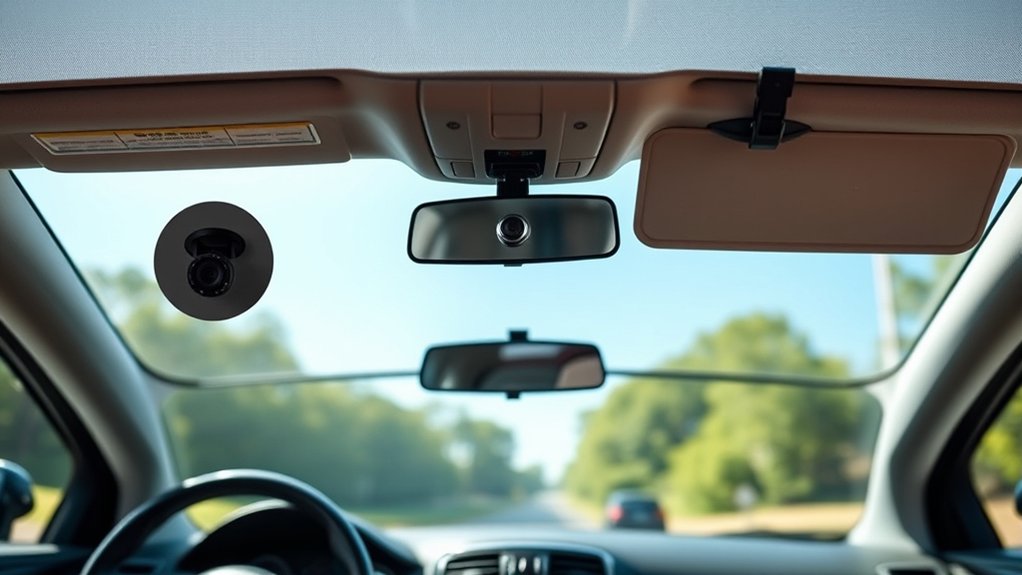
Although California doesn’t have specific laws about where you can mount a car camera, you still need to guarantee it doesn’t obstruct your view while driving. You’re responsible for keeping your windshield clear to avoid distractions or impaired vision. The state emphasizes driver safety, so any device that blocks your line of sight could lead to fines or citations.
You should also verify the camera is securely attached, so it doesn’t become a hazard if it falls while you’re on the road. Avoid placing bulky mounts in the center of your windshield or anywhere that interferes with airbags or controls. By choosing a spot that keeps your view clear and your device stable, you’ll stay compliant and safe while recording your drive.
Legal Mounting Locations on Your Windshield
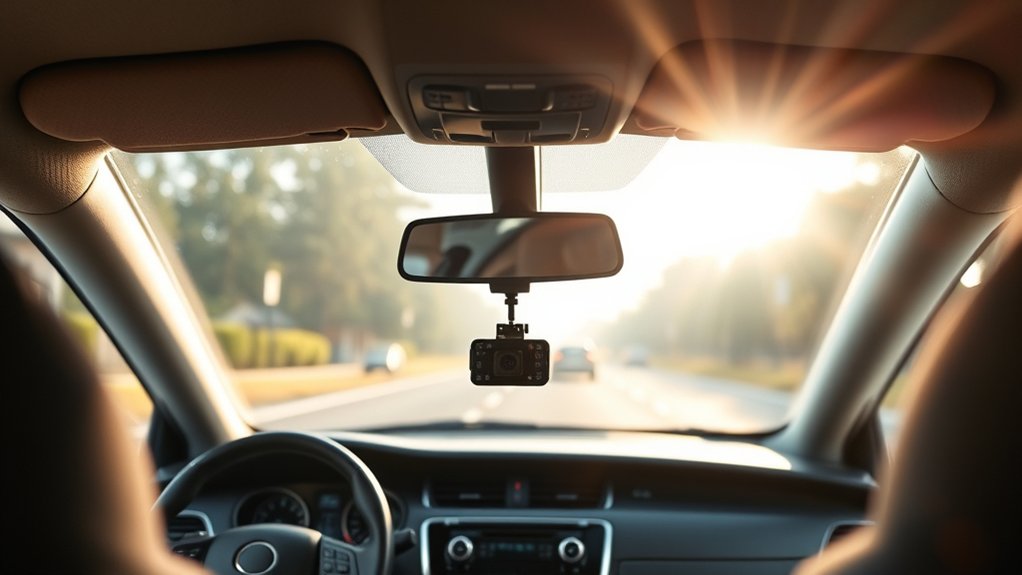
When mounting a car camera on your windshield, you need to place it where it won’t block your view or distract you while driving. California law allows you to install your camera within the upper 5 inches of your windshield, behind the rearview mirror, where it won’t obstruct your sight. This spot keeps the camera out of your direct line of vision and guarantees it captures a clear view of the road ahead.
Avoid placing the camera too low or near the edges of the windshield, as this can interfere with your ability to see pedestrians, traffic signals, or other vehicles. Make sure the mount is secure and doesn’t fall while driving, but don’t cover any sensors or airbags located on the windshield.
Legal Dashboard Mounting Tips for Car Cameras
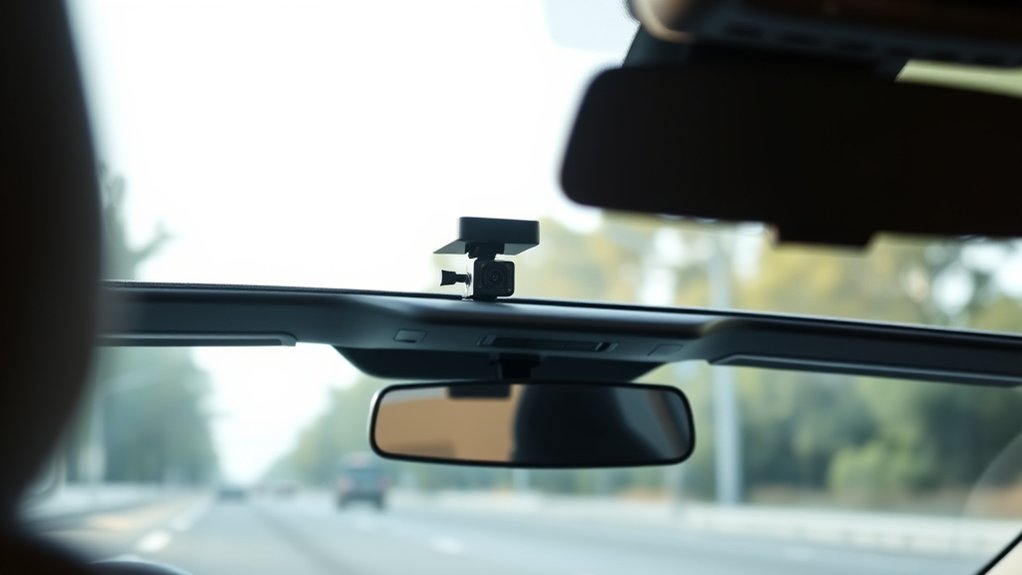
Since dashboard mounting offers a stable and accessible spot for your car camera, you’ll want to verify it complies with California’s regulations. First, place the camera where it doesn’t obstruct your view of the road or any critical controls. Avoid mounting it too high or near the windshield’s lower edge, as this could distract you or block traffic signals.
Make certain the device is securely fixed to prevent it from sliding or falling while driving. Also, check that the camera doesn’t interfere with airbags or other safety features. Keep the installation neat; wires should be tucked away to avoid distractions or hazards.
Mounting Car Cameras on Rearview Mirrors
Mounting your car camera on the rearview mirror provides a convenient alternative to dashboard placement, offering a central view without cluttering your windshield. This position keeps the camera discreet and maintains a wide angle for recording the road ahead. When mounting here, make sure the camera doesn’t obstruct your line of sight or interfere with the mirror’s function.
California law requires that any device attached to the windshield not block the driver’s clear view, so placing the camera behind or near the mirror frame is best. Use a secure mount designed for rearview mirrors to prevent vibrations or shifts while driving. By choosing this spot, you balance legal compliance with ideal recording, giving you peace of mind without sacrificing safety.
Mounting Car Cameras on Side and Rear Windows
Although side and rear windows offer alternative spots for your car camera, you’ll need to guarantee the placement doesn’t obstruct your view or violate California’s windshield laws. Mount your camera low on the side windows, away from the driver’s direct line of sight, to keep your vision clear.
On rear windows, position the camera near the top or corners to avoid blocking your rearview mirror’s function. Make sure the camera is securely attached and doesn’t distract you while driving.
California law restricts any devices that substantially obstruct the windshield or driver’s view, so avoid placing cameras in the middle of windows or in spots that create blind spots. Always check your local regulations before finalizing your camera’s placement to stay within legal limits.
Legal Roof-Mounted Car Camera Guidelines
When mounting a car camera on your roof, you need to follow height restrictions to avoid any legal issues. Make sure the camera doesn’t block your view or interfere with any safety features.
Also, secure the camera firmly so it won’t come loose while driving.
Mounting Height Restrictions
If you plan to install a car camera on your roof, you need to follow California’s height restrictions to stay compliant. The maximum allowable height for any mounted device, including cameras, is generally 15 feet from the ground. This limit guarantees your vehicle remains safe for bridges, tunnels, and other overhead structures.
When mounting your camera, measure from the ground to the highest point of the device to confirm you don’t exceed this height. Keep in mind that adding roof racks or other accessories can add to the total height, so factor those in. Staying within these limits helps you avoid fines and ensures your camera setup is legal on California roads.
Always double-check local regulations as they can vary slightly by city or county.
Visibility and Obstruction Rules
Since your car camera sits on the roof, you need to make sure it doesn’t block your view or interfere with any vehicle lights or signals. California law requires that nothing obstructs your clear line of sight through the windshield or windows. Roof-mounted cameras must not cover brake lights, turn signals, or license plates visible from behind.
You also can’t place the camera where it distracts other drivers or creates blind spots. Keep it centered or toward the rear of the roof to avoid interfering with your rearview mirror’s effectiveness. Before driving, check that your camera doesn’t hinder your ability to see pedestrians, traffic signs, or other vehicles.
Staying within these visibility and obstruction rules helps keep you compliant and ensures safe driving conditions for everyone on the road.
Secure Attachment Requirements
Although mounting your car camera on the roof offers a great vantage point, you must guarantee it’s securely attached to prevent it from falling off or shifting while driving. Use strong, weather-resistant mounts designed specifically for roof installations. Avoid makeshift solutions like tape or suction cups that may weaken over time or in adverse conditions.
Confirm the camera and mount don’t interfere with your vehicle’s aerodynamics or create safety hazards for other drivers. Regularly inspect the attachment points to confirm everything remains tight and stable. If your mount requires drilling, do so carefully to avoid damaging your vehicle or voiding warranties.
Illegal Car Camera Mounting Spots to Avoid in California
You shouldn’t place your car camera where it blocks your view while driving, as that’s illegal in California. Mounting it on certain parts of the windshield can also get you in trouble.
Let’s look at the spots you need to avoid to stay compliant.
Obstructing Driver’s View
When mounting a car camera in California, you must avoid placing it where it blocks your view of the road. Any obstruction can distract you or reduce your ability to spot hazards, increasing accident risk.
Stay clear of spots directly in your line of sight, such as the center of the windshield or near the rearview mirror.
| Mounting Spot | Visibility Effect | Legal Status |
|---|---|---|
| Center windshield | Blocks forward view | Illegal |
| Dashboard (low) | Minimal obstruction | Legal |
| Side window (front) | May obstruct side view | Illegal if obstructs |
| Rear window | No forward obstruction | Legal |
Choose mounting locations that keep your view clear and comply with California laws.
Mounting On Windshield
Keeping your windshield clear is key to safe driving, so placing a car camera directly on the windshield can lead to legal trouble in California. The state prohibits mounting devices in spots that obstruct your view, including most areas of the windshield. If your camera blocks any part of the driver’s line of sight, you risk getting a ticket.
Instead, consider mounting your camera lower on the dashboard or behind the rearview mirror where it’s less intrusive. Always make certain your camera doesn’t interfere with airbags or other safety features. By avoiding windshield mounts that impair visibility, you’ll stay compliant with California law and keep yourself and others safer on the road.
Frequently Asked Questions
Can Car Cameras Record Audio Legally in California?
You can’t legally record audio with car cameras in California without consent because it’s a two-party consent state. Always get permission before recording conversations to avoid breaking wiretapping laws and facing serious penalties.
Do Car Camera Recordings Hold up in Court?
Yes, your car camera recordings can hold up in court if they’re clear, unaltered, and legally obtained. Make certain your camera placement follows laws, and avoid recording audio without consent to ensure admissibility.
Are There Privacy Concerns With Dash Cams in California?
Worried about privacy with dash cams in California? You shouldn’t be too concerned if you avoid recording audio without consent. Just focus on public areas, and you’re generally safe from legal issues.
Sound fair?
How Do Weather Conditions Affect Car Camera Performance?
You’ll notice weather can blur or freeze your camera’s view, especially in rain, fog, or extreme cold. To keep it clear, you should use waterproof, anti-fog models and regularly clean the lens for peak performance.
Can I Use a Car Camera App on My Smartphone Legally?
You can absolutely use a car camera app on your smartphone legally, as long as you don’t distract yourself while driving. It’s like juggling flaming torches—stay focused, keep your phone mounted, and obey traffic laws!
Conclusion
Now that you know the best legal spots to mount your car camera in California, you’re set to capture every moment without any “viewpoint complications.” Stick to the windshield, dashboard, or rearview mirror, and avoid those tricky “no-go zones” that could cause distractions or fines.
Mount smartly, stay safe, and keep your rides smooth and trouble-free. After all, a well-placed camera is your silent co-pilot on the road!
Remember, choosing the right legal spots to mount a car camera in California ensures clear footage and helps you stay compliant with state laws. Prioritize safety and legality for the best driving experience.

