

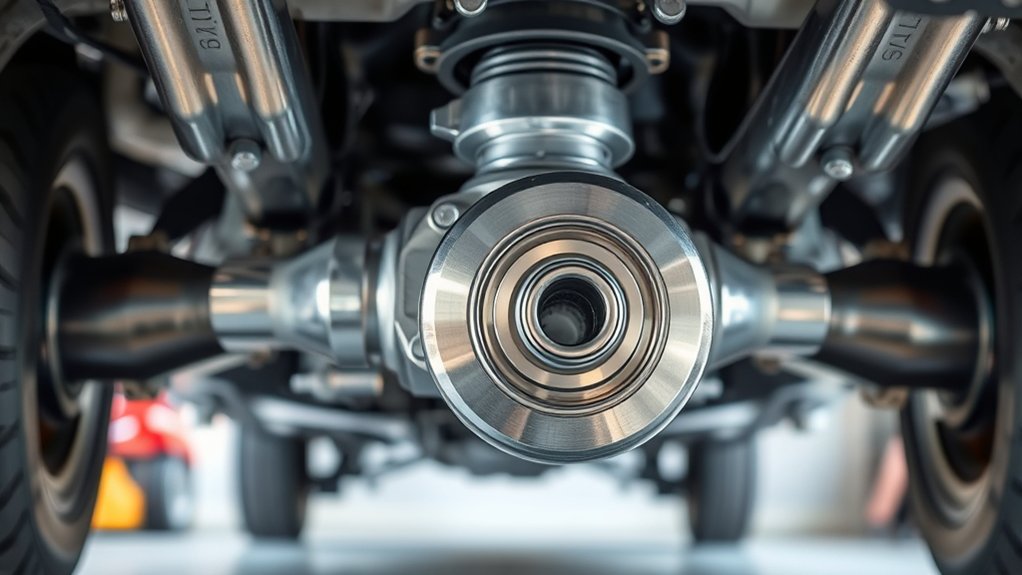
A vehicle axle is a crucial component that connects your wheels and supports your vehicle’s weight. It also transfers power from the engine to the wheels, helping you move smoothly and efficiently.
Understanding what a vehicle axle is and how it functions is essential for maintaining your vehicle’s performance.
The axle plays a key role in maintaining balance, stability, and handling while you drive. It works closely with your suspension system to absorb shocks and keep control on uneven roads.
This teamwork ensures a more comfortable and safer driving experience.
Knowing the different types of axles, the materials used, and recognizing signs of wear can help you keep your axles in top shape. Proper axle maintenance guarantees safer rides and prolongs the life of your vehicle.
Key Takeaways
- A vehicle axle connects wheels and supports the vehicle’s weight during movement.
- It transfers power from the engine to the wheels for acceleration and speed.
- Axles work with the suspension system to absorb shocks and maintain control.
- They ensure proper wheel rotation, vehicle stability, and safety while driving.
- Different types of axles include live, dead, and stub axles, each serving specific functions.
What a Vehicle Axle Is and Why It’s Important
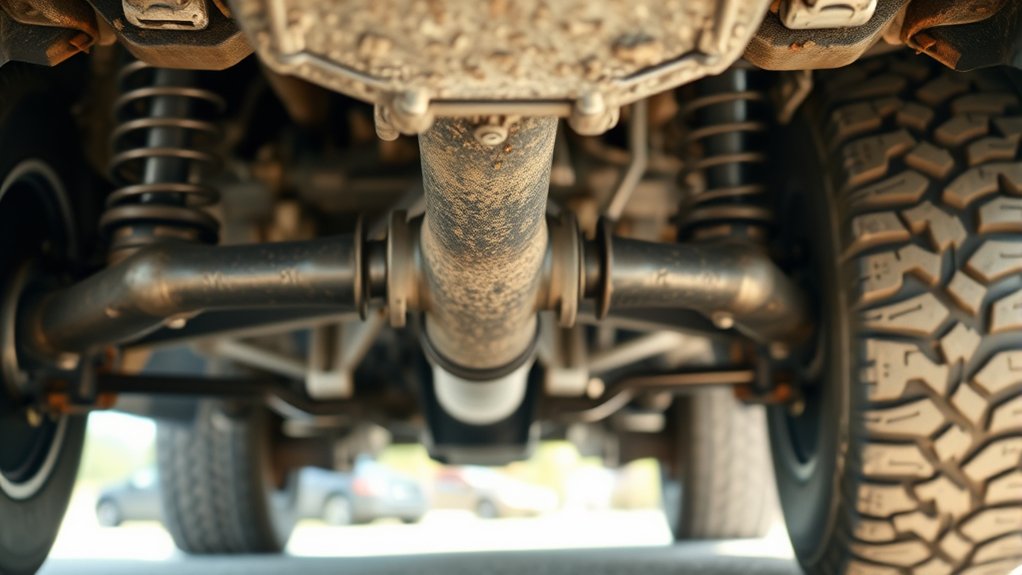
Although you might not always notice it, a vehicle axle plays an essential role in your vehicle’s performance by connecting the wheels and supporting the weight of the car. It’s a central shaft that allows the wheels to rotate smoothly while keeping them aligned properly. Without it, your car couldn’t move in a controlled way.
The axle also helps transfer power from the engine to the wheels, enabling your vehicle to accelerate and maintain speed. When you turn or drive over uneven surfaces, the axle absorbs some of the stress, ensuring stability and safety.
Understanding this part helps you appreciate how critical it is for your vehicle’s handling, durability, and overall driving experience.
How Vehicle Axles Carry Your Vehicle’s Weight
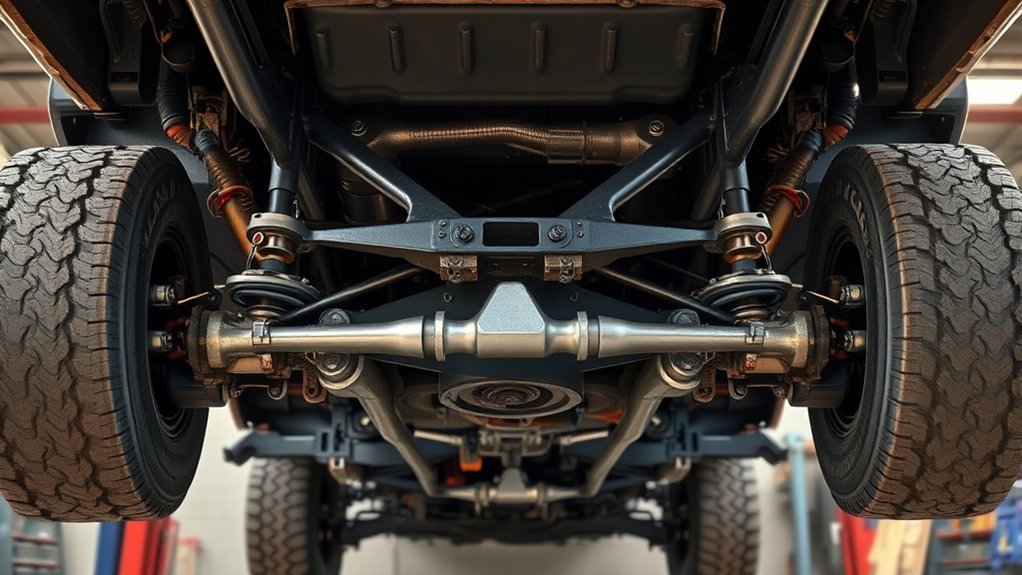
You rely on your vehicle’s axles to evenly distribute its weight across the wheels, keeping everything balanced. They act as a critical support system, handling the load from the frame and body.
Understanding this weight support mechanism helps you appreciate how axles keep your ride stable and safe.
Axle Load Distribution
How does your vehicle’s weight get shared across its axles? Each axle carries a portion of the total load, depending on your vehicle’s design, cargo, and passenger distribution. When you load your vehicle unevenly, one axle might bear more weight, affecting handling and tire wear.
Manufacturers design vehicles so the front and rear axles share the weight within safe limits, optimizing performance and safety. You can check axle load distribution by measuring the weight each axle supports, especially if you haul heavy cargo. Properly balanced axle loads help maintain stability, improve braking, and extend tire life.
Keeping this balance in mind ensures your vehicle operates smoothly and safely on the road.
Weight Support Mechanism
Ever wondered what actually holds your vehicle up as it moves down the road? The axle is the key player in the weight support mechanism. It carries the vehicle’s weight by transferring loads from the chassis to the wheels, ensuring stability and balance.
The axle must be strong enough to handle the combined weight of the vehicle, passengers, and cargo while absorbing shocks and stresses from uneven surfaces.
Here’s a simple breakdown of how the axle supports weight:
| Component | Function |
|---|---|
| Axle Shaft | Transfers weight to the wheels |
| Bearings | Reduce friction and support load |
| Suspension Mounts | Connect axle to vehicle frame |
| Wheels | Distribute load to the road |
Together, these parts carry your vehicle safely wherever you go.
The Different Types of Vehicle Axles
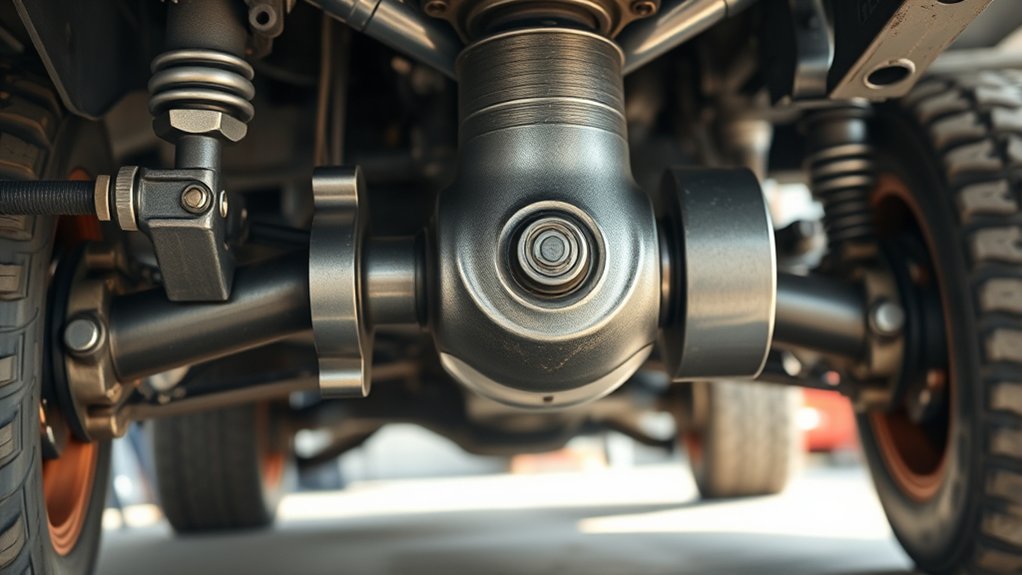
What sets different vehicle axles apart? It’s how they handle weight, movement, and power that makes each unique. When you understand these types, you’ll appreciate how your vehicle stays balanced and responsive.
- Live Axle – This one moves with the wheels, delivering power while supporting weight. It’s tough and straightforward, ideal if you want durability.
- Dead Axle – It doesn’t transmit power but carries weight. You’ll find these on trailers or some heavy-duty vehicles, providing stability.
- Stub Axle – Small and crucial, it connects the wheels to the suspension. Without it, your steering would struggle, and your ride wouldn’t be smooth.
Knowing these types helps you see how your vehicle’s foundation works hard so you can drive safely.
How Front and Rear Vehicle Axles Differ
Although both front and rear axles support your vehicle, they serve distinct roles that affect handling and power delivery. The front axle often handles steering and, in many vehicles, carries the weight of the engine, influencing your car’s balance and maneuverability. It allows your wheels to pivot, helping you navigate turns smoothly.
On the other hand, the rear axle primarily delivers power from the engine to the wheels, propelling your vehicle forward. In rear-wheel-drive setups, it’s responsible for traction and acceleration. You’ll also find that front axles tend to be more complex due to their steering function, while rear axles focus on strength and durability.
Understanding these differences helps you appreciate how your vehicle manages control and power on the road.
What Vehicle Axles Are Made Of
Vehicle axles typically consist of strong metals like steel or aluminum alloys, chosen to withstand the immense forces they face during driving. These materials guarantee durability and safety, so you can trust your vehicle’s performance. When you think about axles, consider these key materials:
- Steel: Known for its toughness and resistance to wear, steel is often used in heavy-duty vehicles. It keeps you steady on rough roads.
- Aluminum Alloys: Lightweight yet strong, aluminum alloys help improve fuel efficiency without compromising strength.
- Carbon Steel: Offers a great balance of strength and flexibility, giving you reliable handling in various conditions.
How Vehicle Axles Connect Wheels and Transmit Power
How exactly do axles connect wheels and transmit power? When you look at a vehicle, the axle serves as the essential link between the wheels and the drivetrain. It physically holds the wheels in place, allowing them to rotate smoothly.
At the same time, axles transfer torque from the engine or motor through the transmission and differential to the wheels, making the vehicle move. This power transfer happens via the axle shafts, which spin inside the axle housing. As the engine generates rotational force, the axle shafts carry that force to the wheels, causing them to turn.
Without this connection, your vehicle wouldn’t be able to move forward or backward effectively, highlighting the axle’s critical role in both wheel attachment and power transmission.
How Axle Design Influences Vehicle Stability and Handling
You’ll notice that axle geometry plays a key role in how your vehicle handles turns and maintains balance. Proper load distribution across the axles also affects stability, especially during acceleration and braking.
Understanding these factors helps you appreciate how axle design keeps your ride safe and smooth.
Axle Geometry Effects
Why does axle geometry play such a crucial role in your driving experience? Because the way an axle is designed directly shapes how your vehicle handles, responds, and feels on the road. When axle angles, widths, and positions are optimized, you enjoy better control, stability, and safety.
Here are three key ways axle geometry impacts you:
- Steering Precision – Correct axle alignment ensures your steering feels responsive, making turns smoother and more predictable.
- Cornering Stability – Properly set axle angles reduce body roll, boosting your confidence when steering through curves at speed.
- Ride Comfort – Balanced axle placement helps absorb shocks from uneven surfaces, so you experience fewer jolts and bumps.
In short, axle geometry isn’t just mechanical—it’s fundamental to how your vehicle connects with the road and you.
Load Distribution Impact
Where does your vehicle’s stability really begin? It starts with how the axle distributes the load across the wheels. When an axle is designed to evenly spread weight, it helps your vehicle maintain balance, especially during turns or sudden stops.
Uneven load distribution can cause one side to bear more weight, leading to poor handling and increased tire wear. By optimizing axle placement and strength, manufacturers guarantee your vehicle responds predictably, giving you better control on the road. This design directly impacts how your vehicle feels when accelerating, braking, or cornering.
Why Vehicle Axles Fail and How to Avoid It
Although vehicle axles are built to withstand heavy loads and rough conditions, they can still fail if neglected or misused. You might not realize it, but improper maintenance or harsh driving habits take a toll on your axles.
To keep them in top shape, focus on these key areas:
- Avoid Overloading: Putting excessive weight on your vehicle stresses the axles beyond their limit, leading to cracks or breaks.
- Maintain Proper Tire Pressure: Incorrect tire pressure causes uneven load distribution, increasing axle wear.
- Regular Inspections and Lubrication: Skipping routine checks and lubrication can cause parts to seize or wear prematurely.
Signs Your Vehicle Axle Might Be Damaged
You might notice unusual vibrations while driving or hear clicking noises during turns, both of which can signal axle trouble. Sometimes, visible damage on the axle itself is a clear warning sign.
Paying attention to these symptoms can help you catch issues early before they get worse.
Unusual Vibrations While Driving
If your vehicle starts shaking or vibrating while driving, it’s a clear warning sign that your axle might be damaged. Ignoring this can lead to serious safety risks and costly repairs. You need to pay attention and act fast.
Here are three reasons why unusual vibrations matter:
- Loss of control: Damaged axles can affect your steering, making it harder to keep the vehicle steady.
- Increased wear: Vibrations put extra stress on tires and suspension, leading to quicker deterioration.
- Safety hazard: A failing axle might break completely, causing accidents or breakdowns.
If you notice these vibrations, get your vehicle inspected immediately. Don’t wait until it’s too late—your safety depends on it.
Clicking Noises During Turns
When does a simple turn become a cause for concern? If you hear clicking noises while turning, your vehicle axle might be the culprit. These sounds often indicate worn or damaged CV joints, which connect the axle to the wheels and allow for smooth rotation during turns.
Ignoring this clicking can lead to more severe damage, affecting your car’s handling and safety. You’ll likely notice the noise intensifies when making sharp turns or accelerating. Don’t wait—get your vehicle inspected promptly if you experience this symptom.
Addressing clicking noises early can prevent costly repairs and keep your drives safe and quiet. Remember, your axle’s health directly impacts your vehicle’s performance, so staying alert to these signs is vital.
Visible Axle Damage
Clicking noises during turns often signal underlying issues, but sometimes the signs are easier to spot with the naked eye. If you notice visible axle damage, don’t ignore it—it can compromise your safety.
Here are three clear signs your axle might be damaged:
- Bent or twisted axle shaft: If you see any bends or twists, your axle’s integrity is compromised and needs immediate attention.
- Leaking grease or fluid: Grease leaking from the axle boot means the protective cover is torn, exposing the joint to dirt and moisture.
- Cracked or torn CV boots: These boots protect the axle joint; damage here can lead to joint failure.
Spotting these signs early can save you from costly repairs and keep your vehicle safe to drive.
How Axles Work With Suspension and Drive Systems
How do axles interact with suspension and drive systems to keep your vehicle stable and moving smoothly? Axles serve as a critical link, transferring power from the engine through the drive system to the wheels while working with suspension to absorb shocks and maintain control. They guarantee your wheels rotate properly and adapt to road conditions.
| System | Role of Axle |
|---|---|
| Suspension | Supports weight, absorbs bumps, maintains wheel contact |
| Drive System | Transmits engine power to wheels, enables movement |
| Stability Control | Helps balance and control during turns and braking |
How to Maintain Your Vehicle Axle for Longevity
To keep your vehicle axle functioning smoothly and extend its lifespan, you need to perform regular maintenance checks and address issues promptly. Neglecting your axle can lead to costly repairs and unsafe driving conditions, so staying proactive is key.
Here are three essential steps to maintain your axle:
1. Inspect for Leaks and Damage Regularly
Check the axle seals and boots for cracks or leaks. Catching these early prevents dirt and moisture from causing wear.
2. Keep the Axle Lubricated
Ensure the axle’s grease and oil levels are adequate. Proper lubrication reduces friction and heat, protecting moving parts.
3. Monitor Unusual Noises or Vibrations
If you hear grinding or notice vibrations, have your axle checked immediately. Early detection saves you from bigger problems down the road.
When and Why You Should Replace a Vehicle Axle
Although axles are built to last, you’ll need to replace them if they show signs of severe wear or damage. Pay attention to symptoms like clicking noises when turning, vibrations during driving, or grease leaking from the axle boots. These issues indicate the axle’s integrity is compromised, affecting your vehicle’s safety and performance.
Ignoring these signs can lead to more serious problems, such as loss of control or further damage to the drivetrain. If you experience difficulty steering or uneven tire wear, it’s time to have your axle inspected. Timely replacement prevents costly repairs and ensures your vehicle runs smoothly.
Always consult a trusted mechanic to diagnose and replace a faulty axle correctly.
Frequently Asked Questions
Can I Upgrade My Vehicle Axle for Better Performance?
Yes, you can upgrade your vehicle axle for better performance. Upgrading to stronger or lightweight axles improves durability and handling, especially for off-road or high-power applications.
Just make sure the new axle fits your vehicle properly.
How Do Axle Types Affect Fuel Efficiency?
Just like choosing the right shoes for a marathon, your axle type shapes fuel efficiency. Lighter, well-designed axles reduce drag and rolling resistance, helping your engine breathe easier and sip less fuel on every journey you take.
Are Axle Repairs Covered Under Vehicle Warranties?
Axle repairs are sometimes covered under your vehicle’s warranty, especially if it’s a powertrain or bumper-to-bumper warranty. Always check your specific warranty terms, since coverage varies by manufacturer and warranty type.
What Tools Are Needed to Replace a Vehicle Axle?
Imagine Jake needing an axle swap; you’ll need a jack, socket set, breaker bar, torque wrench, and pry bar. These tools help you safely lift, remove, and install the axle without damaging your vehicle or yourself.
Can Axle Issues Cause Uneven Tire Wear?
Yes, axle issues can cause uneven tire wear because a bent or damaged axle affects wheel alignment and balance. If you notice uneven wear, inspect the axle and fix any problems promptly to avoid further damage.
Conclusion
Now that you know what a vehicle axle does, you might wonder if it’s really that important. The truth is, without a strong axle, your vehicle can’t carry weight, steer properly, or deliver power to the wheels.
So, if you ignore axle maintenance, you risk costly damage and unsafe driving. Keep an eye out for signs of wear and replace axles when needed—your safety and your car’s performance depend on it.
Regular axle inspection and maintenance are essential for vehicle safety and optimal performance. Ensuring your axles are in good condition helps prevent breakdowns and extends the life of your vehicle. Don’t overlook the importance of a reliable vehicle axle for smooth and safe driving.

