

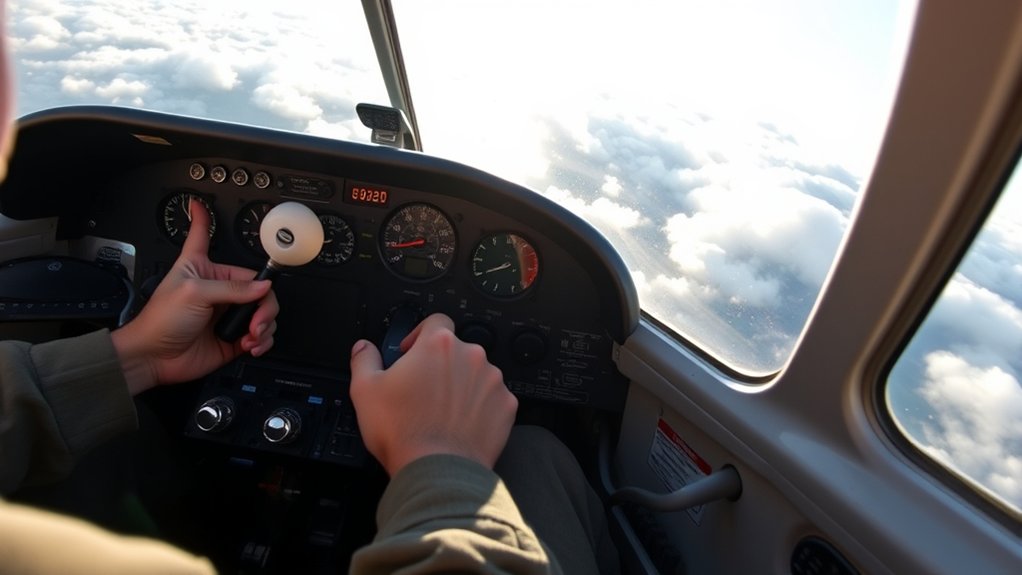
You should retract your gear only after confirming a positive rate of climb and stable airspeed within your aircraft’s safe limits. Ensuring these conditions is crucial in complex airplane operations for safe and efficient gear retraction.
Make sure you’re above the recommended altitude and have cleared all obstacles before moving the gear handle smoothly and confidently.
Always follow your aircraft’s checklist, monitor gear indicator lights closely, and keep an eye on engine performance during the process.
Avoid retracting gear in turbulence or unstable flight.
Keep practicing regularly to build confidence and master the procedure – there’s more to know for safe, efficient gear retraction.
Key Takeaways
- Confirm a positive climb rate and stable, obstacle-free flight before retracting gear.
- Ensure airspeed is above stall speed but below maximum gear operating speed (V_LO).
- Verify gear position indicators show the gear is fully extended prior to retraction.
- Follow the aircraft’s checklist and manual procedures precisely for gear retraction.
- Retract gear smoothly only after reaching the recommended safe altitude for aerodynamic efficiency.
Know When to Retract Gear After Takeoff

Although it might be tempting to retract the landing gear immediately after takeoff, you should wait until you’ve reached a safe altitude and confirmed a positive rate of climb. Retracting the gear too soon can risk ground clearance and may compromise safety.
Typically, you’ll want to maintain a stable climb and verify obstacles are cleared before pulling the gear up. Keep in mind that different aircraft have varying procedures, so always consult your specific aircraft’s manual. Waiting also reduces drag more efficiently since you’re climbing steadily.
Once you hit the recommended altitude, you can safely retract the gear to improve aerodynamic performance. Staying patient during this phase helps maintain control and guarantees a smooth progression to cruise. Remember, timing is vital for a safe and efficient climb-out.
Make Sure You Have a Positive Rate of Climb
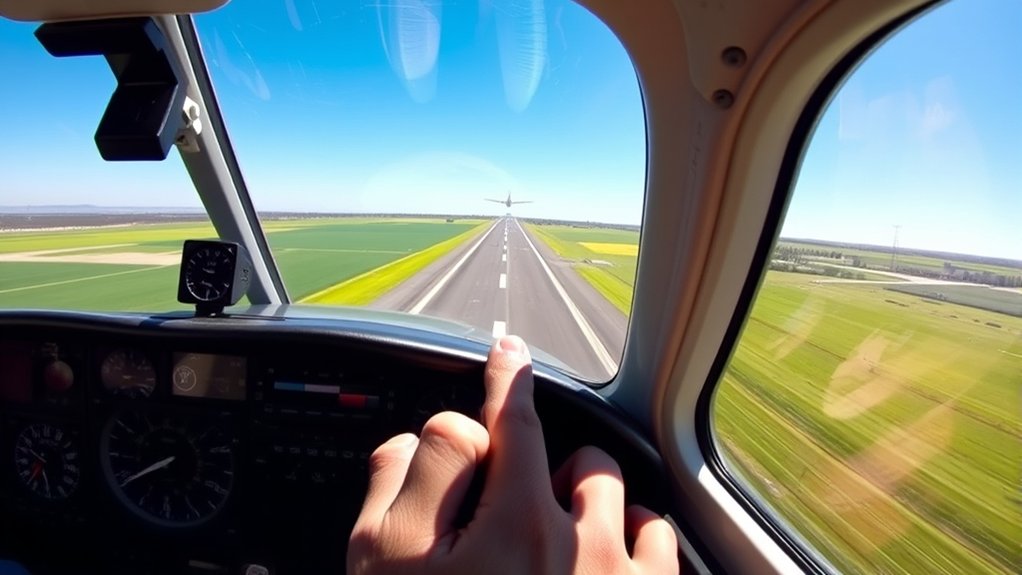
Before retracting the gear, make certain you have a positive rate of climb by confirming your climb indicator shows an upward trend. Keep a close eye on your vertical speed indicator to guarantee you’re gaining altitude steadily.
Also, verify your attitude indicator reflects the proper nose-up position for a safe ascent.
Confirm Climb Indicator Positive
How can you be sure it’s safe to retract the landing gear? You need to confirm the climb indicator shows a positive rate of climb. This means your airplane is ascending, not descending, ensuring safe gear retraction without risking a loss of altitude.
To confidently confirm a positive climb rate, you should:
- Check the attitude indicator for a nose-up pitch.
- Observe the vertical speed indicator briefly for upward movement.
- Verify the altimeter shows increasing altitude.
- Listen for stable engine sounds indicating steady power.
- Feel for the airplane’s natural upward motion.
Only after these checks will you know the climb is positive, making it safe to retract your gear without compromising flight safety.
Monitor Vertical Speed Indicator
When you monitor the vertical speed indicator, you’ll confirm that your airplane is indeed climbing at a positive rate. This step is essential before retracting the gear to make sure you have enough altitude and avoid settling back toward the runway. Watch for a steady upward trend on the VSI—typically a positive number indicating feet per minute climbing.
If the indicator shows zero or negative, don’t retract the gear yet; maintain your current configuration and adjust your pitch or power settings until you establish a positive climb. Keeping a close eye on the VSI helps you maintain safe control during this critical phase. Only once you’re confident in your positive rate should you proceed with retracting the landing gear.
Verify Attitude Indicator Position
Although you’ve confirmed a positive rate of climb on the vertical speed indicator, you should also verify the attitude indicator position to make sure your airplane’s nose is properly pitched for a safe ascent. This helps validate you’re truly climbing and not just gaining altitude momentarily.
When checking the attitude indicator, focus on these key points:
- Confirm the nose is slightly above the horizon line.
- Avoid excessive pitch that could cause a stall.
- Keep wings level to maintain coordinated flight.
- Cross-check with airspeed to prevent a slow climb.
- Adjust your pitch smoothly if the attitude indicator shows incorrect positioning.
Check Your Airspeed Before Retracting Gear
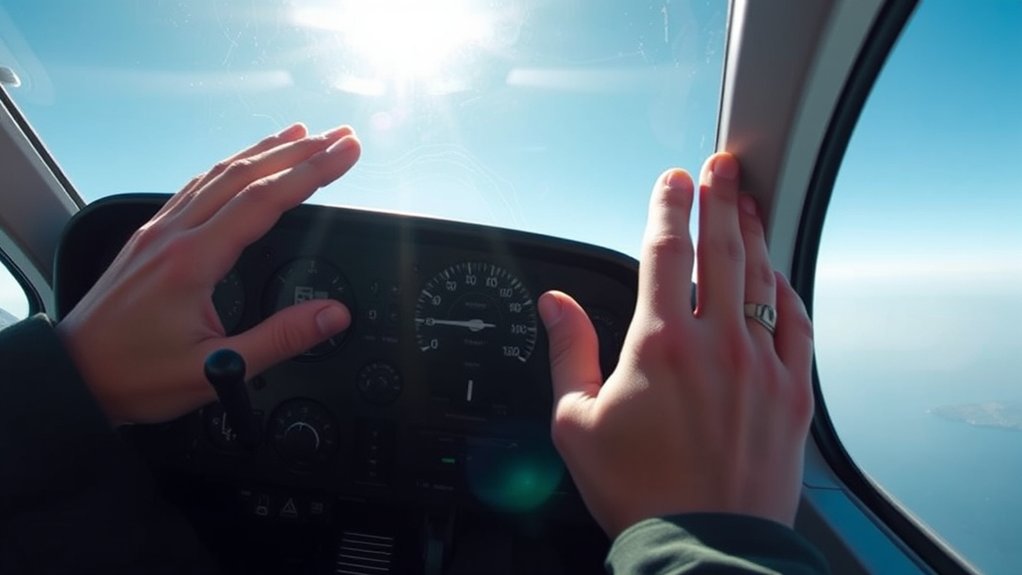
Before you retract your gear, always check your airspeed to stay within safe limits. You don’t want to risk stalling or damaging the gear by going too slow or too fast.
Knowing your aircraft’s stall speed and gear speed limits keeps your flight smooth and safe.
Importance Of Safe Speed
Why does checking your airspeed matter before retracting the landing gear? Because flying at the right speed ensures smooth gear operation and protects your aircraft. Retracting gear too fast or too slow can cause mechanical stress or unsafe flight conditions.
You want to keep your airplane stable and avoid unnecessary risks.
Here’s why maintaining a safe speed is crucial:
- Prevents damage to the landing gear mechanism
- Ensures smooth hydraulic or electric gear retraction
- Helps maintain aircraft stability during gear transition
- Avoids sudden altitude or attitude changes
- Keeps you within the aircraft’s recommended operating limits
Always confirm your airspeed is within the safe range before retracting the gear to keep your flight safe and your plane in top shape.
Stall Speed Awareness
How close is your airspeed to the stall speed when you’re about to retract the landing gear? You need to be certain that your airspeed is well above the stall speed before you pull the gear up. Retracting gear at or near stall speed risks a sudden loss of lift, which can lead to an unintended stall.
Always check your airspeed indicator carefully and confirm you’re safely above the stall threshold for your aircraft’s current configuration, weight, and altitude. Remember, stall speed increases when you raise the gear because you lose the extra lift generated by the extended gear. Keep this in mind to avoid surprises.
Staying aware of stall speed guarantees a smooth, safe changeover to clean flight without compromising control or safety.
Speed Limits For Gear
Keeping your airspeed well above stall speed is just one part of safely retracting your landing gear. You also need to respect the maximum gear operating speed (V_LO) and the gear extended speed (V_LE) to prevent damage. Always check your airspeed before retracting the gear to avoid stressing the system.
Here are key points to remember:
- Never retract gear above V_LO to prevent mechanical failure.
- Don’t extend gear above V_LE; it can cause structural damage.
- Monitor airspeed closely during climb and descent phases.
- Use your aircraft’s POH for exact speed limits.
- Adjust power and pitch to maintain safe speeds when retracting or extending gear.
Retract Gear Only Above Safe Altitude Limits
When should you retract your airplane’s landing gear to guarantee safety? You should only retract it once you’ve climbed above the safe altitude limits specified in your aircraft’s manual. Retracting gear too low can be risky because you might not have enough altitude to recover if something goes wrong.
Staying above these limits ensures you have sufficient clearance and time to handle any unexpected issues. Additionally, retracting the gear prematurely can disrupt your airplane’s stability and performance during critical phases of flight. Always verify your altitude before gear retraction to avoid compromising safety.
Use Your Aircraft’s Landing Gear Checklist
Before you retract or extend your landing gear, you should always follow your aircraft’s specific landing gear checklist. This guarantees you don’t miss any critical steps and keeps your flight safe and smooth. Each plane has unique systems and indicators, so relying on the checklist helps you confirm everything is ready before moving the gear.
Key items to check include:
- Verify the gear handle is in the correct position.
- Confirm hydraulic pressure is adequate for gear operation.
- Check gear position indicators for proper status.
- Ensure no warning lights or alarms related to the gear are active.
- Confirm your airspeed and altitude meet the safe operating limits for gear movement.
Sticking to this checklist minimizes risks and helps you maintain control during gear shifts.
Use the Gear Handle Smoothly and Confidently
Although retracting or extending the landing gear might seem straightforward, you need to move the gear handle smoothly and confidently to avoid stressing the mechanical system or triggering false alarms. Jerky or hesitant movements can cause unnecessary wear or interrupt hydraulic pressure, risking gear malfunction.
Trust the system and make deliberate, steady motions. This helps maintain system integrity and guarantees a safe transition.
| Action | Reason | Result |
|---|---|---|
| Smooth motion | Prevents mechanical stress | Longer gear system life |
| Confident move | Avoids false alarms | Reliable gear operation |
| Steady speed | Maintains hydraulic pressure | Proper gear retraction |
| Avoid hesitation | Reduces system strain | Fewer maintenance issues |
| Trust the system | Ensures proper function | Safe flight operations |
Check Gear Retraction Indicators Closely
You need to monitor the gear retraction indicator lights carefully during the process. Make sure the lights confirm the gear is fully retracted or extended as expected.
Verifying the gear position helps prevent any surprises during flight.
Monitor Indicator Lights
How can you be sure the landing gear is retracting properly? You need to monitor the indicator lights on your control panel carefully. These lights give you immediate feedback on gear status, so don’t take your eyes off them during retraction.
Pay close attention to:
- Gear down lights turning off promptly
- Gear up lights illuminating steadily
- Any warning or caution lights activating unexpectedly
- Consistency between left, right, and nose gear indicators
- Flickering or delayed light changes indicating a potential issue
Verify Gear Position
Where exactly is your landing gear during retraction? You need to verify its position by closely checking the gear retraction indicators. These indicators give you real-time status to confirm the gear is fully up or down.
Don’t rely solely on the initial command; always monitor the position until the indicator confirms completion. Missing this step could lead to unsafe flight conditions.
Here’s a quick reference for indicator meanings:
| Indicator Light Color | Gear Status |
|---|---|
| Green | Gear fully extended |
| Red | Gear in transit |
| Off | Gear fully retracted |
Monitor Engine Performance During Retraction
Although retracting the landing gear is a routine procedure, you need to closely monitor engine performance during this phase to catch any irregularities early. Sudden changes can indicate mechanical issues or increased drag affecting engine workload. Keep a sharp eye on your instruments to guarantee a smooth shift.
Retract landing gear carefully while monitoring engine instruments for any sudden performance changes.
Focus on these key engine parameters:
- RPM consistency to detect power fluctuations
- Oil pressure for signs of mechanical stress
- Engine temperature to avoid overheating
- Fuel flow rate to confirm efficient consumption
- Torque or thrust levels to identify abnormal loads
Avoid Retracting Gear in Turbulence or Unstable Flight
When you encounter turbulence or unstable flight conditions, resist the urge to retract the landing gear immediately. Retracting gear in these moments can worsen aircraft instability, making control more difficult. The gear adds drag and weight distribution that helps stabilize the plane; removing it too soon may cause unexpected pitch or roll changes.
Wait until the aircraft is in smooth, steady flight before initiating gear retraction. This approach reduces stress on the landing gear mechanism and avoids sudden shifts in the airplane’s balance. Prioritize maintaining control and ensuring a stable flight path over speeding up gear retraction.
Practice Retracting Gear Regularly to Build Confidence
To handle gear retraction smoothly, you should practice it regularly until you build confidence in the procedure. Consistent practice helps you react quickly and correctly, especially under pressure. The more you repeat the steps, the more natural it feels, reducing hesitation and errors.
Here’s how to enhance your gear retraction skills:
- Simulate different flight conditions during practice sessions
- Use a checklist every time to reinforce proper sequence
- Practice in a flight simulator to experience realistic scenarios
- Time yourself to improve speed without sacrificing accuracy
- Review and analyze your technique after each session
Frequently Asked Questions
What Should I Do if the Landing Gear Fails to Retract?
If your landing gear fails to retract, you should troubleshoot the gear system, check circuit breakers, and try the emergency gear extension.
Prepare for a possible gear-down landing while communicating your situation to ATC for assistance.
How Does Retracting Gear Affect Fuel Efficiency?
Retracting your gear can improve fuel efficiency by up to 10% because it reduces drag. So, you’ll save fuel and extend your flight range by keeping the gear up once you’re safely airborne and stable.
Can Retracting Gear Cause Damage During Emergency Landings?
Yes, retracting gear during emergency landings can cause damage if the gear doesn’t deploy properly or if the surface is rough.
You should prioritize safety and follow emergency procedures to minimize risks and protect the aircraft.
What Are Common Signs of Landing Gear Malfunction?
You’ll notice warning lights, unusual noises, or the gear not locking properly. The handle might feel loose or stuck, and the aircraft could pull to one side during taxi or landing.
Trust your instruments and stay alert.
How Do Different Airplane Models Vary in Gear Retraction Procedures?
You’ll notice gear retraction varies like shifting gears in a dance—some planes need a gentle pause after liftoff, others retract immediately.
Your cockpit’s controls and speed limits dictate when and how you safely tuck those wheels away.
Conclusion
As you lift off and feel the wheels leave the runway, imagine the smooth hum of your engines and the steady climb ahead. Retracting your gear isn’t just a checklist item—it’s a dance with your aircraft, a moment to trust your instruments and your skills. Keep your eyes sharp, your hands steady, and practice often.
With each climb, you’ll glide higher and fly smarter, turning every takeoff into a confident, seamless journey. Remember, knowing when to retract gear in complex airplane operations is essential for safe and efficient flight. Master these 10 essential steps to ensure your takeoffs are smooth and your flights are successful.

