

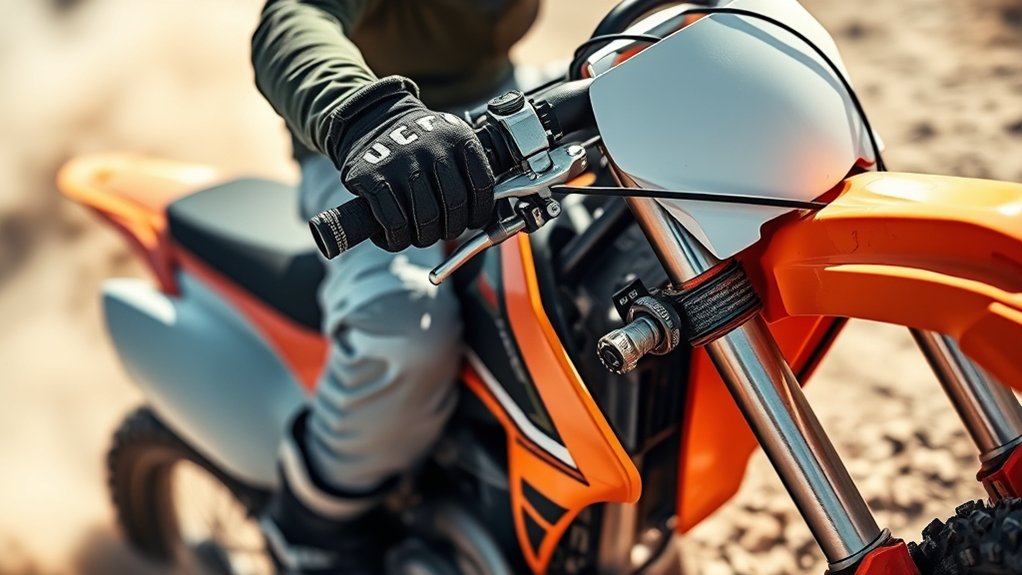
To ride a dirt bike with a clutch, start by ensuring it’s in neutral, pull in the clutch fully, and start the engine smoothly. Learning how to ride a dirt bike with a clutch is essential for better control and smoother gear transitions. This skill helps you handle the bike confidently on various terrains and improves your overall riding experience.
Next, shift gears by pulling the clutch, selecting the right gear, and releasing it gradually while coordinating throttle. Use the clutch to control your speed and power, especially on tricky terrain.
When stopping, ease off throttle, pull in the clutch, brake carefully, and park securely.
Mastering these basics sets the foundation—keep going to improve your control and confidence. Practice regularly to enhance your clutch control and enjoy a safer, more enjoyable ride.
Key Takeaways
- Start the bike in neutral, fully pull in the clutch, then use the electric start or kick-start while keeping the clutch engaged.
- Slowly release the clutch to engage power once the engine runs smoothly, coordinating throttle to prevent stalling or jerks.
- Pull in the clutch gently before shifting gears, smoothly tap the gear lever, and gradually release the clutch while rolling on throttle.
- Manage speed by modulating the clutch and throttle together, using partial clutch pull to control power during turns or tricky terrain.
- Stop by easing off throttle, pulling in the clutch, applying brakes front then rear, downshifting smoothly, and shifting to neutral before parking.
Start a Dirt Bike Using the Clutch
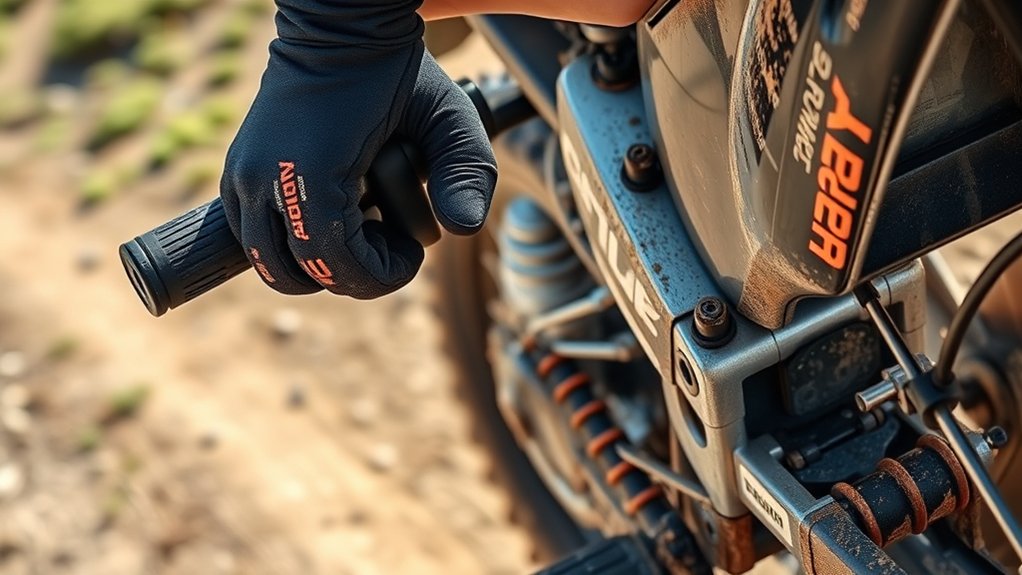
Before you can hit the trails, you need to start your dirt bike using the clutch properly. First, make sure the bike is in neutral to prevent it from lurching forward. Pull in the clutch lever fully with your left hand—this disengages the engine from the transmission.
Next, turn the ignition on and press the electric start button or kick-start the bike, depending on your model. Keep the clutch pulled in while the engine fires up to avoid sudden movement. Once the engine is running smoothly, you can slowly release the clutch lever to engage the bike’s power.
Mastering this step guarantees you start safely and control the bike’s motion right from the beginning, setting you up for a confident ride.
Shift Dirt Bike Gears Smoothly With the Clutch
To shift gears smoothly, you need to master clutch control and time your shifts just right. Coordinating the throttle with the clutch helps prevent jerky movements and keeps your ride steady.
Let’s break down how to sync these actions for a seamless gear change.
Clutch Control Basics
When you master clutch control, shifting gears on your dirt bike becomes smooth and precise, preventing jerks and stalling. Start by gently pulling the clutch lever all the way in before you shift. This disengages the engine from the transmission, letting you change gears without grinding.
As you release the clutch, do it slowly and steadily—this helps re-engage the engine smoothly. Don’t let go too fast; otherwise, you’ll feel a sudden jerk or risk stalling. Practice feathering the clutch, where you partially release the lever to find the friction zone, giving you better control especially at low speeds.
Keep your hand relaxed on the lever to avoid fatigue. With consistent practice, clutch control will feel natural and keep your rides fluid and safe.
Timing Gear Shifts
Mastering clutch control sets the stage for smooth gear shifts, but timing your shifts correctly is just as important. When you want to change gears, wait until the engine RPMs drop slightly or rise to an appropriate range before pulling in the clutch. Shifting too early or too late can cause jerks or strain on the transmission.
As you pull the clutch, smoothly tap the gear lever to the next gear. Don’t rush—give the bike a moment to respond. Once shifted, gradually release the clutch to re-engage the power.
Practice feeling the sweet spot where the engine’s speed matches the gear you select. Over time, this timing becomes instinctive, helping you ride more efficiently and prolong your bike’s lifespan.
Smooth Throttle Coordination
Although clutch control and timing are essential, coordinating your throttle smoothly during gear shifts is what really keeps your ride fluid and controlled. As you pull in the clutch to shift, gently roll off the throttle to reduce engine power without causing a sudden drop in RPM. Once you’ve shifted gears, smoothly roll the throttle back on while gradually releasing the clutch.
This balance prevents jerks and keeps the power delivery consistent. Avoid snapping the throttle open or closing it abruptly, as this can upset your bike’s stability. Practicing this coordination helps you maintain momentum and control, especially on rough terrain.
Use the Clutch to Manage Speed and Power
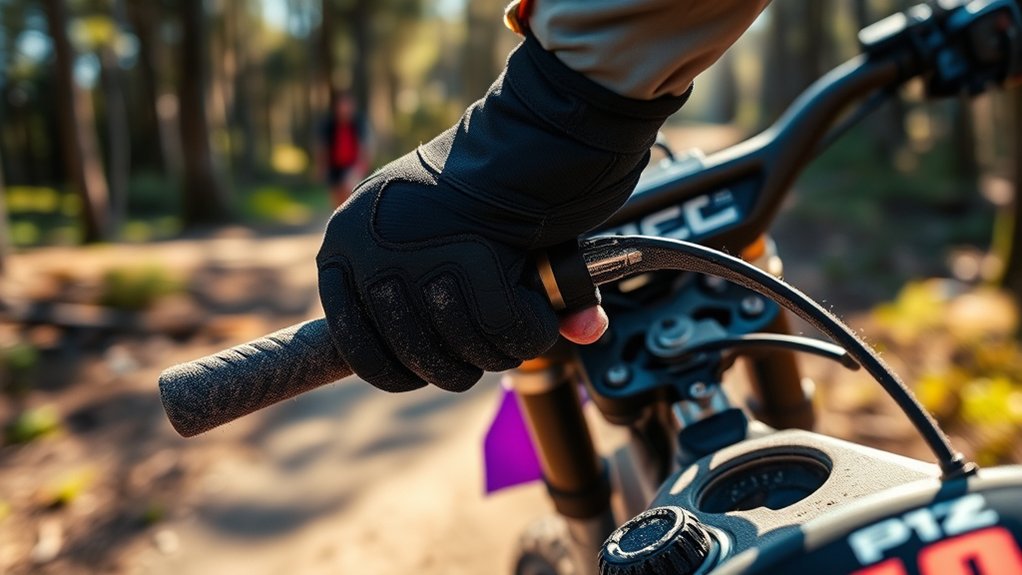
Since controlling your bike’s speed and power is essential for smooth riding, you’ll need to use the clutch thoughtfully. When you want to accelerate, gently release the clutch while smoothly twisting the throttle to deliver power without jerking.
To reduce speed without braking harshly, partially pull in the clutch lever, which lets you feather the power and maintain control. On tricky terrain or tight turns, modulating the clutch helps you keep the engine engaged without stalling.
Stop and Park Your Dirt Bike Safely
When you’re ready to stop, ease off the throttle and pull in the clutch lever smoothly to prevent the engine from stalling. Apply the brakes gradually, front first, then rear, to slow down safely. As your speed drops, downshift through the gears by releasing the clutch slowly while engaging each lower gear.
Once you reach a complete stop, keep the clutch pulled in and shift into neutral. This prevents the bike from moving unexpectedly. Set the kickstand down firmly and confirm the bike is stable before releasing the clutch.
Always park on level ground or slightly uphill to avoid rolling. Double-check that the engine is off and the bike is secure before walking away. Stopping and parking carefully keeps your dirt bike ready for the next ride and ensures your safety.
Avoid These Common Clutch Mistakes
Don’t overuse the clutch or you’ll wear it out faster than you expect. You’ve got to time your clutch release just right to keep your ride smooth and controlled.
Avoiding these common mistakes will make you a better dirt bike rider in no time.
Overusing The Clutch
Although the clutch is essential for controlling your dirt bike, overusing it can lead to unnecessary wear and reduced performance. If you find yourself riding with the clutch partially engaged for extended periods, you’re putting extra strain on the clutch plates. This causes overheating and faster deterioration, which means more frequent repairs and replacements.
Instead, focus on using the clutch only when necessary—like during gear shifts or starting from a stop. Avoid holding the clutch in while idling or coasting, as this wastes energy and damages parts. Mastering smooth engagement and disengagement helps you maintain control without over-relying on the clutch.
Improper Clutch Release Timing
If you release the clutch too quickly or too slowly, you risk losing control and stalling your dirt bike. Timing your clutch release correctly is essential for smooth riding. When you let the clutch out too fast, the bike jerks forward abruptly, making it hard to maintain balance and causing unnecessary wear on the drivetrain.
Conversely, releasing it too slowly causes the engine to lug, wasting power and increasing clutch wear. To avoid these issues, focus on finding the friction zone—the point where the clutch plates begin to engage. Practice easing off the clutch smoothly while applying steady throttle.
This balance lets the bike move forward without jerking or stalling, giving you better control and a more enjoyable ride every time you hit the trail.
Dirt Bike Clutch Basics and Controls Explained
Before you start riding, you need to understand how the clutch works and where its controls are located on your dirt bike. The clutch connects and disconnects the engine’s power to the wheels, letting you smoothly change gears and control speed. You’ll find the clutch lever on the left handlebar, which you pull in to disengage the clutch.
Here are the basics to keep in mind:
- Pull the lever to disengage the clutch, allowing you to shift gears without damaging the transmission.
- Slowly release the lever to re-engage the clutch and transfer power to the wheels.
- Use the clutch for smooth starts, stops, and gear changes to avoid stalling or jerking.
Mastering these controls is essential before you hit the trails.
Practice Tips to Build Clutch Riding Confidence
Since controlling the clutch takes practice, you should start slow and focus on smooth, deliberate movements. Find a flat, open space and practice releasing the clutch lever gradually while giving the throttle a little twist. This helps you understand the friction zone where the bike starts moving.
Start slow with smooth clutch and throttle control to feel the friction zone where the bike begins to move.
Don’t rush; let your hands learn the timing and feel. As you get comfortable, try shifting gears and stopping using only the clutch. Repeat these exercises regularly to build muscle memory.
You’ll gain confidence as you better control your bike’s power and speed. Remember, consistency beats speed. The more you practice clutch control in a calm environment, the easier it becomes when riding on trails or rough terrain.
Stay patient and keep practicing.
Frequently Asked Questions
How Often Should I Replace My Dirt Bike Clutch Plates?
You should replace your dirt bike clutch plates every 10 to 20 hours of riding or when you notice slipping, grabbing, or difficulty shifting. Regular inspection helps you catch wear early and keep your bike performing smoothly.
Checking your clutch regularly ensures better control and extends the life of your bike’s transmission. Replace the plates promptly if you experience any signs of clutch issues. This proactive approach prevents more costly repairs down the line.
Can a Worn Clutch Cause Engine Overheating?
Yes, a worn clutch can cause engine overheating because it slips, making your engine work harder. You’ll notice heat build-up from the extra friction, so it’s smart to replace worn clutch plates promptly to avoid damage.
What Type of Oil Is Best for Clutch Performance?
Imagine a knight oiling his armor—use high-quality, motorcycle-specific oil with JASO MA or MA2 rating. It’s designed for wet clutches, so you’ll avoid slipping and guarantee smooth clutch performance every ride.
How Do I Adjust Clutch Lever Free Play?
You adjust clutch lever free play by loosening the locknut, turning the adjuster screw to increase or decrease play, then tightening the locknut back.
Aim for about 10-15mm of free play for smooth clutch operation.
Is It Safe to Ride With a Slipping Clutch?
Riding with a slipping clutch is like gripping a wet rope—it’s risky and unpredictable. You shouldn’t ride it because it can cause sudden loss of power, damage your bike, and compromise your control, putting you in danger.
Conclusion
Mastering the clutch is like learning to dance with your dirt bike—it takes rhythm, timing, and confidence. By starting smoothly, shifting gears with care, and managing power, you’ll glide over trails like a pro.
Avoid common clutch mistakes, understand your bike’s controls, and practice regularly. With each ride, your clutch skills will sharpen, turning every twist and turn into a seamless, thrilling adventure.
So grab those handlebars and let the dance begin! By following these steps on how to ride a dirt bike with clutch, you’ll gain control, improve your technique, and enjoy every ride even more.

