

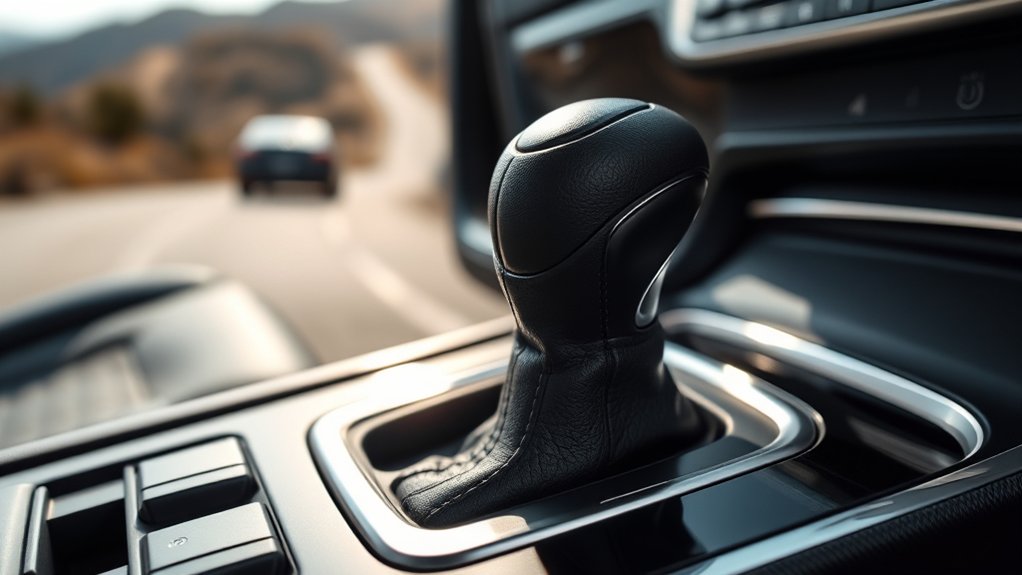
You use the L gear in an automatic car to lock the transmission in the lowest gear, providing more engine braking, torque, and control. This feature is essential for challenging driving conditions like steep hills, towing heavy loads, or driving on slippery roads.
Using the L gear helps prevent wheel spin and maintain a steady speed in these situations. It also helps protect your transmission and brakes by reducing excessive wear.
When driving in tough conditions, the L gear allows you to manage your vehicle more safely and efficiently. There’s plenty more to explore about how and when to use it for optimal performance and safety.
Key Takeaways
- L gear keeps the transmission in the lowest gear, providing maximum torque and engine braking.
- It helps control vehicle speed on steep hills and slippery roads by preventing automatic upshifts.
- L gear enhances engine braking, reducing brake wear and improving downhill safety.
- It is ideal for towing heavy loads or driving on rough terrain requiring extra power and control.
- L gear is not for regular driving but specific conditions needing low-speed control and maximum traction.
What Does the L Gear Do in an Automatic Car?
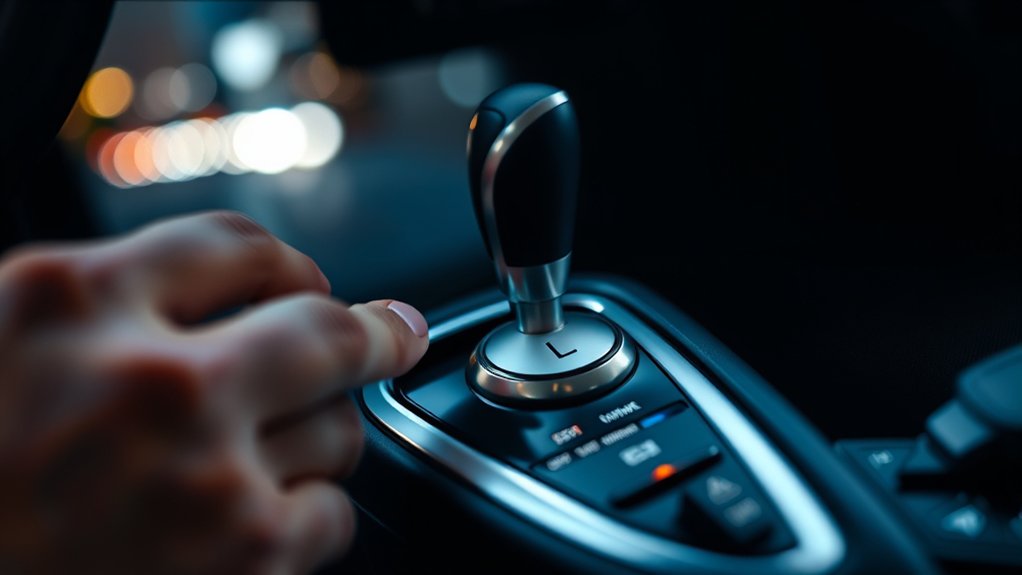
How exactly does the L gear function in an automatic car? When you shift to L, the transmission stays in a lower gear, preventing it from shifting up to higher gears. This keeps your engine running at higher RPMs, giving you more control over power delivery.
You’ll typically use L when you need extra torque or engine resistance, such as driving up steep hills or towing heavy loads. It’s not meant for regular driving but for situations where you want the car to maintain lower gears longer.
How L Gear Affects Engine Braking and Speed
When you shift into L gear, the engine helps slow your car down through engine braking, reducing wear on your brakes. This gear also gives you better control over your speed, especially on steep downhill roads. Using L gear in these situations keeps you safer by preventing your vehicle from accelerating too quickly.
Engine Braking Mechanism
Why does shifting to L gear slow your car down without using the brakes? When you switch to L gear, the engine resists the wheels’ rotation more strongly. This resistance creates a natural slowing effect called engine braking.
Here’s how it works:
- Higher Engine RPM: L gear keeps the engine running at higher revolutions per minute, increasing resistance.
- Transmission Lock: It prevents the transmission from shifting to higher gears, maintaining engine braking force.
- Reduced Speed Without Brake Wear: The engine helps slow the vehicle, reducing reliance on your brake pads.
Speed Control Benefits
Where can you best use the L gear to maintain better control over your vehicle’s speed? You’ll find it especially useful when you want to slow down without constantly tapping the brake pedal. Engaging L gear forces the transmission to stay in a lower gear, which increases engine braking.
This means the engine itself helps reduce your speed, giving you smoother deceleration and reducing brake wear. It also prevents your car from accelerating too quickly on flat roads or gentle inclines, so you can maintain a steady pace. By using L gear, you gain more precise speed control, especially in stop-and-go traffic or when maneuvering through tight spaces.
This helps you drive more confidently and safely without relying solely on the brakes.
Downhill Driving Safety
How can you keep your car safer and more controlled while driving downhill? Using the L gear in your automatic car helps by engaging engine braking, which slows the vehicle without overusing your brakes. This prevents brake overheating and maintains better control.
Here’s how L gear enhances downhill driving safety:
- Reduces Brake Wear: Engine braking takes the load off your brakes, so they don’t fade or fail.
- Maintains Steady Speed: L gear limits your speed without constant brake pressure, keeping your descent smooth.
- Improves Control: Lower gears give you more control over the car’s momentum, especially on steep or slippery slopes.
How L Gear Is Different From D and 2 Gears
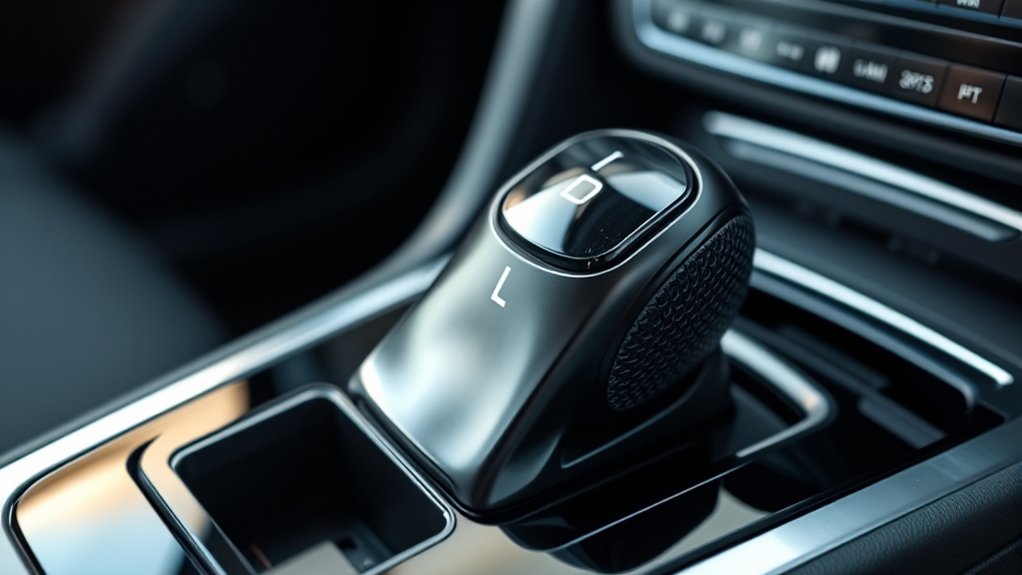
You’ll notice that L gear functions differently than D and 2 gears by keeping your car in a lower gear range for more power and control. Each gear suits specific driving conditions, with D for regular driving, 2 for moderate engine braking, and L for steep climbs or descents.
Understanding these differences helps you choose the right gear for safer and smoother driving.
Gear Function Comparison
What sets the L gear apart from the D and 2 gears in an automatic car? Each gear serves a distinct purpose based on how it manages engine power and speed.
- D Gear (Drive): This is your default gear for everyday driving. It automatically shifts through all gears, optimizing fuel efficiency and smooth acceleration.
- 2 Gear: It limits the transmission to the first two gears, providing more control on moderate inclines or slippery surfaces by preventing higher gear shifts.
- L Gear (Low): This gear locks the transmission in the lowest gear, maximizing engine braking and torque. It’s perfect when you need extra power or control at very low speeds.
Understanding these differences helps you choose the right gear for specific driving needs.
Driving Conditions Suitability
Each gear’s unique function influences where it performs best on the road. When you use L gear, you’re choosing maximum engine braking and low speed control, ideal for steep hills and towing.
D gear handles everyday driving with smooth shifts and fuel efficiency. Meanwhile, 2 gear gives you more power than D but less than L, perfect for moderate inclines or slippery roads.
| Gear | Best for | Key Benefit |
|---|---|---|
| L | Steep hills, towing | Maximum engine braking, low speed control |
| 2 | Moderate inclines, slippery roads | Extra power, moderate engine braking |
| D | Normal driving | Smooth shifting, fuel efficiency |
Knowing when to use each gear keeps you safer and your car performing at its best.
When to Use the L Gear: Key Situations
Although many drivers overlook the L gear, it plays a crucial role in specific driving scenarios where controlling your vehicle’s speed and engine power is essential. You’ll find it especially helpful when you need precise control or extra engine braking.
Here are three key situations to use the L gear:
- Descending steep slopes: It slows your car using engine braking, reducing brake wear and preventing overheating.
- Navigating tight traffic: It helps you maintain a steady, low speed without constant brake pressure.
- Starting on slippery surfaces: It limits wheel spin by keeping power delivery controlled and steady.
Using the L gear in these moments gives you better control, improves safety, and protects your vehicle from unnecessary strain.
L Gear Use Cases: Hills, Towing, and Slippery Roads
When driving on hills, towing heavy loads, or facing slippery roads, knowing how to use the L gear can make a significant difference. When you’re going downhill, L gear helps control your speed by using engine braking, so you don’t rely solely on your brakes and risk overheating them.
If you’re towing a trailer or heavy cargo, L gear provides extra power and prevents your transmission from constantly shifting between gears, which protects your vehicle and improves stability.
On slippery surfaces like snow or ice, L gear reduces wheel spin by maintaining lower gears, giving you better traction and control. Using L gear in these situations enhances safety and performance, making your ride smoother and more secure.
Common Mistakes Using the L Gear
Knowing how to use the L gear properly can improve your driving experience in specific conditions, but misusing it can cause problems. You might think using L gear all the time is helpful, but it can strain your engine and reduce fuel efficiency.
Also, shifting into L gear at high speeds is risky—it can cause sudden deceleration or damage your transmission.
Here are common mistakes to avoid:
- Overusing L gear on flat roads – It’s meant for low-speed control, not regular driving.
- Ignoring engine RPM – Staying too long in L gear can lead to engine overheating.
- Shifting abruptly into L gear – This can shock your transmission and cause wear.
Avoid these errors to keep your car running smoothly and safely.
Tips for Shifting Into and Out of L Gear Safely
How can you shift into and out of L gear without harming your car? First, always come to a complete stop before shifting into L gear. This prevents unnecessary strain on the transmission.
When you want to exit L gear, slow down and press the brake firmly before moving the gear lever back to Drive or another mode. Avoid shifting into L gear at high speeds, as it can cause engine lugging or damage.
Use L gear only when necessary, like on steep declines or heavy towing, to avoid excessive wear. Finally, don’t force the gear lever; if it doesn’t shift smoothly, check the brake pedal is fully pressed and consult your owner’s manual. Following these steps helps protect your transmission and keeps your car running smoothly.
Why L Gear Improves Traction on Slippery Roads
Although slippery roads can challenge your control, using L gear can help improve traction by limiting your car’s speed and maximizing engine braking. When you engage L gear, your transmission stays in a lower gear, giving you better control over your vehicle’s movement on slick surfaces.
Engaging L gear limits speed and boosts engine braking, enhancing control on slippery roads.
Here’s why it matters:
- Reduced Wheel Spin: Lower gears prevent your wheels from spinning too fast, helping you maintain grip on ice or wet roads.
- Enhanced Engine Braking: By slowing the car without relying solely on brakes, you avoid sudden skids caused by brake lockups.
- Steady Speed Control: L gear helps you drive at slower, consistent speeds, which is key for safely *orchestrating* slippery conditions.
Using L gear wisely can make your drive safer when traction is compromised.
L Gear for Better Control While Towing
When you’re towing a heavy load, engaging L gear gives you greater control by keeping the transmission in a lower gear, which helps manage your speed and reduces strain on your brakes. This is especially useful when driving downhill, as it prevents your trailer or load from pushing your vehicle too fast.
By limiting the gear range, L gear lets you maintain a steady, controlled pace without constantly applying the brakes, which can overheat and wear them out. Additionally, using L gear improves engine braking, giving you smoother deceleration and helping you avoid sudden stops.
Frequently Asked Questions
Can Using L Gear Increase Fuel Consumption?
Yes, using L gear can increase fuel consumption because your engine runs at higher RPMs.
You won’t want to use it constantly, only when you need extra power or control, like driving downhill or in tough conditions.
Does L Gear Cause More Wear on the Transmission?
Using L gear gently nudges your transmission into a more demanding dance, which can add a bit of extra strain over time.
If you don’t overuse it, your car should handle it without much trouble.
Is L Gear Available in All Automatic Cars?
No, L gear isn’t available in all automatic cars. It’s more common in older or specific models designed for better control on steep hills or towing.
You’ll want to check your car’s manual to be sure.
How Does L Gear Affect Vehicle Emissions?
You’d think using L gear would magically slash emissions, but it actually can increase them by making your engine work harder at lower speeds.
Can L Gear Be Used for City Driving?
You can use L gear for city driving, especially in stop-and-go traffic or on steep hills. It helps control your speed and prevents frequent braking, giving you better engine braking and smoother driving in those conditions.
Conclusion
Using the L gear in your automatic car gives you more control, especially on steep hills, slippery roads, or when towing. It’s not just about slowing down; it helps with engine braking, reducing wear on your brakes.
Some think L gear always saves fuel, but that’s not true—it can actually use more. So, use it wisely to improve traction and control, but don’t expect it to boost your mileage every time.
In conclusion, the L gear is valuable for enhanced control and safety in specific driving conditions. Understanding its purpose helps you use the L gear effectively without assuming it will always save fuel or increase mileage.

