

You’ll know your clutch is slipping if the engine revs climb but your car slows down or struggles to accelerate, especially uphill or under load. This common clutch problem often results in loss of power and difficulty maintaining speed.
You might feel hesitation when shifting or notice a burning smell, which are key signs of clutch slipping.
Watch for unusual noises like squealing or grinding during gear changes. A loose or spongy clutch pedal can also signal a problem that needs attention.
If these signs sound familiar, learning more will help you catch issues early and avoid costly repairs.
Key Takeaways
- Engine RPM increases without a matching rise in vehicle speed during acceleration, indicating clutch slippage.
- A burning smell or unusual noises during clutch use can signal clutch slipping or damage.
- Difficulty shifting gears smoothly or delayed engagement suggests clutch wear or slipping.
- Visual inspection showing shiny, glazed, or oil-contaminated clutch surfaces confirms slipping issues.
- A spongy or loose clutch pedal with excessive free play often indicates clutch adjustment or wear problems.
How Does a Slipping Clutch Feel When Driving?
When your clutch is slipping, you’ll notice a distinct change in how your car responds as you accelerate. Instead of smoothly gaining speed, your engine revs higher without a corresponding increase in velocity. You might feel a loss of power, especially when climbing hills or carrying heavy loads.
The car may hesitate or struggle to move forward despite pressing the gas pedal harder. You’ll often sense a disconnect between the engine’s RPM and the actual speed, which feels frustrating and inefficient. This slipping can make shifting gears feel less precise, sometimes causing a delay or a rough changeover.
If you’re driving a manual transmission, you might also find it harder to control the car smoothly, indicating your clutch isn’t fully engaging as it should.
What Visual Signs Indicate a Slipping Clutch?
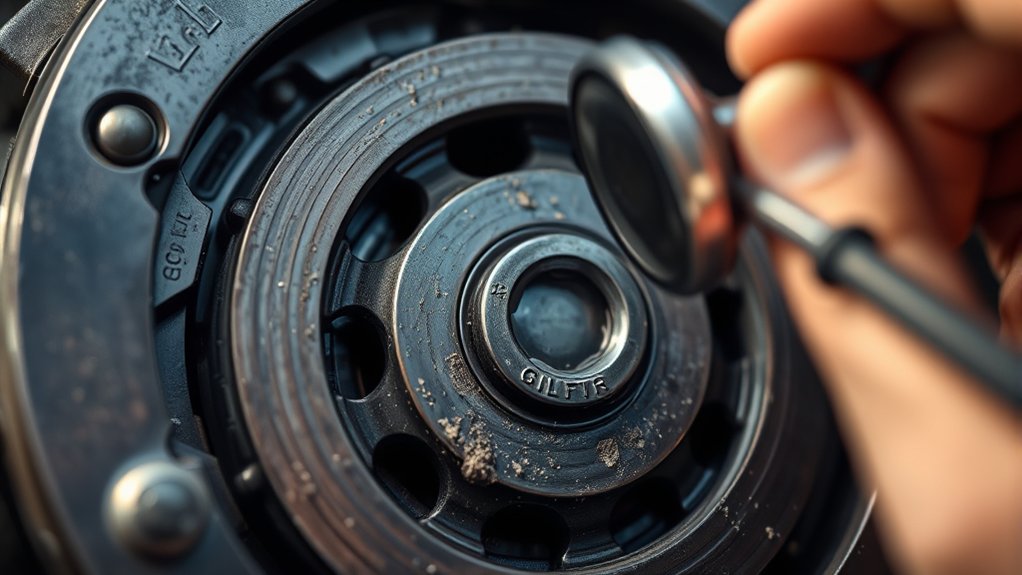
Although you can often feel a slipping clutch through driving symptoms, certain visual signs also reveal its condition. When inspecting your clutch system, look for wear or glazing on the clutch disc, which appears shiny or burned.
Also, check for oil or grease contamination on the clutch surface, which can cause slipping. Additionally, observe any abnormal wear on the pressure plate or flywheel, such as grooves or hot spots.
Here’s a quick reference table for visual signs:
| Visual Sign | What It Means | What To Do |
|---|---|---|
| Shiny or glazed disc | Clutch slipping | Replace clutch disc |
| Oil on clutch surface | Contamination causing slip | Fix leak and clean parts |
| Grooves on flywheel | Excessive wear | Resurface or replace flywheel |
| Hot spots on plate | Overheating | Inspect and replace parts |
Spotting these early helps prevent bigger issues.
What Noises Reveal a Failing Clutch?
You’ll want to listen carefully for any squealing sounds when you engage the clutch, as this often signals trouble. Grinding noises while shifting gears can also point to a failing clutch. Additionally, whining or chirping noises are warning signs you shouldn’t ignore.
Squealing Sounds During Engagement
If your clutch produces a high-pitched squeal as you press the pedal, it could signal a problem with the release bearing or clutch linkage. This squealing usually occurs because the release bearing is worn out and struggles to move smoothly against the pressure plate. You might also notice the sound if the clutch linkage is misaligned or lacks proper lubrication.
Ignoring this squeal can lead to more serious clutch damage or failure. When you hear this noise consistently during engagement, it’s a clear sign you should have your clutch system inspected promptly. Addressing the issue early can save you from costly repairs and keep your vehicle shifting smoothly.
Don’t wait until the noise worsens—it’s your clutch’s way of asking for attention.
Grinding Noise When Shifting
When shifting gears, a grinding noise can signal serious clutch problems that need immediate attention. This grinding often means the clutch isn’t fully disengaging, causing the gears to clash. If you ignore this sound, you risk damaging your transmission.
It usually happens when the clutch disc or pressure plate wears out, preventing smooth gear changes. You might also notice difficulty shifting or a stiff clutch pedal. If you hear grinding, don’t force the shift—it can worsen the issue.
Instead, get your clutch inspected promptly. Early diagnosis helps avoid costly repairs and ensures your car shifts smoothly again. Paying attention to these noises can save you time, money, and frustration down the road.
Whining or Chirping Alerts
Although whining or chirping sounds might seem minor, they often point to early clutch issues that shouldn’t be ignored. These noises usually arise when the clutch release bearing or pilot bearing starts wearing out. When you hear these alerts, it’s a sign your clutch system needs attention before it worsens.
Here’s what those noises might mean:
| Noise Type | Possible Cause |
|---|---|
| Whining | Worn release bearing |
| Chirping | Damaged pilot bearing |
| Both combined | Clutch misalignment or wear |
If you notice these sounds especially when pressing or releasing the clutch pedal, don’t delay a mechanic visit. Addressing them early can save you from costly repairs and keep your clutch functioning smoothly.
How Can RPM and Speed Show a Slipping Clutch?
You can spot a slipping clutch by watching how your RPMs behave compared to your speed. If your engine revs higher without a matching increase in speed, the clutch might be slipping.
Pay attention to any unusual acceleration where the wheels don’t seem to keep up with the engine’s power.
RPM Fluctuation Patterns
If your engine’s RPM rises while your vehicle’s speed stays the same or increases only slightly, it usually signals a slipping clutch. You might notice the RPM needle jumping erratically when you accelerate, rather than rising smoothly. This fluctuation happens because the clutch isn’t fully engaging, causing inconsistent power transfer from the engine to the wheels.
As you press the accelerator, the engine revs increase, but the wheels don’t respond proportionally. You’ll feel this especially during uphill driving or when carrying heavy loads. Pay attention to sudden RPM spikes that don’t match your speed changes.
These irregular patterns indicate the clutch plates are slipping, which reduces driving efficiency and can lead to further damage if ignored. Recognizing these signs early helps you address the issue promptly.
Speed Versus RPM Ratio
When your clutch slips, the relationship between engine RPM and vehicle speed changes noticeably. You’ll see the engine revving higher without a corresponding increase in speed.
Here’s how you can tell by observing the speed versus RPM ratio:
- At a steady throttle, the RPM climbs, but your speed stays nearly the same or increases very slowly.
- Shifting gears doesn’t produce the expected jump in speed, despite higher RPMs.
- On inclines, your engine revs spike, but the vehicle struggles to accelerate.
- The RPM gauge shows inconsistent increases compared to the speedometer, signaling lost power transfer.
Acceleration Without Speed Increase
Noticing your engine rev higher without a matching increase in speed directly points to a slipping clutch. When you press the accelerator, the engine’s RPM should rise, and your vehicle’s speed should increase proportionally.
If the RPM climbs but your speed barely changes, the clutch isn’t fully engaging. This happens because the clutch plate isn’t gripping the flywheel effectively, causing the engine to spin faster without transferring power efficiently to the wheels. You might feel a delay or a lack of smooth acceleration.
To confirm, try shifting into a higher gear and gently accelerate—if the engine revs jump without the car accelerating accordingly, your clutch is slipping. Addressing this early prevents further damage and keeps your vehicle running smoothly.
What Common Causes Lead to Clutch Slipping?
Because your clutch plays an essential role in transferring power from the engine to the wheels, several common issues can cause it to slip. Knowing these can help you spot problems early and avoid costly repairs.
Here are four frequent causes:
- Worn Clutch Disc – Over time, the friction material wears down, reducing grip.
- Oil Contamination – Leaks can coat the clutch, making it slippery.
- Weak Pressure Plate Springs – If springs lose tension, they can’t hold the disc firmly.
- Improper Clutch Adjustment – A poorly adjusted clutch pedal can cause incomplete engagement.
How Can You Test Your Clutch for Slipping?
Several simple tests can help you determine if your clutch is slipping. One quick way is to try accelerating in a higher gear at low speed; if the RPMs rise without a corresponding increase in speed, the clutch may be slipping.
Another test involves checking for a burning smell or unusual noises during acceleration. You can also perform a clutch pedal test by pressing it and feeling for inconsistent resistance. Here’s a quick guide:
| Test | What to Look For |
|---|---|
| Higher Gear Accel. | RPMs increase, speed doesn’t |
| Burning Smell | Smell of burnt material during drive |
| Noise Check | Unusual sounds when engaging clutch |
| Pedal Feel | Inconsistent or soft pedal resistance |
| Engine Stall Test | Engine stalls if clutch grabs well |
When Should You Fix a Slipping Clutch Immediately?
If your clutch shows signs of severe damage, like burning smells or difficulty shifting gears, you need to fix it right away. Ignoring these issues can put your safety at risk and hurt your vehicle’s performance.
Don’t wait—addressing a slipping clutch immediately can prevent costly repairs and keep you safe on the road.
Signs of Severe Damage
When your clutch starts slipping severely, you’ll notice immediate signs that demand urgent attention. Ignoring these can lead to costly repairs or complete failure.
Here are four clear signs of severe clutch damage:
- Burning Smell: A strong, acrid odor signals the clutch is overheating and wearing out rapidly.
- Difficulty Shifting Gears: If you struggle to engage or change gears smoothly, the clutch plate may be severely worn.
- High Engine RPM with Little Acceleration: The engine revs climb, but your vehicle barely moves, indicating the clutch isn’t fully engaging.
- Spongy or Loose Clutch Pedal: A pedal that feels unusually soft or has excessive free play suggests hydraulic or mechanical failure.
If you spot these signs, fix your slipping clutch immediately to avoid further damage.
Safety and Performance Risks
Why should you fix a slipping clutch immediately? Because it directly impacts your safety and your vehicle’s performance. A slipping clutch reduces your control over acceleration and gear shifts, increasing the risk of stalling in traffic or struggling to climb hills.
This loss of control can lead to dangerous situations, especially in heavy traffic or on busy highways. Ignoring a slipping clutch also causes further damage, leading to costly repairs and leaving you stranded unexpectedly. Your engine might overheat, and fuel efficiency will drop, making your daily drives frustrating and unsafe.
Fixing the clutch promptly guarantees smooth operation, reliable power transfer, and keeps you safe on the road. Don’t wait—address the issue as soon as you notice symptoms.
Can a Slipping Clutch Be Repaired Without Replacement?
Although a slipping clutch often signals the need for replacement, you might be able to fix minor issues without swapping out the entire unit. Sometimes, simple adjustments or repairs can restore your clutch’s performance.
Here are four common fixes to contemplate:
- Adjusting the clutch cable or hydraulic system – Proper tension can eliminate slipping caused by misalignment.
- Cleaning contaminated clutch components – Oil or grease on the clutch plate can cause slipping; a thorough cleaning might help.
- Replacing the clutch fluid – Old or low fluid can affect clutch engagement and cause slipping.
- Inspecting and tightening related parts – Loose or worn parts linked to the clutch mechanism can lead to slipping and may just need tightening or minor replacement.
If these steps don’t work, replacement might be necessary.
How Can You Prevent Your Clutch From Slipping Early?
To keep your clutch from slipping prematurely, you need to adopt good driving habits and perform regular maintenance. Avoid riding the clutch pedal—don’t rest your foot on it while driving, as this causes unnecessary wear. When starting on a hill, use the handbrake instead of slipping the clutch to hold the car.
Shift gears smoothly and avoid aggressive acceleration, which strains the clutch. Regularly check your clutch fluid if your vehicle uses a hydraulic system, and replace it as recommended. Also, have your clutch inspected during routine service intervals to catch early signs of wear.
What Happens If You Ignore a Slipping Clutch?
If you ignore a slipping clutch, you’ll quickly face worsening performance and potentially costly damage. Your car won’t respond as well, making driving frustrating and unsafe. Over time, the clutch’s friction material wears down, which can lead to complete clutch failure.
Here’s what you can expect if you let the problem slide:
- Reduced acceleration and difficulty maintaining speed.
- Increased engine revving without corresponding movement.
- Overheating clutch components causing further mechanical damage.
- Potential damage to the flywheel and pressure plate, increasing repair complexity.
Addressing a slipping clutch early helps you avoid these issues and keeps your vehicle running smoothly. Don’t wait until the damage gets worse—it’s better to fix the problem promptly.
How Much Does It Cost to Fix a Slipping Clutch?
Fixing a slipping clutch can be a significant expense, but knowing what influences the cost helps you prepare. Labor usually costs the most, since the clutch is deep inside the transmission. Parts like the clutch disc, pressure plate, and release bearing also add up.
Depending on your car’s make and model, prices can vary widely.
| Component | Estimated Cost (USD) |
|---|---|
| Labor | $300 – $800 |
| Clutch Disc | $100 – $300 |
| Pressure Plate | $150 – $350 |
| Release Bearing | $50 – $150 |
| Total Repair Cost | $600 – $1,600 |
Keep in mind, regular maintenance can help avoid these costs.
When Is It Time to Replace Your Clutch Completely?
Although clutches wear down gradually, you’ll know it’s time to replace yours completely when you notice persistent slipping, difficulty shifting gears, or a burning smell that won’t go away. These signs indicate that the clutch’s friction material is too worn to function properly. To help you decide, watch for:
Persistent slipping, gear shifting issues, or a lasting burning smell signal it’s time to replace your clutch.
- Engine revs rising without acceleration.
- Grinding or resistance when changing gears.
- A distinct burning odor during or after driving.
- A spongy or loose clutch pedal that doesn’t engage smoothly.
If you experience any combination of these symptoms consistently, it’s wise to schedule a clutch replacement soon. Ignoring these signs will only worsen your driving experience and could lead to more costly repairs.
Why Address Clutch Slipping Early to Avoid Bigger Problems
Since clutch slipping signals a problem with your vehicle’s performance, addressing it early can save you from more extensive damage and higher repair costs down the road. When you ignore the signs, the slipping clutch can lead to overheating, causing premature wear on other components like the pressure plate and flywheel. This not only raises repair expenses but can also result in unexpected breakdowns, leaving you stranded.
Fixing the issue promptly helps maintain smooth gear shifts and protects your transmission system. Plus, it extends the lifespan of your clutch and related parts. By tackling clutch slipping early, you avoid costly repairs and keep your vehicle running safely and efficiently.
Don’t wait—taking action now prevents bigger problems later.
Frequently Asked Questions
Can a Slipping Clutch Affect My Car’s Fuel Efficiency?
Yes, a slipping clutch can lower your car’s fuel efficiency because it causes the engine to work harder and waste power.
You’ll notice you’re burning more gas even if you’re not driving differently than usual.
Is Clutch Slipping More Common in Manual or Automatic Cars?
Think of a manual car’s clutch like a tightrope walker—more prone to slipping. You’ll find slipping far more common in manual cars since automatics use a torque converter, which handles slippage differently and more smoothly.
How Does Weather Impact Clutch Performance and Slipping?
Cold weather can make your clutch stiffer and harder to engage, while wet conditions might cause slipping due to moisture reducing friction.
You’ll notice more clutch performance issues during extreme temperatures or heavy rain.
Are There Specific Car Models Prone to Clutch Slipping?
Yes, some car models, especially older manuals or high-performance vehicles, can be prone to clutch slipping.
You should research your model’s history and maintenance to spot common issues early and avoid unexpected clutch problems.
Can Driving Habits Influence the Lifespan of a Clutch?
If you constantly ride the clutch like Sarah did in her compact car, you’ll wear it out faster. Yes, your driving habits—like keeping your foot on the pedal—directly shorten your clutch’s lifespan, so avoid that!
Conclusion
If you notice your clutch slipping, don’t ignore it like a ticking time bomb. Catching the signs early—whether it’s strange noises, sluggish acceleration, or a burning smell—can save you from costly repairs down the road. Addressing the problem promptly keeps your car running smoothly and prevents bigger issues.
Think of your clutch like a dancer’s shoes; if they wear out, the whole performance suffers. So, act quickly to keep your ride in top shape! Regular maintenance and paying attention to symptoms of a slipping clutch are essential to avoid further damage.
By understanding how to tell if your clutch is slipping, you can take action early and maintain your vehicle’s performance. Don’t wait—keep your clutch in good condition for a safer, smoother driving experience.

