

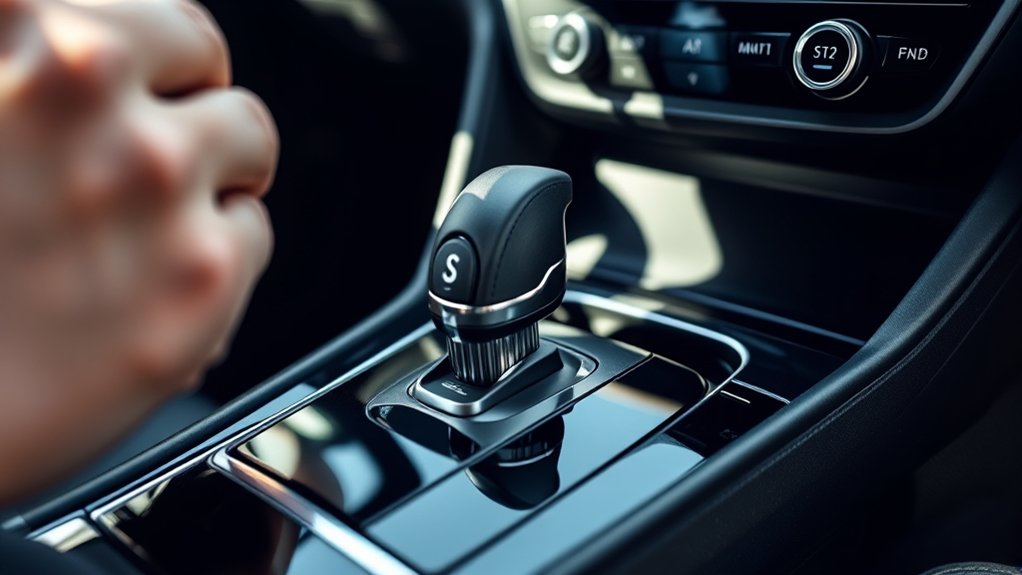
The S gear in your car stands for “Sport” and is designed to enhance driving performance by holding gears longer and allowing the engine to rev higher. This sport mode delivers more power and quicker acceleration, making it ideal for situations that require better control and responsiveness.
Whether you’re driving on steep hills, navigating winding roads, or overtaking other vehicles, the S gear helps improve your driving experience.
Use the S gear by shifting into it when you want a sportier, more dynamic drive. However, avoid using it constantly as it can cause engine strain and increase fuel consumption.
Keep experimenting with the S gear, and you’ll soon discover the moments when it truly makes a difference in your drive.
Key Takeaways
- S Gear stands for “Sport” mode, holding gears longer for higher RPMs, enhancing power and acceleration. It improves control and responsiveness on steep hills, winding roads, and during towing or overtaking. Use S Gear for sporty driving, but avoid constant use to prevent engine strain and excessive fuel consumption.
- Shift smoothly, avoid engaging S Gear at low speeds, and use engine braking cautiously on appropriate terrains. S Gear works with other modes like Eco and Snow to balance performance with fuel economy and traction.
What Does the S Gear Mean in Your Car?
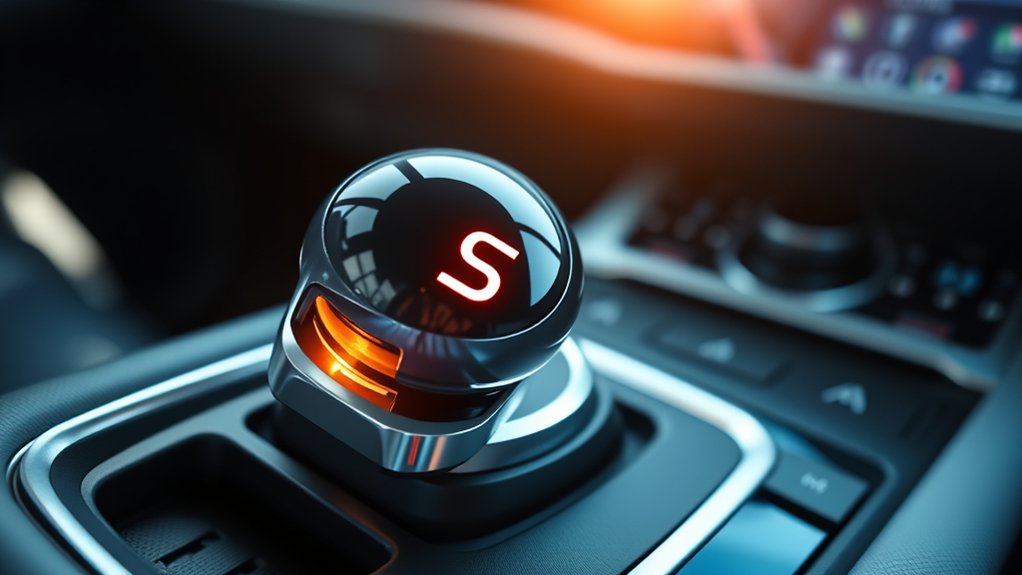
What exactly does the S gear in your car do? The S stands for “Sport” or sometimes “Second,” depending on your vehicle. When you shift into S, your car holds gears longer before shifting up, allowing the engine to rev higher.
This gives you more power and quicker acceleration, especially useful when you want a more responsive drive or need extra control on steep hills. Unlike the regular Drive mode, S gear prioritizes performance over fuel efficiency. It’s not meant for everyday cruising but for situations where you want enhanced control and a sportier feel.
Using the S gear can make your drive more engaging without fully switching to manual mode, giving you a balance between automatic convenience and sporty performance.
How the S Gear Changes Your Car’s Shifting Behavior
When you shift into S gear, your car holds higher RPMs before changing gears. This lets you tap into better acceleration and quicker throttle response.
You’ll notice your car feels more responsive and enthusiastic to perform.
Increased RPM Range
How does the S gear affect your car’s shifting behavior? When you engage the S gear, your car’s transmission allows the engine to rev higher before shifting gears. This means you’ll notice an increased RPM range, giving you more control over power delivery and performance.
Specifically, the S gear:
- Holds gears longer to keep the engine in its ideal power band
- Delays upshifts, allowing for higher engine speeds
- Provides a sportier driving feel with more engine responsiveness
- Helps maintain momentum on inclines or during spirited driving
Enhanced Acceleration Response
Along with holding gears longer and increasing RPM range, the S gear sharpens your car’s acceleration response. When you engage the S gear, the transmission changes its shifting behavior to keep the engine in a higher power band. This means your car shifts later than usual, so you get quicker throttle response and stronger acceleration.
You’ll notice the car feels more enthusiastic to move when you press the gas pedal, making it perfect for overtaking or merging on highways. The S gear optimizes gear changes to match a sportier driving style, giving you smoother but more aggressive shifts. By using it, you’re effectively telling your car to prioritize performance and responsiveness over fuel efficiency and comfort.
When Should You Use the S Gear While Driving?
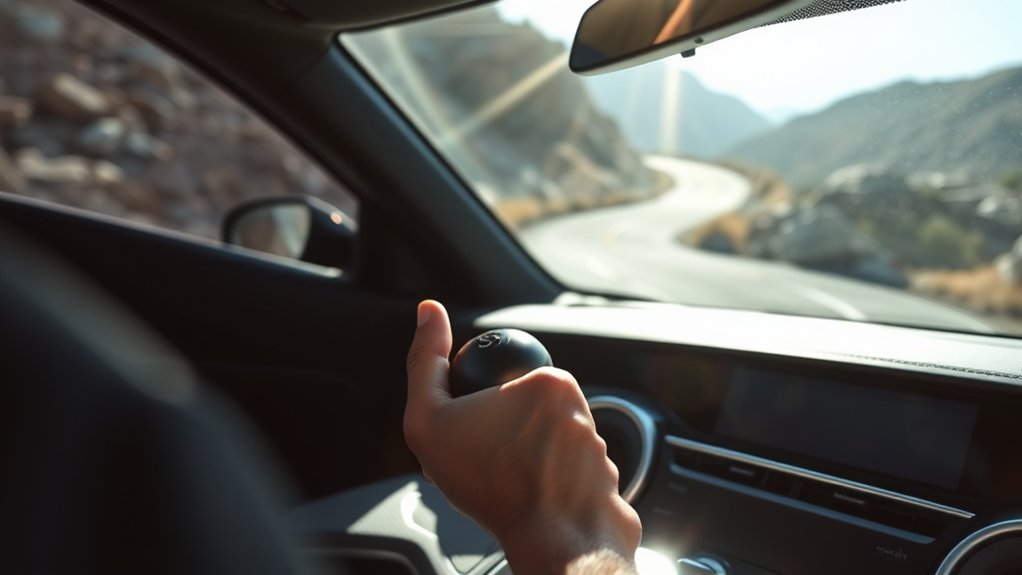
Although many drivers overlook the S gear, you’ll find it useful in specific situations that demand better control and power. Engaging the S gear lets your car hold gears longer and respond quicker, which helps when precise handling is necessary.
Many drivers overlook the S gear, but it offers better control and quicker response when precise handling is needed.
You should consider using the S gear when:
- Driving on steep hills, to maintain consistent power and avoid frequent gear shifts
- Traveling through winding or mountainous roads, for improved engine braking and control
- Towing heavy loads, to prevent the transmission from constantly shifting
- Driving in slippery conditions, where steady power delivery improves traction
S Gear for Better Acceleration and Overtaking
When you switch to S gear, your car’s engine responds faster, giving you better acceleration. It keeps the gears in ideal ranges, so you get smoother and more powerful shifts. This makes overtaking safer and more efficient when you need extra power quickly.
Enhanced Engine Response
If you need quicker acceleration or want to overtake another vehicle safely, engaging the S gear can make a noticeable difference. This mode sharpens your car’s engine response, so it reacts faster when you press the accelerator. You’ll feel the difference immediately as the engine holds higher RPMs longer, delivering more power right when you need it.
Here’s what the enhanced engine response does for you:
- Increases throttle sensitivity for quicker reactions
- Keeps engine revs higher to boost power output
- Reduces delay in power delivery during acceleration
- Helps maintain momentum when overtaking or merging
Using S gear gives you more control and confidence on the road, especially in situations requiring swift speed changes.
Optimal Gear Shifting
Because the S gear adjusts your car’s shift points for higher RPMs, you’ll get better acceleration and smoother overtaking maneuvers. When you switch to S mode, your transmission holds gears longer before shifting, allowing the engine to stay in its power band. This means you can accelerate quicker without the lag of premature upshifts.
To use it effectively, engage the S gear when approaching slower traffic or merging onto highways. Keep an eye on the tachometer to avoid over-revving, but trust the car’s programming to optimize shifts. Once you’ve passed or the need for rapid acceleration ends, switch back to Drive for normal shifting.
Using S gear smartly helps you maintain control and confidence during those vital acceleration moments.
Improved Power Delivery
Shifting into S gear doesn’t just change when your car shifts—it enhances how power reaches the wheels. When you need quicker acceleration or want to overtake safely, S gear adjusts the transmission to keep your engine in its power band longer.
This means:
- Faster throttle response for immediate power delivery
- Higher RPMs before upshifting, maximizing engine output
- Improved torque availability for smoother acceleration
- Enhanced control during overtaking maneuvers
How the S Gear Enhances Performance on Curvy Roads
When you engage the S gear on curvy roads, your car responds with quicker acceleration and enhanced control. This gear keeps the engine revving higher, giving you immediate power when you need to accelerate out of a turn. It also holds the gears longer, preventing unnecessary shifting that could disrupt your momentum.
As a result, you can navigate bends more smoothly and confidently. The S gear’s tuning helps maintain better traction and stability by matching engine output to the demands of sharp corners. You’ll feel more connected to the road, able to adjust your speed precisely without lag.
Using the S gear on winding routes boosts your driving experience, letting you tackle curves with both agility and safety.
How S Gear Affects Fuel Efficiency
When you use the S gear, you might notice a change in your fuel consumption because it keeps the engine revving higher. How you drive in this mode plays a big role in efficiency—aggressive acceleration can waste fuel, while smooth driving helps.
Understanding these habits lets you balance performance and fuel economy effectively.
Impact on Fuel Consumption
How does using the S gear affect your car’s fuel efficiency? When you shift to S gear, your engine runs at higher RPMs to deliver more power and responsiveness. This can impact fuel consumption in a few ways:
- Increases fuel use during aggressive acceleration since the engine works harder.
- Helps maintain steady speed on hilly terrain by avoiding constant gear shifts, potentially saving fuel.
- Can reduce fuel efficiency in stop-and-go traffic due to higher revs.
- Provides better control for sporty driving but at the cost of increased consumption.
In short, S gear may lead to higher fuel consumption during spirited driving, but it can also improve efficiency in specific situations like climbing hills. Use it wisely depending on your driving conditions.
Driving Habits and Efficiency
Although S gear offers improved control and responsiveness, your driving habits considerably influence its impact on fuel efficiency. When you use S gear aggressively, accelerating quickly and revving high, your fuel consumption rises.
On the other hand, if you maintain steady speeds and avoid unnecessary rapid acceleration, you can minimize wasted fuel even in S mode. Remember, S gear keeps the engine in higher RPM ranges for power, which naturally uses more fuel.
So, to get the most efficiency, shift smoothly and anticipate traffic to avoid frequent stops and starts. By combining smart, calm driving with S gear’s performance benefits, you can enjoy better control without drastically hurting your fuel economy.
Your habits ultimately determine how efficient your drive will be.
S Gear vs. Manual Mode Differences
While both S gear and manual mode let you take more control over your car’s performance, they operate quite differently. The S gear, or Sport mode, automatically adjusts shift points to boost acceleration and responsiveness without requiring you to change gears manually. Manual mode, on the other hand, lets you decide exactly when to shift, giving you a hands-on driving experience.
S gear boosts performance automatically, while manual mode gives you full control over every gear shift.
Here’s how they differ:
- S Gear: Automatically shifts for sportier driving, ideal for quick acceleration.
- Manual Mode: Requires you to manually shift gears via paddle shifters or the gear lever.
- Control Level: S gear offers semi-automatic control; manual mode offers full control.
- Driver Engagement: Manual mode demands more attention, while S gear simplifies sporty driving.
Choosing depends on how involved you want to be behind the wheel.
How S Gear Works With Eco and Snow Driving Modes
When you switch between S gear and modes like Eco or Snow, your car adapts its behavior to match the driving conditions. In Eco mode, the system prioritizes fuel efficiency by adjusting throttle response and shifting gears earlier. If you engage S gear alongside Eco, your car balances a sportier feel with economy, holding gears longer but still aiming to save fuel.
On the other hand, Snow mode modifies throttle sensitivity and gear shifts to reduce wheel spin. Combining S gear with Snow mode lets you maintain better control and power delivery on slippery surfaces, as the transmission holds gears to prevent unnecessary shifting that could cause loss of traction.
Understanding how these modes interact helps you optimize performance and safety in varied conditions.
Tips for Smooth Shifting Into and Out of S Gear
Balancing S gear with modes like Eco and Snow helps you get the most out of your car’s performance, but shifting smoothly into and out of S gear takes a bit of practice. To avoid jerks and maintain control, consider these tips:
- Ease off the accelerator before shifting to reduce strain on the transmission.
- Wait for the RPM to settle; this ensures the engine speed matches the gear shift.
- Shift deliberately but gently; avoid forcing the gear lever to prevent damage.
- Use the brake lightly when downshifting to help the changeover feel smoother and safer.
Common Mistakes When Using the S Gear
Although the S gear can boost your car’s performance, many drivers make mistakes that reduce its effectiveness or even cause damage. One common error is using the S gear all the time, which can lead to unnecessary engine strain and fuel consumption. You should engage it only when you need extra power or control, like during overtaking or driving on hilly terrain.
Another mistake is shifting into S gear at very low speeds, causing rough gear changes and potential wear. Also, don’t forget to downshift smoothly before entering S gear to avoid jerks and transmission stress. Additionally, avoid relying on S gear to compensate for poor driving habits, like sudden acceleration or braking, as it won’t fix those issues and may worsen them.
S Gear and Engine Braking Explained
Since the S gear lets you control your car’s RPMs more directly, it plays a key role in engine braking. When you shift to S, your engine revs higher before shifting gears, which helps slow the vehicle without relying solely on the brakes. This is especially handy on downhill slopes or in stop-and-go traffic.
Using engine braking with the S gear can:
- Reduce brake wear and overheating
- Improve vehicle control on steep descents
- Enhance fuel efficiency in some driving conditions
- Provide smoother deceleration without sudden stops
When Using the S Gear Could Harm Your Car
While the S gear offers better control, using it improperly can cause damage to your car. For example, if you rely on the S gear to accelerate aggressively or frequently rev the engine at high RPMs, you risk excessive engine wear. Also, using the S gear on slippery surfaces like ice or wet roads can lead to wheel spin and loss of traction, putting stress on your drivetrain.
Avoid switching to S gear when your engine is cold, as it favors higher RPMs that strain unheated components. Additionally, don’t use the S gear for everyday city driving or stop-and-go traffic, since it reduces fuel efficiency and increases wear on transmission parts. Use the S gear thoughtfully to avoid costly repairs and maintain your car’s longevity.
Which Cars and Transmissions Have an S Gear Option
Where can you find the S gear in your vehicle? The S gear is typically available in cars with automatic transmissions designed for a sportier driving experience. It’s more common in models that emphasize performance or offer manual control over shifting.
Here are some examples where you might spot it:
- Sporty sedans like the Honda Accord and Toyota Camry
- SUVs such as the Mazda CX-5 and Subaru Outback
- Luxury brands including BMW and Audi with automatic transmissions
- Some hybrid models offering enhanced control and responsiveness
If your car has an automatic transmission with a sport mode or manual shift option, it likely includes the S gear. Check your gear selector or owner’s manual to confirm whether your vehicle supports it.
Frequently Asked Questions
Can I Use the S Gear in Stop-And-Go Traffic?
You can use the S gear in stop-and-go traffic, but it’s not always ideal. It keeps engine RPMs higher for better power, so you might feel more fuel consumption and noise compared to Drive mode.
This can make driving less comfortable in heavy traffic. Consider switching back to Drive mode for smoother, quieter operation. It’s a balance between performance and convenience.
Does the S Gear Affect My Car’s Warranty?
About 90% of manufacturers don’t void warranties for using the S gear. You can use it without worry, but always check your car’s manual to confirm it won’t affect specific components or coverage terms.
Is the S Gear Available in Electric Vehicles?
You won’t usually find an S gear in electric vehicles since they use a single-speed transmission. Instead, EVs rely on software-controlled modes for performance, so you’ll experience similar benefits without needing an S gear.
How Does the S Gear Impact Tire Wear?
Using the S gear can increase tire wear since it often boosts engine power and acceleration, making your tires grip harder. You’ll notice more friction, so try not to overuse it to keep your tires lasting longer.
Can Children Safely Learn to Drive Using the S Gear?
You shouldn’t let children learn to drive using the S gear alone. It demands more control and experience.
Focus on basic gears first to build their confidence and skills safely before introducing sport mode driving techniques.
Conclusion
Now that you know how the S gear boosts acceleration and control, you’re ready to use it wisely. Did you know that cars with an S mode can improve overtaking response by up to 25%? Just remember, it’s great for sporty driving and engine braking but avoid overusing it in stop-and-go traffic to protect your engine.
Master the S gear, and you’ll enjoy a smoother, more dynamic drive every time you hit the road. Using the S gear correctly enhances your car’s performance and responsiveness. Embrace the benefits of the S gear for a more engaging driving experience.

