

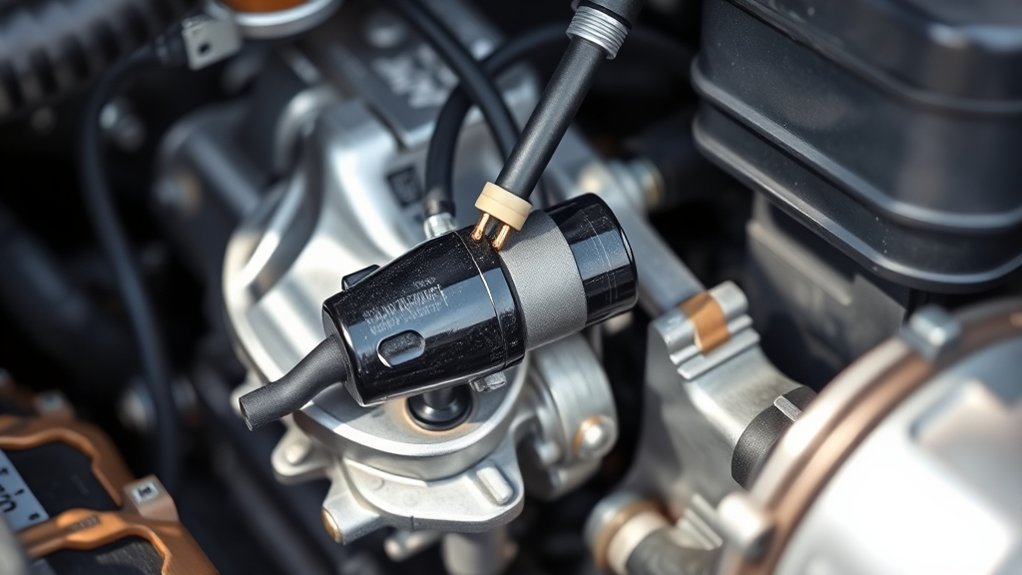
You’ll find the Torque Converter Clutch (TCC) solenoid in various locations depending on your vehicle’s make and model. This essential component is either inside or mounted on the transmission housing, playing a key role in controlling the torque converter clutch engagement.
Knowing where the Torque Converter Clutch solenoid is located can help with identification, testing, and servicing.
Typically, the TCC solenoid is situated near the valve body or the transmission pan. For example, Ford often places it close to the valve body, while GM tends to integrate it within the transmission.
Toyota and Honda usually locate the solenoid inside the transmission case. Access to the solenoid can vary, sometimes requiring the removal of nearby parts to reach it safely.
Key Takeaways
- The Torque Converter Clutch (TCC) solenoid is usually mounted on or inside the transmission housing near the valve body.
- In Ford vehicles, it is commonly found on the transmission housing close to the valve body.
- GM models often have the TCC solenoid integrated within the transmission’s valve body.
- Toyota and Honda typically locate the solenoid inside the transmission case, requiring partial disassembly.
- Accessibility varies; some solenoids are near the transmission pan, while others may be under the intake manifold or within electronic control units.
What Is the Torque Converter Clutch (TCC) Solenoid?

What exactly does the torque converter clutch (TCC) solenoid do? It controls the engagement of the torque converter clutch, which helps improve your vehicle’s fuel efficiency and reduces heat buildup. When your car reaches a certain speed, the solenoid activates, locking the torque converter to create a direct connection between the engine and transmission.
This eliminates slippage, so your engine doesn’t waste energy. You’ll notice smoother acceleration and better fuel economy because the solenoid guarantees the clutch engages only when conditions are right. If the TCC solenoid malfunctions, it can cause issues like shuddering or stalling.
Basically, this small but essential part manages when your torque converter clutch locks and unlocks, helping your vehicle run more efficiently and smoothly.
Where Is the TCC Solenoid Located in Most Cars?
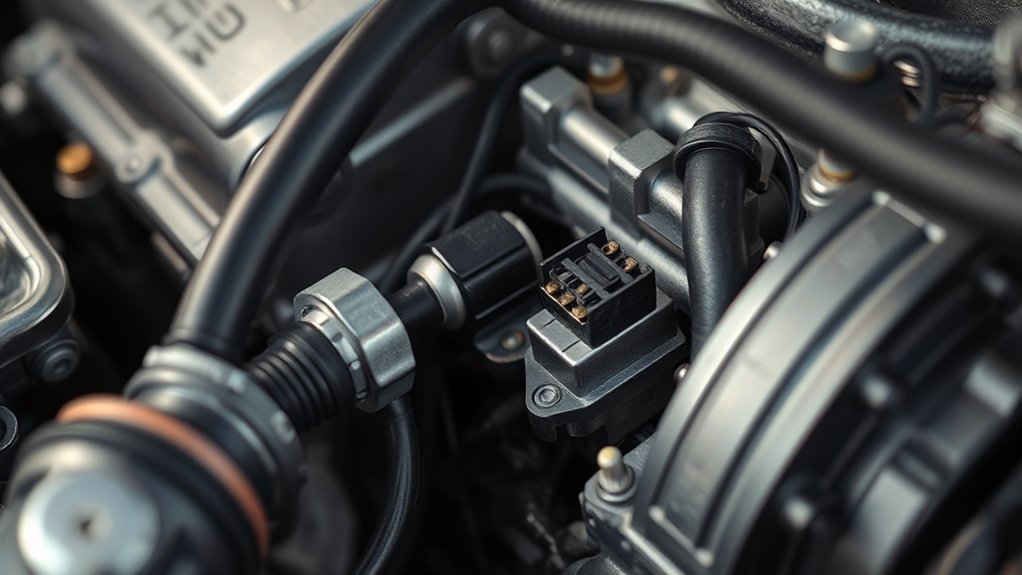
Although the exact location can vary by vehicle make and model, you’ll usually find the TCC solenoid mounted on or inside the transmission housing. This placement helps it control fluid flow to engage or disengage the torque converter clutch efficiently.
In many cars, it’s accessible near the transmission valve body or attached externally on the transmission case.
Here’s a quick overview of common TCC solenoid locations:
| Location | Description |
|---|---|
| Transmission valve body | Inside, controlling hydraulic flow |
| Transmission case exterior | Mounted externally, easy to access |
| Near the transmission pan | Positioned close for maintenance |
| Integrated in solenoid pack | Combined with other solenoids |
Knowing this will help you identify and service the TCC solenoid when needed.
How TCC Solenoid Location Varies by Vehicle
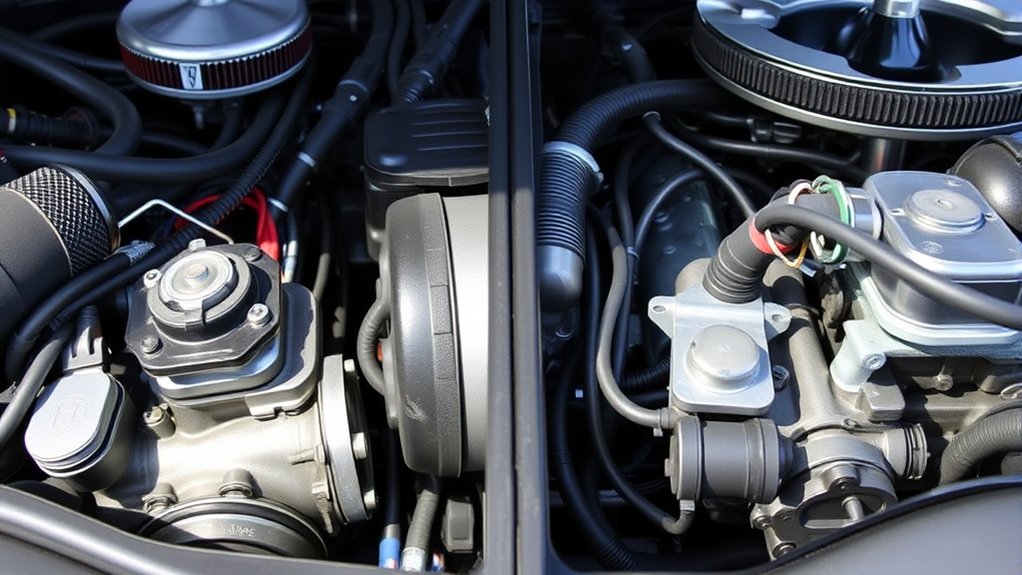
You’ll find the TCC solenoid in a few common areas, but its exact spot depends on your vehicle’s make and model. Some cars hide it inside the transmission, while others place it near the valve body or on the transmission case.
Knowing your specific vehicle helps you access the solenoid quickly and avoid unnecessary trouble.
Common TCC Solenoid Areas
Since vehicle designs differ widely, the location of the torque converter clutch (TCC) solenoid can vary considerably. However, you’ll most often find the TCC solenoid mounted on or near the transmission housing. It’s commonly positioned close to the valve body, where it can directly control hydraulic pressure to the torque converter clutch.
In many vehicles, the solenoid is accessible from underneath the car, near the transmission pan. Sometimes, it’s located on the transmission’s side, attached with bolts or clips. In other cases, you might find it near the engine block, integrated with other transmission components.
Regardless of the exact spot, the TCC solenoid is typically in a place that allows easy connection to the transmission’s control system for efficient operation.
Vehicle Make Differences
Because automakers design their transmissions differently, the location of the torque converter clutch (TCC) solenoid can change depending on the vehicle make and model. For example, in many Ford vehicles, you’ll often find the TCC solenoid mounted on the transmission housing near the valve body.
In contrast, some GM models integrate the solenoid within the transmission’s valve body itself, making it less visible from the outside. Japanese brands like Toyota and Honda typically place the solenoid inside the transmission case, requiring more disassembly to access.
European vehicles, such as BMW or Mercedes, may have unique designs where the solenoid is part of an electronic transmission control unit. Knowing your vehicle’s make helps you anticipate where the TCC solenoid might be positioned, saving you time during diagnosis or repairs.
Accessing The Solenoid Location
Understanding where the torque converter clutch (TCC) solenoid sits in your vehicle is only half the battle; accessing it can vary widely depending on the make and model. In some vehicles, the solenoid is tucked under the intake manifold, requiring you to remove several components before reaching it. Others mount it directly on the transmission housing, making access straightforward.
You might need basic hand tools, but in some cases, specialized tools are necessary to reach tight spaces. Checking your vehicle’s service manual helps you identify the exact location and the steps to remove surrounding parts safely. Being prepared for these differences saves you time and frustration when you’re ready to inspect or replace the TCC solenoid.
Why You Should Know Where the TCC Solenoid Is
Knowing where the TCC solenoid is helps you spot transmission problems early. It lets you troubleshoot issues before they get worse.
Plus, understanding its location can improve your vehicle’s overall performance.
Identifying Transmission Issues
When your vehicle starts showing signs of transmission trouble, pinpointing the torque converter clutch (TCC) solenoid can save you time and money. You might notice symptoms like rough shifting, slipping gears, or poor fuel efficiency. These issues often trace back to the TCC solenoid malfunctioning, which affects how smoothly your transmission locks and unlocks.
By knowing where the solenoid is, you can quickly inspect or replace it instead of guessing the problem. Ignoring these signs can lead to more severe transmission damage and costly repairs. So, understanding the TCC solenoid’s location helps you diagnose issues early, ensuring your vehicle runs smoothly and preventing unexpected breakdowns.
This knowledge puts you in control of maintaining your transmission’s health.
Enhancing Vehicle Performance
Detecting issues with your torque converter clutch solenoid is just the first step; being aware of its location can also boost your vehicle’s overall performance. When you know where the TCC solenoid sits, you can quickly inspect or replace it, preventing transmission slippage and improving fuel efficiency. This knowledge helps you respond swiftly to performance drops, ensuring smoother acceleration and better power transfer.
Additionally, understanding its placement allows you to monitor for signs of wear or damage before problems escalate, saving you costly repairs. By maintaining the solenoid properly, you keep your transmission operating at its best, which enhances driving comfort and extends your vehicle’s lifespan. So, knowing where the TCC solenoid is isn’t just technical—it’s practical for maintaining your car’s peak performance.
How to Identify the TCC Solenoid in Transmission Assemblies
Although identifying the torque converter clutch (TCC) solenoid might seem challenging, you can locate it by focusing on specific transmission components. Start by locating the transmission housing; the TCC solenoid is often mounted on or near the valve body inside the transmission. It’s a small, cylindrical part with an electrical connector attached.
You’ll usually find it near the transmission fluid lines or wiring harness. If you remove the transmission pan, the solenoid may be visible on the valve body assembly. Look for a part that controls fluid flow and has electrical terminals—this is typically the TCC solenoid.
Using your vehicle’s service manual can also help pinpoint its exact location, as the position varies depending on make and model.
Common Signs of a Faulty TCC Solenoid
If your vehicle starts experiencing rough shifting or unexpected stalling, the torque converter clutch (TCC) solenoid might be at fault. This component controls the engagement of the torque converter clutch, so when it malfunctions, you’ll notice several key symptoms.
Here are three common signs of a faulty TCC solenoid:
- Poor Fuel Economy – The clutch won’t engage properly, causing the engine to work harder than necessary.
- Shuddering or Jerking at Highway Speeds – You may feel vibrations or jerks while driving, especially during acceleration.
- Transmission Overheating – A failing solenoid can cause excess heat due to improper clutch engagement, risking transmission damage.
If you spot these signs, addressing the TCC solenoid issue promptly can prevent costly repairs.
Essential Tools to Locate and Inspect the TCC Solenoid
To locate and inspect the TCC solenoid, you’ll need some basic tools like a socket set and a multimeter. A scan tool or diagnostic equipment can help you read error codes and monitor solenoid performance. Having these on hand makes the process faster and more accurate.
Basic Inspection Tools
Before you start locating and inspecting the torque converter clutch (TCC) solenoid, you’ll need a few essential tools to make the process smooth and accurate. These basic inspection tools help you identify issues quickly and ensure the solenoid functions properly.
Here are three indispensable tools you’ll want on hand:
- Multimeter – To measure electrical resistance and voltage, confirming the solenoid’s electrical integrity.
- Socket Set and Wrenches – For removing bolts and accessing the solenoid without damaging surrounding components.
- Flashlight – To illuminate hard-to-see areas in the transmission housing for better visibility during inspection.
With these tools ready, you’ll be well-prepared to locate and inspect the TCC solenoid efficiently and effectively.
Diagnostic Equipment Needed
Having your basic inspection tools ready sets a solid foundation for diagnosing the torque converter clutch (TCC) solenoid. To accurately locate and test the solenoid, you’ll need a digital multimeter to check electrical resistance and continuity.
A scan tool or OBD-II reader is essential to read transmission-related trouble codes and monitor live data for TCC operation. Additionally, a wiring diagram specific to your vehicle will help you trace solenoid connectors and wiring harnesses.
In some cases, a service manual with solenoid location details and testing procedures proves invaluable. Finally, a power probe or test light can assist in verifying voltage supply to the solenoid. With these diagnostic tools, you’ll efficiently pinpoint issues and confirm the solenoid’s condition.
How to Safely Access the TCC Solenoid
When you need to access the torque converter clutch (TCC) solenoid, taking proper safety precautions is essential to protect yourself and your vehicle. Start by ensuring the vehicle is parked on a flat surface with the parking brake engaged. Disconnect the negative battery terminal to prevent electrical shocks or accidental startups.
Wear safety gloves and goggles to protect your hands and eyes from debris or fluids.
Follow these steps to safely access the TCC solenoid:
- Raise the vehicle using a jack and secure it with jack stands for stable access underneath.
- Locate the transmission pan and carefully remove it, watching for fluid spills.
- Identify the TCC solenoid by referring to your vehicle’s service manual to avoid disturbing other components.
Taking these precautions helps you work safely and efficiently.
How to Test the TCC Solenoid Once You Find It
Once you’ve safely accessed the TCC solenoid, the next step is to test its functionality to guarantee it operates correctly. First, disconnect the solenoid’s electrical connector. Use a multimeter to check resistance across the solenoid terminals; it should fall within the manufacturer’s specified range, typically between 20-30 ohms.
Next, apply 12V power briefly to see if the solenoid actuates, producing a clicking sound. Finally, inspect the wiring for damage or corrosion.
| Test Step | What to Do |
|---|---|
| Disconnect connector | Ensure no power is connected |
| Resistance check | Use a multimeter, expect 20-30Ω |
| Apply power | Briefly apply 12V, listen for click |
| Visual inspection | Check wires for damage or wear |
| Confirm results | Compare readings to specs |
When to Get Help With Your TCC Solenoid
Although you can perform basic tests on your TCC solenoid, certain symptoms or persistent issues mean it’s best to seek professional help. If your vehicle shows signs of severe transmission problems or you’re unsure about diagnosing the solenoid yourself, a mechanic’s expertise is invaluable.
Here are three key scenarios when you should get help:
- Persistent slipping or shuddering: If these symptoms continue after your tests, the solenoid or related components likely need expert diagnosis.
- Transmission overheating: This can cause serious damage and often relates to torque converter issues beyond simple fixes.
- Check engine light remains on: A professional scan can reveal specific trouble codes tied to the TCC solenoid or transmission system.
Don’t delay—addressing these problems promptly protects your transmission’s longevity.
Frequently Asked Questions
What Causes a Torque Converter Clutch Solenoid to Fail?
You’ll find a torque converter clutch solenoid fails due to electrical issues, dirt buildup, or worn-out components. Neglecting regular maintenance or using contaminated transmission fluid can cause it to malfunction or stick, affecting performance.
Can a Faulty TCC Solenoid Affect Fuel Efficiency?
Imagine driving with a leaky tire—it wastes energy. Similarly, a faulty TCC solenoid can reduce fuel efficiency by causing your engine to work harder, burning more fuel and costing you extra at the pump each month.
How Much Does It Cost to Replace a TCC Solenoid?
You’ll typically pay between $150 and $400 to replace a TCC solenoid, depending on your vehicle and labor rates. Doing it yourself can save money, but professional service guarantees proper installation and function.
Is It Safe to Drive With a Malfunctioning TCC Solenoid?
Driving with a malfunctioning TCC solenoid isn’t safe; it’s like riding a bike with a stuck brake. One driver ignored it and faced overheating, causing costly transmission damage.
Get it fixed to avoid bigger problems.
What Are the Differences Between TCC Solenoids in Automatic vs. CVT Transmissions?
In automatics, TCC solenoids control torque converter lockup for smooth shifts, while in CVTs, they manage torque transfer differently due to belt-driven design. You’ll notice CVT solenoids focus more on efficiency than shift timing.
This difference stems from the distinct transmission mechanisms in each system. Automatic transmissions rely on gear sets, requiring precise lockup control.
CVTs use a belt and pulley system, so solenoids adjust torque transfer to optimize fuel economy. This leads to unique operational characteristics between the two types.
Conclusion
Now that you know where the torque converter clutch solenoid hides, you’re basically ready to become a transmission detective! Finding and testing this little powerhouse can save your car from turning into a rolling paperweight. Don’t let a faulty solenoid ruin your drive—knowing its location puts you one step closer to automotive hero status.
So roll up your sleeves, grab your tools, and take control before your transmission throws a tantrum! Understanding the exact location of the torque converter clutch solenoid is key to diagnosing transmission issues effectively. By pinpointing this crucial part, you can prevent costly repairs and keep your vehicle running smoothly.

