

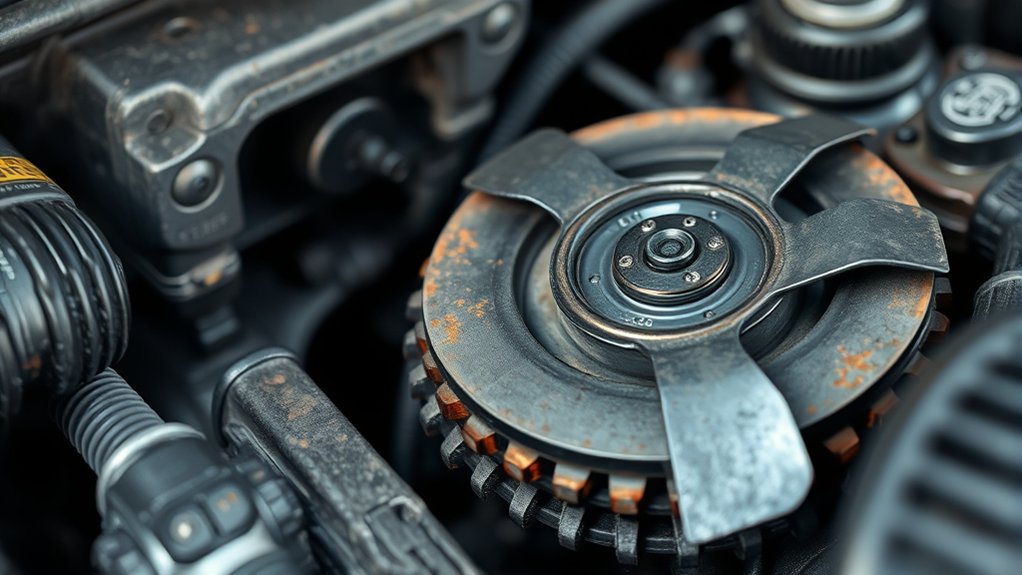
You can tell your fan clutch is bad if your engine overheats, especially when idling or stuck in traffic. A failing fan clutch often causes poor cooling performance, leading to fluctuating engine temperatures.
Listening for unusual noises like roaring, squealing, or rattling from the fan area is another clear sign.
Also, check if the fan spins freely when the engine is cold but resists turning when hot—if it doesn’t, that’s a strong indication of a bad fan clutch. These symptoms suggest the fan clutch is not engaging or disengaging properly.
Keep going to find out how to inspect and fix these issues properly to prevent engine damage and ensure optimal cooling system performance.
Key Takeaways
- Notice rising engine temperatures or overheating during idle and slow traffic as a sign of a failing fan clutch.
- Listen for unusual noises like roaring, squealing, or rattling from the fan clutch area during engine operation.
- Check if the fan spins freely when cold but resists turning when hot to confirm proper fan clutch engagement.
- Inspect fan blades and clutch for visible damage, oil leaks, or excessive looseness and wobbling.
- Observe decreased cooling efficiency, such as poor A/C performance or steam from the engine, indicating fan clutch issues.
What Does a Fan Clutch Do in Your Engine
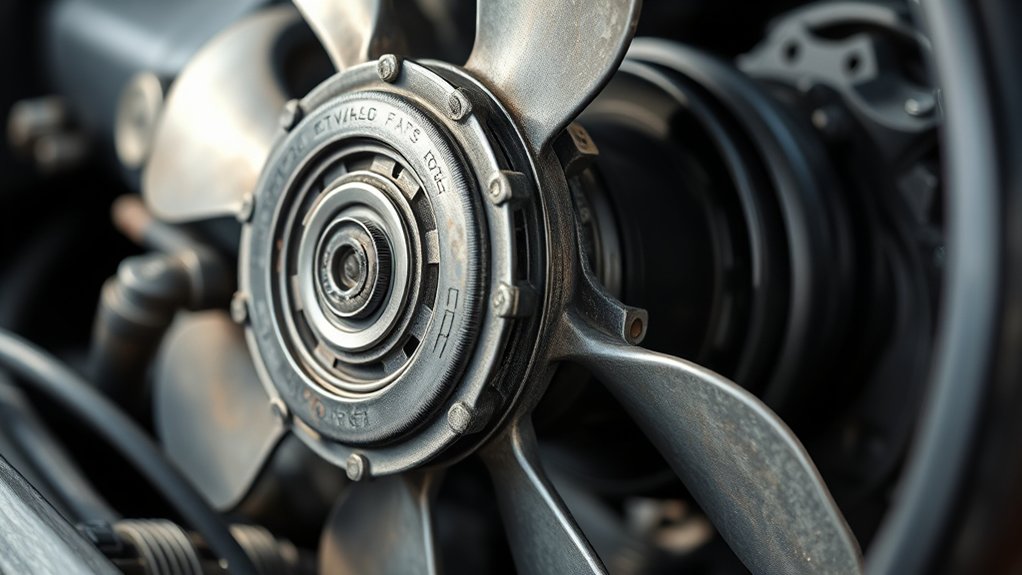
Although you might not notice it often, the fan clutch plays an important role in keeping your engine cool. It controls the fan’s speed, adjusting how fast it spins based on your engine’s temperature. When your engine heats up, the clutch engages, making the fan spin faster to pull more air through the radiator and cool things down.
When the engine is cooler, the clutch lets the fan spin slower or even freewheel, saving energy and improving fuel efficiency. This balance helps prevent overheating while reducing unnecessary wear on the fan and engine components. Essentially, the fan clutch acts like a smart switch, responding to your engine’s needs and maintaining ideal temperature for smooth performance.
Common Signs Your Fan Clutch Is Failing
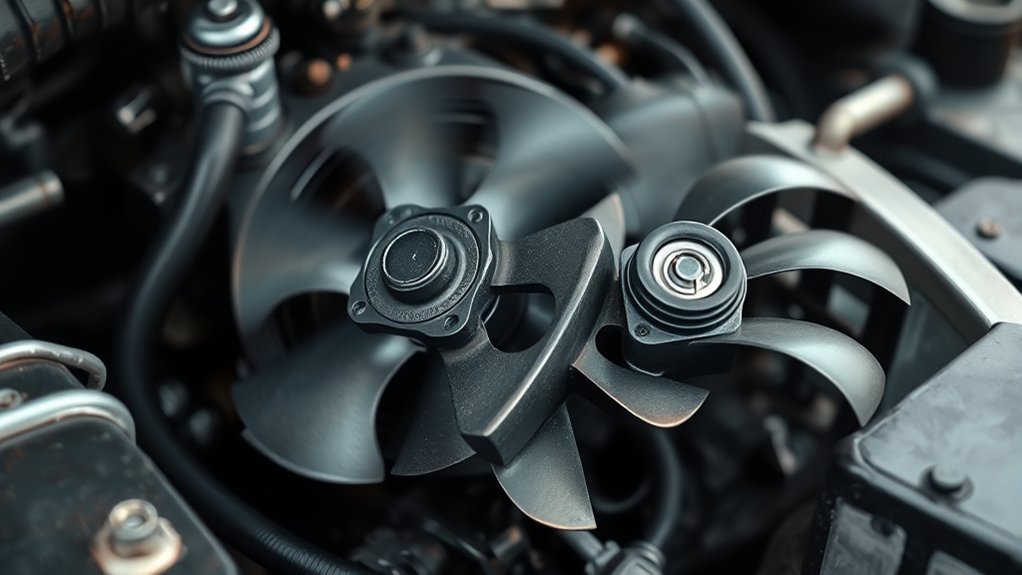
You’ll notice your engine overheating more often if the fan clutch is failing. Listen for unusual noises coming from the fan area, which can signal trouble.
Also, if your cooling system isn’t working as efficiently as before, it’s a clear sign the fan clutch might be going bad.
Overheating Engine Symptoms
When your fan clutch starts to fail, your engine may begin to overheat because the cooling fan won’t engage properly. You might notice the temperature gauge climbing higher than usual, especially during idle or slow traffic. The engine may feel hotter to the touch, and you could see steam rising from under the hood if it gets too hot.
Overheating can cause your vehicle to lose power or even stall, making it unsafe to drive. If you spot coolant leaks or notice your heater isn’t blowing warm air consistently, these can also be signs related to overheating caused by a bad fan clutch. Addressing these symptoms early helps prevent serious engine damage and keeps your vehicle running smoothly.
Unusual Noise Indicators
If your fan clutch starts making unusual noises, it’s a clear sign something isn’t right. You might hear a loud roaring or grinding sound when the engine revs up, which often means the fan clutch bearings are worn out or failing. A high-pitched squealing noise can also indicate the clutch is slipping or the internal mechanism is damaged.
These noises usually get louder as engine speed increases, so pay attention when accelerating or idling. Ignoring these sounds can lead to further damage, so it’s important to inspect the fan clutch promptly. By recognizing these noise indicators, you can catch problems early and avoid costly repairs or engine overheating later on.
Reduced Cooling Efficiency
How can you tell if your fan clutch is losing its grip on cooling performance? When it starts to fail, your engine might not stay as cool as it should. This reduced cooling efficiency can cause your engine to overheat, leading to costly repairs if ignored.
Watch for these signs:
- Rising engine temperature: The gauge climbs higher than normal, especially in slow traffic or hot weather.
- Coolant boiling: You notice steam or a boiling coolant reservoir, indicating insufficient airflow.
- Increased AC struggles: Your air conditioner doesn’t cool as effectively because the fan isn’t spinning fast enough.
If you spot these issues, your fan clutch may not be engaging properly, so it’s time to get it checked and possibly replaced.
How to Inspect Your Fan Clutch for Damage
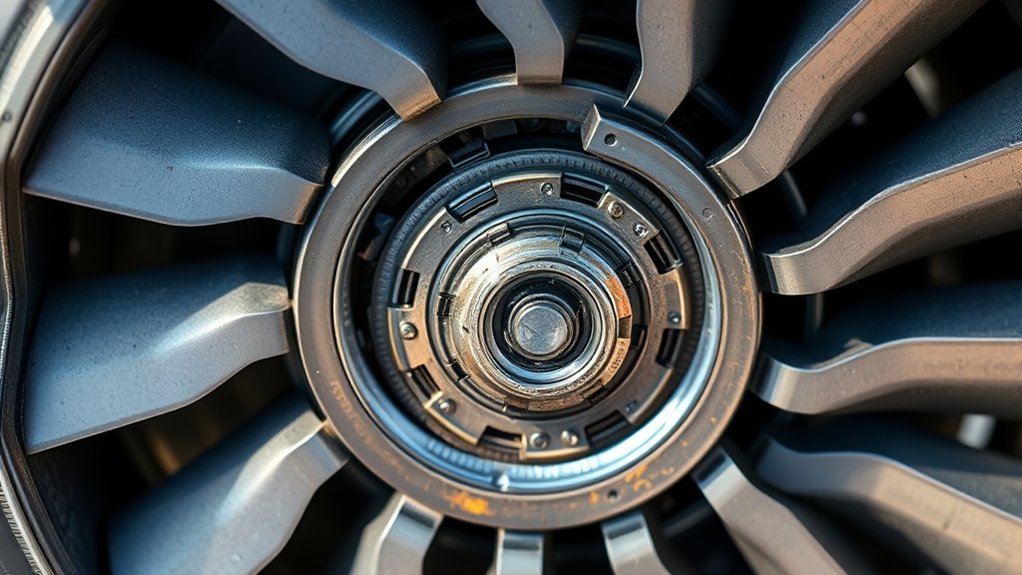
Although your fan clutch might look fine at a glance, you’ll need to perform a close inspection to spot any signs of damage. Start by checking the fan blades for cracks, chips, or warping, as these can indicate stress or impact damage.
Next, examine the fan clutch body for oil leaks or wet spots, which suggest internal seal failure. Spin the fan by hand; it should offer some resistance and gradually slow down, not spin freely or feel stuck.
Also, look for any looseness where the fan clutch attaches to the water pump or pulley—wobbling parts can cause uneven operation. Finally, inspect the bearing area for corrosion or excessive play. Catching these issues early can help you decide if the fan clutch needs repair or replacement.
Identifying Unusual Fan Clutch Noises
After checking for visible damage on your fan clutch, pay close attention to any unusual noises it might make while running. These sounds often indicate internal wear or failure. Listen carefully when the engine is warm and the fan is engaged.
Common problematic noises include:
- Grinding or squealing: Suggests worn bearings or lack of lubrication.
- Rattling or knocking: Points to loose components or internal clutch damage.
- Whining sounds: Could mean the bearing or clutch mechanism is slipping.
If you notice any of these noises, it’s a strong sign your fan clutch isn’t functioning properly. Addressing these sounds early can prevent overheating and more costly repairs down the line. Keep your ears alert for anything out of the ordinary while your engine runs.
How to Check Engine Temperature for Fan Clutch Problems
When your fan clutch starts to fail, your engine temperature may rise unexpectedly, signaling a problem. To check this, first monitor your temperature gauge while the engine is idling and during a test drive. If the needle climbs higher than normal or fluctuates erratically, your fan clutch could be malfunctioning.
You can also use an OBD-II scanner to get precise temperature readings. Compare these readings under different driving conditions to spot inconsistencies.
| Condition | Normal Engine Temp | Possible Fan Clutch Issue |
|---|---|---|
| Idle | 180°F – 210°F | Over 210°F |
| City Driving | 190°F – 220°F | Rapid spikes |
| Highway Driving | 190°F – 215°F | Excessive heat buildup |
| After Stopping | Cooling down | Stays hot |
| A/C On | Slight increase | Sharp rise |
Why a Bad Fan Clutch Hurts Performance and Fuel Economy
If your fan clutch is bad, your engine can overheat and cause serious damage. You’ll also notice your fuel consumption go up because the engine has to work harder. This reduces your overall engine efficiency, making your car less reliable and more expensive to run.
Engine Overheating Risks
Because your fan clutch controls the engine’s cooling fan speed, a faulty one can cause serious overheating problems. When the fan clutch fails, it either won’t engage properly or stays locked, disrupting essential cooling. This puts your engine at risk for overheating, which can lead to costly damage.
Here’s how a bad fan clutch impacts engine temperature:
- Reduced airflow through the radiator, limiting heat dissipation
- Increased engine temperature during idle or slow speeds
- Potential for engine components to warp or seize due to excess heat
If you notice your temperature gauge rising unexpectedly or your engine running hotter than usual, it’s vital to inspect the fan clutch. Addressing this issue early helps prevent engine damage and keeps your vehicle running smoothly.
Increased Fuel Consumption
How exactly does a bad fan clutch affect your fuel economy? When the fan clutch sticks in the engaged position, it forces the fan to spin constantly, wasting engine power. This extra load makes your engine work harder, burning more fuel than necessary.
Over time, this inefficiency adds up, lowering your miles per gallon and increasing fuel costs.
Here’s a quick look at how a bad fan clutch impacts fuel consumption:
| Condition | Fan Speed | Fuel Efficiency Impact |
|---|---|---|
| Good Fan Clutch | Variable | Ideal fuel economy |
| Stuck Engaged Fan | Constant High | Increased fuel consumption |
| Stuck Disengaged | Constant Low | Overheating risk, no fuel gain |
Keep an eye on your fuel usage—it’s often a sign your fan clutch needs attention.
Reduced Engine Efficiency
When your fan clutch malfunctions, it directly reduces your engine’s efficiency by forcing the fan to spin at inappropriate speeds. This disrupts the balance between cooling and power output, causing your engine to work harder than necessary. You’ll notice a drop in overall performance because the engine isn’t operating within its ideal temperature range.
A bad fan clutch can lead to:
- Excessive drag on the engine, reducing horsepower
- Overcooling or overheating, impacting combustion efficiency
- Increased fuel consumption as the engine compensates for temperature fluctuations
How to Test Your Fan Clutch With a Spin Test
If you want to quickly check whether your fan clutch is functioning properly, performing a spin test can give you valuable insights. First, make sure the engine is cool to avoid injury. Then, reach in and spin the fan blades by hand.
When the engine is cold, the fan should spin freely with minimal resistance. If the fan feels stuck or hard to turn, your clutch might be seized. Next, start the engine and let it warm up.
Once hot, the fan should become harder to spin, indicating the clutch is engaging as it should. If the fan still spins easily when hot, this suggests the clutch isn’t engaging properly, and it may be failing. This simple test helps you assess fan clutch performance quickly and safely.
Deciding When to Replace or Repair Your Fan Clutch
Although a faulty fan clutch can cause engine overheating and reduced performance, you don’t always need to replace it immediately. Sometimes, simple repairs or adjustments can restore proper function.
To decide whether to repair or replace your fan clutch, consider these factors:
- Severity of symptoms: If the clutch barely engages or slips constantly, replacement is often the best choice. Minor sticking or noise might just need a repair.
- Age and mileage: Older fan clutches with high mileage tend to wear out and are less reliable when repaired.
- Cost-effectiveness: Compare repair costs against replacement parts and labor. Sometimes replacing the fan clutch saves you time and money in the long run.
How to Choose the Right Replacement Fan Clutch
Deciding whether to repair or replace your fan clutch sets the stage for selecting the right replacement part. First, check your vehicle’s make, model, and engine type to guarantee compatibility. Don’t guess—use your owner’s manual or consult a reliable parts database.
Next, consider the type of fan clutch: thermal, non-thermal, or viscous. Choose one that matches your original setup. Quality matters, so opt for OEM or high-quality aftermarket brands known for durability.
Also, compare warranties—they often indicate confidence in product longevity. Finally, think about your budget but avoid cheap options that might fail quickly. By carefully matching specifications and prioritizing quality, you’ll ensure your new fan clutch performs reliably and keeps your engine cool under any conditions.
Frequently Asked Questions
Can a Bad Fan Clutch Cause My Air Conditioning to Stop Working?
Yes, a bad fan clutch can cause your air conditioning to stop working because it may lead to engine overheating. When the engine overheats, the AC system often shuts down to prevent damage.
This protective measure helps avoid further issues with both the engine and the AC components.
Therefore, addressing a faulty fan clutch promptly can help maintain your air conditioning performance and overall vehicle health.
How Much Does It Typically Cost to Replace a Fan Clutch?
You’ll typically pay between $200 and $400 to replace a fan clutch. Labor usually costs around $100 to $150, while parts range from $100 to $250. Prices vary depending on your vehicle and location.
Are There Specific Vehicle Makes More Prone to Fan Clutch Failure?
You’ll find that older trucks and SUVs, especially from manufacturers like Ford, Dodge, and Chevrolet, tend to experience fan clutch failures more often. Regular maintenance helps, but these models often put extra stress on the fan clutch.
This increased stress can lead to more frequent issues requiring attention. Keeping up with scheduled inspections is crucial for these vehicles to avoid unexpected failures.
Can a Faulty Fan Clutch Damage Other Engine Components?
A faulty fan clutch is like a broken conductor in your engine’s orchestra—it can cause overheating, damaging your radiator, water pump, and even the head gasket.
You’ll want to fix it fast to avoid costly repairs.
Is It Safe to Drive With a Failing Fan Clutch Temporarily?
You can drive temporarily with a failing fan clutch, but don’t push it. It risks overheating your engine, causing serious damage.
Get it checked and replaced as soon as possible to avoid costly repairs.
Conclusion
Your fan clutch is like the heartbeat of your engine’s cooling system—when it falters, everything feels off rhythm. By watching for signs like unusual noises, high engine temps, or poor performance, you catch the warning before it’s too late.
Trust your inspection and tests; they’re your stethoscope. Replacing a bad fan clutch keeps your engine’s pulse steady, letting your ride run cool and smooth.
Regularly checking your vehicle can help you tell if your fan clutch is bad. Acting promptly ensures your engine stays protected and performs at its best.

