

You shouldn’t use carburetor cleaner instead of starter fluid because it’s not designed to ignite your engine quickly or safely. Carburetor cleaner contains harsh solvents meant for cleaning, not producing combustible vapor like starter fluid.
Using carburetor cleaner as a starter fluid substitute can lead to engine damage, poor ignition, or fire risks.
Starter fluid is specifically formulated to help engines start in cold or difficult conditions by providing a quick ignition source. Carburetor cleaner, on the other hand, is intended to dissolve deposits inside the carburetor and does not have the same properties needed for safe engine starting.
If you’re curious about safer alternatives and proper usage to avoid issues, you’ll find useful guidance ahead to help your engine start smoothly and protect its components. Always choose the right product for the task to ensure engine safety and performance.
Key Takeaways
- Carburetor cleaner is designed to dissolve deposits, not to ignite engines like starter fluid.
- Using carburetor cleaner instead of starter fluid risks poor ignition and potential engine damage.
- Starter fluid contains volatile hydrocarbons specifically formulated for quick combustion and engine starting.
- Carburetor cleaner’s harsh solvents can degrade engine components and increase fire hazards if misused.
- Only use carburetor cleaner sparingly for cleaning; rely on starter fluid or proper aids for starting engines.
What Is Starter Fluid and How Does It Work?
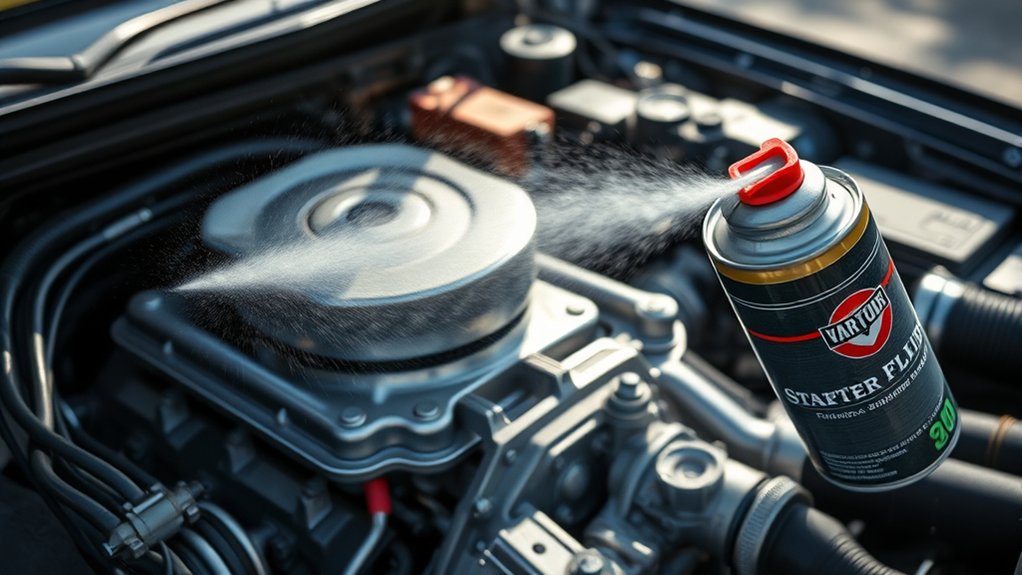
What exactly is starter fluid, and why do you need it? Starter fluid is a highly flammable aerosol spray designed to help your engine start quickly, especially in cold or damp conditions. When you spray it into the intake or carburetor, it provides a quick burst of combustible vapor that ignites more easily than regular fuel.
This jump-starts the combustion process, allowing your engine to fire up smoothly. You’ll find it particularly useful if your vehicle or equipment struggles to start because of low temperatures or stale fuel. Just a small amount can make a big difference when cranking the engine.
However, it’s important to use starter fluid sparingly and follow the manufacturer’s instructions, as overuse can potentially harm certain engine components.
How Is Carburetor Cleaner Different From Starter Fluid?
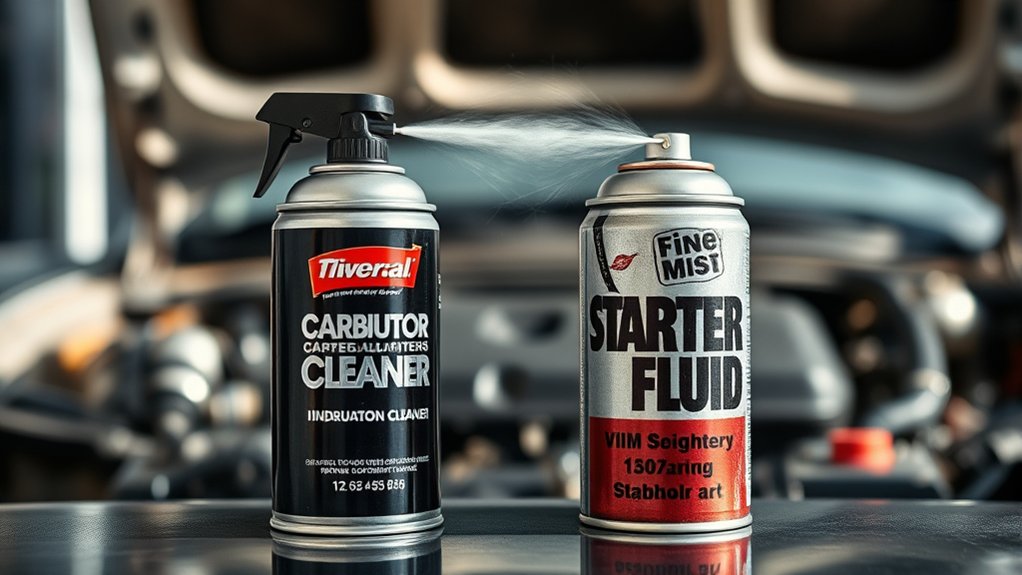
You’ll notice that carburetor cleaner and starter fluid have different chemical makeups designed for specific tasks. Carburetor cleaner focuses on removing buildup, while starter fluid helps ignite engines more easily.
Plus, their flammability and safety profiles vary, so it’s important to understand those differences before using one in place of the other.
Chemical Composition Differences
Although both carburetor cleaner and starter fluid aim to improve engine performance, their chemical compositions differ considerably, affecting how you should use them. Carburetor cleaner contains powerful solvents like acetone, toluene, and xylene designed to dissolve varnish, gum, and carbon deposits inside the carburetor. On the other hand, starter fluid primarily consists of volatile hydrocarbons such as ether or diethyl ether, which ignite quickly to help start cold engines.
Because carburetor cleaner is more of a solvent and less flammable, using it as a starting aid can be ineffective and potentially harmful. Starter fluid’s chemical makeup makes it highly combustible, providing the quick ignition boost your engine needs. Understanding these differences helps you avoid misuse and potential damage to your engine components.
Intended Usage Purposes
The different chemical properties of carburetor cleaner and starter fluid reflect their distinct roles in engine maintenance. You use carburetor cleaner primarily to remove varnish, gum, and deposits inside the carburetor and intake system, ensuring smooth fuel flow and efficient combustion. It’s designed for cleaning, not ignition.
Starter fluid, on the other hand, serves a very different purpose. You spray it into the intake or carburetor to help your engine start quickly, especially in cold or tough conditions. It ignites easily, providing a quick burst of combustible vapor.
While carburetor cleaner focuses on maintenance by dissolving buildup, starter fluid’s intended use is to assist with cold starts by enhancing fuel ignition. So, they’re not interchangeable because they cater to different engine needs.
Flammability And Safety
Because carburetor cleaner and starter fluid contain different chemical compounds, their flammability and safety profiles vary considerably. Starter fluid is designed to ignite quickly and burn cleanly, helping your engine start easily in cold conditions. It’s formulated with highly volatile ingredients, which means it’s extremely flammable but controlled for safe use in engines.
Carburetor cleaner, on the other hand, contains harsh solvents that are flammable but not optimized for ignition purposes. Using it as a starter fluid substitute can be dangerous because it may ignite unpredictably or produce harmful fumes. You should avoid spraying carb cleaner near open flames or hot surfaces.
Always handle these chemicals with care, use them only as intended, and follow safety guidelines to prevent accidents or engine damage.
Can You Safely Use Carburetor Cleaner Instead of Starter Fluid?
You might wonder if carburetor cleaner can replace starter fluid safely. Since their chemical compositions differ, using the wrong product can cause damage or pose safety risks.
Let’s look at how to use each correctly to avoid problems.
Chemical Composition Differences
Although carburetor cleaner and starter fluid might seem similar since they both aid engine performance, their chemical compositions differ considerably.
Carburetor cleaner contains strong solvents designed to dissolve varnish and gum inside the carburetor. Starter fluid, on the other hand, is made of volatile compounds that ignite easily to help start a cold engine.
Here’s a quick comparison:
| Feature | Carburetor Cleaner | Starter Fluid |
|---|---|---|
| Primary Chemicals | Solvents (acetone, xylene) | Ether or a blend of ethers |
| Purpose | Cleaning carburetor parts | Assisting engine start-up |
| Ignition Capability | Low (not designed to ignite) | High (highly flammable) |
Understanding these differences helps you decide whether substitution is appropriate.
Risks of Misuse
The distinct chemical makeup of carburetor cleaner and starter fluid means using one in place of the other can lead to problems. If you use carburetor cleaner instead of starter fluid, you risk damaging engine components because carburetor cleaner contains harsh solvents not designed for ignition. These solvents can degrade rubber seals, gaskets, and plastic parts, leading to leaks and costly repairs.
Additionally, carburetor cleaner’s high volatility and flammability increase the chance of backfiring or fire hazards if misapplied. You might also experience poor ignition since carburetor cleaner doesn’t provide the same combustible boost as starter fluid, causing frustrating no-start situations.
To avoid these risks, it’s critical not to substitute carburetor cleaner for starter fluid without understanding the consequences fully.
Appropriate Application Guidelines
While carburetor cleaner and starter fluid serve different purposes, you can sometimes use carburetor cleaner cautiously in specific situations, but only with a clear understanding of its limitations and risks. If you choose to use carburetor cleaner as a starter aid, apply it sparingly and directly into the intake or carburetor throat, avoiding any contact with hot engine parts to prevent fires. Make sure the engine is off and cool before spraying.
Use short bursts rather than continuous spraying to minimize chemical buildup and damage. Always check your vehicle’s manual and consider manufacturer recommendations. Remember, carburetor cleaner lacks the quick ignition properties of starter fluid, so it’s not a reliable substitute for every cold start scenario.
Use it only when necessary and with proper precautions.
When Is It Okay to Use Carburetor Cleaner to Start Your Engine?
If you’re dealing with a stubborn engine that won’t start, you might wonder when it’s okay to reach for carburetor cleaner instead of starter fluid. You can use carburetor cleaner to help start your engine if you suspect the issue is related to fuel delivery or a dirty carburetor. Spray a small amount directly into the carburetor throat while trying to start.
This can help loosen deposits and provide a quick fuel source for ignition. However, use it sparingly and only as a temporary fix, since carburetor cleaner isn’t formulated as a dedicated starting aid. Always ensure your engine is off before spraying, and avoid overuse to prevent damage.
When in doubt, starter fluid remains the safer choice for reliable starting assistance.
What Are the Risks of Using Carburetor Cleaner Instead of Starter Fluid?
Because carburetor cleaner isn’t designed as a starting aid, using it instead of starter fluid can cause several risks for your engine. The chemicals in carburetor cleaner are highly flammable but also very harsh, which can damage sensitive engine components like rubber seals, hoses, and gaskets. You might end up causing corrosion or deterioration, leading to costly repairs.
Additionally, carburetor cleaner can ignite too aggressively, increasing the chance of backfires or engine fires. Its improper vaporization can also result in poor combustion, making it harder to start your engine and potentially flooding it. Using carburetor cleaner incorrectly may void warranties or damage your vehicle’s emission systems.
How to Use Starter Fluid to Get Your Engine Started
Wondering how to use starter fluid safely and effectively? First, make sure your engine is off and cool. Locate the air intake or carburetor, depending on your engine type.
Ensure your engine is off and cool before locating the air intake or carburetor to use starter fluid safely.
Shake the can well, then spray a quick burst—usually 1 to 3 seconds—directly into the intake. Avoid over-spraying, as too much starter fluid can damage your engine. Once sprayed, start your engine immediately.
If it doesn’t start, wait a minute before trying again. Never spray starter fluid into a running engine or use it excessively. Always follow the instructions on the can and take safety precautions like working in a well-ventilated area.
Using starter fluid correctly can help your engine fire up quickly without causing harm.
Alternative Starting Aids When You Don’t Have Starter Fluid
When you don’t have starter fluid on hand, several other options can help get your engine going. These alternatives can provide the necessary combustion boost to start your engine in a pinch. Here are some you can try:
- WD-40: It’s flammable and can help ignite the fuel-air mixture.
- Isopropyl Alcohol: Spray a small amount into the intake for ignition help.
- Hand Sanitizer: Contains alcohol and can work similarly to isopropyl alcohol.
- Carburetor Cleaner: While not ideal, a quick, light spray may assist starting.
Use these cautiously and sparingly. Always remember these aren’t perfect substitutes and are best used only when starter fluid isn’t available.
Tips to Avoid Engine Damage When Using Starting Aids
Although starting aids can be a helpful quick fix, you need to use them carefully to prevent engine damage. First, always follow the manufacturer’s instructions and never spray starting fluid or carburetor cleaner directly into the air intake for more than a few seconds. Overuse can flood the engine or cause pre-ignition, leading to serious damage.
Avoid using starting aids on engines with glow plugs or diesel engines unless specified safe. Use starting aids only when the engine is cold; applying them to a warm engine can cause harmful deposits. Finally, make sure your engine is well-maintained—clean filters, proper fuel, and timely tune-ups reduce the need for starting aids and protect your engine in the long run.
Use these tips to start safely without risking harm.
Frequently Asked Questions
Can Starter Fluid Damage Fuel-Injected Engines?
Yes, starter fluid can damage fuel-injected engines if you use it excessively. You should avoid spraying it directly into the intake, as it may harm fuel injectors, sensors, and other delicate components in your engine.
How Long Does Starter Fluid Remain Effective After Application?
Starter fluid remains effective for just a few seconds after you apply it, so you need to start your engine quickly. If you wait too long, its ignition properties fade, making it harder to get your engine running.
What Ingredients in Carburetor Cleaner Make It Flammable?
Like gasoline ignites a fire, carburetor cleaner contains flammable solvents such as acetone, toluene, and heptane. These ingredients evaporate quickly and burn easily, so you should handle the cleaner with extra caution around flames.
Are There Environmental Concerns With Using Starter Fluid?
Yes, you should be cautious. Starter fluid contains chemicals that can harm the environment, contributing to air pollution and toxicity.
Always use it sparingly and dispose of containers properly to minimize environmental impact.
Can Starter Fluid Be Used in Diesel Engines?
You absolutely can’t use starter fluid in diesel engines without risking a fiery disaster! Diesel engines rely on compression, so instead, you’ll want to use specially formulated diesel starting aids to get your engine roaring safely.
Conclusion
While carburetor cleaner might seem like a quick fix, using it instead of starter fluid can increase your engine’s risk of damage. Did you know that nearly 30% of engine failures are linked to improper starting methods? It’s best to stick with starter fluid or approved alternatives to protect your engine.
When you do use starting aids, follow instructions carefully to avoid costly repairs and keep your engine running smoothly. Using the right product is essential for engine safety and performance. Always prioritize starter fluid over carburetor cleaner for reliable engine starts.

