

You burn a clutch step by step by slipping it under load repeatedly, riding the pedal continuously, and applying too much engine torque. This process generates excessive heat, which wears down the friction surfaces of the clutch.
Understanding how to burn a clutch is essential for drivers who want to avoid costly repairs.
Resting your foot on the clutch or slipping it during gear changes or hill starts speeds up the damage. Abrupt, aggressive clutch use also accelerates wear, leading to poor performance.
Over time, these habits significantly reduce the clutch’s lifespan.
Keep going, and you’ll find out how to protect your clutch and extend its life. Proper driving techniques can prevent premature clutch failure and save you money in the long run.
Key Takeaways
- Excessively slip the clutch by partially engaging it under high engine load or throttle for long periods.
- Rest your foot on the clutch pedal continuously, causing constant friction and premature wear.
- Release the clutch abruptly or aggressively during gear changes or hill starts.
- Use excessive engine torque by revving high and engaging the clutch suddenly, overwhelming friction material.
- Hold the clutch down at stoplights or in traffic, generating heat that damages clutch surfaces.
What It Means To Burn A Clutch And Why It Happens
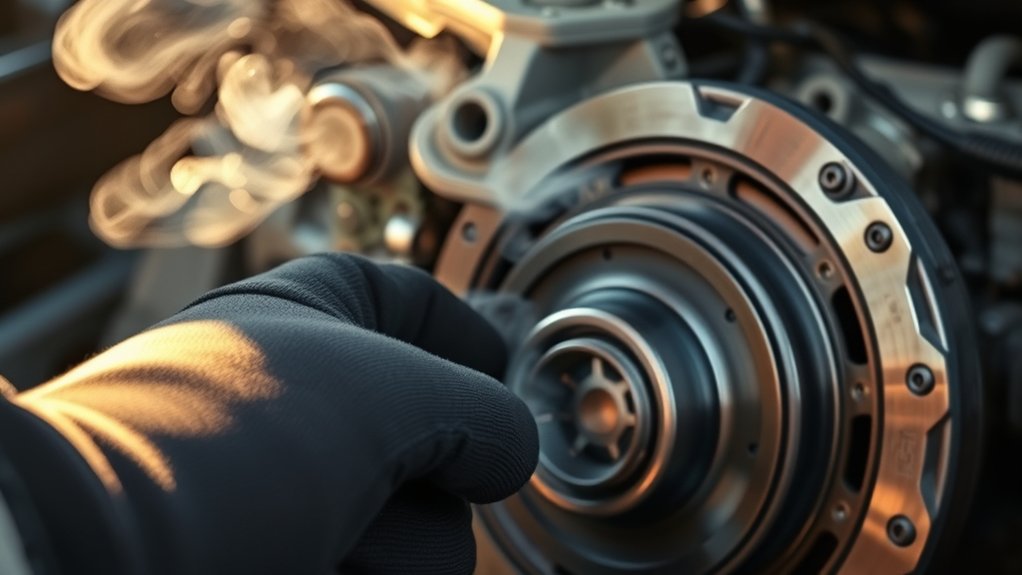
When you burn a clutch, you’re fundamentally causing the clutch material to overheat and wear out prematurely. This happens when you slip the clutch excessively, usually by keeping the pedal partially engaged for too long or by riding the clutch while driving. You might do this when you try to launch your car smoothly or when you’re stuck in stop-and-go traffic.
The friction generates intense heat, which damages the clutch’s friction surface, reducing its ability to grip effectively. Over time, this results in a loss of power transmission and can lead to costly repairs. To avoid burning your clutch, you need to be mindful of how you use the pedal and avoid unnecessary slipping or holding it down longer than needed.
How Your Car’s Clutch Works And Why It Matters
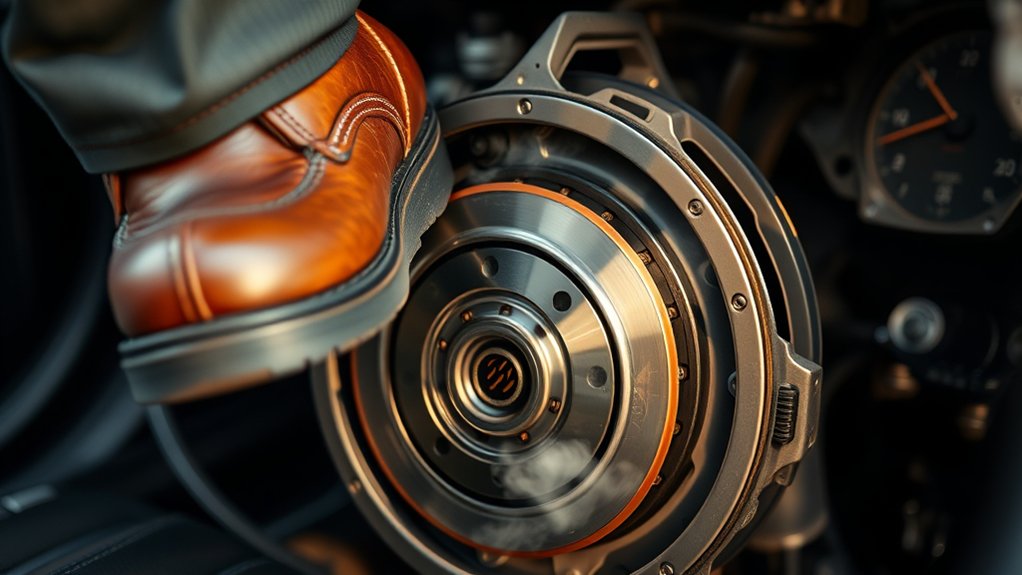
Understanding how your car’s clutch works is essential because it directly affects how smoothly your vehicle shifts gears and transfers power from the engine to the wheels. The clutch connects and disconnects the engine’s power to the transmission, allowing you to change gears without grinding. When you press the clutch pedal, it disengages the clutch, stopping power flow so you can shift.
Releasing the pedal re-engages the clutch, transferring power smoothly.
| Clutch Part | Function |
|---|---|
| Clutch Pedal | Controls engagement/disengagement |
| Clutch Disc | Transfers engine power |
| Pressure Plate | Applies pressure to clutch disc |
| Flywheel | Connects clutch to engine |
| Release Bearing | Allows smooth pedal operation |
Knowing this helps you avoid clutch damage and improves driving feel.
Step 1: Slipping The Clutch Under Load
Since the clutch transfers power from the engine to the wheels, slipping it under load means you’re allowing some controlled slippage while the engine is working hard. When you engage the clutch partially while accelerating, the friction material heats up rapidly due to the friction between the clutch disc and flywheel. This heat can wear down the clutch lining quickly.
If you hold the clutch in this slipping state for too long or apply too much throttle, you increase wear exponentially. You might feel the engine rev without corresponding acceleration—this is the clutch slipping. Avoid prolonged slipping by fully engaging the clutch once the car starts moving.
Mastering this balance is key; slipping under heavy load damages the clutch faster than gentle, smooth engagement.
Step 2: Overusing The Clutch At Low Speeds
Controlling clutch slip under load is just one way you can wear out your clutch. Another common mistake is overusing the clutch at low speeds. When you constantly engage and disengage the clutch while crawling in traffic or maneuvering tight spaces, you generate unnecessary friction.
This friction heats up the clutch plates, causing them to wear faster. You might think easing off the gas while feathering the clutch helps, but it actually accelerates deterioration. Instead, try using the brake more and rely on the clutch only when shifting gears.
Avoid riding the clutch or slipping it excessively at low speeds, as this burns the friction material prematurely. Mastering smooth, deliberate clutch use at low speeds extends your clutch’s lifespan considerably.
Step 3: Riding The Clutch Pedal Continuously
If you keep your foot resting on the clutch pedal while driving, you’re causing constant friction between the clutch plate and flywheel. This “riding the clutch” means the clutch isn’t fully engaged, leading to premature wear. You might do this subconsciously, especially in stop-and-go traffic or when preparing to shift gears, but it’s harmful.
Instead, rest your foot beside the pedal to avoid unnecessary contact. Continuous partial engagement generates heat and wears down the clutch lining, reducing its lifespan considerably. Over time, this will cause slipping, poor acceleration, and costly repairs.
To protect your clutch, press the pedal fully only when shifting gears, then release it smoothly. Avoid keeping your foot on the pedal when it’s not needed to maintain clutch health.
Step 4: Applying Excessive Engine Torque
How much engine torque is too much when using the clutch? If you slam down the accelerator while the clutch is still slipping, you’re applying excessive torque that overwhelms the clutch’s friction material. This causes rapid wear and can burn out the clutch quickly.
You want to avoid revving the engine excessively before fully engaging the clutch.
Here’s a quick reference on torque levels and clutch impact:
| Engine Torque (Nm) | Clutch Engagement State | Clutch Wear Risk |
|---|---|---|
| 0-100 | Fully engaged | Minimal |
| 100-200 | Slight slip | Moderate |
| 200-300 | Partial slip | High |
| 300-400 | Heavy slip | Very high |
| 400+ | Full slip | Immediate damage |
Keep torque low until the clutch fully grips to protect it.
Step 5: How Heat Builds Up And Destroys Your Clutch
Since the clutch relies on friction to transfer power, it naturally generates heat during use. When you slip the clutch or hold it partially engaged, friction increases, causing the temperature to rise rapidly. If you keep riding the clutch, that heat builds up faster than it can dissipate.
Excessive heat breaks down the clutch’s friction material, making it less effective at gripping. Over time, the clutch surface warps or becomes glazed, reducing its ability to transfer power smoothly. This damage leads to slipping, loss of performance, and eventually clutch failure.
You’ll find that repeated overheating wears the clutch out prematurely, forcing costly repairs. Managing heat by avoiding unnecessary slipping and using proper clutch control helps protect your clutch from this destructive process.
The First Signs Your Clutch Is Burning
You’ll notice a distinct smell of burning when your clutch starts to fail. If your gears slip or your acceleration drops unexpectedly, those are clear warning signs.
Paying attention to these clues can help you avoid further damage.
Smell Of Burning
What does a burning clutch smell like? You’ll notice a distinct, acrid odor, similar to burnt rubber or overheated brakes. This smell often hits you when you’re stuck in traffic or climbing a hill, where the clutch works harder.
If you catch this scent lingering around your car, don’t ignore it. It’s your clutch’s way of screaming for attention. The smell comes from the friction material overheating as the clutch slips, generating excessive heat.
If you keep pushing through without fixing the issue, the smell will only get stronger, signaling serious damage. Pay attention early—catching the smell can save you from costly repairs and keep your car running smoothly.
Slipping Gears
How can you tell if your clutch is starting to fail? One of the earliest signs is slipping gears. When you shift into a gear and the engine revs higher without a corresponding increase in speed, your clutch is slipping.
This happens because the clutch plate isn’t fully engaging the flywheel, causing a loss of power transfer. You might notice it more when accelerating uphill or carrying heavy loads. If you feel a sudden drop in engine responsiveness despite pressing the accelerator, don’t ignore it.
Slipping gears mean your clutch is burning out, wearing down the friction material. Catching this early helps avoid more serious damage. Pay attention to these subtle clues—they’re your car’s way of warning you before things get worse.
Decreased Acceleration
When your clutch starts to burn, you might notice your car struggling to accelerate as it once did. Instead of a smooth surge forward, your engine revs higher without a matching increase in speed. This happens because the clutch plate isn’t gripping the flywheel properly, causing power loss between the engine and transmission.
You’ll feel a delay or hesitation when pressing the gas pedal, especially during uphill drives or quick starts. Ignoring decreased acceleration can worsen clutch damage, leading to complete failure. To protect your vehicle, pay attention to this early warning sign.
Adjust your driving habits by avoiding excessive slipping or riding the clutch, and schedule a mechanic’s inspection soon to prevent costly repairs.
How A Burned Clutch Affects Vehicle Performance
When your clutch burns, you’ll notice reduced power getting to the wheels, making acceleration sluggish. You’ll also face increased slippage, which means the engine revs without the car responding properly.
Over time, this wear speeds up damage to other parts, leading to more costly repairs.
Reduced Power Transmission
Why does your vehicle struggle to accelerate or maintain speed after a clutch burns out? When the clutch wears down or burns, it can’t effectively transfer the engine’s power to the transmission. This loss means less power reaches your wheels, so your car feels sluggish and unresponsive.
You might notice your engine revving higher without a corresponding increase in speed. That’s because the clutch plates aren’t gripping tightly, causing a drop in power transmission. This reduced efficiency makes driving uphill or carrying loads especially difficult.
Fundamentally, your vehicle can’t perform at its best because the connection between the engine and drivetrain weakens. Recognizing this early helps you avoid further damage and maintain safer, smoother driving.
Increased Slippage Issues
The loss of power transmission you experience is closely tied to increased clutch slippage. When the clutch disc wears down or overheats, it can’t grip the flywheel properly, causing the engine’s power to slip instead of transferring efficiently to the wheels. You’ll notice the engine revving higher without a corresponding increase in speed, especially during acceleration or climbing hills.
This slippage reduces your vehicle’s responsiveness and can make controlling speed tricky. If you keep driving with this issue, the clutch will struggle to engage smoothly, leading to jerky starts and difficulty maintaining momentum. You might also smell burning or notice smoke from the clutch area.
Addressing slippage early helps prevent further damage and keeps your vehicle running safely and efficiently.
Accelerated Component Wear
Because a burned clutch can’t engage properly, it puts extra strain on other drivetrain parts, causing them to wear out faster. When your clutch slips, the transmission and flywheel endure more stress as they compensate for lost power transfer. This leads to overheating and premature wear of these components.
You might also notice rough shifting or grinding noises because the worn clutch disrupts smooth gear engagement. Over time, this accelerated wear can cause costly repairs beyond just replacing the clutch itself. To maintain your vehicle’s performance and avoid these issues, you should address clutch problems promptly.
Ignoring a burned clutch not only reduces your car’s efficiency but also shortens the lifespan of crucial drivetrain parts, increasing maintenance expenses down the line.
Driving Habits That Damage Your Clutch
If you often rest your foot on the clutch pedal or ride it halfway, you’re accelerating clutch wear without realizing it. This habit keeps the clutch partially engaged, causing unnecessary friction and heat. Slipping the clutch too frequently during gear changes or while starting on hills also wears down the clutch plate faster.
Holding the clutch down at stoplights or in traffic means the release bearing stays engaged, increasing wear. Abruptly releasing the clutch or launching your car aggressively places excessive stress on the clutch components. Even riding the clutch to control speed instead of using the brakes puts extra strain on the system.
These common driving habits chip away at your clutch’s lifespan, making it more vulnerable to burning out prematurely.
How To Avoid Burning Your Clutch In Daily Driving
When you get into the habit of fully pressing and releasing the clutch only when necessary, you considerably reduce wear and extend its life. Avoid resting your foot on the clutch pedal, and don’t ride it during stops or slow traffic.
Shift gears smoothly without forcing the clutch to slip. Practice using the handbrake on hills instead of holding the clutch halfway. Here’s a quick guide to protect your clutch daily:
| Action | Tip |
|---|---|
| Starting Off | Fully release clutch gently |
| Stopping | Press clutch only when needed |
| Shifting Gears | Shift smoothly, avoid jerks |
| Hill Starts | Use handbrake, avoid slipping |
| Resting Foot | Keep off clutch pedal |
Master these habits to keep your clutch healthy longer.
When To Replace A Burned Clutch And How Much It’ll Cost You
A burned clutch doesn’t just affect your car’s performance—it signals it’s time for a replacement. If you notice slipping gears, difficulty shifting, or a burning smell, it’s time to act. Driving with a worn clutch can damage your transmission, leading to costlier repairs.
Replacing a clutch typically costs between $500 and $2,000, depending on your vehicle’s make and model. Labor is the most significant part of the expense since accessing the clutch requires removing the transmission. Parts, including the clutch disc, pressure plate, and release bearing, add to the price.
To avoid surprises, get a mechanic’s diagnosis early. Replacing the clutch promptly saves you from further damage and keeps your car running smoothly. Don’t wait—address the issue at the first signs of trouble.
Frequently Asked Questions
Can You Burn a Clutch in an Automatic Transmission?
You can’t burn a clutch in a traditional automatic transmission because it doesn’t have a clutch plate like a manual. However, in automatics with a torque converter or dual-clutch systems, overheating can still cause damage.
Is Burning a Clutch Covered by Car Insurance?
No, burning a clutch usually isn’t covered by car insurance since it’s considered wear and tear or driver error.
You’ll likely have to pay for repairs yourself unless you have specific mechanical breakdown coverage.
How Long Does a Clutch Typically Last Before Replacement?
A clutch lasts about 50,000 to 100,000 miles, like a marathon runner pacing through miles. How long it lasts depends on how you drive and maintain it—gentle use helps it go the distance without burning out.
Are Certain Car Brands More Prone to Clutch Burning?
Yes, some car brands with less durable clutch materials or aggressive designs are more prone to clutch burning. You’ll want to research your specific model and driving habits to avoid premature wear and costly repairs.
Can Clutch Burning Cause Damage to Other Car Parts?
Yes, burning your clutch can damage other parts like the flywheel and pressure plate. You’ll also stress the transmission and engine, leading to costly repairs.
Conclusion
Burning a clutch isn’t just about harsh driving—it’s often the subtle habits, like slipping or riding the clutch, that wear it down. You might think revving aggressively causes the damage, but it’s actually the constant friction and heat from improper use that ruins it.
By understanding how your clutch works and avoiding these common mistakes, you’ll extend its life and save money. Remember, smooth and mindful driving beats power moves every time.
To prevent burning a clutch, focus on proper clutch control and avoid unnecessary slipping. Consistent habits like not riding the clutch and using the correct gear reduce wear. Ultimately, careful driving is key to maintaining clutch health and avoiding costly repairs.

