

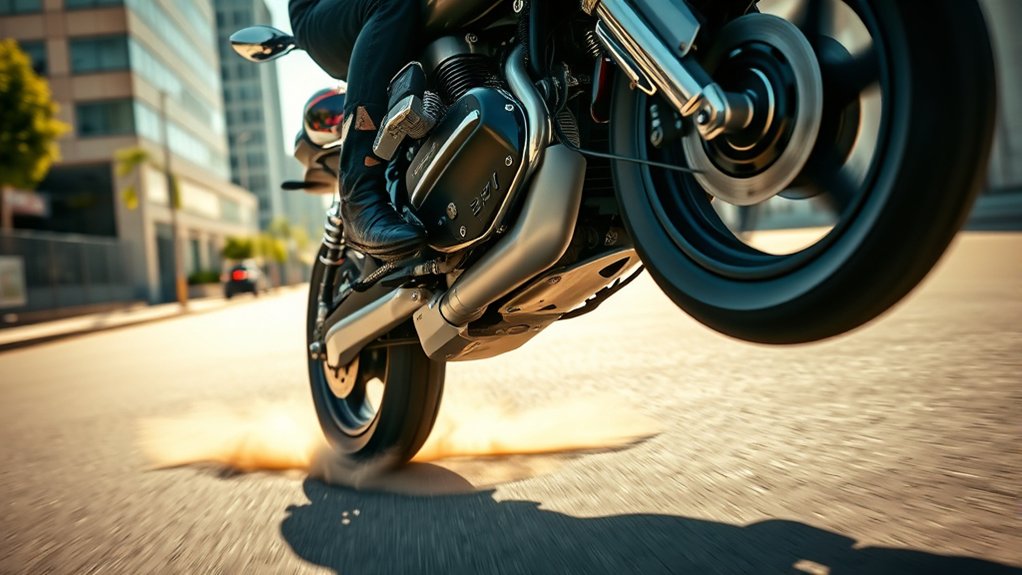
To clutch up a wheelie, start by prepping your bike with smooth clutch and throttle checks. Finding the sweet spot around 5,000-8,000 RPM is crucial for a successful lift. These key steps ensure you have the right control and power to pull the front wheel off the ground safely.
Position your body relaxed and centered, gripping with your knees to maintain balance. Pull the clutch sharply while twisting the throttle to lift the front wheel. Then hold the clutch bite point to stabilize the wheelie and prevent sudden drops.
Shift your weight back to extend the wheelie and use precise throttle modulation along with rear brake control to manage height. Ease off smoothly to land safely without losing balance.
Master these steps and discover finer control techniques next for perfecting your clutch-up wheelies.
Key Takeaways
- Check clutch and throttle for smooth operation and identify optimal RPM range (5,000-8,000) for responsive power delivery.
- Engage clutch sharply while twisting throttle, then release clutch smoothly to lift the front wheel without stalling or jerking.
- Lean back slightly, grip tank with knees, and keep arms relaxed to maintain balance and control during the wheelie.
- Use steady throttle and fine-tune wheelie height with clutch modulation and gentle rear brake taps as needed.
- Lower the wheel smoothly by easing off throttle and gradually releasing clutch, shifting weight forward for a controlled landing.
Understand Clutch Basics for Wheelies
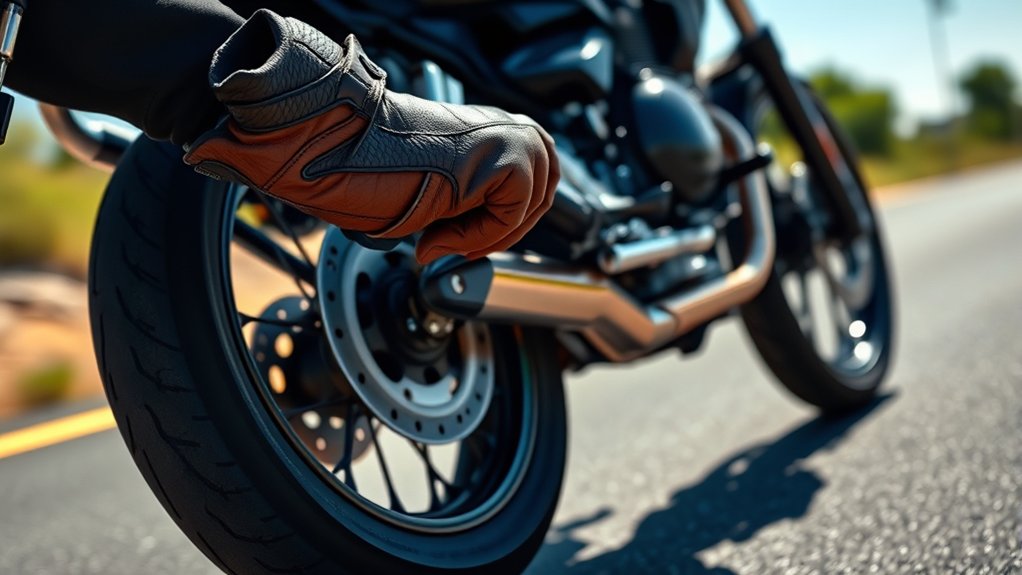
How exactly do you use the clutch to get a wheelie started? You’ll need to quickly engage and release the clutch to deliver a sudden burst of power to the rear wheel. The key is to pull the clutch lever in sharply while giving the throttle a strong twist.
This disconnects the engine from the drivetrain momentarily, allowing you to rev the engine higher without immediately moving the bike. When you release the clutch lever smoothly but quickly, the engine power transfers abruptly to the rear wheel, causing the front wheel to lift. Timing is crucial: too slow, and you’ll stall; too fast, and the bike will jerk uncontrollably.
Mastering this clutch control lets you launch a clean wheelie and maintain balance as you ride.
Prepare Your Bike for Clutching Up
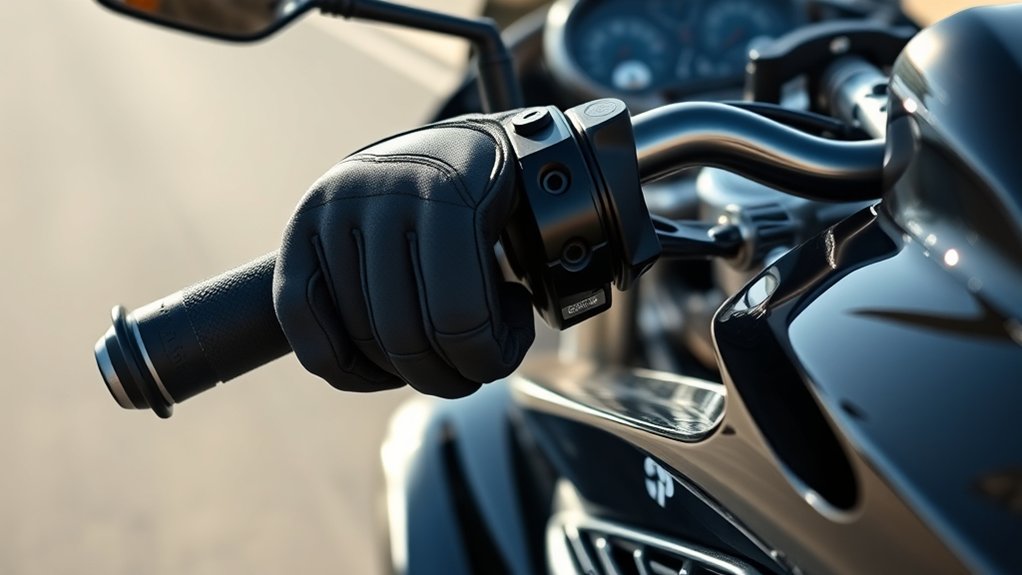
Before you start clutching up for a wheelie, make sure your bike is in prime condition. Check the clutch lever for smooth operation—any stiffness or sticking can ruin your timing. Adjust the clutch cable so it has just the right amount of free play; too tight or too loose affects control.
Inspect your throttle response and brakes to ensure they’re sharp and reliable. Confirm your tires are properly inflated and have enough tread for traction. Tighten all bolts and fasteners, especially around the handlebars and engine mounts, to avoid surprises mid-wheelie.
Finally, remove any unnecessary accessories or loose items that might shift or distract you. A well-prepared bike gives you confidence and precise control for clutching up safely and effectively.
Find the Right RPM Before You Clutch Up
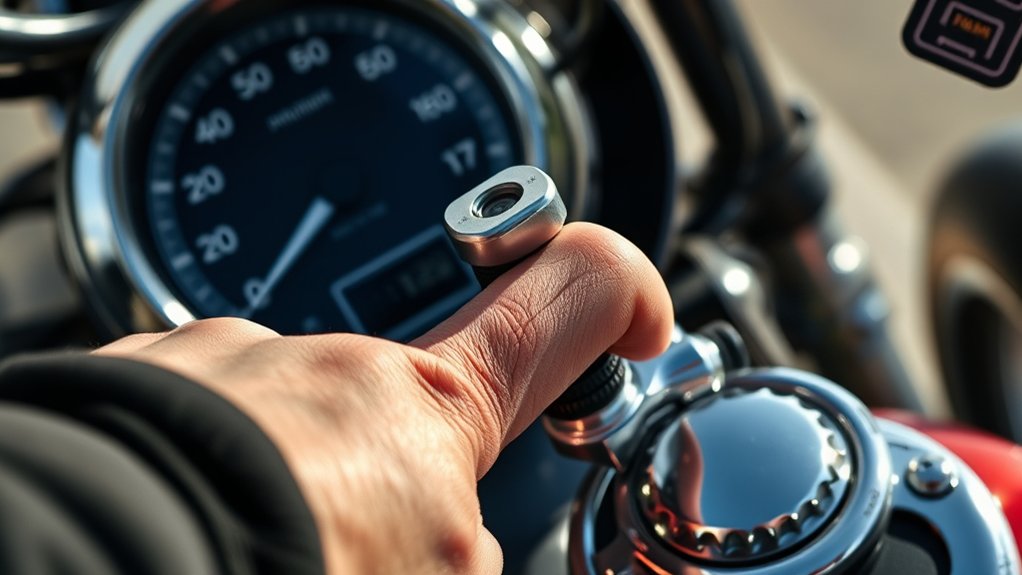
You need to find the ideal RPM range where your bike responds quickly without bogging down. Hitting this sweet spot helps you time the clutch release perfectly for a smooth wheelie.
Focus on how the engine reacts so you can control the power surge just right.
Optimal RPM Range
Although finding the right RPM might seem tricky at first, mastering this step is essential for a smooth clutch-up wheelie. You want to hit an ideal RPM range where your bike has enough power to lift the front wheel without bogging down or snapping the throttle open too aggressively.
Generally, this sweet spot sits just above your engine’s low-end torque curve but below redline—often between 5,000 and 8,000 RPM, depending on your bike. Staying within this range gives you predictable throttle response and enough momentum to pop the wheelie.
To find it, experiment by revving the engine gradually and noting where the bike feels most responsive. Once you identify this zone, you’ll clutch up confidently, making your wheelie smoother and more controlled every time.
Engine Response Timing
When you find the right RPM, your bike’s engine responds faster and more predictably, making it easier to time the clutch release perfectly. To nail your wheelie, you need to feel how the engine reacts at different RPMs before pulling the clutch. Too low, and the bike won’t have enough power to lift the front wheel; too high, and it might surge uncontrollably.
Focus on the engine’s throttle response—smooth yet immediate. Practice revving to a consistent RPM where the bike feels ready to pop up without lag or jerkiness. Once you recognize that sweet spot, your clutch release becomes a confident, precise action rather than a guessing game.
This timing is key to controlling your wheelie and staying balanced throughout the maneuver.
Position Your Body to Balance the Wheelie
Since maintaining balance is essential for a successful wheelie, positioning your body correctly will make all the difference. You need to stay centered and agile, shifting your weight subtly to keep the front wheel steady.
Here’s how to position yourself:
- Keep your arms slightly bent and relaxed to absorb any movement without stiffening.
- Lean back just enough so the bike’s balance point aligns with your body’s center of gravity.
- Grip the tank firmly with your knees, giving you stability and control.
Pull the Clutch and Throttle Smoothly to Lift the Wheel
To lift the front wheel smoothly, you need to pull the clutch and roll on the throttle with control and timing. Start by pulling the clutch lever in firmly but not abruptly. Then, gently twist the throttle while gradually releasing the clutch.
This coordinated action transfers power to the rear wheel, causing the front wheel to lift. Avoid jerky movements to prevent sudden wheelies or stalling.
| Action Step | Key Tip |
|---|---|
| Pull Clutch | Smooth, steady pull |
| Roll Throttle | Gradual increase |
| Release Clutch | Slow, controlled release |
| Maintain Timing | Sync clutch and throttle |
Practice this sequence to master the lift without losing control or balance.
Use Rear Brake to Control Wheelie Height and Angle
After you’ve smoothly lifted the front wheel by coordinating the clutch and throttle, you’ll need to manage the wheelie’s height and angle using the rear brake. The rear brake is your key tool for fine-tuning balance and preventing the bike from tipping back too far. Lightly tapping the rear brake will gently bring the front wheel down if you feel the angle getting too steep.
Conversely, easing off keeps the wheel elevated longer. Remember, subtlety is essential — overusing the rear brake can kill your momentum or cause a sudden drop.
- Use small, controlled taps to adjust the wheelie height.
- Apply the brake gradually to avoid abrupt changes in angle.
- Combine rear brake use with throttle control for smooth modulation.
Master this, and you’ll keep your wheelies balanced and controlled.
Practice Holding the Clutch Bite Point for Stability
Although mastering throttle and brake control is essential, practicing how to hold the clutch bite point is equally important for maintaining stability during a wheelie. The bite point is where the clutch plates begin to engage and transfer power without fully releasing the clutch lever. By finding and holding this spot, you gain smooth power delivery, preventing sudden jerks or loss of control.
Start by slowly releasing the clutch until you feel the bike start to pull forward, then hold it steady. This controlled engagement keeps your front wheel balanced and responsive. Practice this repeatedly in a safe area to build muscle memory.
Over time, you’ll instinctively modulate the clutch, making your wheelies more stable and easier to sustain without over-revving or stalling.
Shift Your Weight to Extend the Wheelie
When you shift your weight backward during a wheelie, you help balance the bike and keep the front wheel lifted longer. This shift acts like a counterbalance, giving you better control and stability. To do this effectively:
Shifting your weight backward during a wheelie improves balance, control, and keeps the front wheel elevated longer.
- Lean your upper body slightly back while keeping your arms relaxed but firm.
- Position your hips toward the rear of the seat, allowing the bike’s center of gravity to move rearward.
- Keep your legs engaged, gripping the tank or frame to maintain control as you adjust your position.
Adjust Throttle and Clutch to Manage Duration
To keep your wheelie going smoothly, you’ll need to adjust both the throttle and clutch with careful timing and control. As you lift the front wheel, gently roll on the throttle to maintain power without flipping backward. If you feel the bike tipping too far back, ease off the throttle slightly to bring the balance point back.
Use the clutch to fine-tune this balance—feather the clutch by slipping it just enough to modulate power delivery. This helps you avoid sudden jerks or stalls. Practice small adjustments so you can react quickly as conditions change.
Mastering this interplay between throttle and clutch lets you hold the wheelie longer and stay in control, making your ride safer and more enjoyable.
Bring the Front Wheel Down Safely and Recover
As you decide to end your wheelie, smoothly easing the front wheel back down is essential for maintaining control and preventing a hard landing. You want to gently roll off the throttle and gradually release the clutch to lower the front end. Avoid slamming the front wheel down, as that can cause instability or even a crash.
Keep your body relaxed and centered to absorb any bumps.
To bring the front wheel down safely and recover, focus on:
- Gradually reducing throttle input to lower the wheel steadily
- Modulating the clutch to control the descent speed
- Shifting your weight slightly forward to assist in stabilizing the bike
Mastering these steps ensures you land smoothly and stay balanced for your next move.
Frequently Asked Questions
What Type of Gloves Improve Clutch Control During Wheelies?
You want gloves with thin, grippy palms and flexible materials to improve clutch control. Leather or synthetic gloves with reinforced padding help you feel the clutch better while protecting your hands during wheelies and other maneuvers.
These features enhance your grip and provide the necessary tactile feedback for precise clutch modulation. Additionally, the padding safeguards against vibrations and impacts. Choosing the right gloves can significantly boost your confidence and control on the bike.
Can Wheelies Damage My Bike’s Clutch System?
Yes, wheelies can damage your bike’s clutch system if you overuse the clutch or slip it too much.
To avoid wear, you should apply smooth, controlled clutch engagement and avoid riding the clutch longer than necessary.
How Do Weather Conditions Affect Clutching up Wheelies?
“Don’t count your chickens before they hatch.” Wet or cold weather can make your clutch less responsive and slippery, so you’ll need to adjust your grip and throttle control carefully to avoid wheel spin or stalling during wheelies.
Is It Safe to Practice Wheelies on Public Roads?
No, it’s not safe to practice wheelies on public roads. You risk accidents, legal trouble, and endangering others.
Instead, find a controlled, private area or track where you can practice safely and responsibly.
What Protective Gear Is Essential When Learning Wheelies?
You need a DOT-approved helmet, gloves, a sturdy jacket with armor, riding pants, and boots to protect yourself. These essentials reduce injury risk while learning wheelies, letting you focus on improving your skills safely and confidently.
Conclusion
Now that you know the clutch basics, imagine yourself on a sunny afternoon, smoothly pulling the clutch and throttle just right to lift the front wheel. You feel the bike balance beneath you as you hold that sweet spot, shifting your weight to keep the wheelie going longer.
With practice, like any skilled rider mastering this, you’ll confidently bring the wheel down safely, turning heads and enjoying every thrilling moment on your bike. Clutching up a wheelie takes patience and precision, but following these essential steps will help you perfect your technique.
By mastering the clutch and throttle control, you’ll be able to clutch up a wheelie with confidence and style, making every ride an exciting adventure.

