


You should change your fuel filter every 20,000 to 40,000 miles, depending on your vehicle type. Cars typically last longer between changes, while trucks and high-performance vehicles might need it sooner. Regular fuel filter replacement is essential to maintain optimal engine performance and fuel efficiency.
Factors like driving in dusty areas or using lower-quality fuel can speed up clogging. A clogged fuel filter restricts fuel flow, which can harm your engine and fuel system. Ignoring this maintenance can lead to costly repairs and reduced vehicle reliability.
Staying on schedule with fuel filter changes is key. Keep reading to discover how to spot problems early and choose the right filter for your ride. Proper care ensures your vehicle runs smoothly and efficiently for miles to come.
Key Takeaways
- Change the fuel filter every 20,000 to 40,000 miles, depending on vehicle type and manufacturer recommendations.
- Passenger cars typically require fuel filter changes every 30,000 to 40,000 miles.
- Trucks and SUVs usually need replacements every 20,000 to 30,000 miles due to heavier usage.
- High-performance vehicles demand more frequent changes, around 15,000 to 25,000 miles.
- Adjust replacement frequency based on driving conditions, fuel quality, and vehicle age for optimal performance.
What Does a Fuel Filter Do in Your Car
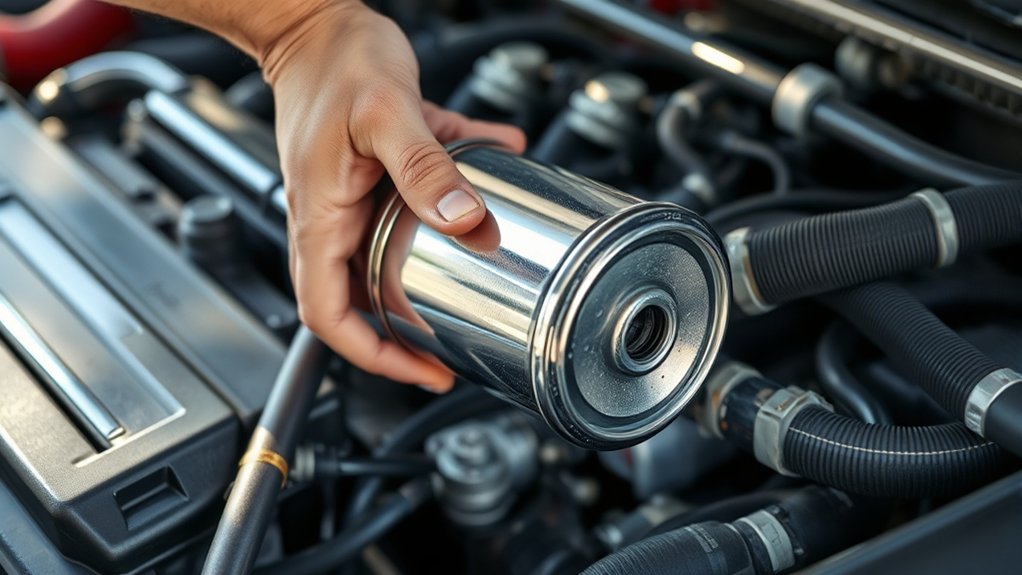
Have you ever wondered why your car needs a fuel filter? It plays a vital role in keeping your engine running smoothly. The fuel filter traps dirt, rust, and other contaminants before they reach your engine.
These particles can cause damage or reduce performance if they get inside. By filtering out impurities, the fuel filter guarantees that only clean fuel reaches your engine’s combustion chamber. This helps your car run efficiently and prevents costly repairs down the line.
Without a properly functioning fuel filter, debris could clog fuel injectors or damage engine components, leading to poor performance and breakdowns. So, the fuel filter acts as a first line of defense, protecting your engine from harmful contaminants every time you drive.
Why Your Engine Needs a Clean Fuel Filter
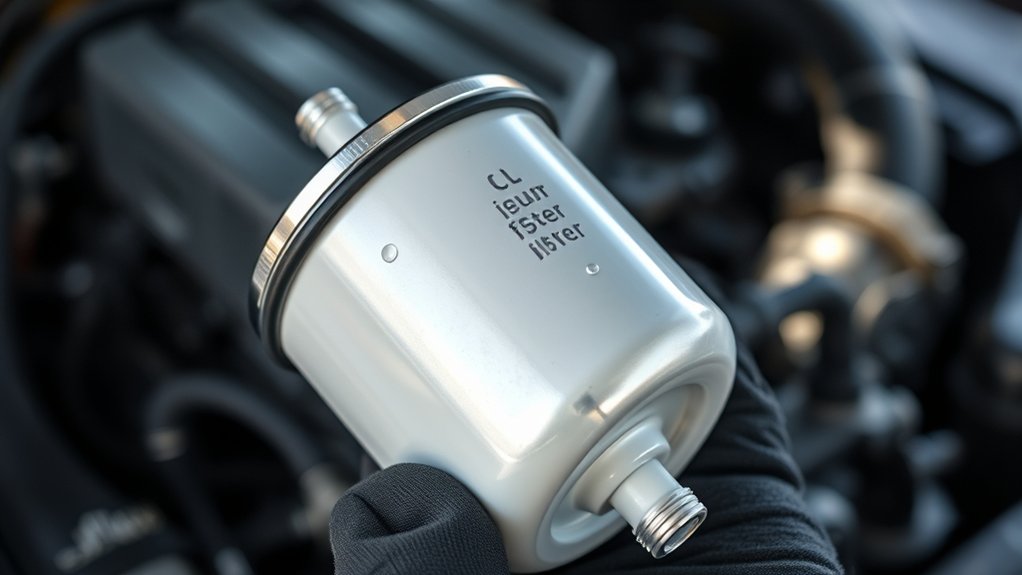
Although you might not see it, a clean fuel filter plays an essential role in keeping your engine healthy and efficient. It traps dirt, rust, and other contaminants before they reach your engine, preventing damage to critical components. When your fuel filter is clean, fuel flows smoothly, ensuring peak combustion and performance.
If the filter clogs, your engine struggles to get the fuel it needs, causing misfires, reduced power, and poor fuel economy. Over time, contaminants can wear down fuel injectors and other parts, leading to costly repairs. By maintaining a clean fuel filter, you help your engine run smoothly, extend its lifespan, and avoid breakdowns.
It’s a small part that makes a big difference in your car’s reliability and efficiency.
How Often Should You Change Your Fuel Filter?
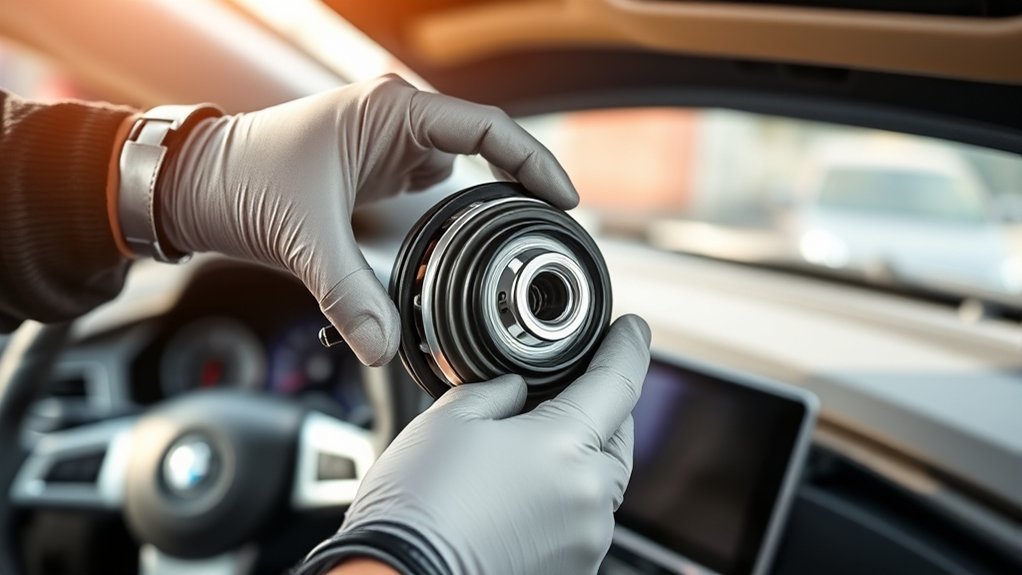
You should change your fuel filter based on recommended intervals, but also watch for signs it’s clogged. Factors like your driving conditions and fuel quality can affect how often you need to replace it.
Knowing these details helps you keep your engine running smoothly without unnecessary maintenance.
Recommended Replacement Intervals
Since your vehicle’s performance depends on clean fuel, changing the fuel filter regularly is essential to keep contaminants from reaching the engine. Most manufacturers recommend replacing the fuel filter between 20,000 and 40,000 miles, but this varies based on your vehicle type and driving conditions.
If you drive in dusty or harsh environments, you might need to change it more often. Always check your owner’s manual for specific guidance.
| Vehicle Type | Recommended Interval |
|---|---|
| Passenger Cars | 30,000 – 40,000 miles |
| Trucks & SUVs | 20,000 – 30,000 miles |
| High-Performance | 15,000 – 25,000 miles |
Sticking to these intervals helps maintain fuel efficiency and engine health.
Signs Fuel Filter Needs Changing
When your vehicle starts showing signs like engine hesitation, difficulty starting, or reduced fuel efficiency, it’s a good indication that the fuel filter might need changing. A clogged fuel filter restricts fuel flow, causing your engine to struggle. You might notice your car sputtering during acceleration or stalling at idle.
Additionally, a dirty fuel filter can cause your engine light to come on, signaling fuel system issues. Keep an eye out for these warning signs:
- Engine misfires or hesitation during acceleration
- Trouble starting the vehicle or frequent stalling
- Noticeable drop in fuel economy
If you experience any of these symptoms, it’s wise to inspect or replace your fuel filter soon to avoid more serious engine problems.
Factors Affecting Replacement Frequency
Although fuel filters have general replacement guidelines, several factors can influence how often you should change yours. Your driving conditions play a big role—if you often drive on dusty roads or in heavy traffic, your filter clogs faster. The quality of fuel you use also matters; lower-grade or contaminated fuel can shorten filter life.
Vehicle type and age affect replacement frequency too, as older engines might strain filters more. Additionally, how well you maintain your vehicle impacts this schedule. If you regularly service your car and use recommended fuel, your filter lasts longer.
Keep these factors in mind and adjust your replacement intervals accordingly to maintain ideal engine performance and avoid costly repairs down the road.
How Your Driving Habits Affect Fuel Filter Life
Your driving habits play a significant role in determining how quickly your fuel filter clogs and needs replacement. If you often drive in dusty or dirty environments, your fuel filter works harder to keep contaminants out of the engine. Frequent short trips can also affect filter life because the fuel system doesn’t get a chance to fully clear out impurities.
On the other hand, smooth highway driving at steady speeds tends to be easier on your fuel system.
Consider these factors in your daily driving:
- Driving on rough, unpaved roads increases dirt and debris intake
- Regular stop-and-go traffic prevents the fuel system from self-cleaning
- Using lower-quality fuel can introduce more particles into the filter
Adjust your maintenance schedule accordingly to keep your engine running smoothly.
Signs Your Fuel Filter Is Clogged or Failing
You’ll notice your engine struggling or hesitating when the fuel filter is clogged. Your fuel efficiency might drop, making trips more expensive than usual.
If your car has trouble starting, the fuel filter could be the culprit.
Engine Performance Issues
How can you tell if a clogged fuel filter is affecting your engine’s performance? When your fuel filter gets dirty, it restricts fuel flow, causing your engine to struggle. You might notice your car hesitates or stumbles when accelerating.
It could also sputter or misfire, especially under load. These symptoms show that your engine isn’t getting the proper fuel supply.
Keep an eye out for these signs:
- Reduced engine power during acceleration
- Rough idling or frequent stalling
- Difficulty starting the engine or extended cranking time
If you experience any of these issues, it’s a strong indication that your fuel filter needs checking or replacing. Addressing it promptly helps maintain smooth engine operation and prevents further damage.
Fuel Efficiency Drops
Why does your car suddenly start guzzling more fuel than usual? A clogged fuel filter restricts fuel flow, forcing your engine to work harder, which lowers fuel efficiency. You’ll notice your mileage dropping even if your driving habits haven’t changed.
Identifying this early helps prevent bigger problems.
| Symptom | Cause | Impact on Fuel Efficiency |
|---|---|---|
| Reduced mileage | Restricted fuel flow | Increased fuel consumption |
| Hesitation under load | Insufficient fuel supply | Engine uses more fuel to compensate |
| Rough idling | Erratic fuel delivery | Wastes fuel during idle |
| Stalling | Fuel starvation | Inefficient fuel usage |
| Engine misfires | Inconsistent fuel pressure | Fuel economy drops |
Keep an eye on these signs to know when to replace your fuel filter and save on fuel costs.
Starting Difficulties
If your car struggles to start or takes longer than usual to turn over, a clogged fuel filter might be the culprit. When the filter gets blocked, fuel flow is restricted, making it hard for the engine to get the fuel it needs to ignite. You might notice your engine cranking but failing to start promptly, especially in cold weather.
Watch for these signs that your fuel filter is causing starting difficulties:
- The engine turns over multiple times before firing up
- Your car stalls immediately after starting
- You hear sputtering or coughing sounds when you try to start the engine
Addressing a clogged fuel filter early can save you from more extensive engine problems and keep your vehicle running smoothly.
Risks of Ignoring a Clogged Fuel Filter
When you ignore a clogged fuel filter, your engine won’t get the clean fuel it needs to run smoothly, which can cause a range of problems. You might experience reduced engine performance, as the restricted fuel flow limits power and acceleration. Over time, your engine could misfire or stall unexpectedly, putting you at risk while driving.
A clogged filter forces the fuel pump to work harder, which can lead to premature pump failure—a costly repair. Additionally, contaminants trapped by the filter might eventually reach the injectors, causing clogging and damage. Ignoring these issues can escalate repair costs and reduce your vehicle’s reliability.
Staying on top of fuel filter maintenance helps you avoid these risks and keeps your engine running efficiently.
How to Check Your Fuel Filter for Problems
You’ll want to watch for signs like engine hesitation or trouble starting, which could indicate a fuel blockage. Take a close look at the fuel filter’s condition, checking for dirt or damage.
These simple steps help you spot problems before they cause bigger issues.
Signs of Fuel Blockage
Although fuel filters work quietly in the background, they can start causing noticeable engine issues when blocked. You might notice your engine sputtering or hesitating during acceleration, which often signals restricted fuel flow. Another common sign is difficulty starting your vehicle, as the clogged filter limits fuel reaching the engine.
You may also experience a drop in fuel efficiency because the engine struggles to perform at its best.
Watch for these signs of fuel blockage:
- Engine misfires or stalling during idle or acceleration
- Reduced power and sluggish response when pressing the gas pedal
- Unexpected decrease in miles per gallon, indicating poor combustion
Recognizing these symptoms early helps you avoid more serious engine damage and ensures timely fuel filter replacement.
Inspecting Filter Condition
Since a clogged fuel filter can cause serious engine problems, it’s important to inspect its condition regularly. Start by locating the fuel filter—usually along the fuel line or near the fuel tank. Look for visible signs of damage, rust, or leaks.
If your filter is transparent or has a clear bowl, check for dirt or debris buildup inside. You can also tap the filter lightly; unusual rattling might indicate internal damage. For a more thorough inspection, consider removing the filter and shining a light through it—any cloudiness or particles indicate it’s time for a replacement.
Replacing Your Fuel Filter: DIY or Professional?
When deciding whether to replace your fuel filter yourself or hire a professional, consider your comfort level with automotive repairs and the tools you have on hand. If you’re familiar with basic car maintenance and have access to a jack, wrenches, and safety gear, you might handle the replacement yourself.
However, if you lack experience or special tools, a professional mechanic can ensure the job is done safely and correctly.
If you lack experience or tools, a professional mechanic ensures safe and proper fuel filter replacement.
Here’s what to keep in mind:
- DIY replacement saves money but requires time and caution to avoid fuel leaks.
- Professionals offer expertise and warranty on their work.
- Incorrect installation can lead to engine problems or fuel system damage.
Choose the option that fits your skills and confidence best.
How to Choose the Right Fuel Filter for Your Vehicle
Whether you decide to replace your fuel filter yourself or hire a professional, selecting the correct filter for your vehicle is a key step. Start by checking your vehicle’s owner manual for the manufacturer’s recommended fuel filter type and specifications. You’ll also want to know the engine size and model year since fuel filters vary based on these factors.
Avoid guessing or choosing a generic filter; improper fit or filtration can harm your engine or reduce performance. When shopping, look for filters with quality certifications and positive reviews. If you’re unsure, consult with a trusted mechanic or the parts store staff—they can help you find a filter that matches your vehicle’s needs precisely.
This guarantees your fuel system stays clean and your engine runs smoothly.
Tips to Extend the Life of Your Fuel Filter
To keep your fuel filter working efficiently for longer, you should pay attention to the quality of fuel you use and maintain a regular vehicle maintenance schedule. Using contaminated or low-grade fuel can clog the filter faster, so always fill up at reputable stations.
Maintaining fuel quality and regular check-ups help your fuel filter last longer and perform better.
Regularly inspecting your fuel system helps catch issues early, preventing strain on the filter.
Here are some tips to extend your fuel filter’s life:
- Use high-quality fuel to reduce debris and contaminants.
- Replace the fuel filter as recommended in your vehicle’s manual.
- Keep your fuel tank at least a quarter full to avoid sediment buildup.
Frequently Asked Questions
Can Using Premium Fuel Affect the Fuel Filter’s Lifespan?
Using premium fuel can help keep your fuel filter cleaner because it often contains additives that reduce deposits. So, you might extend your fuel filter’s lifespan, but it’s still important to follow your vehicle’s maintenance schedule.
Do Electric Vehicles Have Fuel Filters?
You might think electric vehicles need fuel filters, but they don’t since they run on electricity, not gasoline. So, you won’t have to worry about changing fuel filters or dealing with related maintenance in EVs.
How Does Fuel Filter Replacement Impact Emissions?
Replacing your fuel filter keeps your engine running clean, reducing harmful emissions. When you change it regularly, you prevent clogs that cause inefficient combustion, helping your vehicle emit fewer pollutants and run more efficiently overall.
Are Fuel Filter Replacements Covered Under Warranty?
Yes, fuel filter replacements are often covered under your vehicle’s warranty, especially if they’re part of scheduled maintenance.
You should check your warranty details to see specific coverage and avoid unexpected costs.
Can a Dirty Fuel Filter Affect Fuel Economy?
Yes, a dirty fuel filter can reduce fuel economy by restricting fuel flow, making your engine work harder. You’ll notice decreased performance and increased fuel consumption, so it’s smart to replace it regularly to keep efficiency up.
Conclusion
Keeping your car’s fuel filter fresh is fundamental for flawless fuel flow and fantastic engine function. By changing your filter consistently, you can confidently conquer clogged contaminants and costly car troubles. Consider your driving conditions carefully, check for warning signs, and choose the correct filter to keep your ride running reliably.
Whether you DIY or hire a pro, protecting your vehicle’s performance starts with smart, simple steps to save you stress and spare your wallet. Regular fuel filter replacement ensures your engine runs smoothly and efficiently, preventing breakdowns and improving fuel economy. Make it a routine part of your car maintenance to enjoy a dependable and powerful driving experience.

