

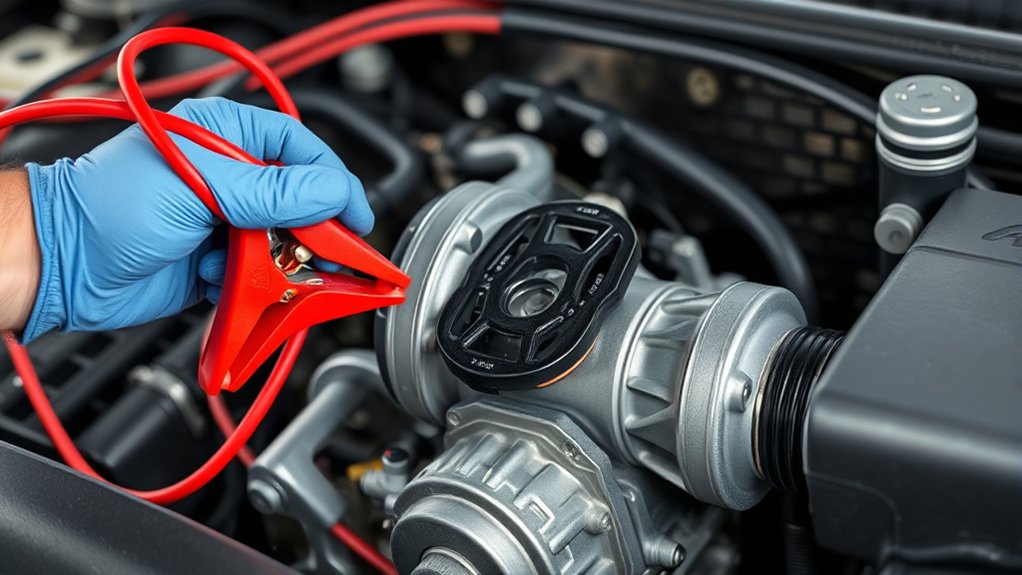
To jump start your AC compressor clutch safely and effectively, first ensure your vehicle is turned off and the battery’s negative terminal is disconnected. This step is crucial to prevent electrical shocks or short circuits during the process.
Locating the AC compressor clutch connector is your next task, as this is where you’ll apply the jump start.
Unplug the compressor clutch connector carefully to avoid damaging the wiring.
Use an insulated jumper wire to briefly connect the positive battery terminal to the clutch terminal. This connection will make the clutch engage and the pulley start spinning, indicating the compressor is working.
After this, reconnect all components carefully to their original positions.
Turn on your vehicle and test the AC system to confirm it blows cold air.
Following these steps not only jump starts your AC compressor clutch but also helps you troubleshoot and avoid common pitfalls effectively.
Key Takeaways
- Disconnect the compressor clutch connector to access the clutch terminals safely.
- Use a jumper wire to connect the positive battery terminal to the clutch terminal briefly.
- Observe if the clutch engages and the pulley starts spinning during the jump start.
- Ensure all electrical components and the engine are off before performing the jump start.
- Avoid prolonged contact with jumper wires to prevent damage and ensure safety.
How to Tell If Your AC Compressor Clutch Is Faulty
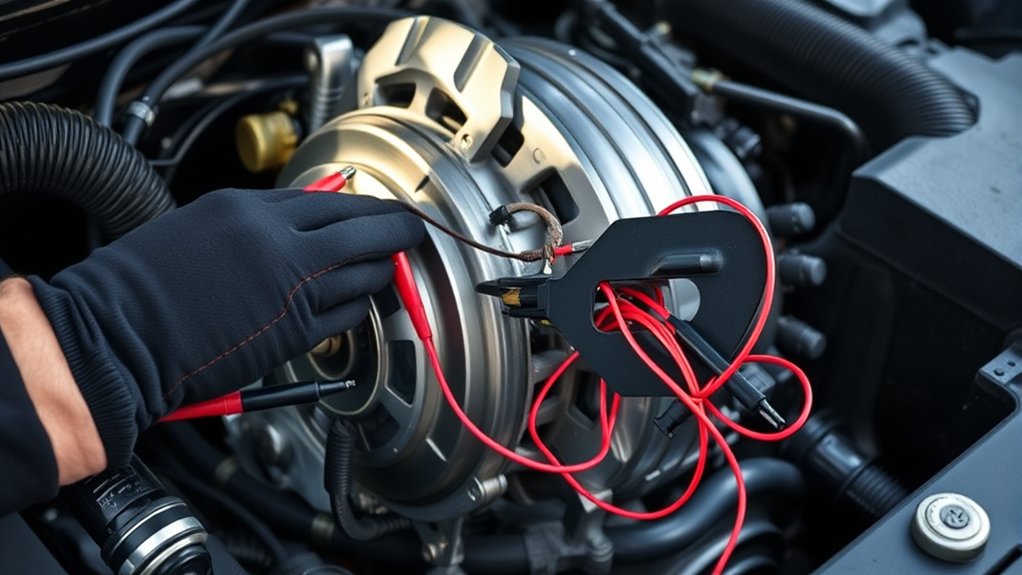
There are several clear signs that indicate your AC compressor clutch might be faulty. First, if you notice your AC blowing warm air instead of cold, the clutch might not be engaging properly. You might also hear a clicking noise when the AC kicks on, signaling the clutch struggles to connect.
Another sign is if the engine stalls or hesitates when the AC engages, indicating the clutch is slipping or dragging. Visually, you can check if the clutch isn’t spinning with the pulley when the AC is on. If you feel the AC compressor isn’t cycling on and off smoothly, that’s another hint.
Spotting these signs early helps you address the issue before it causes further damage or leaves you without cooling.
Tools You’ll Need to Jump Start Your AC Compressor Clutch
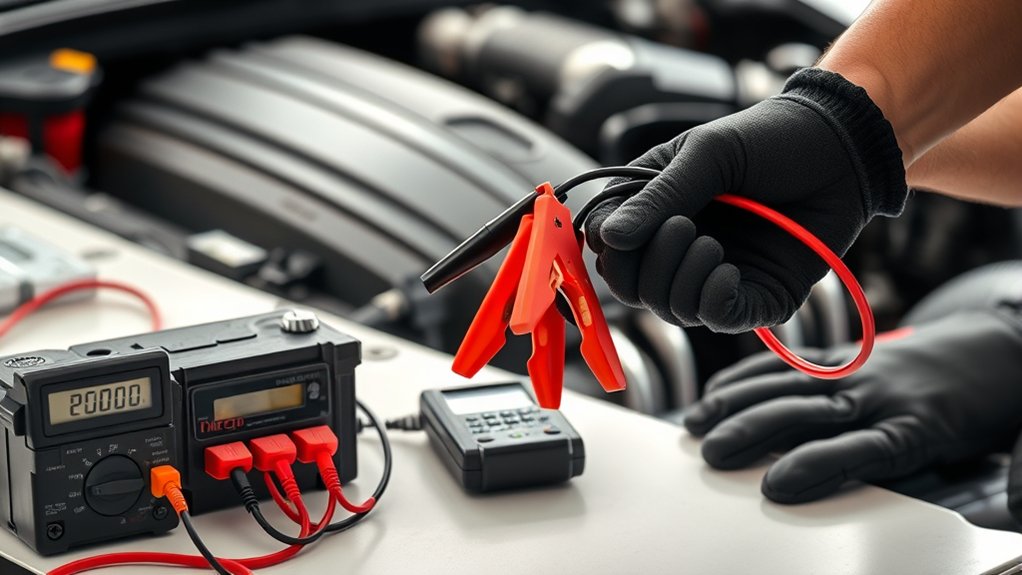
To jump start your AC compressor clutch, you’ll need a few essential tools like jumper wires and a multimeter. Don’t forget safety gear such as gloves and eye protection to keep yourself safe. Having the right equipment ready will make the process smoother and safer.
Essential Tools Overview
Although jump starting an AC compressor clutch might seem complex, having the right tools simplifies the process considerably. First, you’ll need a multimeter to check voltage and continuity, ensuring the clutch receives power. Jumper wires with insulated handles are essential for safely bridging electrical connections without causing shorts.
A basic set of screwdrivers and pliers will help you access and manipulate components easily. Additionally, a 12-volt power source, like a fully charged car battery or a reliable jump starter pack, is necessary to provide the initial current. Finally, having a wiring diagram for your vehicle’s AC system helps you identify the correct terminals.
With these tools, you’ll be well-prepared to jump start the AC compressor clutch efficiently and confidently.
Safety Equipment Needed
Having the right tools in hand sets the stage, but protecting yourself throughout the process is just as important. When jump-starting your AC compressor clutch, safety gear shields you from electrical shocks, debris, and chemical exposure. Don’t skip these essentials to work confidently and reduce risks.
Here are the top three safety items you need:
- Insulated gloves – They protect your hands from electrical hazards and sharp components.
- Safety goggles – These guard your eyes from sparks, refrigerant, or debris.
- Long-sleeve clothing – Wear durable, non-flammable fabric to shield your skin from burns or cuts.
With these safety tools, you’ll stay secure and focused while jump-starting your AC compressor clutch. Always prioritize protection for a smooth, hazard-free repair.
How to Safely Prepare Your Vehicle for Jump Starting the AC Clutch
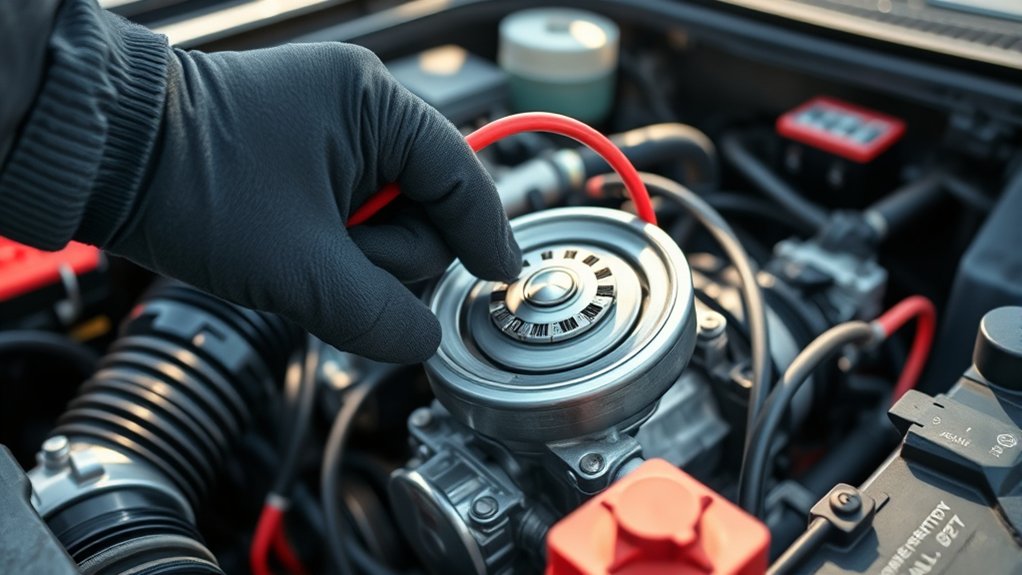
Before jump starting the AC compressor clutch, you’ll need to make certain your vehicle is properly secured and powered down. Begin by parking on a flat surface and engaging the parking brake to prevent any movement. Turn off the engine and remove the key from the ignition to avoid accidental starts.
Open the hood and disconnect the negative terminal on the battery to eliminate electrical hazards. Wear your safety gloves and goggles throughout the process to protect yourself from sparks or debris. Make sure all electrical accessories, including the AC system, are switched off.
Finally, double-check that the area around the engine bay is clear of any loose tools or flammable materials before proceeding. Proper preparation guarantees a safe jump start for the AC clutch.
Jump Starting the AC Compressor Clutch: Step-by-Step Guide
Before you start jump starting the AC compressor clutch, make certain you follow essential safety precautions to protect yourself and your vehicle. Gather all the required tools to guarantee a smooth process.
Then, follow the step-by-step instructions carefully to get the clutch working again.
Safety Precautions First
Since jump starting the AC compressor clutch involves electrical components and moving parts, you need to prioritize safety to prevent injury or damage. Before you begin, take a moment to prepare yourself and your workspace properly. Follow these key safety precautions:
- Disconnect the battery: To avoid accidental shocks or shorts, disconnect the negative terminal of your car battery before working on the AC clutch.
- Wear protective gear: Use insulated gloves and safety glasses to protect against electrical sparks and debris from moving parts.
- Keep the area clear: Ensure there are no flammable materials nearby and that pets or bystanders stay away while you work.
Required Tools Checklist
Although jump starting the AC compressor clutch might seem straightforward, having the right tools on hand will make the process smoother and safer. Before you begin, gather these essentials to guarantee you’re prepared and avoid unnecessary delays.
| Tool | Purpose |
|---|---|
| Multimeter | To check voltage and continuity |
| Jumper Wires | To connect power safely |
| Insulated Gloves | To protect from electrical shocks |
These tools help you verify power availability, safely establish connections, and protect yourself throughout the process. Using a multimeter ensures you don’t risk damaging components, while jumper wires make a secure jump start possible.
Don’t skip on insulated gloves—they’re a must for safety. Having these tools ready will save time and help you manage the task effectively.
Stepwise Jump Start Process
Having the right tools ready makes the jump start process much easier and safer.
Now, follow these steps to jump start your AC compressor clutch effectively:
- Locate the Compressor Clutch Connector: Find the electrical connector on the compressor clutch. Disconnect it carefully to access the terminals.
- Connect the Jumper Wire: Attach one end of a jumper wire to the positive terminal of the battery. Then, touch the other end to the positive terminal on the compressor clutch connector for a brief moment. This supplies power directly to the clutch coil.
- Observe the Clutch Engagement: Once powered, the clutch should engage and spin the compressor pulley. If it doesn’t, recheck connections or consider possible mechanical failure.
Always ensure safety by keeping wires secure and avoiding prolonged contact.
How to Test If Your AC Compressor Clutch Is Working After Jump Start
After you jump start your AC compressor clutch, you’ll want to verify that it’s engaging properly. First, turn on your vehicle’s ignition and set the AC to the coldest setting with the highest fan speed. Then, listen closely near the compressor; you should hear a distinct clicking sound as the clutch engages.
If you can see the compressor, look for the clutch plate spinning – it indicates the clutch is working. Additionally, check if cold air is blowing from the vents, which confirms the compressor is circulating refrigerant.
If there’s no clicking, spinning, or cold air, the clutch may not be engaging despite the jump start, and further inspection will be necessary before proceeding.
Common Issues That Prevent the AC Compressor Clutch From Engaging
When your AC compressor clutch won’t engage, several common problems might be causing the issue. You’ll want to check these first before attempting more complex repairs:
- Electrical Issues: A blown fuse, faulty relay, or damaged wiring can prevent power from reaching the clutch coil. Inspect the fuses and relays, and look for frayed or disconnected wires.
- Low Refrigerant Levels: Most AC systems have pressure switches that stop the clutch from engaging if refrigerant is too low. Make sure the system is properly charged.
- Faulty Clutch Coil or Pulley: Over time, the clutch coil can burn out or the pulley bearing can seize, stopping the clutch from engaging. Test the coil resistance and inspect the pulley for smooth rotation.
Addressing these issues often gets your clutch working again.
When It’s Time to Call a Mechanic Instead of Jump Starting
If you’ve checked the basics and your AC compressor clutch still won’t engage, it might be time to call a mechanic instead of trying to jump start it yourself. Persistent issues like a faulty relay, blown fuse, or damaged wiring often require professional tools and expertise.
If you notice unusual noises, burning smells, or the clutch feels stuck, don’t risk causing further damage. Also, if you’re unsure about electrical components or lack the right equipment, a mechanic can safely diagnose and fix the problem.
Attempting repairs without proper knowledge might lead to costly mistakes. Trusting a professional ensures your AC system gets the correct repair, protecting your vehicle’s comfort and preventing more severe issues down the road.
Frequently Asked Questions
What Causes an AC Compressor Clutch to Fail Prematurely?
You cause an AC compressor clutch to fail prematurely by running low refrigerant, neglecting maintenance, or overheating. Dirt, worn-out bearings, and electrical issues also wear it down faster, so keep your system clean and well-serviced.
Can Jump Starting Damage the AC Compressor Clutch?
Yes, you can cause costly clutch complications if you carelessly jump-start. Sudden surges stress the system, risking damage.
How Much Does It Cost to Replace an AC Compressor Clutch?
Replacing an AC compressor clutch usually costs between $200 and $500, depending on your car model and labor rates.
You’ll want to get a few quotes to avoid surprises and guarantee you’re getting a fair price.
Are There Specific Car Models Prone to AC Clutch Issues?
Yes, you’ll find some models like older Hondas, Toyotas, and Fords often have AC clutch issues due to wear and design. Regular maintenance helps, but if you drive those cars, keep an eye on your AC system’s performance.
These issues are more about age and usage than specific defects. Staying proactive with checks can prevent bigger problems down the road. Don’t ignore unusual noises or inconsistent cooling.
Can a Weak Car Battery Affect the AC Compressor Clutch?
Yes, a weak car battery can reduce voltage, causing the AC compressor clutch to struggle engaging. Studies show 30% of AC failures relate to electrical issues, so you’ll want a strong battery to keep your system running smoothly.
Conclusion
Now that you know how to jump start your AC compressor clutch, you’re just a few steps away from cool, invigorating air on even the hottest days. Don’t let a stubborn clutch turn your car into a sauna! Follow these steps carefully, and you’ll feel like a mechanic wizard in no time.
But remember, if the clutch still won’t engage, it’s time to call in the pros. Proper maintenance of your AC compressor clutch is key to avoiding further issues. Jump starting the AC compressor clutch can save you time and money, but professional help ensures your system stays in top shape.
By mastering how to jump start your AC compressor clutch, you’re taking an important step toward keeping your vehicle’s air conditioning running smoothly. Stay cool and drive safe!

