

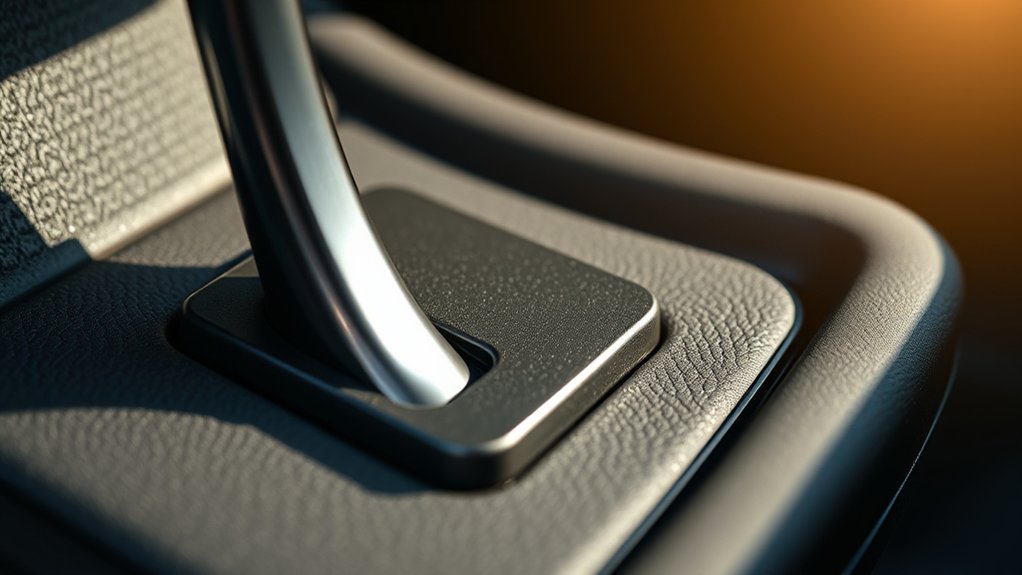
A clutch can mean two things: in cars, it’s a crucial mechanical component that looks like a round, flat disc covered with friction material. This disc is hidden inside a bell housing located between the engine and transmission. You won’t see it without taking parts apart, but it plays a vital role in vehicle operation.
Inside your car, the clutch pedal is positioned to the left of the brake pedal. It features a sturdy arm and a textured pad for better grip and control while driving.
In fashion, a clutch refers to a small, strapless handheld bag. These bags can be sleek and simple or elaborately embellished. Keep exploring, and you’ll discover how each clutch works and looks in detail.
Key Takeaways
- A car clutch consists of a round, flat clutch plate with friction material bonded to both sides.
- The pressure plate is a metal component with springs or diaphragm fingers that clamp the clutch plate to the flywheel.
- The clutch assembly is enclosed inside a bell housing between the engine and transmission, making it not directly visible.
- The clutch pedal is a sturdy metal arm with a textured footpad, located to the left of the brake pedal in the footwell.
- Fashion clutches are small, handheld bags with various shapes like rectangular or envelope, made from leather or satin materials.
What Is a Clutch? Understanding Mechanical and Fashion Types
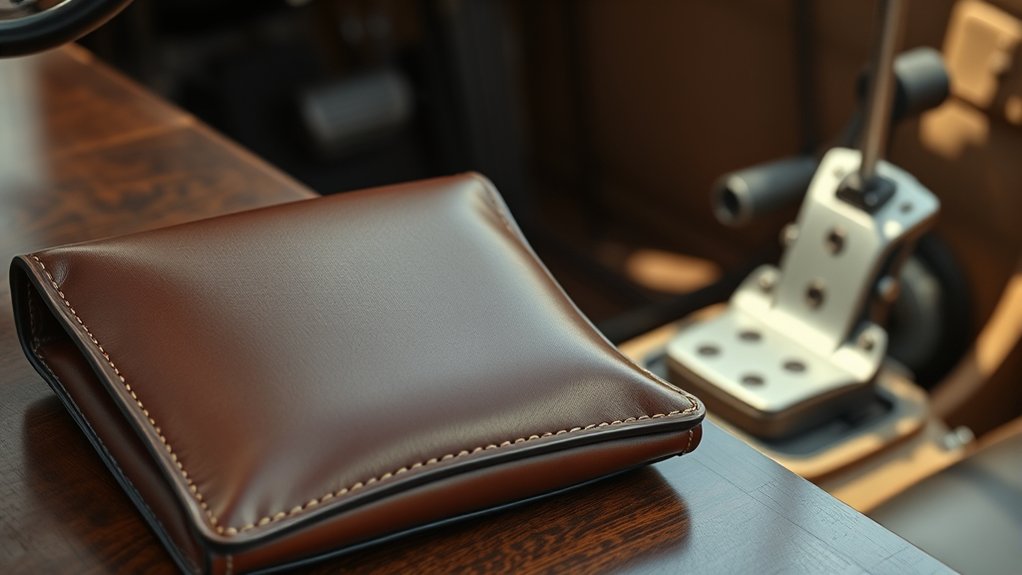
Although the word “clutch” might bring different images to mind, it actually refers to two distinct things: a mechanical device in vehicles and a small handbag in fashion. When you hear “clutch” in a mechanical sense, it’s about controlling power transfer between the engine and wheels, letting you shift gears smoothly.
On the other hand, in fashion, a clutch is a compact, elegant handbag designed to be held in your hand or tucked under your arm, perfect for carrying essentials during formal events or nights out.
Understanding these two meanings helps you appreciate how the same word can describe objects with very different functions but both play essential roles in their contexts—one in driving and the other in style.
How Does a Mechanical Clutch Work?
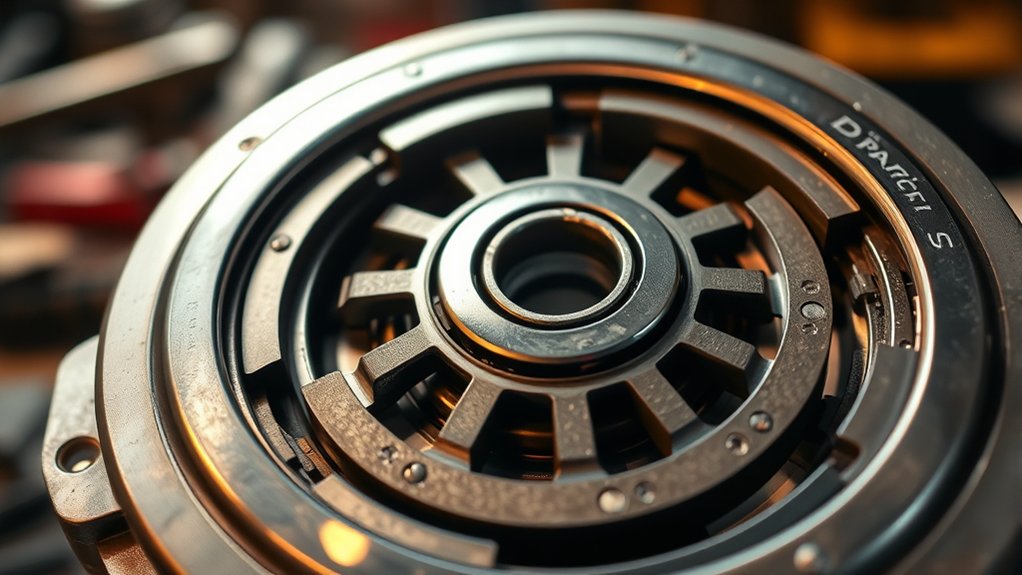
When you think about a mechanical clutch, picture it as the middleman between your engine and wheels, managing how power flows. When you press the clutch pedal, it disengages the clutch plate from the flywheel, temporarily stopping power transfer. This lets you change gears smoothly without grinding.
When you release the pedal, springs push the clutch plate back against the flywheel, reconnecting engine power to the transmission. The friction between these components controls the connection, allowing for gradual engagement. This system helps you start, stop, and shift gears efficiently by controlling torque transfer.
Without it, your car wouldn’t move smoothly or handle gear changes properly. Understanding this process helps you appreciate the clutch’s essential role in driving mechanics.
How to Recognize a Car Clutch Under the Hood
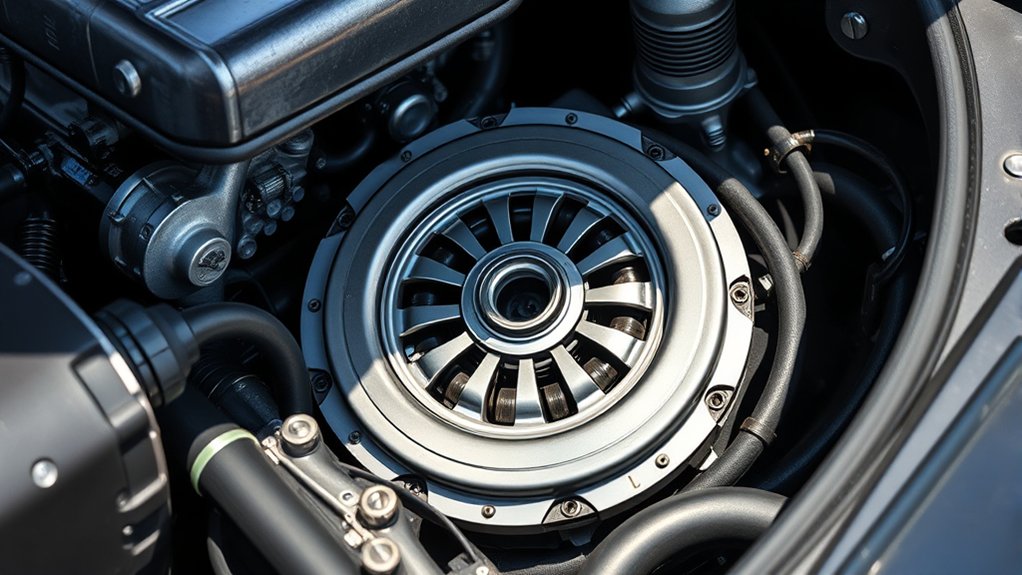
If you want to identify the clutch under your car’s hood, start by locating the transmission housing, as the clutch sits between the engine and transmission. You’ll usually find the clutch inside a bell-shaped housing called the bell housing, which connects these two components.
To access it, you might need to remove some covers or components obstructing your view, especially in modern cars where space is tight. Remember, the clutch itself isn’t visible without disassembly since it’s enclosed for protection.
However, by spotting the transmission and tracing where it meets the engine, you can pinpoint the general area where the clutch operates. This understanding helps you recognize the clutch’s position even if you can’t see its parts directly under the hood.
Visual Features of a Car Clutch Assembly
You’ll notice the clutch plate has a distinct, circular shape with friction material lining its surface. The pressure plate, usually metal, features a series of springs or fingers radiating from the center.
Recognizing these parts helps you understand how the clutch assembly works visually.
Clutch Plate Appearance
Although it’s hidden from view during normal driving, the clutch plate plays a crucial role in your car’s transmission. When you see a clutch plate, you’ll notice it’s a round, flat disc typically made of metal with friction material bonded to both sides. This friction material, often resembling a rough, textured surface, helps the plate grip the flywheel and pressure plate, allowing smooth power transfer.
Around the center, you’ll find a splined hub that connects to the transmission input shaft. The plate usually has several springs embedded near the hub, which act as dampers to absorb vibrations and shocks during engagement. Overall, its design balances durability and flexibility, ensuring your car shifts gears efficiently without slipping or jerking.
Pressure Plate Design
When you look closely at a pressure plate, you’ll notice it’s a sturdy, circular component designed to clamp the clutch plate firmly against the flywheel. It usually features a series of evenly spaced release springs or diaphragm fingers radiating from the center, which provide the clamping force needed for the clutch to engage and disengage smoothly.
The outer edge often has bolt holes that secure it to the flywheel, ensuring stability during operation. The pressure plate’s surface is flat and smooth to maintain consistent contact with the clutch disc. You’ll also spot vented areas or grooves that help dissipate heat generated by friction.
What Does a Clutch Pedal Look Like Inside a Car?
When you look inside a car, the clutch pedal stands out with its sturdy metal arm and textured footpad. You’ll find it positioned to the left of the brake pedal, designed for easy reach and smooth operation.
Behind the scenes, a mechanical linkage connects the pedal to the clutch system, allowing you to engage and disengage the gears effortlessly.
Clutch Pedal Components
Since the clutch pedal plays a crucial role in controlling your car’s transmission, understanding its components can help you diagnose issues or appreciate how it works. At its core, the clutch pedal consists of the pedal arm, a pivot point, and a return spring. When you press the pedal, the arm pivots, transferring force through a linkage or cable to the clutch release mechanism.
Inside the pedal assembly, a sensor or switch often detects pedal position, signaling the engine control unit or cruise control. The return spring ensures the pedal springs back once you release it, preventing it from sticking. Each part works together smoothly, so when you press the clutch, your car disengages the engine from the transmission, allowing you to shift gears seamlessly.
Pedal Placement And Design
Although the clutch pedal might seem straightforward, its placement and design inside your car are carefully planned for comfort and control. You’ll find the clutch pedal on the far left side of the footwell, positioned to allow smooth, natural foot movement alongside the brake and accelerator pedals. Its surface usually features a textured or rubberized finish to prevent slipping, giving you reliable grip during gear changes.
The pedal’s size and angle are designed to reduce fatigue, enabling you to press down comfortably without straining your ankle. Manufacturers also consider the distance between pedals to avoid accidental presses. This thoughtful design guarantees you can operate the clutch precisely and safely, making your driving experience smoother and more responsive every time you shift gears.
Mechanical Linkage Overview
Beyond its external design and placement, the clutch pedal connects to a complex mechanical linkage that makes gear shifting possible. When you press the pedal, you’re not just pushing a lever; you’re activating a precise system that disengages the engine from the transmission.
This system includes:
- Pushrod: Transfers your pedal motion to the next component.
- Release Fork: Moves the throw-out bearing toward the pressure plate.
- Throw-Out Bearing: Presses against the clutch pressure plate to disengage the clutch.
This linkage requires exact alignment and smooth operation to guarantee a seamless driving experience. When everything works perfectly, you won’t even notice the intricate dance happening beneath your feet.
Understanding this helps you appreciate how much engineering goes into every simple press of the clutch pedal.
Identifying Different Types of Car Clutches
How can you tell different car clutches apart? First, look at the clutch type: most common is the friction clutch, which uses a pressure plate and friction disc to engage the engine and transmission. You’ll spot the diaphragm spring in modern clutches, a circular spring that applies pressure evenly.
Older models may have coil springs instead. There’s also the centrifugal clutch, which engages automatically as engine speed increases—often found in smaller vehicles or motorcycles. Another type is the dual-clutch system, which has two separate clutches for odd and even gear sets, allowing faster shifts.
What Is a Fashion Clutch? Key Differences Explained
When you hear the word “clutch,” you might immediately think of car parts, but in fashion, a clutch refers to a small, handheld bag designed to carry essentials like your phone, keys, and wallet. Unlike larger handbags, a fashion clutch is compact and usually lacks straps, encouraging you to carry it in your hand or under your arm.
Here’s what sets it apart:
- Size and Portability – It’s small enough to be lightweight yet big enough for your essentials.
- Design and Elegance – Often crafted with luxurious materials to complement formal wear.
- Functionality – Prioritizes minimalism, so you only bring what you truly need.
Understanding these differences helps you appreciate why a clutch is both practical and stylish for special occasions.
Common Styles and Shapes of Fashion Clutches
Now that you know what makes a clutch unique, it’s easier to spot the variety of styles and shapes available. You’ll find classic rectangular clutches, perfect for a sleek, timeless look. Envelope clutches mimic the style of an envelope flap, adding a chic and modern touch.
Box clutches stand out with their rigid, often geometric shapes, making a bold statement. If you prefer something softer, wristlet clutches come with a strap, offering convenience and style. For a more dramatic effect, you might choose a fold-over clutch that folds at the top for added dimension.
Each style suits different occasions, so you can pick one that matches your outfit and vibe effortlessly. Exploring these options helps you find the perfect clutch to complement your look.
Materials and Textures Used in Clutch Bags
Although clutches come in various shapes, their materials and textures play an essential role in defining their style and feel. When you pick a clutch, you’re not just choosing a bag—you’re choosing an experience.
Here’s what you’ll often find:
- Leather: Smooth or pebbled, it offers a classic, luxurious touch that ages beautifully.
- Satin or Silk: Soft and glossy, perfect for adding elegance and a delicate shimmer to your outfit.
- Beaded or Embellished Fabrics: These add texture and sparkle, making your clutch a statement piece that catches every eye.
Choosing the right material ensures your clutch complements your style and the occasion perfectly, making every moment feel special.
How to Spot a Designer Fashion Clutch
Because designer fashion clutches combine craftsmanship with distinctive details, you can spot them by paying close attention to quality and branding. First, examine the stitching—it should be even, tight, and flawless. Check the hardware; designer clutches use high-quality metals that feel solid and often feature engraved logos.
Look for authentic branding elements like embossed or printed logos inside and outside the bag. The materials should feel luxurious—whether it’s smooth leather, exotic skins, or fine fabrics. Also, notice the lining; it’s usually made of premium fabric and perfectly fitted.
Ultimately, authentic designer clutches often come with authenticity cards or dust bags. By focusing on these details, you’ll quickly distinguish a genuine designer clutch from a knockoff.
Tips for Choosing the Right Clutch: Car or Fashion
When choosing a clutch, you need to know the differences between car clutch types and fashion clutch styles. It’s important to match the clutch’s design to its purpose, whether for driving or accessorizing.
Let’s explore how to pick the right one for your needs.
Car Clutch Types
If you’re deciding between a car clutch and a fashion clutch, understanding their types can make your choice easier. When it comes to car clutches, knowing the differences helps you pick one that suits your driving style and vehicle.
Here are three common car clutch types:
- Single Plate Clutch – Simple and reliable, perfect for most everyday cars.
- Multi-Plate Clutch – Offers more grip and handles higher power, great for performance vehicles.
- Centrifugal Clutch – Engages automatically based on engine speed, ideal for beginners or small engines.
Each type affects how smoothly and powerfully your car transmits engine force. By grasping these distinctions, you’ll confidently choose the clutch that fits your needs and enhances your driving experience.
Fashion Clutch Styles
Although car clutches focus on mechanical function, fashion clutches emphasize style and practicality, offering you a variety of designs to complement your outfit. When choosing a fashion clutch, consider the shape—envelope, box, or wristlet—each lending a different vibe. Material matters too; leather offers timeless elegance, while sequins or satin add glam.
Size plays a role; you want enough space for essentials without bulk. Look for secure closures like zippers or clasps to keep your items safe. Don’t forget comfort—wrist straps or detachable chains can make carrying easier.
Finally, pick colors and textures that enhance your ensemble, whether for casual outings or formal events. By focusing on these details, you’ll find a clutch that’s both functional and fashionable.
Matching Purpose And Design
Since clutches serve very different purposes—one in vehicles and the other in fashion—you’ll want to match your choice to its intended use carefully. Picking the right clutch means understanding both function and style.
For a car, it’s about performance and compatibility; for fashion, it’s about statement and practicality. Here’s how to nail it:
- Identify the need: Is it for smooth gear shifts or a night out?
- Consider design: For cars, durability and feel matter; for fashion, look and size count.
- Match with context: A rugged clutch suits off-road driving; a sleek clutch complements a formal outfit.
Frequently Asked Questions
How Do You Maintain a Car Clutch for Longevity?
You maintain your car clutch by avoiding riding the pedal, shifting gears smoothly, and not resting your foot on the clutch.
Regularly check and adjust the clutch cable, and get timely inspections to guarantee it lasts longer.
Can a Clutch Be Repaired at Home or Need Professional Service?
You can try clutch repairs at home, but “measure twice, cut once” applies—clutch work’s complex and needs precision.
If you’re unsure or lack tools, it’s best to trust a professional to avoid costly mistakes.
What Are the History and Origin of Clutch Bags?
You’ll find clutch bags originated in the early 1900s, evolving from small, handheld purses. They became popular as elegant accessories for evening wear, designed to carry just essentials without straps or handles.
Their compact size and simplicity made them a chic choice for formal occasions. Over time, clutch bags have evolved in style and materials, reflecting fashion trends while maintaining their classic appeal. Today, they remain a symbol of sophistication and practicality in women’s accessories.
How to Clean and Store Fashion Clutches Properly?
You should gently wipe your clutch with a soft, damp cloth and let it air dry.
Store it in a dust bag away from direct sunlight to prevent fading and maintain its shape by stuffing it with tissue paper.
Are There Eco-Friendly Materials Used in Clutch Manufacturing?
Yes, you’ll find eco-friendly clutches made from materials like cork, recycled leather, organic cotton, and pineapple fiber. These sustainable options help reduce waste and environmental impact while keeping your style conscious and chic.
Conclusion
You might think clutches—whether in cars or fashion—are confusing or hard to identify, but they’re actually pretty straightforward once you know what to look for.
Car clutches have distinct parts under the hood and pedals you can feel, while fashion clutches come in various stylish shapes and materials you’ll instantly recognize.
Don’t let uncertainty hold you back; understanding clutches empowers you to appreciate their function and flair, making your next choice easier and more confident.
Recognizing the key features of both car clutches and fashion clutches will help you identify their unique qualities. With this knowledge, you can confidently distinguish a clutch in any context, appreciating both its mechanical role and aesthetic appeal.

