

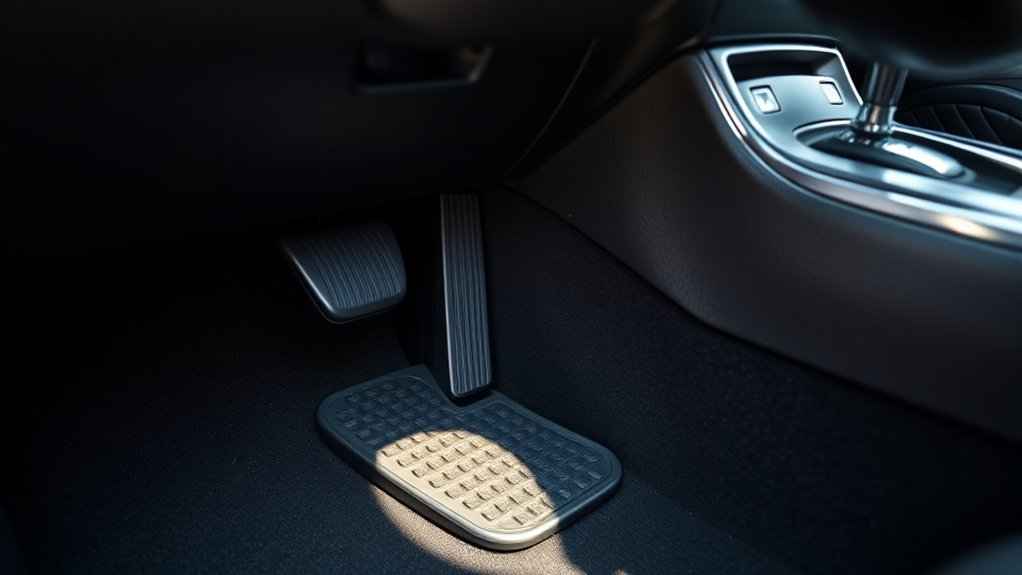
To locate the clutch in your car, especially in a manual transmission vehicle, start by identifying the pedals. The clutch is the leftmost pedal among the three pedals you see. This pedal is crucial for controlling the connection between the engine and the transmission.
It’s usually larger than the gas pedal but narrower than the brake pedal. The surface of the clutch pedal has a textured finish to provide better grip. When you press it down, you’ll notice moderate resistance.
The clutch pedal allows you to engage and disengage the engine from the transmission smoothly. Understanding these basics will help you gain confidence and control.
This knowledge is essential as you learn to use the clutch efficiently.
Key Takeaways
- The clutch pedal is the far left pedal among three pedals in manual transmission cars.
- It is larger than the gas pedal but usually narrower than the brake pedal.
- Located directly under the driver’s left foot with a rubber or textured grip for better foot placement.
- The clutch pedal presses down with moderate resistance and is used to engage or disengage the engine from the transmission.
- Automatic cars lack a clutch pedal and have only two pedals, so three pedals indicate the presence of a clutch.
How to Identify the Clutch Pedal in Your Car
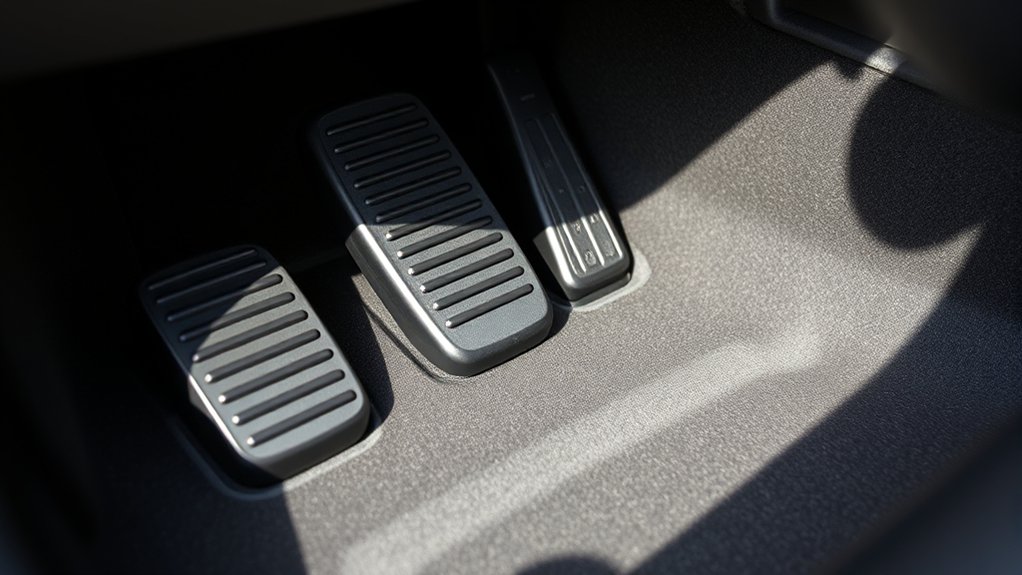
Although it might seem tricky if you’re new to manual cars, you can easily spot the clutch pedal by looking at the pedals’ arrangement. In a manual vehicle, you’ll find three pedals at your feet. The clutch pedal is always on the far left, next to the brake pedal in the middle and the gas pedal on the right.
It’s typically wider than the gas pedal but narrower than the brake. Pressing the clutch pedal disengages the engine from the wheels, allowing you to shift gears smoothly. When you place your left foot on the pedal farthest left, that’s the clutch.
Getting familiar with its position helps you control the car better and makes driving manual more intuitive over time.
How Do I Know If My Car Has a Clutch?
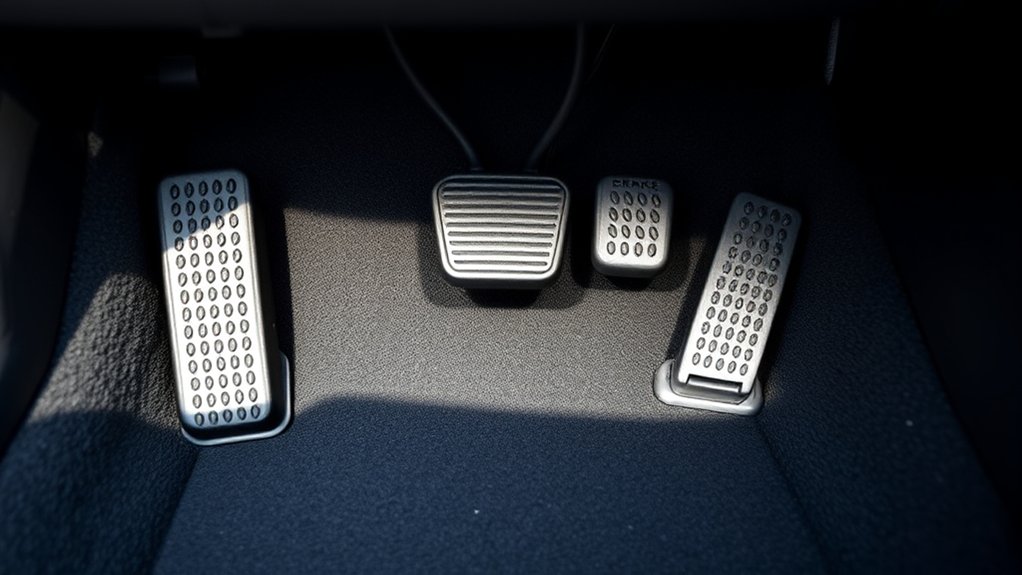
If you’re unsure whether your car has a clutch, the easiest way to check is by looking at the pedals under the dashboard. Most cars with manual transmissions have three pedals: the accelerator, brake, and clutch. If you see only two pedals—accelerator and brake—your car likely has an automatic transmission, meaning it doesn’t have a clutch pedal.
Additionally, you can check your car’s gear shifter: a manual transmission will have a pattern indicating multiple gears and usually a reverse gear that you shift manually. If your shifter has options like P, R, N, and D, it’s an automatic and doesn’t require a clutch. Knowing this helps you understand your car’s controls better and makes locating the clutch pedal straightforward if it exists.
Why Is the Clutch Pedal Always on the Left?
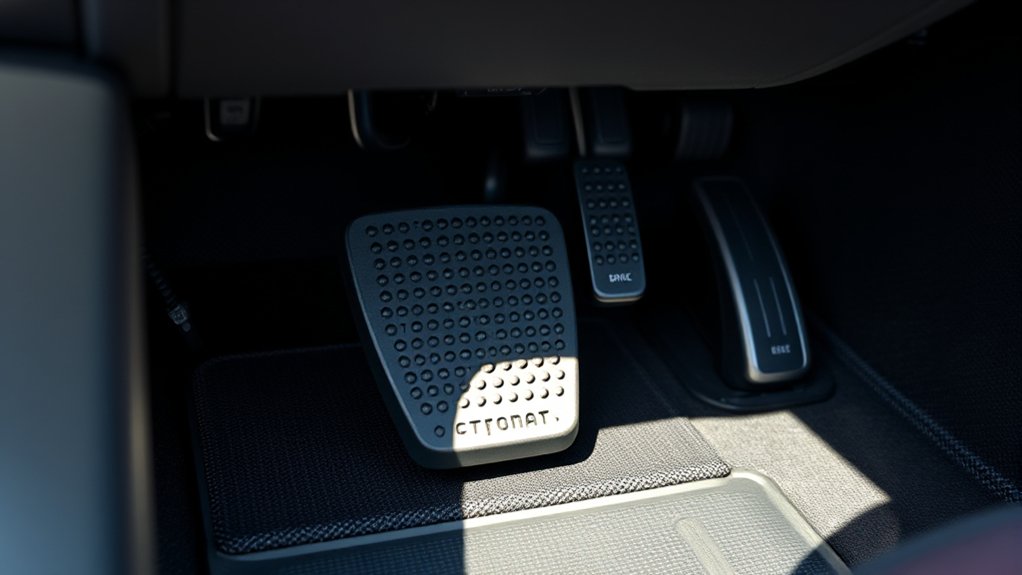
You might wonder why the clutch pedal is always on the left side. This setup traces back to early car designs and how drivers naturally use their feet. Understanding this helps you see how ergonomics shape pedal placement for comfort and control.
Historical Pedal Arrangement
Because early automobiles were designed with manual transmissions, the clutch pedal has always occupied the leftmost position on the pedal assembly. This layout originated when drivers needed a straightforward way to engage and disengage the engine from the drivetrain. By placing the clutch on the left, manufacturers established a consistent pedal pattern that drivers could quickly learn.
Over time, as cars evolved, the arrangement stuck, becoming an industry standard. You’ll find the clutch on the left, the brake in the center, and the accelerator on the right in almost every manual car. This historical setup helps you instinctively know where the clutch is, even if you switch between different car models.
Driver Ergonomics Impact
Although tradition set the clutch pedal on the left, driver ergonomics play a crucial role in maintaining this layout. When you drive a manual car, your left foot operates the clutch while your right foot manages both the brake and accelerator. This separation helps you control each function precisely without confusion or overlap.
Placing the clutch on the left also matches your natural foot positioning, reducing strain and allowing smoother *changeover* between pedals. If the clutch were elsewhere, you’d risk awkward foot movements, which could impact your reaction time and comfort.
How the Clutch Pedal Feels Compared to Other Pedals
When you press the clutch pedal, you’ll notice it requires a different amount of pressure than the brake or gas pedals. Its texture often feels distinct, helping you identify it without looking.
Compared to the brake, the clutch responds more gradually, so you’ll need to adjust your foot accordingly.
Pedal Pressure Differences
While driving, you’ll notice that the clutch pedal feels different from the brake and accelerator pedals. It generally requires a firmer, more deliberate push to fully depress compared to the lighter pressure needed for the gas pedal. The brake pedal usually offers a more consistent resistance, designed for quick but controlled stops.
In contrast, the clutch demands a gradual, steady pressure to engage or disengage the transmission smoothly. You might find the clutch pedal’s resistance changes slightly depending on the car’s make or condition, but it never feels as soft as the accelerator or as immediately responsive as the brake.
Understanding these pressure differences helps you modulate the clutch properly, preventing stalling and ensuring smooth gear shifts while driving a manual transmission vehicle.
Clutch Pedal Texture
Feeling the difference in pedal pressure is just one way to recognize the clutch. Another key factor is the clutch pedal’s texture. When you press it, you’ll notice it often has a slightly rougher or matte surface compared to the brake and accelerator pedals.
This texture provides extra grip, helping your foot stay securely on the pedal, especially during gear changes. Unlike the smoother brake pedal, which often feels firmer and more solid, the clutch pedal’s surface is designed to prevent slipping without being uncomfortable.
This subtle tactile difference helps you distinguish the clutch quickly, even if you’re not looking down. So, as you get familiar with your car, pay attention to how the clutch pedal feels underfoot—it’s a useful cue for identifying it.
Response Compared To Brake
How does the clutch pedal respond compared to the brake? When you press the clutch, it feels softer and requires a smoother, more gradual motion. Unlike the brake pedal, which offers firm, immediate resistance, the clutch pedal engages progressively as you push it down.
You won’t feel a hard stop but rather a point where the pedal suddenly becomes easier to press, indicating the clutch is disengaging. This “biting point” is unique to the clutch. The brake pedal demands quick, decisive pressure for safety, while the clutch calls for finesse and timing.
Getting used to this difference helps you control the car better, especially when starting or shifting gears. So, expect the clutch to feel less stiff and more fluid compared to the brake pedal.
Identifying the Clutch Pedal in Different Car Models
Because car interiors vary widely, you might notice differences in how the clutch pedal looks and feels across models. Generally, the clutch pedal is the leftmost of the three pedals in manual transmission cars. Unlike the brake and accelerator, it often feels stiffer and requires more force to press.
In sportier or performance vehicles, the clutch pedal might be smaller or more responsive, designed for quicker shifts. Older cars may have larger, wider pedals, while compact cars might have a narrower design due to space constraints. Despite these variations, the clutch pedal consistently sits to the left of the brake pedal and is usually marked by its placement rather than any unique color or label.
Paying attention to its position helps you identify it quickly, no matter the car.
Common Mistakes New Drivers Make With the Clutch
Although mastering the clutch takes practice, many new drivers struggle with common errors that can damage the car or make driving jerky. You might find yourself riding the clutch too long, releasing it abruptly, or not fully pressing it when changing gears. These mistakes can lead to premature wear or stalling.
Being aware of these pitfalls helps you develop smoother control and prolong the clutch’s life.
| Common Mistake | Effect on Driving/Car |
|---|---|
| Riding the clutch | Causes excessive wear |
| Abrupt clutch release | Leads to jerky starts/stalls |
| Incomplete clutch press | Difficulty shifting gears |
| Resting foot on clutch | Gradual clutch damage |
| Over-revving engine | Increased engine and clutch stress |
Safe Ways to Practice Finding the Clutch Pedal
When you’re just starting, getting a feel for the clutch pedal is essential to building confidence behind the wheel. To safely practice locating the clutch, begin by sitting in the driver’s seat with the engine off. This lets you focus on pedal placement without distractions.
Getting familiar with the clutch pedal while the engine is off builds essential confidence for new drivers.
Try these steps:
- Place your left foot gently on the pedals, identifying the clutch by its position on the far left.
- Press and release the clutch slowly to get used to its resistance.
- Close your eyes briefly and try to find the clutch pedal by feel.
- Practice with the car in neutral to avoid accidental movement.
- Use a parking lot or quiet street where you won’t be pressured by traffic.
These methods help you become comfortable with the clutch before driving.
Tips for Using the Clutch Pedal Smoothly
Now that you’ve familiarized yourself with the clutch pedal’s location and feel, it’s time to focus on using it smoothly. Start by pressing the clutch gently and gradually, avoiding sudden or harsh movements. This helps prevent jerks and keeps the car stable.
Find the biting point—the moment the clutch begins to engage—and practice holding it there briefly to control your starts. When shifting gears, fully depress the clutch before changing gears, then release it steadily to guarantee a seamless changeover. Avoid riding the clutch by keeping your foot off the pedal when not shifting, which reduces wear.
With consistent practice, your clutch control will improve, making your driving smoother and more comfortable every time you get behind the wheel.
Final Checklist: Finding and Recognizing the Clutch Pedal
Before you start driving, make sure you can quickly identify the clutch pedal among the pedals at your feet. This will help you operate the car smoothly and safely. The clutch pedal is always on the far left, distinct from the brake and accelerator.
Here’s a quick checklist to recognize it:
- Located to the left of the brake pedal
- Larger surface area for your foot
- Presses down smoothly with moderate resistance
- Usually has a rubber or textured grip
- Only pedal used to engage and disengage the engine from the transmission
Frequently Asked Questions
What Maintenance Does a Car Clutch Require?
You’ll need to check the clutch fluid regularly, adjust the pedal free play if necessary, and watch for slipping or unusual noises.
Replacing the clutch disk and pressure plate is essential when wear becomes noticeable.
How Long Does a Clutch Typically Last?
A clutch is like a marathon runner—it usually lasts between 50,000 to 100,000 miles. But if you push it hard or don’t maintain it, it’ll wear out faster, so keep an eye on how you drive.
Can a Clutch Be Repaired or Only Replaced?
You can sometimes repair minor clutch issues, like adjusting the cable or fixing the hydraulic system, but most clutch problems require a full replacement to guarantee proper function and avoid further damage, especially with worn-out components.
What Causes a Clutch to Slip?
Your clutch slips when the friction material wears out, oil contaminates the disc, or the pressure plate weakens. This causes your engine’s power to not fully transfer to the wheels, making acceleration sluggish or uneven.
Is It Possible to Drive Without Using the Clutch?
You can drive without using the clutch, but it’s tricky and can damage your transmission. You’ll need precise timing to shift gears smoothly, so unless you’re skilled, it’s best to use the clutch to avoid costly repairs.
Conclusion
Now that you’ve become familiar with the clutch pedal’s cozy spot on the left, you’re well on your way to mastering smoother rides. Remember, getting comfortable with the clutch is a gentle dance—don’t rush it or expect perfection right away.
With patience and practice, you’ll glide through gear changes like a pro. Keep these tips close, and soon the clutch will feel less like a mystery and more like your car’s trusted companion.
Understanding how to locate the clutch is the first step towards confident driving. Embrace the learning process, and the clutch will become an essential part of your driving experience.

