

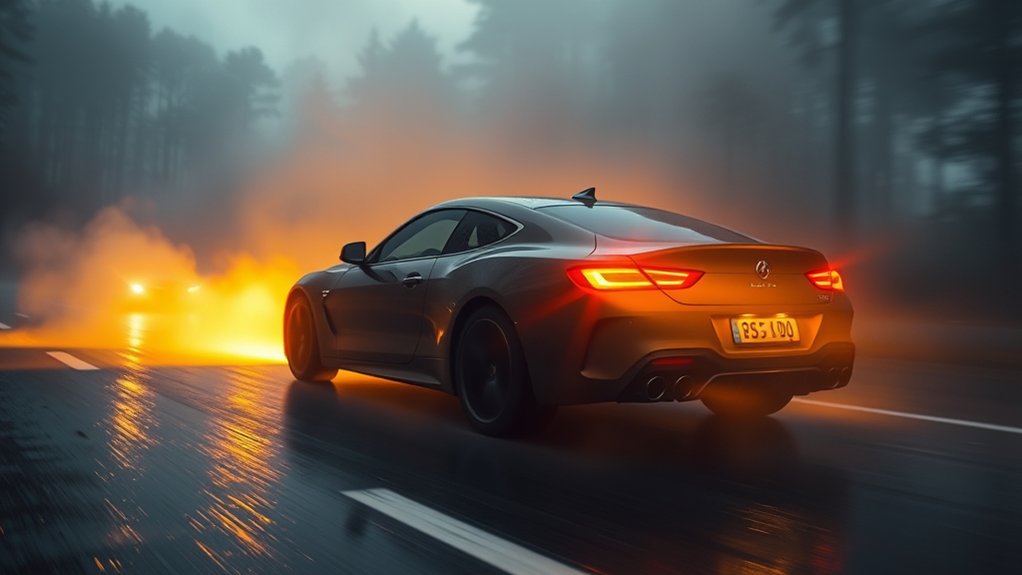
You use yellow fog lights because their longer wavelength reduces glare and cuts through fog, rain, and snow more effectively than white lights. These yellow fog lights are essential for enhancing visibility in poor weather conditions.
Positioned low on your vehicle, they shine beneath fog layers, improving your visibility and helping you spot obstacles and road markings clearly.
This focused, softer light also lessens eye strain during poor weather, keeping you safer and more comfortable. Yellow fog lights provide a practical solution for drivers seeking better clarity on foggy or snowy roads.
If you want to understand how they enhance driving in bad conditions, there’s more to explore.
Key Takeaways
- Yellow fog lights reduce glare and improve visibility in fog, rain, snow, and mist by emitting a focused, low-mounted beam.
- The longer wavelength of yellow light scatters less in moisture, enhancing contrast and object detection compared to white light.
- Positioned low on vehicles, yellow fog lights minimize reflection off fog droplets, providing clearer road markings and obstacle visibility.
- Yellow light reduces eye strain and fatigue during extended drives in poor weather conditions by creating a softer, focused beam.
- Regulations favor yellow fog lights for their glare-reducing properties, improving safety for both drivers and others on the road.
Why Yellow Fog Lights Are Better in Bad Weather
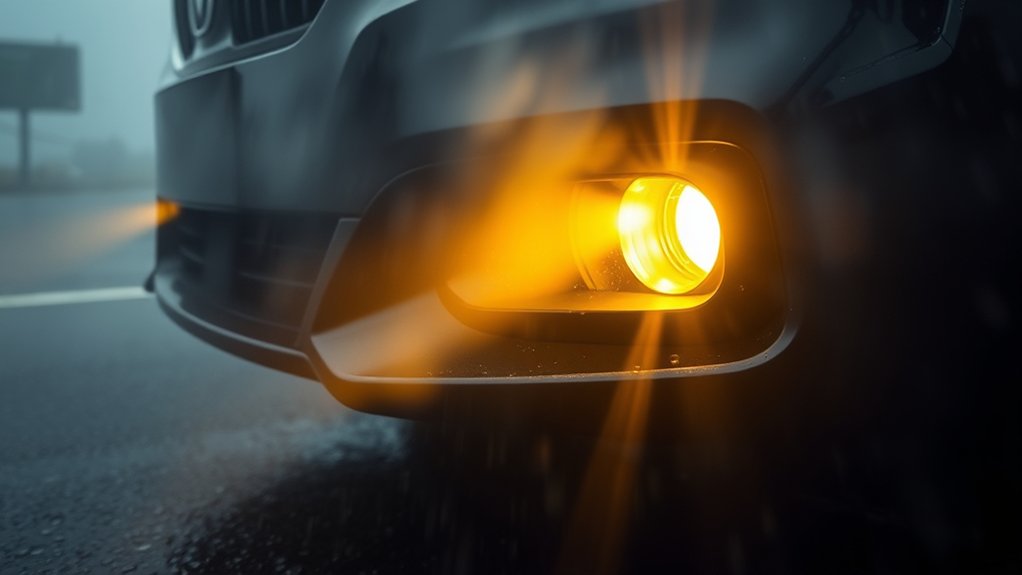
Yellow fog lights perform better in bad weather because they reduce glare and improve visibility. When you drive in rain or snow, white headlights can reflect off moisture droplets, creating harsh glare that makes it hard to see. Yellow light, with its longer wavelength, cuts through this glare more effectively, helping you spot obstacles and road markings clearly.
You’ll notice that yellow lights cause less eye strain during extended drives in poor conditions. They also create a softer, more focused beam that stays closer to the road, reducing scattered light that can confuse your vision.
How Yellow Fog Lights Cut Through Fog and Mist

How exactly do fog lights cut through dense fog and mist to improve your vision? When you turn on your yellow fog lights, they emit a focused, low-mounted beam that stays close to the road surface. This positioning helps reduce the amount of light reflecting off fog droplets right into your eyes, so you avoid the glare that regular headlights cause.
The yellow color also plays a role, as it scatters less than white light, allowing you to see the road markings and edges more clearly. By illuminating the area directly ahead without bouncing light back at you, yellow fog lights help you detect obstacles and navigate safely through poor visibility conditions. This focused, low-glare beam keeps your path clear when fog and mist surround you.
The Science Behind Yellow Fog Lights and Reduced Glare
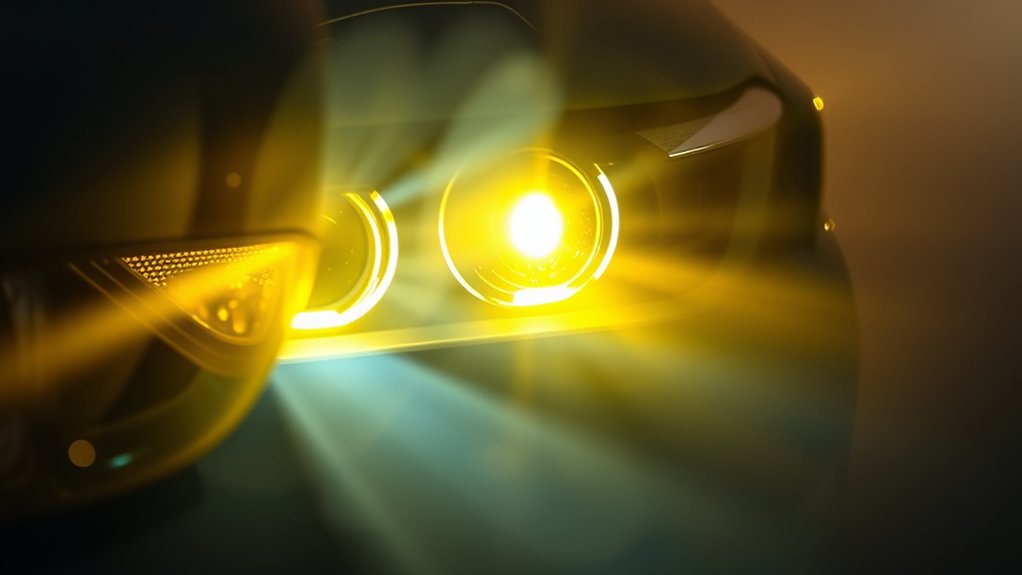
You’ll notice yellow fog lights reduce glare because their light wavelength scatters less in fog and mist. This helps improve your visibility by cutting down the harsh reflections that white lights often cause.
Plus, the yellow light boosts contrast, making it easier for you to spot objects ahead.
Light Wavelength And Visibility
Although fog can scatter light in all directions, certain wavelengths pass through more effectively, which is why yellow fog lights improve visibility. Yellow light has a longer wavelength than blue or violet light, allowing it to penetrate fog without scattering as much.
This helps you see the road more clearly, reducing eye strain and improving safety in poor weather.
| Wavelength Range | Effect on Visibility |
|---|---|
| Blue (450–495 nm) | Scatters heavily in fog |
| Green (495–570 nm) | Moderate scattering |
| Yellow (570–590 nm) | Penetrates fog effectively |
| Red (620–750 nm) | Passes through but less bright |
You’ll notice yellow fog lights cut through the haze better, making your drive safer and less stressful.
Glare Reduction Mechanism
Why does yellow light cause less glare than white or blue light in foggy conditions? It’s all about how light scatters. Blue and white lights have shorter wavelengths that scatter more when they hit fog droplets, creating intense glare that bounces back into your eyes.
Yellow light, with its longer wavelength, scatters less, so you get a clearer, softer beam. This means you won’t be blinded by reflected light, helping you see the road better. When you use yellow fog lights, you’re reducing the amount of scattered light that can overwhelm your vision, especially in dense fog.
This glare reduction mechanism makes driving safer, as it minimizes visual noise and helps you focus on what’s ahead without discomfort or distraction.
Contrast Enhancement Benefits
Because yellow light scatters less in foggy conditions, it enhances the contrast between objects and their background more effectively than white or blue light. This means you can spot obstacles, road signs, and lane markings with greater clarity. The reduced scattering also lowers glare, helping your eyes stay focused and less strained.
Here’s why yellow fog lights boost contrast for you:
- Penetrate fog, rain, and snow without reflecting back excessively
- Improve visibility by highlighting edges and shapes clearly
- Reduce eye fatigue during long drives in poor weather
- Help other drivers notice your vehicle sooner, enhancing safety
How Yellow Fog Lights Improve Driver Visibility and Comfort
When you drive in foggy conditions, yellow fog lights cut through the haze more effectively than white lights, enhancing your visibility. The longer wavelength of yellow light reduces glare and reflection caused by fog, rain, or snow, allowing you to see the road and obstacles more clearly. This means your eyes don’t have to work as hard, reducing strain and fatigue during challenging weather.
Yellow light also improves depth perception and contrast, helping you better judge distances and spot hazards sooner. By using yellow fog lights, you maintain a clearer, more comfortable view of the road, which boosts your confidence and safety. Overall, these lights provide a practical way to improve both how well you see and how comfortable you feel while driving in poor visibility.
When to Use Yellow Fog Lights for Safer Driving
You should use yellow fog lights when visibility drops due to fog, rain, or snow to see better and stay safe. They help reduce glare that can blind you and other drivers.
Plus, yellow light enhances contrast, making it easier to spot obstacles on the road.
Low Visibility Conditions
How can yellow fog lights improve your safety on the road? They’re designed specifically for low visibility conditions, helping you see better and stay visible to others.
When you encounter any of the following, switching to yellow fog lights can make a real difference:
- Thick fog that diffuses regular white light
- Heavy rain that reduces contrast and depth perception
- Snowfall that scatters light, causing glare with standard headlights
- Dust or smoke that obscures vision and dulls regular beams
Reducing Glare Impact
Yellow fog lights don’t just help cut through poor weather—they also play a key role in reducing glare that can impair your vision. When you drive at night or in foggy conditions, regular white headlights can reflect off moisture or particles in the air, creating intense glare. Yellow light, with its longer wavelength, scatters less and penetrates the haze more effectively, helping to minimize this glare.
Enhancing Contrast Perception
When does using yellow fog lights make the biggest difference in your driving? It’s when you need to enhance contrast perception on the road. Yellow light cuts through haze, rain, and fog better than white light, helping your eyes detect shapes and edges more clearly.
This improved contrast lets you spot obstacles and road markings faster, boosting safety. You’ll find yellow fog lights especially useful when:
- Driving through dense fog or heavy mist
- Steering through rainy or snowy conditions
- Approaching sharp curves and intersections
- Traveling on unfamiliar or poorly lit roads
Debunking Common Myths About Yellow Fog Lights
Although many drivers believe yellow fog lights substantially improve visibility in all conditions, this isn’t always true. You might think yellow light cuts through fog better than white light, but the difference is often minimal. The real advantage comes from reduced glare and less eye strain, not from a dramatic increase in visibility.
Another common myth is that yellow fog lights are legally required or safer everywhere, but regulations vary by region, so you shouldn’t assume yellow is always best. Also, some say yellow lights are outdated technology, but they still serve a purpose in specific weather conditions. Understanding these facts helps you make informed choices instead of relying on misconceptions about yellow fog lights.
The History of Yellow Fog Lights in Cars
You might not realize it, but yellow fog lights have a long history dating back to the early days of automotive lighting. They were designed to improve visibility in poor weather conditions before modern technology took over.
Understanding how fog lamps evolved can help you appreciate why yellow remains a popular choice today.
Early Automotive Lighting
Since the earliest days of automotive design, engineers have sought ways to improve visibility in poor weather conditions. Early car lighting used simple oil or acetylene lamps, but these often struggled in fog, rain, or snow. You’d notice that drivers needed lighting that cut through the haze without blinding themselves or others.
Here’s what defined early automotive lighting:
- Basic lamps provided limited brightness and range
- White light caused glare, reducing visibility in fog
- Yellow light was found to scatter less, improving clarity
- Early experiments with tinted lenses began to shape fog light design
Evolution of Fog Lamps
Building on the early use of yellow light to reduce glare and improve visibility, fog lamps evolved to meet drivers’ growing needs for safer nighttime and poor-weather driving. In the 1930s, manufacturers started integrating yellow fog lights to cut through fog, rain, and snow more effectively than white lights. You’d notice these lamps were positioned lower on vehicles, aiming light beneath the fog layer to minimize reflection and glare.
Over time, technology improved, making yellow bulbs more efficient and durable. Even as white LED fog lights gained popularity, many drivers still prefer yellow for its proven ability to enhance contrast and reduce eye strain. So, when you switch on yellow fog lamps, you’re tapping into decades of innovation aimed at improving your visibility and safety in challenging conditions.
What You Need to Know About Yellow Fog Light Regulations
Although yellow fog lights offer distinct advantages in poor weather, you should be aware that their use is subject to specific regulations. These rules vary depending on your location, and knowing them helps you avoid fines or unsafe setups.
Yellow fog lights improve visibility in bad weather but must comply with local regulations to avoid penalties.
Here’s what you need to keep in mind:
- Color standards: Many regions restrict fog lights to yellow or white to reduce glare.
- Placement rules: Fog lights must be installed at a specific height and position on your vehicle.
- Usage restrictions: They’re often only allowed during fog, heavy rain, or snow—not for regular night driving.
- Certification requirements: Some areas require fog lights to meet certain brightness and beam pattern specifications.
Always check local laws before modifying your vehicle to guarantee your yellow fog lights comply.
How to Choose the Right Yellow Fog Lights for Your Vehicle
Understanding the regulations around yellow fog lights is a good starting point, but selecting the right ones for your vehicle involves considering several factors. First, check your vehicle’s compatibility with different bulb types—LED, halogen, or HID. LEDs offer energy efficiency and longevity, while halogens are typically more affordable.
Next, think about brightness and beam pattern; you want fog lights that reduce glare and improve visibility without blinding other drivers. Also, verify the color temperature stays within the yellow range for effective fog penetration. Don’t forget to confirm the installation ease and whether the lights fit your vehicle’s mounting points.
Finally, pick a reputable brand that complies with safety standards to guarantee quality and durability. This way, you’ll get fog lights that enhance your driving safety.
Tips for Maintaining and Caring for Yellow Fog Lights
Since yellow fog lights play a crucial role in enhancing your visibility during poor weather, keeping them in good condition is necessary. Proper maintenance ensures they function effectively when you need them most. Here are some tips to help you care for your yellow fog lights:
Yellow fog lights are essential for visibility in poor weather, so regular maintenance is key for optimal performance.
- Clean regularly: Use a soft cloth and mild detergent to remove dirt and grime without scratching the lens.
- Check for damage: Inspect for cracks or moisture buildup that can impair performance.
- Replace bulbs promptly: Don’t wait for dimming; replace bulbs as soon as they show signs of fading.
- Secure fittings: Ensure the lights are tightly mounted to avoid vibrations that can cause wear or misalignment.
Following these steps will keep your yellow fog lights reliable and clear in any driving condition.
Frequently Asked Questions
Can Yellow Fog Lights Be Used as Regular Headlights?
You can use yellow fog lights as regular headlights, but they’re not ideal. They don’t illuminate as far or wide as standard white headlights, so it’s safer and more effective to rely on proper headlights for regular driving.
Do Yellow Fog Lights Affect Fuel Efficiency?
Imagine driving through a dense, yellow-hued mist. Using yellow fog lights won’t affect your fuel efficiency because they draw similar power to regular lights, so you won’t notice any change in your car’s gas mileage.
Are Yellow Fog Lights Compatible With All Car Models?
You can’t use yellow fog lights on all car models since compatibility depends on your vehicle’s make and wiring. Check your owner’s manual or consult a professional to guarantee proper fit and legal compliance before installation.
How Much Do Yellow Fog Lights Cost on Average?
You’ll typically pay between $20 and $100 for yellow fog lights, depending on quality and brand. Some high-end models or kits with installation can cost more, but basic options are usually affordable and easy to find online.
Can Yellow Fog Lights Be DIY Installed at Home?
Yes, you can DIY install yellow fog lights at home if you’re comfortable with basic car wiring and tools. Just follow the instructions carefully, disconnect the battery, and take safety precautions to avoid damage or injury.
Conclusion
Now that you know how yellow fog lights cut through bad weather and reduce glare, wouldn’t you want clearer, safer driving in fog or mist? They improve your visibility and comfort, making every drive less stressful. Remember to use them wisely and keep them well-maintained.
With the right yellow fog lights, you’re not just lighting the road—you’re lighting your way to safer journeys. Ready to see the difference? Embrace the benefits of yellow fog lights for enhanced safety and better visibility in challenging conditions.

