

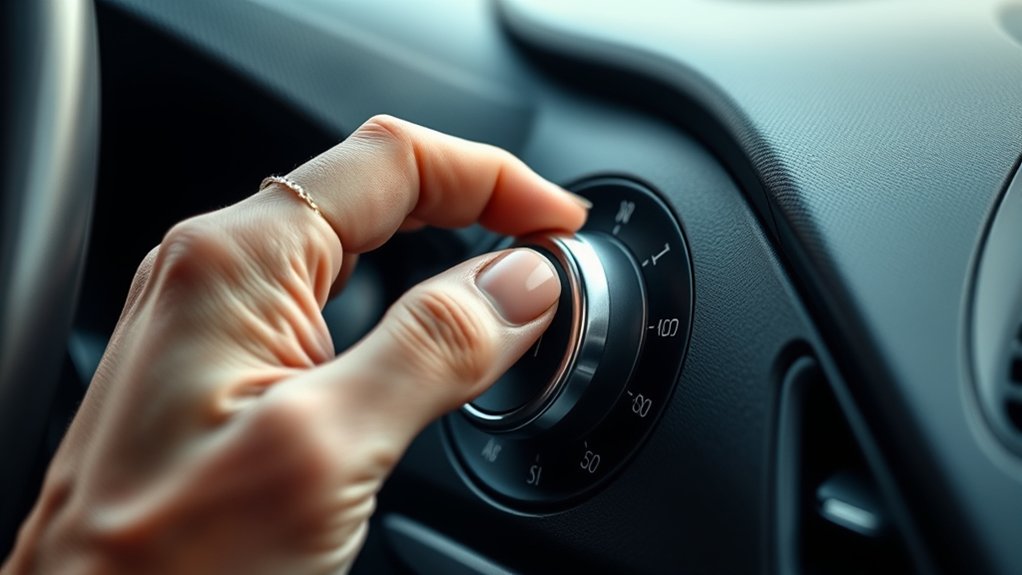
To turn off your fog lights safely and effectively, start by locating the fog light controls near your vehicle’s dashboard. These controls may come in various forms such as toggle switches, rotary dials, or push buttons marked with fog light symbols.
Understanding how to operate these controls is essential for managing your fog lights and preventing unnecessary glare or battery drain. Flip, twist, or press the switch to the off position.
Confirm they’re off by checking the dashboard indicators or visually inspecting the lights outside. If they won’t turn off, inspect the switch, relay, or wiring for issues.
Master these simple steps to confidently control your fog lights and ensure safe driving conditions in all weather scenarios.
Key Takeaways
- Locate the fog light control switch, typically near the headlight controls on the dashboard.
- Identify the switch type: toggle, rotary dial, or push button, using dashboard symbols or labels.
- Turn the toggle switch off, twist the rotary dial to the off position, or press the push button again to deactivate fog lights.
- Confirm fog lights are off by checking dashboard indicator lights and visually inspecting the front and rear fog lamps.
- Step outside in low light to ensure fog lights are no longer illuminated, preventing glare and battery drain.
Turn Off Front Fog Lights
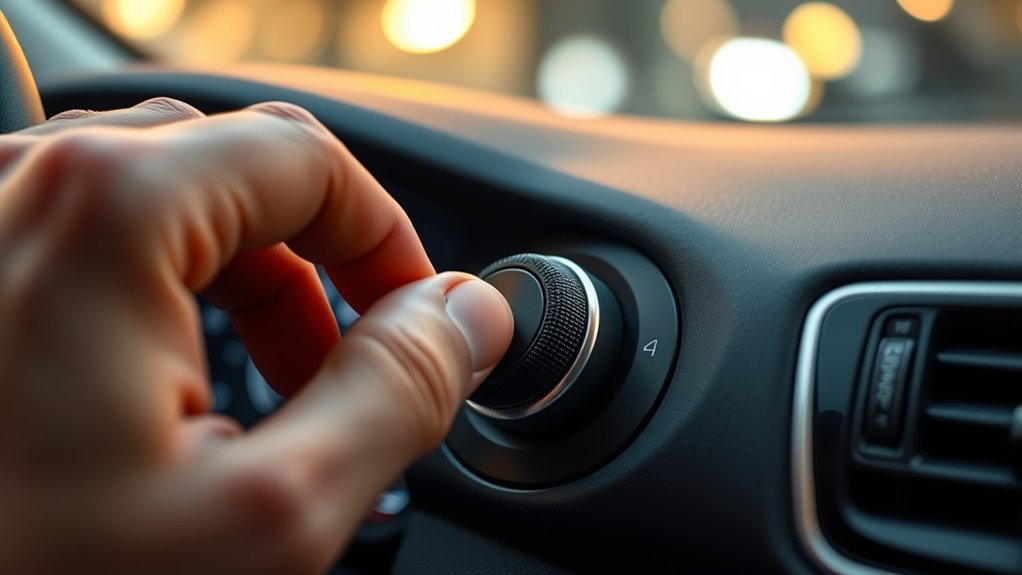
When you need to turn off your front fog lights, start by locating the fog light control switch on your dashboard or steering column. This switch often has a symbol resembling a lamp with horizontal lines and a wavy line through it.
Once you find the switch, simply turn it to the off position or press the button, depending on your vehicle’s setup. Make sure your headlights are on or off as required since some cars only allow fog lights to operate alongside the headlights.
After switching off the fog lights, check your instrument panel for the fog light indicator to confirm they’re off. Turning off your front fog lights when visibility improves helps prevent glare for other drivers and conserves your vehicle’s electrical system.
Switch Off Rear Fog Lights (If Equipped)
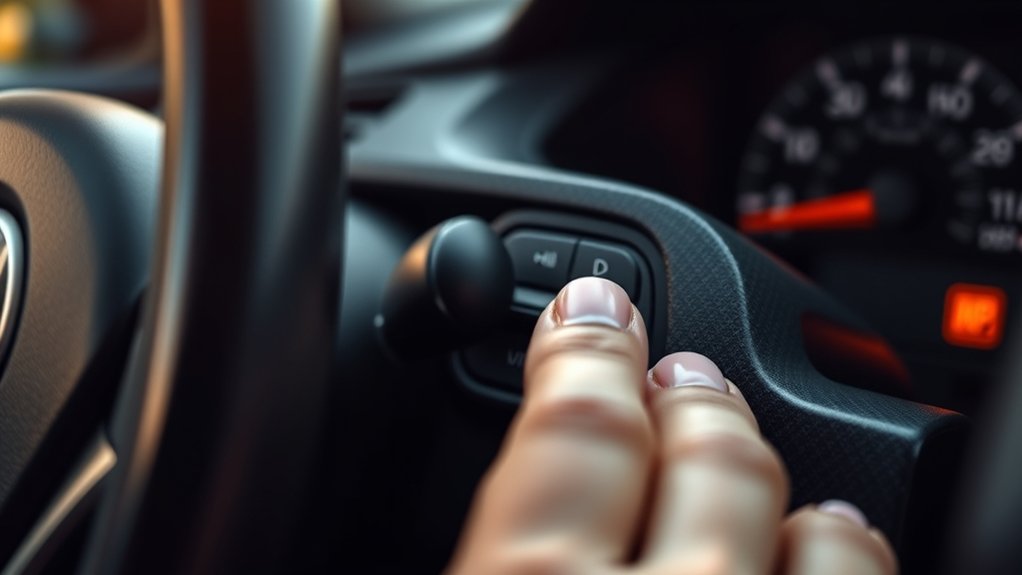
Although rear fog lights improve your visibility in poor weather, you should switch them off once conditions clear up to avoid dazzling drivers behind you. To do this, simply locate the rear fog light control—usually integrated with your vehicle’s light switch or a dedicated button on the dashboard. When visibility improves, press or turn this control to deactivate the rear fog lights.
You’ll often see an indicator light on your dashboard turn off, confirming they’re turned off. Remember, keeping rear fog lights on unnecessarily can confuse or temporarily blind other drivers. So, make it a habit to turn them off promptly after driving through fog, heavy rain, or snow.
This ensures safety for you and others on the road.
Locate and Identify Your Fog Light Controls
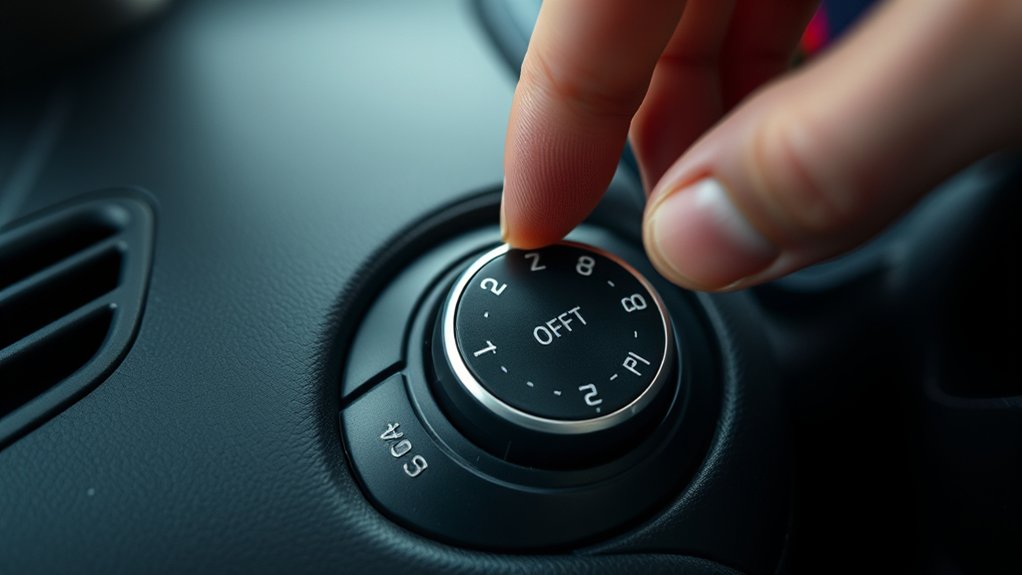
Before you can turn off your fog lights, you need to locate and identify their controls in your vehicle. Typically, these controls are found on or near the dashboard, often integrated with the headlight switch or on a separate dial or button.
Look for symbols resembling a lamp with horizontal lines and a wavy line cutting through them—this icon represents fog lights. In many cars, the front fog light control is marked with a green indicator, while the rear fog light uses an amber one.
If you’re unsure, consult your owner’s manual for exact locations and symbols. Familiarizing yourself with these controls guarantees you can quickly manage your fog lights when needed, improving both safety and convenience.
Check That Your Fog Lights Are Off
After switching off your fog lights, make sure to double-check that they’re actually off. Look for visual confirmation by glancing at the lights themselves and the dashboard indicator.
For extra certainty, take a quick evening drive to confirm your fog lights aren’t on.
Visual Confirmation Techniques
When you want to guarantee your fog lights are off, the easiest way is to perform a quick visual check. Step out of your vehicle and look at the front and rear sides where the fog lights are located. Make sure no lights are glowing in those areas.
If it’s dark outside, this step becomes even more effective since the fog lights will stand out clearly. If you’re in a well-lit area, try to angle your view or turn the car slightly to spot any faint illumination. Also, check reflections on nearby surfaces, like walls or the ground, which can reveal if the fog lights are still on.
This simple method helps avoid battery drain and assures safe driving conditions.
Dashboard Indicator Lights
Although visually checking your fog lights is effective, you can also rely on your dashboard indicator lights to confirm whether they’re off. When you switch your fog lights on or off, a corresponding symbol usually appears on your dashboard. This icon often looks like a lamp with diagonal lines and may be green or amber, depending on your vehicle.
If the fog light indicator is illuminated, it means your fog lights are still on. Once you turn them off, the light should disappear. Keep an eye on this dashboard symbol every time you adjust your fog lights.
It provides a quick, dependable way to ensure they’re off without stepping outside your car or straining your eyes in low light.
Evening Visibility Check
Relying on your dashboard indicator lights is helpful, but it’s also a good idea to perform an evening visibility check to make sure your fog lights are off. After turning them off inside the vehicle, step outside in a dimly lit area or during dusk. Look directly at the front of your car to see if the fog lights are still glowing.
If you spot any light, switch them off again using the controls inside. Remember, fog lights can be brighter and lower than your regular headlights, so they’re easy to miss if you don’t check carefully. Doing this quick check guarantees you’re not unintentionally dazzling other drivers and helps you comply with road safety rules.
It only takes a minute but adds valuable peace of mind.
Troubleshoot Fog Lights That Won’t Turn Off
If your fog lights won’t turn off, the issue usually lies in the switch, relay, or wiring. First, check the fog light switch for any signs of damage or sticking. A faulty switch can keep the lights on even when you turn them off.
Next, inspect the relay—this small electrical component controls power to the fog lights and can get stuck in the “on” position. Finally, examine the wiring for shorts or corrosion that might cause a constant connection.
Here’s what you should do:
- Test the fog light switch for proper function.
- Swap the relay with a similar one to see if the problem clears.
- Look for damaged or exposed wires near the fog light circuit.
Addressing these areas often solves the problem quickly.
Tips for Using Fog Lights Safely and Responsibly
You should only use fog lights in low visibility conditions like fog, heavy rain, or snow to avoid blinding other drivers. Always check your local regulations to make sure you’re using them correctly and legally.
Being responsible with your fog lights helps keep everyone safe on the road.
When To Use
Although fog lights are designed to improve visibility in poor weather, you should only use them in specific conditions like heavy fog, snow, or rain.
Turning them on when it’s clear can be distracting and unnecessary.
Use your fog lights to increase your own visibility and to help other drivers see you better in difficult weather.
Here are key moments to use your fog lights:
- When visibility drops below 100 meters due to dense fog or heavy snowfall
- During intense rainstorms that reduce road visibility
- On winding roads or rural areas where low lighting and weather combine to impair sight
Avoid Blinding Others
How can you guarantee your fog lights help rather than hinder other drivers on the road? First, use fog lights only in poor visibility conditions like fog, heavy rain, or snow. Avoid turning them on in clear weather, as their brightness can easily blind oncoming drivers or those ahead of you.
Always switch off your fog lights once visibility improves to prevent glare and distraction. Make certain your fog lights are properly aimed and maintained; misaligned lights can shine directly into other drivers’ eyes. Be mindful when following other vehicles—excessive brightness can create discomfort or temporary blindness.
Check Local Regulations
Where exactly can you use your fog lights legally? Before turning them on or off, check your local regulations to avoid fines and guarantee safe driving. Rules vary widely, so it’s important to know what applies in your area.
Some places restrict fog light use to specific weather conditions, while others regulate their placement or brightness. Keep these points in mind:
- Fog lights are typically for use in fog, heavy rain, or snow, not clear conditions.
- Many regions prohibit using fog lights alongside high beams to prevent glare.
- Some jurisdictions require fog lights to be turned off when on well-lit roads or in urban areas.
Understand Different Fog Light Switch Types
What types of switches control your fog lights? Typically, you’ll find three main types: toggle switches, rotary dials, and push buttons. Toggle switches flip up or down, making it easy to quickly turn your fog lights on or off.
Rotary dials usually integrate fog light controls with your headlight settings, so you’ll need to twist the dial to the correct position. Push buttons might light up when activated, offering a clear visual cue. Knowing which switch your vehicle uses helps you turn off the fog lights without confusion.
Check your dashboard for symbols or labels indicating fog lights. Understanding your switch type guarantees you operate your fog lights safely and efficiently, especially when you need to turn them off promptly.
Frequently Asked Questions
Are Fog Lights Legal in All States or Countries?
Fog lights aren’t legal in all states or countries. You’ll need to check local laws because regulations vary widely. Some places allow them only in poor visibility, while others restrict their use altogether to avoid blinding other drivers.
Can Fog Lights Improve Visibility in Heavy Rain?
Imagine driving through a dense soup of rain—fog lights can cut through that, like a flashlight in a dark cave. Yes, they improve visibility by reducing glare and illuminating the road edges during heavy rain, helping you see better.
How Do LED Fog Lights Differ From Halogen Ones?
LED fog lights use less energy, last longer, and produce brighter, whiter light compared to halogen bulbs, which generate a warmer, yellowish glow but consume more power and have a shorter lifespan.
You’ll notice clearer visibility with LEDs.
What Is the Average Lifespan of Fog Light Bulbs?
Like a candle flickering in the wind, fog light bulbs last around 1,000 to 3,000 hours.
You’ll want to replace them promptly when they dim, keeping your visibility sharp and your drives safe.
Can Using Fog Lights Affect My Vehicle’s Battery Life?
Yes, using fog lights constantly can drain your vehicle’s battery faster, especially if your engine isn’t running.
It’s best to use them only when necessary to avoid unnecessary battery wear and potential starting issues.
Conclusion
Turning off your fog lights might feel like defusing a bomb, but with these simple steps, you’ll master it like a pro. No more blinding other drivers or draining your battery overnight.
Remember, fog lights are powerful tools—use them wisely and switch them off promptly. If they ever act stubborn, don’t panic; troubleshooting is easier than you think.
Stay safe, stay responsible, and keep your fog lights under your full control every time you hit the road! Following these steps will ensure you know how to turn off fog lights quickly and effectively, maintaining both safety and battery life.

