


To use liquid fuel filter cleaners effectively, it is essential to understand the proper application and timing for optimal results. Liquid fuel filter cleaners help remove contaminants and buildup in your fuel system, ensuring cleaner fuel delivery and improved engine performance.
Adding the cleaner correctly can extend the life of your fuel filter and maintain your vehicle’s efficiency. Add the correct amount of cleaner to a nearly empty tank for better mixing, then fill up with fresh fuel immediately.
Make certain your vehicle is parked on a flat surface with the engine off and cool. Follow the manufacturer’s recommended dosage and maintenance intervals, typically every 3,000 to 5,000 miles.
Regular use prevents buildup and prolongs filter life. Keep these steps in mind, and you’ll guarantee peak engine performance and cleaner fuel delivery—there’s more to explore for best results.
Key Takeaways
- Add the cleaner to a nearly empty fuel tank and then fill it with fresh fuel for optimal mixing.
- Use the recommended cleaner dosage based on your vehicle’s fuel tank size and manufacturer instructions.
- Apply the cleaner regularly every 3,000 to 5,000 miles or before long trips to maintain fuel system cleanliness.
- Ensure the engine is off and cool before adding cleaner to prevent contamination and ensure safety.
- Continue normal driving after application to circulate the cleaner through the fuel system effectively.
Why Use Liquid Fuel Filter Cleaners?
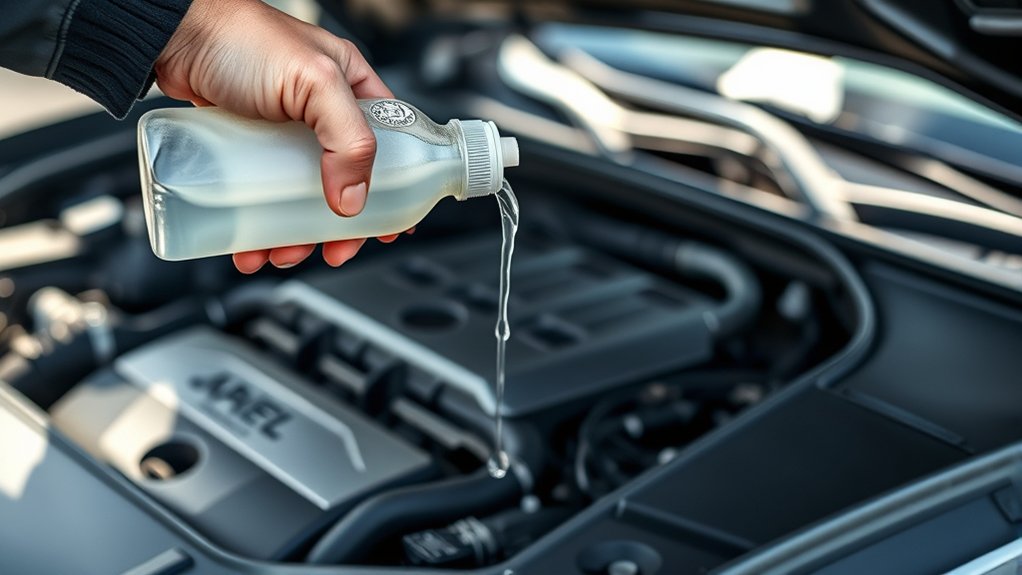
Why should you consider using liquid fuel filter cleaners? Because they help maintain your engine’s performance by preventing clogs and buildup in the fuel filter. When debris accumulates, it restricts fuel flow, causing your engine to struggle or even stall.
Using these cleaners regularly ensures smoother fuel delivery, better combustion, and improved fuel efficiency. You’ll also reduce the risk of costly repairs from damaged fuel injectors or pumps. Plus, liquid fuel filter cleaners can extend the lifespan of your vehicle’s fuel system by keeping it clean and functioning properly.
When you prioritize this simple maintenance step, you protect your engine and enhance overall reliability, making your driving experience safer and more efficient.
What Are Liquid Fuel Filter Cleaners?
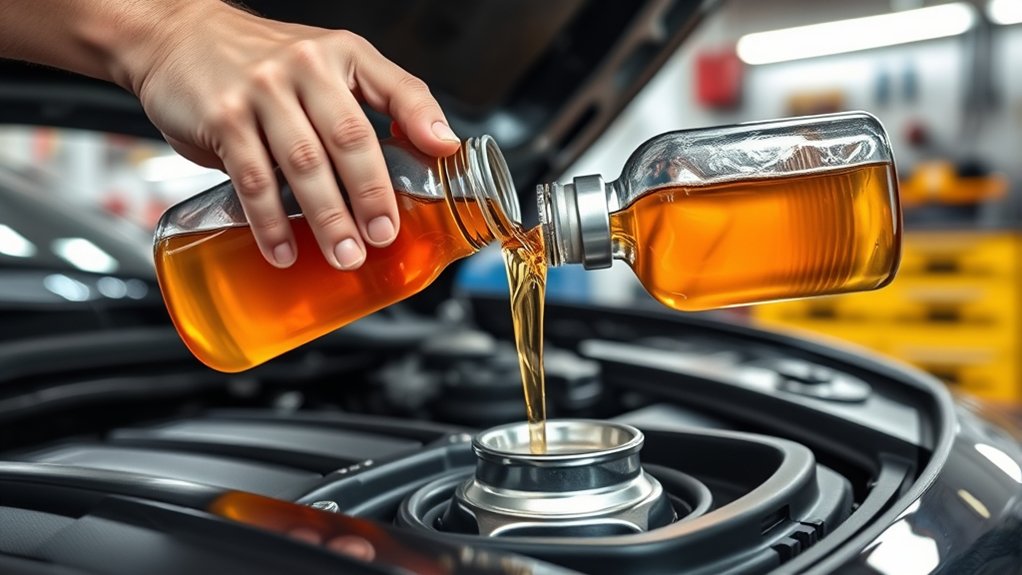
To keep your fuel system running smoothly, you’ll want to understand what liquid fuel filter cleaners actually are. These products are specially formulated additives designed to remove dirt, debris, and contaminants from your fuel filter. By breaking down buildup and deposits, they help restore proper fuel flow and improve engine performance.
You simply pour the cleaner into your fuel tank, where it mixes with the fuel and travels through the system, targeting the filter and other components. Liquid fuel filter cleaners are a convenient way to maintain cleanliness without disassembling parts. Using them regularly can prevent clogs and extend the life of your fuel filter, ensuring your vehicle runs efficiently and reliably every time you hit the road.
Preparing Your Vehicle Before Adding Fuel Filter Cleaner
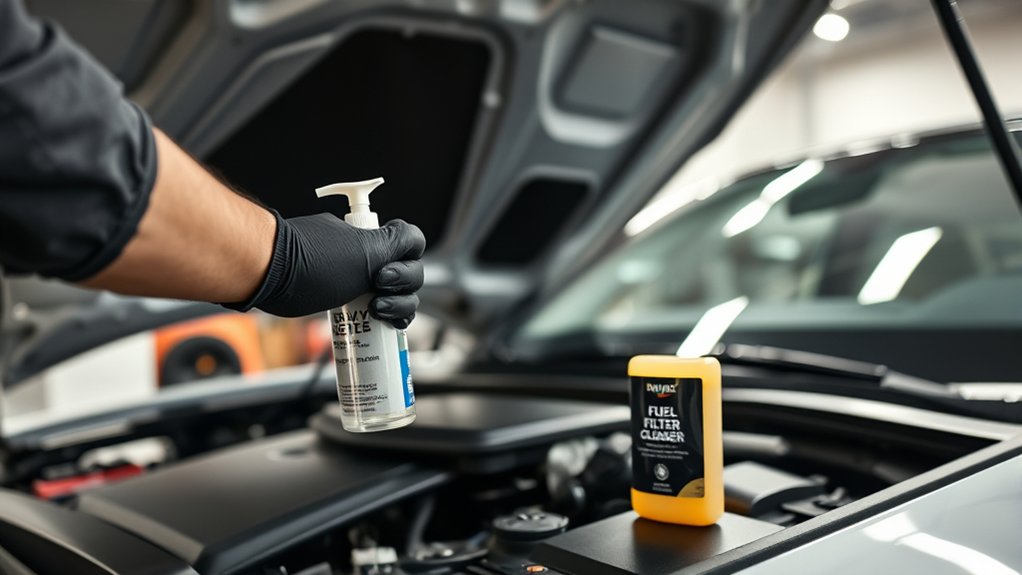
Before adding a liquid fuel filter cleaner, you should verify your vehicle’s fuel tank is nearly empty or at least below half full. This guarantees the cleaner mixes thoroughly with the fuel for maximum effectiveness.
Next, park your vehicle on a flat surface and turn off the engine. Avoid adding cleaner when the engine is hot to prevent spills and fumes. Also, consult your owner’s manual to confirm the recommended cleaner amount.
| Step | Action | Tip |
|---|---|---|
| Check Fuel Level | Guarantee tank is below half | Use the fuel gauge |
| Park Vehicle | Find flat, safe parking spot | Prevent accidents |
| Review Manual | Look up cleaner instructions | Use correct cleaner dosage |
How to Add Liquid Fuel Filter Cleaner Step-by-Step
First, make sure your fuel tank is ready by filling it to the recommended level. Then, measure the correct amount of cleaner according to your vehicle’s needs.
Finally, pour the cleaner into the tank and mix it properly by running the engine.
Preparing The Fuel Tank
Although adding liquid fuel filter cleaner seems straightforward, preparing your fuel tank properly guarantees the cleaner works effectively. Start by checking that your tank isn’t full; adding cleaner to an overfilled tank dilutes it, reducing effectiveness.
Next, clean the fuel cap and surrounding area to avoid dirt entering the tank. Finally, ensure your fuel tank’s ventilation system is unobstructed to allow smooth flow during fueling.
| Preparation Step | Why It Matters |
|---|---|
| Avoid Overfilling | Maintains cleaner concentration |
| Clean Fuel Cap Area | Prevents contaminants |
| Check Ventilation System | Ensures proper fuel flow |
Measuring The Correct Amount
Once your fuel tank is properly prepared, the next step is to measure the correct amount of liquid fuel filter cleaner. Start by checking the product label for the recommended dosage based on your fuel tank’s capacity. Use a clean, clear measuring cup or the applicator provided with the cleaner to guarantee accuracy.
Avoid guessing or eyeballing the amount, as using too little won’t be effective, and too much could harm your engine. If your tank size falls between the recommended ranges, follow the manufacturer’s guidelines for the best results. Always measure carefully on a flat surface to prevent spills.
Pouring And Mixing Properly
How do you guarantee your liquid fuel filter cleaner mixes thoroughly for maximum effectiveness? Start by pouring the measured cleaner directly into your fuel tank when it’s nearly empty. This assures the cleaner blends with a smaller amount of fuel first, promoting better mixing.
After adding the cleaner, fill up your tank with fresh fuel immediately. The incoming fuel stirs the cleaner evenly throughout the tank. Avoid adding the cleaner into a full tank; this can dilute its concentration and reduce its impact.
Once filled, drive your vehicle normally to keep the cleaner circulating through the fuel system. Following these steps helps the liquid fuel filter cleaner reach all components, ensuring your filter and fuel lines stay clean and your engine runs smoothly.
When and How Much Fuel Filter Cleaner to Use
You should add fuel filter cleaner at regular intervals to keep your fuel system running smoothly. Using the right amount is essential—too little won’t be effective, and too much can cause problems.
Let’s look at the ideal timing and correct dosage guidelines to help you get it right.
Optimal Timing For Use
Although fuel filter cleaners can improve your engine’s performance, using them at the right time and in the correct amount is essential for effectiveness. To maximize results, consider these key timing tips:
- Before Long Trips: Add the cleaner a few days before a long drive to ensure the fuel system is thoroughly treated and ready for extended use.
- During Regular Maintenance: Use the cleaner when you change your oil or replace filters to maintain consistent fuel system health.
- When Fuel Quality Is Suspect: If you fill up at an unfamiliar or questionable station, add the cleaner immediately to prevent buildup and contamination.
Correct Dosage Guidelines
When adding fuel filter cleaner, following the correct dosage is vital to avoid damaging your engine or wasting the product. Always check the manufacturer’s instructions on the bottle for the exact amount needed based on your fuel tank size. Typically, one bottle treats 10 to 15 gallons of fuel.
If your tank is larger, adjust the amount proportionally. Pour the cleaner directly into the fuel tank before filling up, ensuring it mixes well with fresh fuel. Avoid overdosing, as excess cleaner won’t improve performance and could harm fuel system components.
Using less than recommended reduces effectiveness. Stick to the recommended intervals, usually every 3,000 to 5,000 miles, or as indicated by your vehicle’s needs. Correct dosage ensures efficient cleaning and prolongs engine life.
What to Expect After Using Fuel Filter Cleaner
Once you add a fuel filter cleaner to your tank, your engine will start benefiting from improved fuel flow and reduced contaminants. You might notice these changes within a few tankfuls:
- Smoother Engine Performance – Your engine will run more smoothly as deposits dissolve, reducing hesitation and stalling.
- Better Fuel Efficiency – Cleaner fuel filters allow fuel to flow freely, helping you get more miles per gallon.
- Reduced Emissions – With fewer impurities, your exhaust will be cleaner, contributing to lower environmental impact.
Keep in mind, these effects are gradual. Avoid expecting instant results, but with regular use, your vehicle’s performance and longevity can improve markedly.
Common Mistakes Using Fuel Filter Cleaners
How can you avoid common pitfalls when using fuel filter cleaners? One mistake is adding the cleaner to a nearly empty tank. Always top off your fuel before pouring in the cleaner to guarantee proper mixing.
Another error is using fuel filter cleaner too frequently, which can cause buildup or damage seals. Stick to the recommended intervals. Don’t ignore the instructions—using the wrong amount or type of cleaner can reduce effectiveness or harm your engine.
Avoid assuming all cleaners work the same; each formula targets specific issues. Finally, don’t overlook the condition of your actual fuel filter; cleaners help but don’t replace necessary filter changes. By steering clear of these mistakes, you’ll maximize your cleaner’s benefits and keep your engine running smoothly.
Choosing the Right Fuel Filter Cleaner for Your Vehicle
Although fuel filter cleaners may seem similar, choosing the right one for your vehicle depends on your engine type and specific fuel system needs. Picking the wrong cleaner can reduce effectiveness or even damage components, so you want to be precise.
Choosing the right fuel filter cleaner is crucial to protect your engine and maintain optimal performance.
Here’s how to choose correctly:
- Check Compatibility: Ensure the cleaner is designed for your fuel type—gasoline, diesel, or ethanol blends.
- Consider Engine Type: Some cleaners work better for older engines, while others suit modern fuel-injected systems.
- Look at Additives: Choose formulas with detergents and corrosion inhibitors tailored to your vehicle’s requirements.
Frequently Asked Questions
Can Liquid Fuel Filter Cleaners Damage My Fuel Pump?
Liquid fuel filter cleaners usually won’t damage your fuel pump if used properly. Just don’t overuse them or choose harsh formulas.
Follow instructions carefully to protect your fuel system and keep your pump running smoothly.
Are Liquid Fuel Filter Cleaners Safe for Diesel Engines?
Yes, liquid fuel filter cleaners are generally safe for diesel engines when used as directed. Just make sure you follow the product instructions carefully to avoid damaging components or affecting engine performance.
Using these cleaners improperly can lead to issues, so adherence to guidelines is important. Always check compatibility with your specific engine model before use. Proper usage helps maintain engine efficiency and longevity.
How Often Should I Replace My Fuel Filter After Using Cleaner?
You should replace your fuel filter every 20,000 to 40,000 miles, even after using a cleaner.
Keep an eye on your vehicle’s performance and follow your manufacturer’s recommendations for the best results.
Can I Use Fuel Filter Cleaner in a Hybrid Vehicle?
Yes, you can use fuel filter cleaner in a hybrid vehicle, but only if it has a traditional internal combustion engine.
Just follow the product instructions carefully to avoid any damage or voiding your warranty.
Do Liquid Fuel Filter Cleaners Affect Vehicle Emissions?
Just like Robin Hood aiming for balance, you’ll find liquid fuel filter cleaners can reduce emissions by improving fuel flow and combustion. They help your engine run cleaner, cutting harmful pollutants and keeping your ride greener on the road.
Conclusion
Using liquid fuel filter cleaners can boost your engine’s performance and prolong filter life, but only if you apply them correctly. While some think these cleaners fix all fuel issues instantly, they actually work best as preventive maintenance rather than quick fixes.
By preparing your vehicle properly and following dosage instructions, you’ll maximize benefits and avoid common mistakes. Remember, the right cleaner for your vehicle guarantees you get the most reliable and efficient results every time.
To sum up, using liquid fuel filter cleaners effectively involves proper application, correct dosage, and regular maintenance. This approach ensures improved engine performance, extended fuel filter life, and overall vehicle efficiency.

