

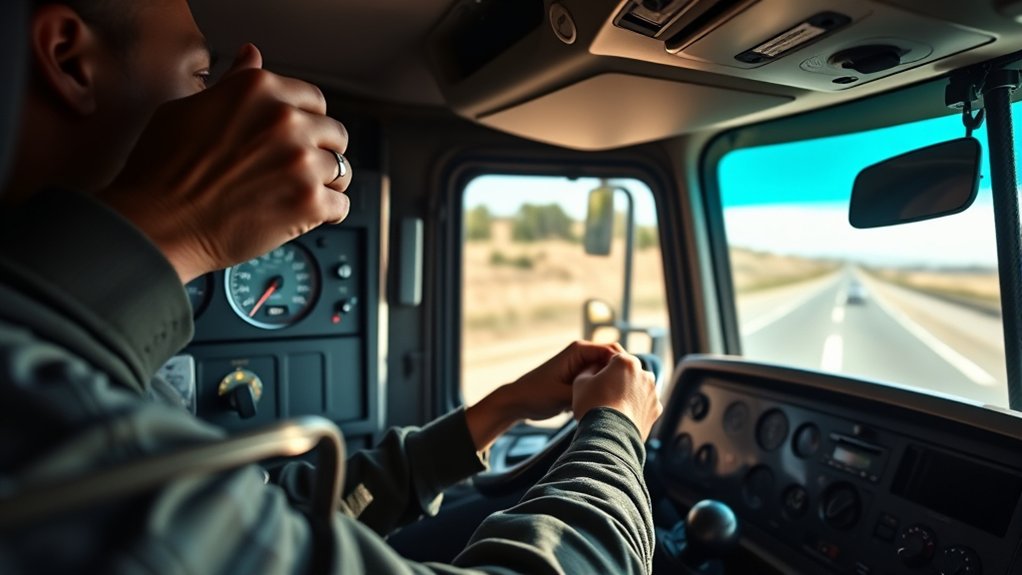
To double clutch your semi truck effectively, start by ensuring your clutch and brake pedals feel smooth and your gearstick is properly positioned. Double clutching is an essential skill for smooth gear transitions in heavy vehicles, especially semi trucks. It helps prevent gear grinding and extends the life of your transmission.
Fully press the clutch and shift out of the current gear, then release the clutch slowly. Next, quickly blip the throttle to raise the engine RPMs, press the clutch again, and shift into the next gear smoothly. Avoid rushing this process to prevent grinding, particularly when downshifting or handling heavy loads.
Keep a close eye on engine feedback to master this technique and ensure smooth shifting. With practice, double clutching will become second nature, improving your driving efficiency and safety. You can discover more tips to perfect your shifting here.
Key Takeaways
- Fully press the clutch and shift out of the current gear smoothly without forcing.
- Release the clutch gradually to avoid jerking while monitoring engine RPM.
- Quickly blip the throttle to raise RPM, matching the next gear’s speed.
- Press the clutch again immediately after the throttle blip to engage the second clutch.
- Shift into the next gear smoothly, coordinating clutch and throttle to prevent grinding.
Why Double Clutching Matters for Semi Trucks
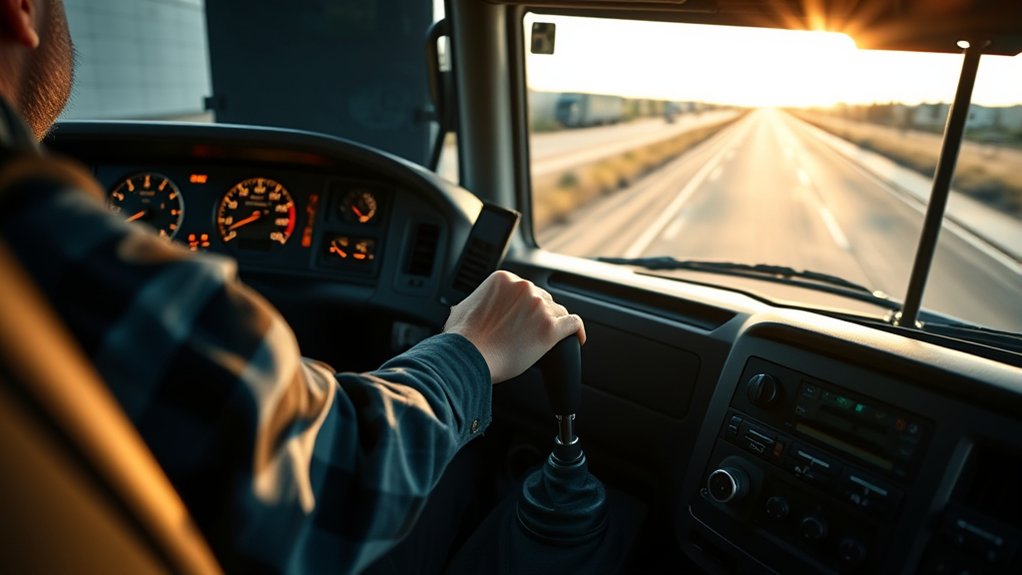
Although it might seem complicated at first, double clutching is crucial for driving a semi truck smoothly and safely. When you double clutch, you’re matching the engine speed to the transmission speed, which helps you shift gears without grinding. Semi trucks have large, heavy-duty transmissions that require precise timing and control.
If you skip double clutching, you risk damaging the gears and causing costly repairs. Plus, smooth shifts mean you maintain better control over your truck, especially when hauling heavy loads or driving on uneven terrain. Mastering double clutching also reduces wear on your clutch and transmission, extending their lifespan.
In short, double clutching isn’t just a technique—it’s a necessary skill that keeps your semi truck running efficiently and safely.
Prepare Your Semi Truck and Gearstick for Double Clutching
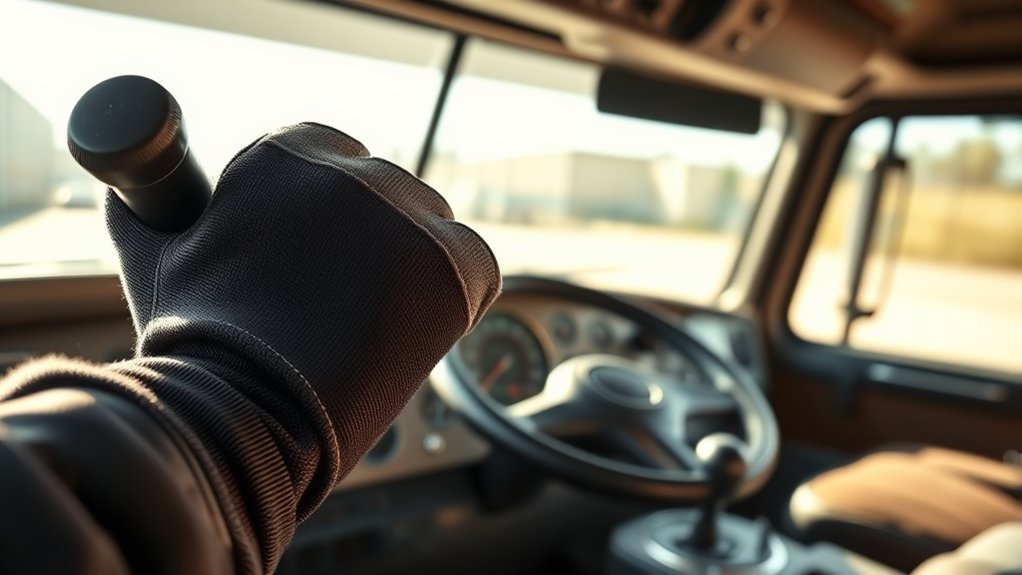
Before you start double clutching, make sure your clutch and pedals are in good shape to avoid any surprises. Position the gearstick firmly and precisely for smooth shifts.
Keep an eye on your engine RPMs to match the gear changes perfectly.
Inspect Clutch and Pedals
Why should you inspect the clutch and pedals thoroughly before double clutching your semi truck? Because a well-functioning clutch and responsive pedals are critical for smooth gear shifts. Start by pressing the clutch pedal fully to check for any unusual resistance or sponginess.
If the pedal feels soft or sticks, it might indicate air in the hydraulic line or worn components that need attention. Also, confirm the pedal returns smoothly without delay. Inspect the brake pedal too, since you’ll often coordinate braking while double clutching.
Confirm there’s no excessive play or sticking. Addressing these issues before you start helps prevent gear grinding and mechanical damage. Taking a moment to verify your clutch and pedals lets you double clutch with confidence and control, making your driving safer and more efficient.
Position Gearstick Correctly
Once you’re confident the clutch and pedals are in good shape, position the gearstick correctly to guarantee smooth double clutching. Start by resting your hand lightly on the gearstick, ready to move it through the shift pattern. Make sure you’re familiar with the gear layout and avoid forcing the stick—it should glide easily between positions.
Keep your movements deliberate but smooth to prevent grinding gears. Here’s a quick reference table for proper gearstick positioning during double clutching:
| Gear Position | Action |
|---|---|
| Neutral | Release clutch, rev engine |
| 1st Gear | Fully engage clutch |
| Neutral (again) | Release clutch, rev engine |
| 2nd Gear | Fully engage clutch |
| Rest Position | Hand ready for next shift |
This setup ensures precision and control during every shift.
Check Engine RPMs
While preparing to double clutch, you’ll need to closely monitor your engine RPMs to match the speed of the gears. When you depress the clutch and shift into neutral, watch the tachometer carefully. The goal is to rev the engine to the correct RPM that aligns with the next gear’s speed before re-engaging the clutch.
If your RPMs are too low or too high, the gear won’t mesh smoothly, causing grinding or wear. As you shift into the next gear, smoothly increase or decrease RPMs by feathering the throttle. With practice, you’ll develop a feel for the precise RPM range needed for each gear change, making your double clutching smoother and prolonging your transmission’s life.
Get the First Clutch and Gear Release Right
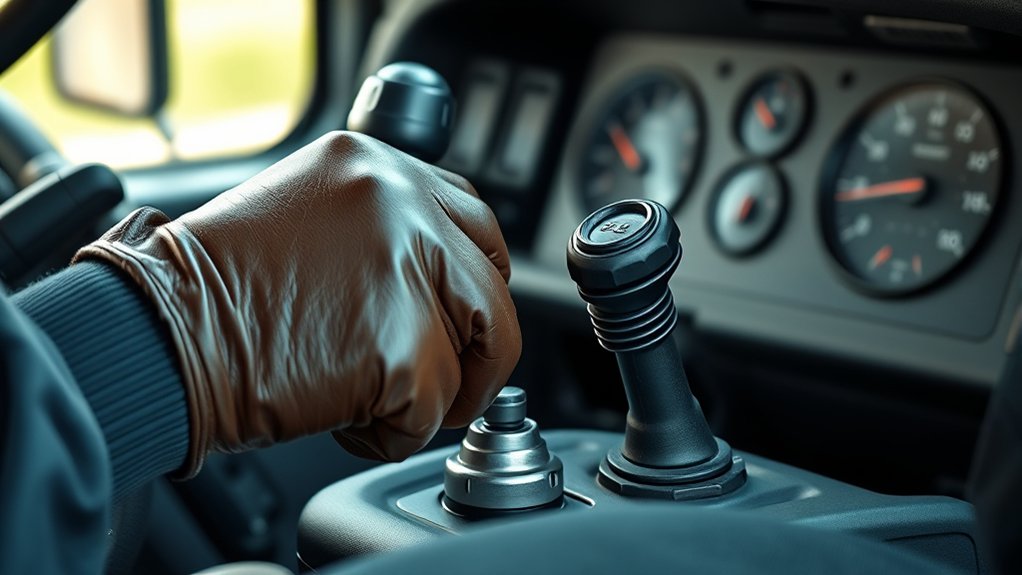
Before you move to the next gear, you need to master releasing the first clutch smoothly and at the right moment. Start by fully pressing the clutch pedal to disengage power from the engine to the transmission. Shift out of the current gear carefully, ensuring the shift lever moves without forcing it.
As you release the clutch, do so gradually to avoid jerking or stalling. Pay attention to the engine and transmission feedback; the clutch should fully release once the gear is disengaged. Timing is essential—releasing too quickly or too slowly can damage the transmission.
Practice this step until you can execute it fluidly. Getting this part right sets the foundation for a smooth double clutch, preparing you for the next phase of blipping the throttle and engaging the second clutch.
Blip the Throttle and Engage the Second Clutch
Mastering the release of the first clutch and gear sets you up to smoothly rev the engine and prepare for the next shift. Once the gear is disengaged, quickly blip the throttle to raise the engine RPM to match the speed of the next gear. This revving aligns the engine and transmission speeds, preventing gear clash.
Immediately after, press the clutch pedal again to engage the second clutch, ready to shift into the next gear.
| Step | Action | Purpose |
|---|---|---|
| Release first clutch | Disengage current gear | Free up transmission |
| Blip throttle | Increase RPM | Match engine to next gear speed |
| Press second clutch | Engage clutch again | Prepare for gear engagement |
| Shift gear | Select next gear | Complete gear change |
Shift Smoothly During Double Clutching Without Grinding
To shift smoothly during double clutching without grinding, you need to time your clutch and throttle inputs precisely. First, press the clutch fully and shift into neutral. Then, release the clutch while you blip the throttle to match the engine speed with the transmission input shaft.
Once the revs align, press the clutch again and gently shift into the next gear. Avoid rushing any step—if engine and transmission speeds aren’t synchronized, the gears will grind. Smooth clutch engagement is key; don’t slam the pedal down or lift it abruptly.
Practice feeling the right engine speed and clutch pressure, and you’ll minimize grinding. Remember, the goal is to match speeds perfectly so the gear teeth mesh effortlessly every time you shift.
When to Double Clutch vs. Shift Normally
Although double clutching is an essential skill for semi truck drivers, you don’t always need to use it when shifting. For instance, when you’re shifting between gears that match engine and transmission speeds well, like moving up through higher gears on a smooth highway, normal shifting often works fine.
Double clutching becomes vital when you downshift or shift between gears with a larger speed difference to avoid grinding and wear. You’ll want to double clutch especially during heavy loads, steep grades, or when the transmission feels stiff.
If you feel resistance or hear grinding, that’s a clear sign to double clutch. Over time, you’ll learn when smooth normal shifts suffice and when double clutching is necessary to protect your truck’s transmission and guarantee a smooth ride.
Troubleshooting Common Double Clutching Mistakes
If you’re new to double clutching, you’ll likely run into some common mistakes that can make shifting rough or even damage your transmission. One frequent error is not fully depressing the clutch pedal, which causes grinding gears. Make sure you press the clutch all the way down before shifting.
Another issue is mistiming the rev-matching step—either revving too high or too low can lead to jerky shifts. Pay close attention to engine speed and adjust accordingly. Also, rushing the process often causes sloppy shifts; take your time to smoothly engage and disengage the clutch.
If you feel resistance or hear unusual noises, stop and reassess your technique. Practicing these steps will help you master double clutching without harming your truck’s transmission.
Frequently Asked Questions
Can Double Clutching Improve Fuel Efficiency in Semi Trucks?
Yes, double clutching can improve your semi truck’s fuel efficiency by ensuring smoother gear shifts, reducing engine strain, and maintaining ideal RPMs.
This helps your engine run more efficiently and saves fuel over long drives.
Is Double Clutching Harder on the Truck’s Transmission?
You won’t wield double clutching like a sword causing harm; instead, it eases transmission wear by matching gear speeds smoothly.
Do All Semi Trucks Require Double Clutching?
No, not all semi trucks require double clutching. Modern trucks often have synchronized transmissions or automated manual transmissions, so you don’t have to double clutch.
Older models usually need it for smooth shifting and to avoid gear damage.
Can Double Clutching Reduce Wear on the Clutch Plates?
Yes, double clutching can reduce wear on the clutch plates because it smooths gear engagement. When you match engine and transmission speeds, you prevent grinding, which helps extend clutch life and keeps your truck running smoothly.
This technique minimizes the shock on the drivetrain components. As a result, it not only preserves the clutch but also enhances overall vehicle performance. Double clutching is especially beneficial in older or heavy-duty vehicles.
Are There Automatic Systems That Mimic Double Clutching?
Yes, some modern automatic transmissions mimic double clutching by using electronic controls to match engine and transmission speeds during gear shifts.
You’ll find these systems improve smoothness and reduce wear without needing manual clutch work.
Conclusion
Mastering double clutching might seem tricky at first, but once you get it right, you’ll gain access to a smoother, more efficient drive that protects your semi’s transmission like nothing else.
Remember, timing is everything—miss it, and you risk grinding gears or stalling. But nail the technique, and you’ll feel the difference in every shift.
So, are you ready to take control and drive like a pro? The road’s waiting—don’t keep it waiting too long.
By following these 7 easy steps to double clutch a semi truck, you’ll improve your driving skills, extend your transmission’s life, and enjoy a safer, more comfortable journey every time.

