


To start your car safely with a battery charger connected, it is essential to follow proper procedures to avoid damage and ensure safety. Using the right battery charger settings and correct connection techniques can protect both your car and battery during the starting process.
First, make certain the charger is off before connecting. Attach the positive clamp to the battery’s positive terminal, then connect the negative clamp to a clean metal surface away from the battery.
Turn on the charger and set it to the correct voltage and mode.
Crank the engine for no more than 10 seconds, pausing for 10-15 minutes if the car doesn’t start.
Following these steps helps avoid damage and guarantees safety—there’s plenty more to keep your battery and car protected.
Key Takeaways
- Keep the charger connected and set to the correct voltage and mode before turning the ignition to start the car.
- Avoid cranking the engine for more than 10 seconds at a time to prevent damage.
- If the car doesn’t start, wait 10-15 minutes with the charger on before trying again.
- Ensure charger clamps are securely and correctly connected to prevent sparks or damage.
- Disconnect the charger only after turning off the ignition to maintain electrical safety.
When Should You Use a Battery Charger to Start Your Car?

Although you might be enthusiastic to jump-start your car, you should use a battery charger only when the battery is weak or dead but still able to hold a charge. If your battery is completely drained or damaged, charging won’t help, and you’ll need a replacement. Use a charger when your car struggles to start, the lights dim, or you notice corrosion on battery terminals.
Avoid using a charger for short-term issues like a cold engine or electrical system problems unrelated to the battery. Also, if your battery frequently dies, get it tested to rule out alternator or wiring problems. By choosing the right time to utilize a battery charger, you ensure safety and prevent unnecessary damage to your vehicle’s electrical system.
Essential Tools and Safety Gear Before Connecting a Battery Charger
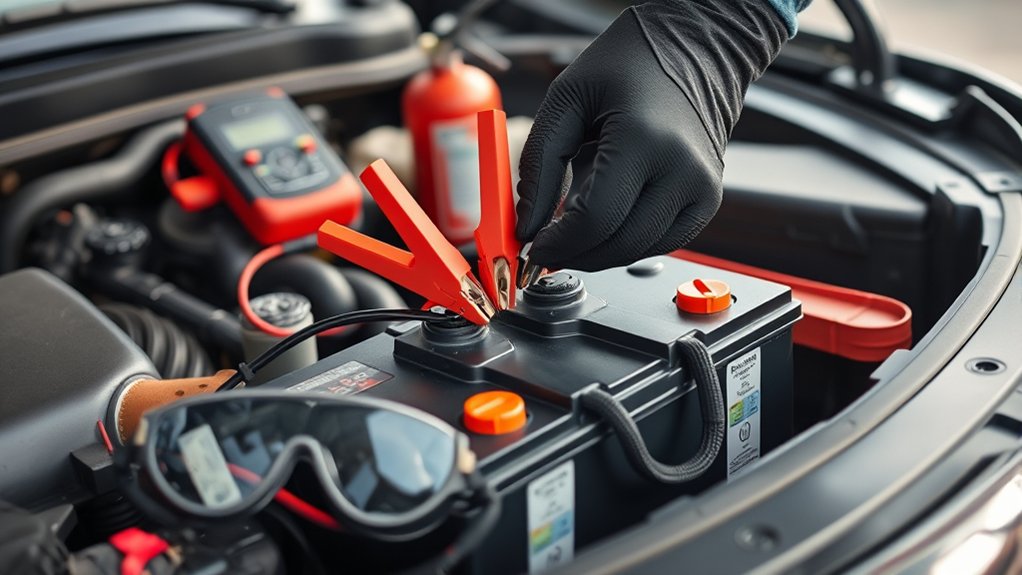
Before connecting a battery charger, you’ll want to gear up with protective gloves and safety glasses to keep yourself safe. Make sure you have the right type of charger for your battery, along with basic hand tools like wrenches or pliers for secure connections.
Being prepared with these essentials helps you work efficiently and avoid accidents.
Protective Gear Essentials
Why should you prioritize protective gear when connecting a battery charger? Because dealing with car batteries involves risks like acid spills, sparks, and electrical shocks. You need safety goggles to shield your eyes from acid splashes and flying debris.
Wear gloves made of rubber or nitrile to protect your hands from corrosive battery acid and electrical current. Long sleeves and pants help prevent skin contact with harmful substances. Avoid loose clothing or jewelry that could get caught or cause short circuits.
Additionally, use insulated tools designed for electrical work to reduce shock risk. Taking these precautions ensures you stay safe while connecting the charger, preventing injury and damage. Don’t skip protective gear—it’s vital for a safe and successful battery charging process.
Required Battery Charger Types
Wearing the right protective gear sets the foundation for safe battery charging, but choosing the proper battery charger is just as important. You’ll want a charger designed specifically for automotive batteries, typically a 12-volt charger for most cars. Opt for a smart charger with automatic shutoff and voltage regulation to prevent overcharging and damage.
Avoid cheap, generic chargers that lack safety features—they can cause sparks or battery damage. If your battery is deeply discharged, a charger with a desulfation mode can help revive it safely. Also, consider a charger with adjustable amps; lower settings allow slow, safe charging, while higher ones speed up the process when needed.
Using the right charger type protects both you and your vehicle during startup.
Necessary Hand Tools
Although choosing the right battery charger is essential, having the necessary hand tools and safety gear on hand guarantees you can connect it properly and safely. Before you begin, grab insulated gloves to protect your hands from sparks and corrosive battery acid. Safety goggles are a must to shield your eyes from unexpected splashes.
A wrench or socket set will help you loosen and tighten battery terminals without damaging them. Keep a wire brush handy to clean any corrosion off the terminals, ensuring a solid connection. Additionally, have a flashlight ready if you’re working in low light.
These tools and gear help you work efficiently and reduce risks, making the process safer and smoother every time you connect your battery charger.
How to Connect a Battery Charger Safely to Your Car
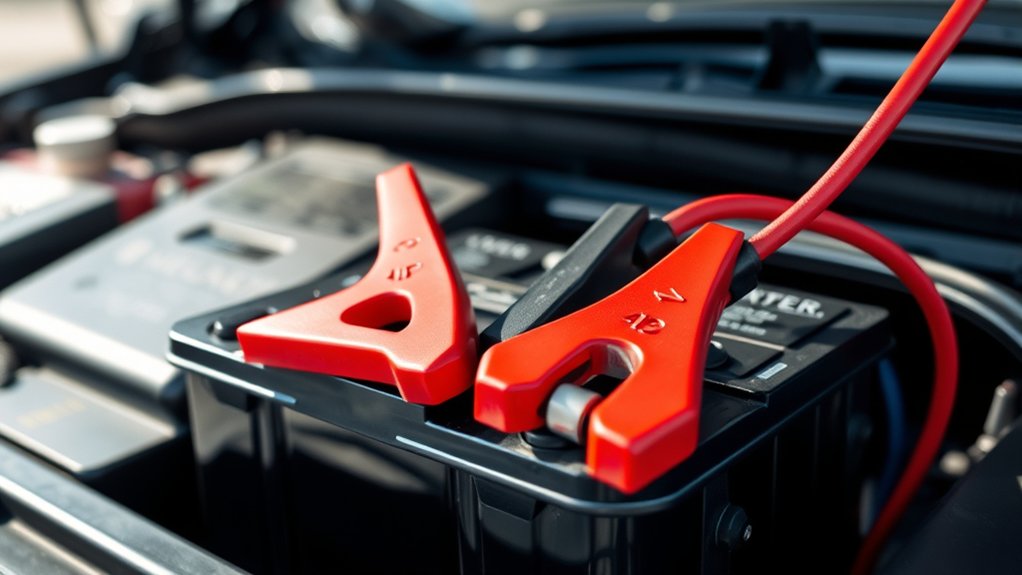
Before you connect a battery charger to your car, you need to make certain the charger is turned off and unplugged. Next, identify the positive (+) and negative (-) terminals on your car battery. Attach the red clamp to the positive terminal first, then connect the black clamp to a clean, unpainted metal surface away from the battery to ground it safely.
Double-check the connections to avoid sparks or damage.
| Step | Action | Tip |
|---|---|---|
| 1 | Make sure charger is off | Prevents accidental sparks |
| 2 | Connect red clamp (+) | Positive terminal on battery |
| 3 | Connect black clamp (-) | Ground on metal surface |
| 4 | Verify clamps are secure | Avoid loose connections |
| 5 | Plug in and power on charger | Only after safe connections |
How to Start Your Car With a Battery Charger Connected
Once you’ve securely connected the battery charger, you can start your car by turning the ignition while keeping the charger on. Make sure the charger is set to the correct voltage and mode for your battery type to avoid damage. Turn the key or push the start button gently; the charger will provide extra power to help the engine turn over.
If the car doesn’t start immediately, wait a few seconds before trying again to prevent overloading the electrical system. Avoid cranking the engine for more than 10 seconds at a time. Once the engine starts, keep the charger connected briefly to stabilize the battery charge, but monitor the charger and car for any unusual sounds or smells during this process.
How to Disconnect the Battery Charger Without Causing Damage
When you’re ready to disconnect the battery charger, make sure the car is turned off to prevent electrical surges.
Next, follow these steps carefully to avoid damage:
- Always unplug the charger from the power outlet first.
- Disconnect the negative (black) clamp from the battery terminal before the positive (red) clamp.
- Avoid touching the clamps together or letting them touch metal surfaces.
- Store the charger and cables properly to prevent wear and damage.
What to Do If Your Car Doesn’t Start Right Away
If your car doesn’t start right away, first double-check that the battery charger connections are secure and properly attached. Don’t keep trying to start the car immediately; give it a few minutes to charge.
This pause helps prevent damage and gives the battery time to gain enough power.
Check Battery Charger Connections
Although you’ve connected the battery charger properly, your car might not start immediately. Before trying again, double-check the charger connections to verify everything’s secure and functioning. Loose or incorrect connections can prevent your battery from receiving enough power.
Here’s what to verify:
- Both charger clamps are attached firmly to the correct battery terminals (positive to positive, negative to negative).
- The clamps are free of corrosion or dirt that could block the current.
- The charger is set to the appropriate voltage and charging mode for your battery.
- The charger’s power source is working and the device is turned on.
Confirming these points helps avoid damage and improves the chance your car will start on the next attempt.
Wait Before Retrying
Since the battery may need time to build up a sufficient charge, you shouldn’t rush to start your car immediately after connecting the charger. If your car doesn’t start right away, give the charger some time—usually 10 to 15 minutes—before trying again. This pause allows the battery to gain enough power for a successful start.
Avoid repeated attempts in quick succession, as they can strain the battery and starter motor. During this waiting period, double-check your connections to verify they’re secure and correctly attached. If your car still won’t start after a few tries and adequate charging time, consider that the battery might be too depleted or another issue exists.
At that point, it’s best to seek professional help rather than forcing the start.
Avoid These Common Battery Charger Mistakes
When you connect a battery charger to your car, it’s easy to make mistakes that could damage your vehicle or the charger itself. To avoid costly errors, steer clear of these common pitfalls:
- Reversing the clamps: Always connect the positive clamp to the positive terminal and the negative clamp to the negative terminal.
- Charging a frozen battery: Never charge if the battery is frozen; it can explode.
- Ignoring the charger’s settings: Use the correct charge rate and mode for your battery type.
- Leaving the charger unattended for too long: Overcharging can shorten battery life or cause overheating.
Keep Your Car’s Electrical System Safe While Charging
Mistakes with charger connections aren’t the only risks you need to watch out for. To keep your car’s electrical system safe while charging, avoid running other electrical components like the radio or headlights. They can draw power and create voltage fluctuations that might damage sensitive electronics.
Also, never start your car if the charger isn’t designed for simultaneous charging and starting—it can overload the system. Be sure to use a charger with built-in safety features such as automatic shutoff and voltage regulation to prevent overcharging. Keep cables neat and away from hot engine parts to avoid insulation melting or shorts.
Finally, always disconnect the charger before turning off the ignition to protect your car’s electrical components from sudden power loss.
Tips for Maintaining Your Car Battery and Charger for Longevity
To get the most life out of your car battery and charger, you need to keep both in good condition with regular care and proper storage. Maintaining them guarantees reliable starts and prevents costly replacements. Here are some essential tips:
- Store your charger in a cool, dry place to avoid moisture damage.
- Clean battery terminals regularly to prevent corrosion and ensure good contact.
- Avoid overcharging by monitoring the charger and disconnecting it once fully charged.
- Check battery fluid levels if applicable, topping off with distilled water as needed.
Frequently Asked Questions
Can I Use Any Type of Battery Charger for My Car?
You can’t use just any battery charger for your car. Make sure the charger matches your battery type and voltage.
Using the wrong one can damage your battery or vehicle’s electrical system, so always check compatibility first.
How Long Does It Take to Fully Charge a Car Battery?
It usually takes about 4 to 24 hours to fully charge a car battery, depending on the charger’s amperage. You’ll charge faster with a higher amp charger, but never rush to avoid damaging the battery.
Are There Specific Chargers for Different Car Battery Types?
Yes, you’ll find specific chargers for different battery types like lead-acid, AGM, and lithium-ion. Using the right charger guarantees safe, efficient charging and prevents damage, so always match your charger to your battery type.
Can Extreme Weather Affect the Charging Process?
You should know extreme weather can slow charging—cold temperatures reduce battery efficiency by up to 50%.
Is It Safe to Charge a Battery While the Engine Is Running?
No, you shouldn’t charge a battery while the engine’s running because it can overload the charger or cause sparks.
Always turn off your engine before connecting or disconnecting a battery charger to stay safe.
Conclusion
When you start your car with a battery charger connected, you’re taking a smart, cautious step to avoid damage and guarantee safety. While some believe jump-starting alone is enough, using a charger properly can extend your battery’s life and protect your car’s electronics. Remember, patience and following safety steps prevent mishaps.
By maintaining your battery and charger well, you’ll keep your car running smoothly and avoid unexpected breakdowns down the road. Safe starting practices with a battery charger connected not only safeguard your vehicle but also enhance the overall longevity of your battery system. Prioritizing these steps ensures reliable performance and peace of mind every time you start your car.

