

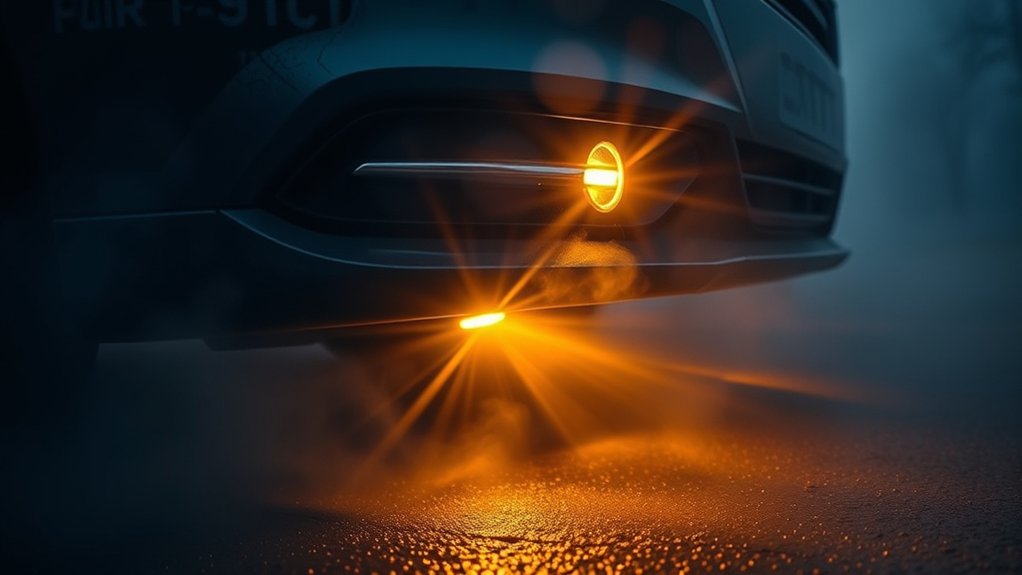
Fog lights work by casting a wide, low beam that shines just above the ground, helping you see pavement and roadside edges clearly in fog, rain, or snow. Designed specifically for poor weather conditions, fog lights reduce glare and improve close-up visibility.
Their unique beam pattern and placement make them essential for safer driving in foggy or rainy environments.
Their light is less intense and angled differently than headlights to reduce glare and reflection off moisture. Mounted low on your vehicle, they improve your visibility close-up without blinding others.
If you want to drive safer in poor weather, understanding their proper use and maintenance can make all the difference. Properly working fog lights enhance your ability to navigate through challenging conditions effectively.
Key Takeaways
- Fog lights emit a wide, low beam that reduces glare by illuminating the road surface and roadside in foggy or poor visibility conditions.
- Positioned low on the vehicle, fog lights shine below the fog layer to enhance close-range visibility of pavement, lane markers, and obstacles.
- Their beam pattern is wider and lower than headlights, minimizing light reflection off fog particles to improve driver visibility and safety.
- Fog lights often use yellowish or warm-toned bulbs to better penetrate fog and reduce light scattering compared to standard headlights.
- They should be used only in low visibility conditions with low beam headlights and turned off in clear weather to avoid glare and legal issues.
What Are Fog Lights and Why They Matter for Safety
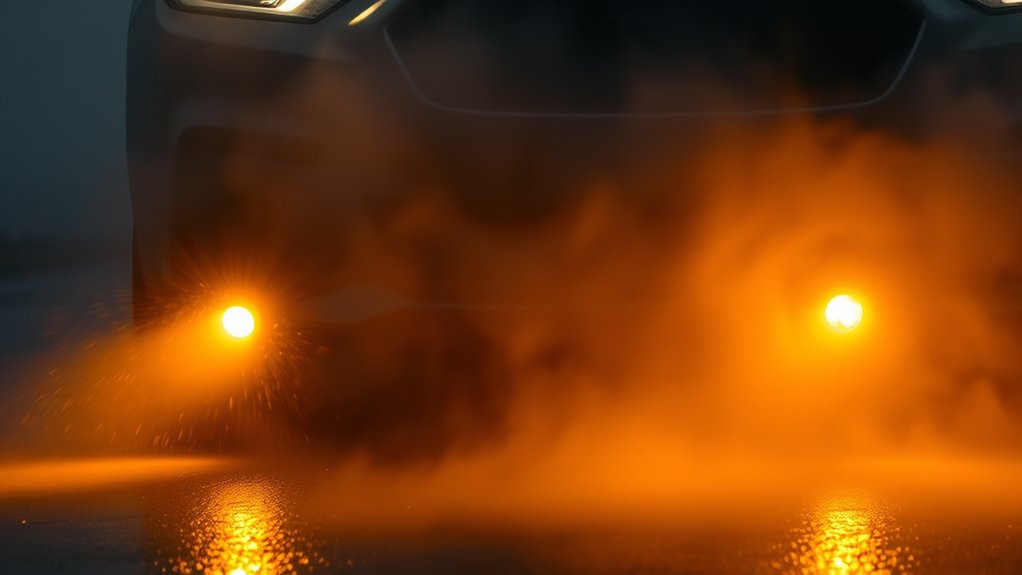
Although you might not use them every day, fog lights play an indispensable role in improving your visibility during foggy, rainy, or snowy conditions. These lights are specifically designed to emit a wide, low beam that cuts through the fog and reduces glare, helping you see the road more clearly. Positioned lower on your vehicle than regular headlights, fog lights illuminate the pavement and roadside, making obstacles and lane markers easier to spot.
Using them boosts safety by enhancing your ability to react quickly to hazards in poor weather. When visibility drops, switching on your fog lights guarantees you’re not just relying on your main headlights, which might reflect off moisture and worsen your view. They’re a vital tool in keeping you safe when conditions get tough.
How Fog Lights Differ From Headlights and High Beams
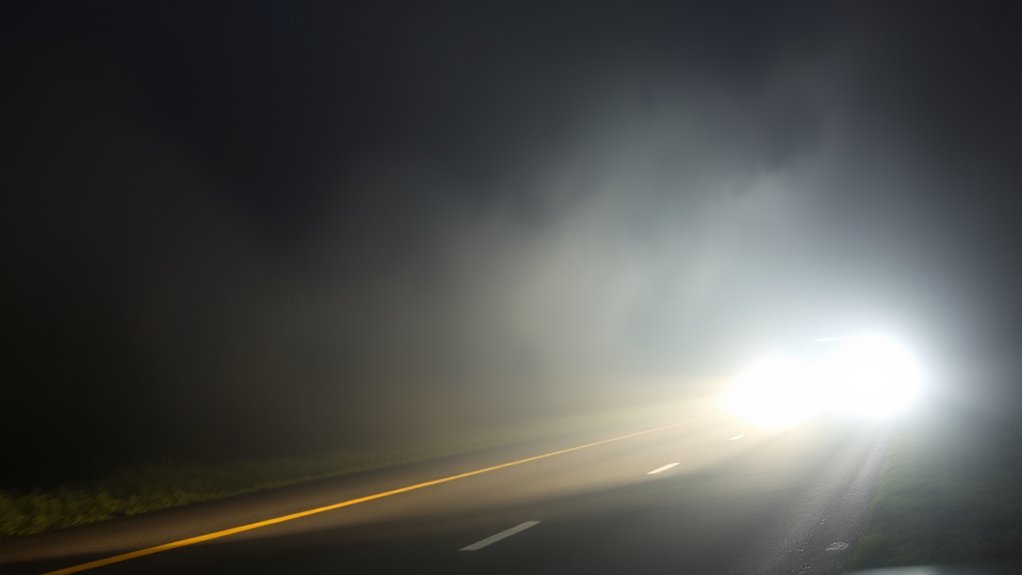
You’ll notice fog lights have a wider, lower beam angle compared to headlights and high beams. This helps reduce glare and improves visibility close to the road in foggy conditions.
Plus, fog lights shine less intensely, so they don’t reflect off the fog and blind you.
Beam Angle Differences
Because fog scatters light differently than clear air, fog lights use a wider, lower beam angle compared to headlights and high beams. This design reduces glare and helps you see the road surface better in foggy conditions.
Headlights and high beams, on the other hand, project narrower, higher beams to illuminate farther ahead, which can reflect off fog particles and impair your vision.
Here’s a quick comparison:
| Light Type | Beam Angle and Direction |
|---|---|
| Fog Lights | Wide, low, and horizontal spread |
| Headlights | Narrower, aimed straight ahead |
| High Beams | Narrowest, aimed higher and farther |
This difference in beam angles guarantees fog lights cut through fog without causing blinding reflections, improving your safety when visibility drops.
Light Intensity Variations
How bright should fog lights be compared to your headlights and high beams? Fog lights are designed to be less intense. While headlights and high beams shine brightly to illuminate distant objects, fog lights use a softer, lower intensity to avoid reflecting off fog, rain, or snow.
If fog lights were as bright as high beams, the light would scatter, creating glare and reducing visibility. Instead, they emit just enough light to highlight the road close to your vehicle. This helps you see lane markings and edges without blinding other drivers or causing eye strain.
How Fog Lights’ Beam Patterns Help You See Better
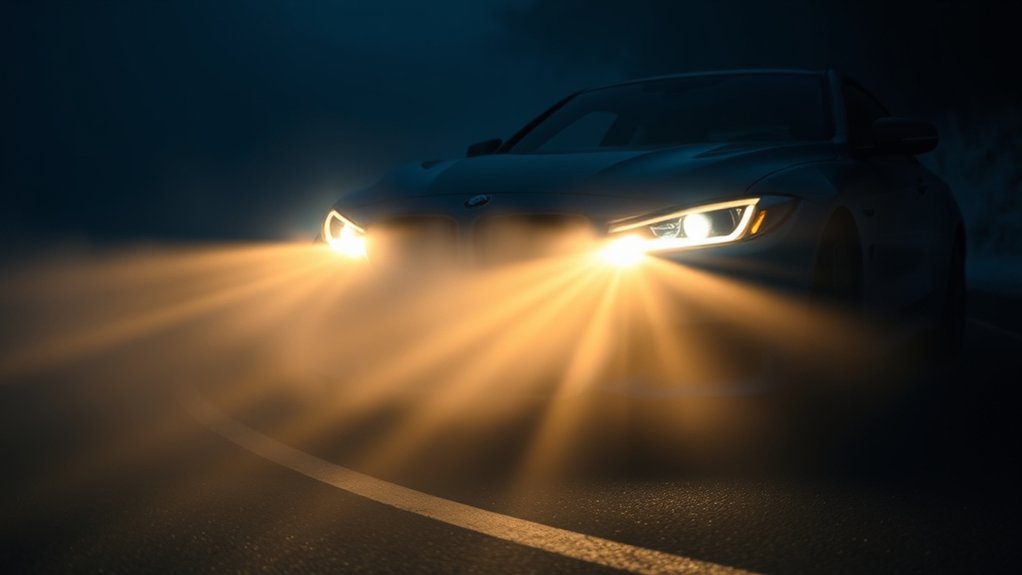
You’ll notice fog lights cast a wide, low beam that cuts through mist without bouncing back into your eyes. Their design reduces glare, helping you maintain clear vision in tough conditions.
Plus, they brighten the roadside, so you can spot obstacles and curves more easily.
Wide And Low Beams
Although fog lights aren’t designed to replace your regular headlights, their wide and low beam patterns help you see the road more clearly in foggy conditions. Instead of projecting light far ahead, fog lights spread a broad, even glow close to the ground. This pattern reduces light reflection off fog droplets, improving visibility right in front of you.
Here’s how these beam patterns compare:
| Beam Type | Width | Height Above Ground |
|---|---|---|
| Fog Lights | Wide (60°) | Low (12-24 inches) |
| Low Beams | Narrow (40°) | Medium (24-36 inches) |
| High Beams | Narrow (40°) | High (above 36 inches) |
This wide, low setup lets you spot road edges and obstacles without blinding yourself or other drivers.
Reduced Glare Design
The wide and low beam pattern of fog lights isn’t just about spreading light—it’s carefully designed to minimize glare. When you drive through fog, rain, or snow, regular headlights can reflect off particles and bounce back into your eyes, blinding you temporarily. Fog lights combat this by directing light downwards and outward, cutting reflections from airborne moisture.
This low, flat beam reduces the intensity of light hitting your eyes, so you see the road clearly without harsh glare. You’ll notice that fog lights have sharp cutoffs that prevent light from scattering upwards. This design helps you maintain better visibility and keeps other drivers from being dazzled, making your drive safer in poor weather conditions.
Enhanced Roadside Illumination
How exactly do fog lights improve your vision along the roadside? Their unique beam patterns are designed to spread wide and low, illuminating the edges of the road where hazards often hide. This wide, flat beam cuts through fog, rain, or snow without bouncing back into your eyes, so you see more clearly.
Why Fog Lights Are Mounted Low on Your Car
Because fog tends to hover close to the ground, your fog lights are mounted low on your car to cut through the mist more effectively. Positioned near the bumper, they shine beneath the fog layer, improving visibility without reflecting light back into your eyes. This placement helps you:
Fog lights sit low to shine beneath the mist, boosting visibility without glare.
- Illuminate the road surface clearly
- Highlight road edges and lane markings
- Reduce glare caused by fog reflection
- Enhance your ability to spot obstacles early
- Provide a wider, low-level light spread
How Fog Lights Cut Through Fog Without Blinding You
When fog surrounds you, your fog lights use a special beam pattern and color to pierce through the haze without overwhelming your vision. Unlike your regular headlights, fog lights emit a wide, flat beam that stays close to the road, reducing glare that reflects back from fog droplets. They often shine with a yellowish tint, which helps cut through the moisture more effectively than pure white light.
This combination guarantees you see the road clearly without the blinding reflection typical of standard headlights. By focusing light low and wide, fog lights improve your visibility in foggy conditions while minimizing the light scattering that can make it harder to see. This design helps you drive safer without straining your eyes or other drivers’ visibility.
Common Fog Light Bulb Types Explained
To get the best performance from your fog lights, choosing the right bulb type matters. Different bulbs offer varying brightness, color temperature, and lifespan, affecting how well you see in foggy conditions.
Here are common fog light bulb types you should know:
- Halogen bulbs: Affordable, widely used, emit a warm yellow light that cuts through fog.
- LED bulbs: Energy-efficient, longer-lasting, provide bright white light with quick response time.
- HID bulbs: Produce intense, bluish light, offer excellent visibility but can be costly.
- Incandescent bulbs: Less common now, shorter lifespan, softer light output.
- Laser bulbs: Emerging technology, very bright and efficient, still rare and expensive.
Selecting the right bulb type guarantees your fog lights perform at their best in tough weather.
When Should You Turn on Your Fog Lights?
Although fog lights are designed for specific conditions, many drivers struggle to know exactly when to switch them on. You should turn on your fog lights when visibility drops considerably—usually below 100 to 200 feet—due to dense fog, heavy rain, snow, or dust. Using them in these situations helps illuminate the road close to your vehicle without causing glare that can bounce back and impair your vision.
Avoid turning on fog lights in clear weather or light rain since their bright, wide beam can distract other drivers and isn’t necessary. Remember, fog lights complement your low beams; they’re not a replacement. Always check your local laws, as some areas regulate fog light use.
Use them smartly to enhance safety without causing confusion on the road.
How Fog Lights Help You See Road Edges
Fog lights are designed to brighten the edges of the road, helping you spot curves and obstacles more clearly. They cast light low and wide, which reduces glare that can bounce back from fog or rain.
This targeted illumination makes it easier for you to stay safely on the road when visibility is poor.
Enhanced Road Edge Visibility
When you drive in low-visibility conditions, fog lights help you spot the edges of the road more clearly by casting a wide, low beam that reduces glare and highlights the pavement boundaries. This enhanced visibility lets you stay safely within your lane and avoid unexpected hazards.
Fog lights illuminate:
- Curbs and road shoulders
- Painted lane markings
- Reflective markers and signs
- Uneven pavement edges
- Parked vehicles or obstacles near the roadside
Reduced Glare Near Ground
Besides improving visibility along the road edges, these lights also cut down the glare that can bounce back from fog, rain, or snow. When you turn on your fog lights, their low and wide beam pattern directs light close to the ground. This setup minimizes the amount of light reflecting off airborne water droplets, which often causes blinding glare with your regular headlights.
Because the light stays near the road surface, you get clearer, sharper edges without the harsh reflections that can strain your eyes. This means you can better judge curves and obstacles in poor weather. By reducing glare near the ground, fog lights help you maintain safer control and improve overall driving comfort in challenging conditions.
Common Fog Light Misconceptions About Usage and Safety
Although fog lights are designed to improve visibility in poor weather, many drivers misunderstand their proper use and safety benefits. You might think fog lights are just brighter headlights, but they serve a different purpose. Using them incorrectly can actually cause problems for you and others on the road.
Here are some common misconceptions you should avoid:
- Fog lights replace headlights in heavy rain or snow (they don’t).
- You can use fog lights on clear nights for extra brightness (this can blind other drivers).
- Fog lights improve long-distance visibility (they mostly illuminate close to the ground).
- They’re effective in all weather conditions (they’re specifically for fog, mist, or dust).
- Leaving fog lights on constantly is safer (it’s unnecessary and can cause glare).
Use fog lights wisely to stay safe and courteous.
How to Maintain and Replace Fog Lights
Since fog lights endure harsh conditions, you’ll need to inspect and maintain them regularly to keep them working effectively. Check for cracks, fogging, or dirt on the lenses, and clean them with a soft cloth and mild detergent. Make sure the bulbs are bright and replace any that flicker or burn out.
To replace a fog light, first disconnect your car’s battery for safety. Locate the fog light housing, usually accessible from underneath the bumper or behind a panel. Remove the screws or clips holding the housing, then carefully disconnect the wiring harness.
Swap the old bulb with a new one, ensuring you handle it by the base to avoid oils from your fingers. Reassemble everything, reconnect the battery, and test your fog lights to confirm they work.
Legal Rules for Using Fog Lights on Public Roads
When you use fog lights on public roads, you have to follow specific legal rules that vary by location. These rules ensure your safety and prevent glare that can blind other drivers. Generally, fog lights are meant for low visibility conditions like fog, heavy rain, or snow.
Using them improperly can lead to fines or warnings. Here are common legal guidelines you should keep in mind:
- Only turn on fog lights when visibility is seriously reduced
- Avoid using fog lights in clear weather or well-lit areas
- Use fog lights in combination with low beam headlights, not high beams
- Turn off fog lights when visibility improves to avoid dazzling others
- Check your local laws, as regulations differ by state or country
Following these rules helps you drive safer and stay compliant.
Frequently Asked Questions
Can Fog Lights Improve Visibility in Heavy Rain or Snow?
Yes, fog lights can improve your visibility in heavy rain or snow by casting a wide, low beam that reduces glare and illuminates the road close to you.
This helps you see better without reflecting off precipitation.
Are LED Fog Lights More Effective Than Halogen Ones?
Yes, LED fog lights are more effective than halogen ones because they produce brighter, whiter light, consume less energy, and last longer.
You’ll notice improved visibility and enhanced durability with LEDs in foggy conditions.
Do Fog Lights Consume More Battery Power Than Regular Headlights?
Wondering if fog lights drain more battery than regular headlights? They actually consume less power since they use lower wattage bulbs.
How Do Fog Lights Affect Fuel Efficiency, if at All?
Fog lights have a minimal impact on your fuel efficiency since they use low wattage bulbs. You won’t notice any significant change in fuel consumption when you turn them on during foggy conditions.
Can Aftermarket Fog Lights Void My Vehicle’s Warranty?
You want safety, style, and reliability. You want peace of mind.
Yes, aftermarket fog lights can void your warranty if they cause damage or electrical issues.
Always check your warranty terms before installing them yourself.
Conclusion
Imagine driving through a thick fog, much like steering a maze blindfolded. Fog lights act as your guiding hands, cutting through the haze to reveal the path ahead without blinding oncoming drivers. Just like a lighthouse beam piercing heavy mist, they enhance your safety and awareness.
By understanding how and when to use your fog lights, you’re not just improving visibility—you’re lighting the way to safer journeys every time you hit the road. Proper use of fog lights ensures you can navigate through foggy conditions with confidence. This knowledge is key to maximizing the benefits of fog lights for safer driving.

