

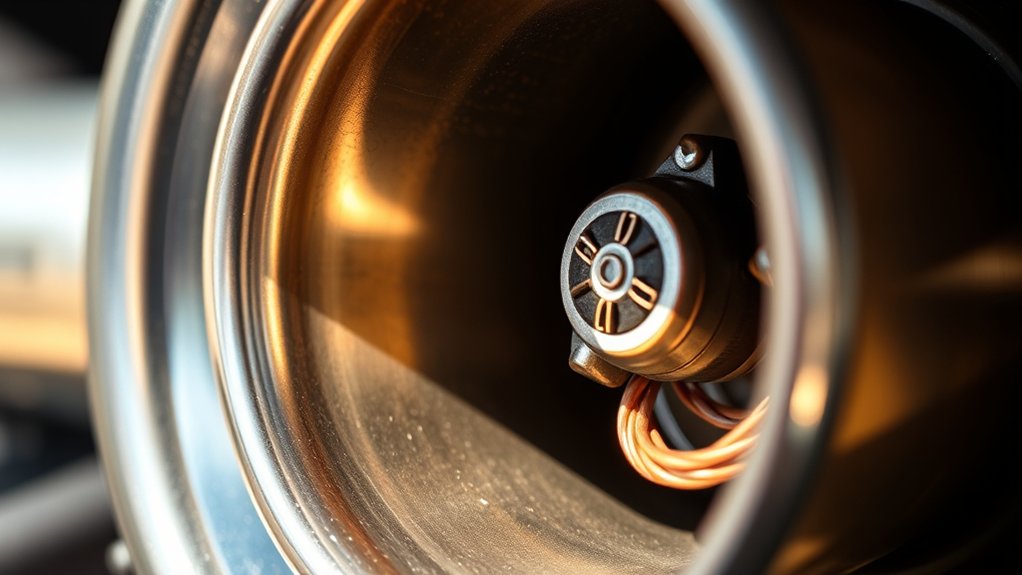
When you press your car horn button, you complete an electrical circuit that sends a small current to the horn relay, activating it.
The relay then allows a stronger current from the battery to flow to the electromagnet inside the horn.
This electromagnet pulls a metal diaphragm, causing it to vibrate rapidly and produce sound waves.
These vibrations create the loud, recognizable honk you hear, alerting others around you.
The car horn is a crucial safety feature that helps drivers communicate and prevent accidents.
Keep following this to understand how each part works in detail.
Key Takeaways
- Pressing the horn button completes an electrical circuit, sending current to the horn relay.
- The relay activates, allowing high current from the battery to power the horn’s electromagnet.
- The energized electromagnet moves a metal diaphragm, causing it to vibrate rapidly.
- Diaphragm vibrations produce sound waves amplified by the horn’s shape, creating the honking sound.
- Releasing the horn button breaks the circuit, stopping current flow and silencing the horn.
What Is a Car Horn and Why It’s Important
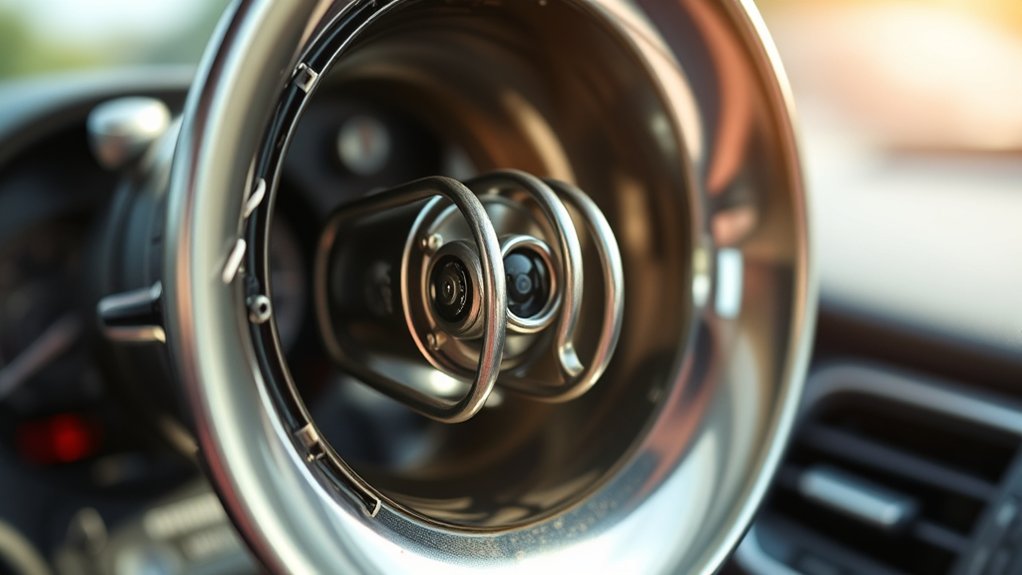
Although it may seem like a simple device, a car horn plays a crucial role in your safety on the road. It’s your primary tool for alerting others to your presence, especially in situations where visibility is limited or unexpected hazards arise. When you use your horn, you’re communicating quickly and effectively with pedestrians, cyclists, and other drivers, helping to prevent accidents.
The horn also helps you signal warnings during emergencies or when someone isn’t paying attention. Beyond safety, it can be a way to politely get someone’s attention or warn about potential dangers ahead. Understanding its significance encourages you to use it responsibly and ensures you stay safer while driving.
How a Car Horn Works: A Quick Overview

Now that you know why a car horn matters, it’s helpful to understand how it actually works. When you activate a car horn, an electrical current flows through the horn’s circuit. This current powers an electromagnet inside the horn, creating a magnetic field that moves a metal diaphragm back and forth rapidly.
As the diaphragm vibrates, it produces sound waves that amplify through the horn’s shape, creating the loud honk you hear. The entire process happens almost instantly, ensuring your alert reaches others quickly. The horn’s design balances power and sound clarity, making it effective for safety.
Understanding this quick overview gives you a clear picture of what happens inside your horn each time you use it.
Pressing the Car Horn Button: Starting the Signal

How exactly does pressing the car horn button trigger the loud honk you hear? When you press the horn button on your steering wheel, you complete an electrical circuit that sends a signal to the horn relay. This action tells the car’s horn system to get ready to produce sound.
The button acts as a switch, allowing current to flow through the circuit. As soon as you release the button, the circuit breaks, stopping the signal. This immediate response lets you control when the horn sounds and for how long.
Without pressing the button, no signal travels, and the horn stays silent. In short, pressing the button starts the chain reaction that leads to the horn’s unmistakable honk.
The Car Horn’s Electrical System: Powering the Sound
Once you press the horn button and complete the circuit, the car’s electrical system springs into action to power the sound. It sends electrical current from the battery through wiring to the horn assembly. This current energizes the horn’s internal components, typically an electromagnet and diaphragm.
The electromagnet rapidly pulls and releases the diaphragm, creating vibrations that produce the loud honking noise you hear. The system relies on your car’s 12-volt power supply to guarantee consistent and strong sound output. Proper wiring and connections are vital here because any resistance or break can weaken or stop the sound.
What the Horn Relay Does and Why It Matters
You rely on the horn relay to safely handle the high current needed for your car horn to sound. It acts like a switch, letting a low-current circuit control the powerful horn without damaging other components.
Understanding this part helps you see why the horn works reliably every time you press the button.
Horn Relay Function
Though the horn seems simple, the relay plays an essential role in making it work efficiently. When you press the horn button, it sends a small electrical current to the relay.
The relay then acts like a switch, allowing a larger current to flow directly from the battery to the horn itself. This prevents the horn button and wiring from carrying heavy electrical loads, which could cause damage or overheating.
Importance In Circuit
Why does the horn relay matter so much in your car’s electrical system? It acts as a vital switch that controls the high current needed for the horn without sending all that power through your steering wheel button. When you press the horn button, the relay receives a small electrical signal, then closes the circuit to let a larger current flow directly from the battery to the horn.
This protects your horn button and wiring from overheating or damage. Without the relay, the horn circuit would draw too much current through delicate components, risking failure or fire. So, the horn relay not only guarantees your horn sounds loud and clear but also keeps your car’s electrical system safe and reliable every time you need to alert others.
How the Horn Switch Activates the Circuit
When you press the horn button, it completes the electrical circuit that powers the horn. This switch acts as the control point, allowing current to flow only when you want the horn to sound.
Here’s how it works:
- You push the horn button, closing the switch contacts.
- The closed switch allows electricity to flow from the car’s battery to the horn.
- Current travels through the horn’s wiring, activating its internal components.
- Once you release the button, the switch opens, breaking the circuit and stopping the current flow.
The Magnetic Coil’s Role in Horn Operation
As soon as electricity flows through the horn, the magnetic coil inside springs into action by creating a strong magnetic field that powers the horn’s sound mechanism. This coil acts like an electromagnet, pulling a metal diaphragm toward it when energized. When the diaphragm moves, it breaks the circuit momentarily, causing the magnetic field to collapse.
Without the magnetic field, the diaphragm snaps back to its original position, reconnecting the circuit. This cycle repeats rapidly, allowing the coil to continuously pull and release the diaphragm. You rely on this magnetic coil’s quick, repeated action to keep the horn’s mechanism moving, setting the stage for the horn to produce its characteristic sound.
Without the coil’s magnetic force, the horn wouldn’t function properly.
How the Horn Makes Its Sound and Tone
When you press the horn button, electrical signals trigger a metal diaphragm to vibrate, creating sound waves. The frequency of these vibrations controls the tone you hear, while the strength of the signal affects the volume.
Understanding this process helps you see how your car horn produces its distinct sound.
Sound Generation Mechanism
Although you might take it for granted, a car horn produces sound through a clever mechanical and electrical process. When you press the horn button, it completes an electrical circuit that powers an electromagnet inside the horn. This electromagnet attracts and releases a metal diaphragm rapidly, causing it to vibrate.
These vibrations create sound waves that travel through the horn’s trumpet-shaped opening, amplifying the noise.
Here’s how the sound generation mechanism works step by step:
- You press the horn button, closing the electrical circuit.
- Current energizes the electromagnet, pulling the diaphragm.
- The diaphragm snaps back as the electromagnet de-energizes.
- Rapid diaphragm vibrations produce sound waves amplified by the horn’s shape.
This process turns electrical energy into the loud, attention-grabbing horn sound you hear.
Frequency and Tone Control
How does a car horn produce its distinct pitch and tone? It all comes down to frequency control. Inside the horn, a diaphragm vibrates rapidly when activated.
The speed of these vibrations—measured in hertz—determines the sound’s frequency. Faster vibrations create a higher pitch, while slower ones produce a lower tone. The horn’s design, including the size and shape of the diaphragm and the air chamber, shapes these vibrations to create a specific tone.
Some horns even use dual diaphragms or multiple chambers to blend frequencies, resulting in richer, more attention-grabbing sounds. By controlling how quickly and forcefully the diaphragm moves, the horn generates its unique, recognizable sound, ensuring you can alert others clearly and effectively while driving.
Electrical Signal Impact
The diaphragm’s vibrations depend heavily on the electrical signals sent to the horn. When you press the horn button, an electrical current flows through the circuit, energizing the electromagnet. This magnetic force pulls and releases the diaphragm rapidly, producing sound waves.
The strength and frequency of these signals directly affect the horn’s volume and tone. Here’s how the electrical signal influences the sound:
- Voltage controls the electromagnet’s power, affecting loudness.
- Signal frequency determines how fast the diaphragm vibrates, shaping tone.
- Consistent current ensures a steady, clear sound without distortion.
- Variations in the electrical signal can create different horn patterns or pulses.
Single-Tone vs. Dual-Tone Car Horns: Key Differences
When you compare single-tone and dual-tone car horns, you’ll notice they produce distinctly different sounds that affect how well your vehicle grabs attention. Single-tone horns emit one consistent pitch, making their sound straightforward but sometimes less noticeable in noisy environments. On the other hand, dual-tone horns combine two different pitches simultaneously, creating a richer, more complex sound that cuts through background noise more effectively.
This contrast means dual-tone horns often alert pedestrians and other drivers faster, enhancing safety. While single-tone horns are simpler and usually less expensive, dual-tone horns provide better sound clarity and presence. Choosing between them depends on how loud and distinct you want your horn to be, as well as your budget and personal preference.
Car Horn Wiring: Connecting All the Components
Although wiring a car horn might seem complicated at first, you’ll find it straightforward once you understand the key components and their connections. The wiring links the horn button, relay, power source, and the horn itself to make everything work smoothly.
Here’s how you connect everything:
- Connect the horn button to the relay’s coil terminal.
- Attach the relay’s power terminal to the car battery (usually through a fuse).
- Link the relay’s switched terminal to the horn’s positive terminal.
- Ground the horn and the relay coil to the vehicle chassis.
Common Car Horn Problems and Why They Happen
Since your car horn plays a crucial role in safety, you’ll want it working perfectly every time. Common problems include a silent horn, weak sound, or a horn that stays on. These often happen because of electrical issues like a blown fuse, corroded wiring, or a faulty horn relay.
Dirt or moisture can also cause connections to fail. Sometimes, the horn button or switch itself wears out or gets stuck. Mechanical problems inside the horn, like damaged diaphragms, can reduce sound output.
Knowing these causes helps you quickly identify why your horn might not respond when you need it. Keeping your horn’s electrical system clean and checking connections regularly can prevent many of these issues before they start.
How to Test Your Car Horn Step by Step
To test your car horn, start by locating the horn fuse to guarantee it’s intact. Then, use a multimeter to check for power and continuity in the circuit.
Finally, verify the horn relay is working properly to confirm the issue isn’t there.
Locate The Horn Fuse
Where can you find the horn fuse in your car? Typically, it’s located in the fuse box under the hood or inside the cabin. To locate it, follow these steps:
- Check your car owner’s manual for the exact fuse box location.
- Open the fuse box cover and look for a diagram on the underside or in the manual.
- Identify the fuse labeled “Horn” or with a horn symbol.
- Inspect the fuse for any signs of damage or a blown filament.
Finding the horn fuse is essential before testing the horn’s electrical system. Once located, you can proceed to test or replace the fuse if necessary, ensuring your horn functions correctly.
Use A Multimeter
Although testing your car horn might seem complicated, using a multimeter makes the process straightforward. First, set your multimeter to the continuity or resistance mode. Disconnect the horn’s wiring connector to isolate it from the vehicle’s electrical system.
Place the multimeter probes on the horn terminals. If you hear a beep or see a low resistance reading, the horn’s internal coil is intact. No beep or an infinite reading indicates a faulty horn that needs replacement.
Next, check the wiring harness by connecting the multimeter probes to the horn connector with the horn unplugged. Press the horn button and watch for voltage; if present, the wiring and switch work fine. Using a multimeter helps you pinpoint issues efficiently and keeps you from guessing.
Check Horn Relay Function
Since the horn relay controls the power flow to your car horn, checking its function is essential when troubleshooting. Here’s how you can test the horn relay step by step:
- Locate the horn relay in your vehicle’s fuse box—consult your owner’s manual if needed.
- Swap the horn relay with another relay of the same type to see if the horn sounds.
- Use a multimeter to check for continuity between the relay’s terminals when activated.
- Listen for a clicking sound when you press the horn button; no click may indicate a faulty relay.
If the relay fails any of these tests, replace it. Testing the relay helps pinpoint issues, saving you time and unnecessary parts replacement.
Maintenance Tips for a Loud, Reliable Horn
To keep your car horn loud and reliable, you need to check it regularly for signs of wear or damage. Start by inspecting the horn’s wiring and connections for corrosion or loose fittings. Clean any dirt or debris from the horn’s surface and terminals to guarantee proper contact.
Test the horn frequently to catch any decline in sound quality early. If you notice a weak or inconsistent tone, check the horn relay and fuse, replacing them if necessary. Avoid pressing the horn continuously, as this can overheat the diaphragm and reduce its lifespan.
Finally, protect your horn from water exposure by ensuring the mounting area drains well. Following these simple maintenance tips will help maintain a loud, dependable horn every time you need it.
Frequently Asked Questions
Are Car Horns Regulated by Law in Different Countries?
Yes, car horns are regulated by law in different countries. You’ll find rules about their sound level, usage, and when you can honk, ensuring safety and reducing noise pollution where you drive.
These regulations help maintain order on the roads and protect public peace. Different places may have specific restrictions based on local traffic conditions and cultural norms.
Can Aftermarket Car Horns Damage My Vehicle’s Electrical System?
Yes, aftermarket car horns can damage your vehicle’s electrical system if they draw too much power or aren’t installed correctly.
Always use compatible horns and follow proper wiring guidelines to avoid electrical issues and guarantee safety.
How Loud Are Car Horns Compared to Other Vehicle Sounds?
Right off the bat, car horns usually scream between 100 to 110 decibels, louder than most vehicle sounds like engines or music. You’ll definitely turn heads when you hit that horn—it’s no small potatoes!
Do Electric Cars Use Different Types of Horns?
Yes, electric cars often use electronic horns instead of traditional ones. You’ll find these horns sound different and are powered by the car’s battery, making them quieter and more energy-efficient compared to conventional air-powered horns.
Can Car Horns Be Connected to Smartphone Apps for Remote Use?
You can turn your car horn into a digital trumpet by connecting it to smartphone apps. This lets you honk remotely, blending modern tech with traditional sounds, giving you control at your fingertips wherever you are.
Conclusion
Now that you know how your car horn works, you might think it’s too complex to troubleshoot or maintain yourself. But it’s not! With a little understanding and simple tools, you can easily test and keep your horn in top shape.
Don’t overlook this essential safety feature—your horn helps prevent accidents and keeps you heard on the road. Stay proactive, and your horn will stay loud and reliable whenever you need it most. Regular maintenance and timely troubleshooting ensure your car horn works effectively and safely every time.

