

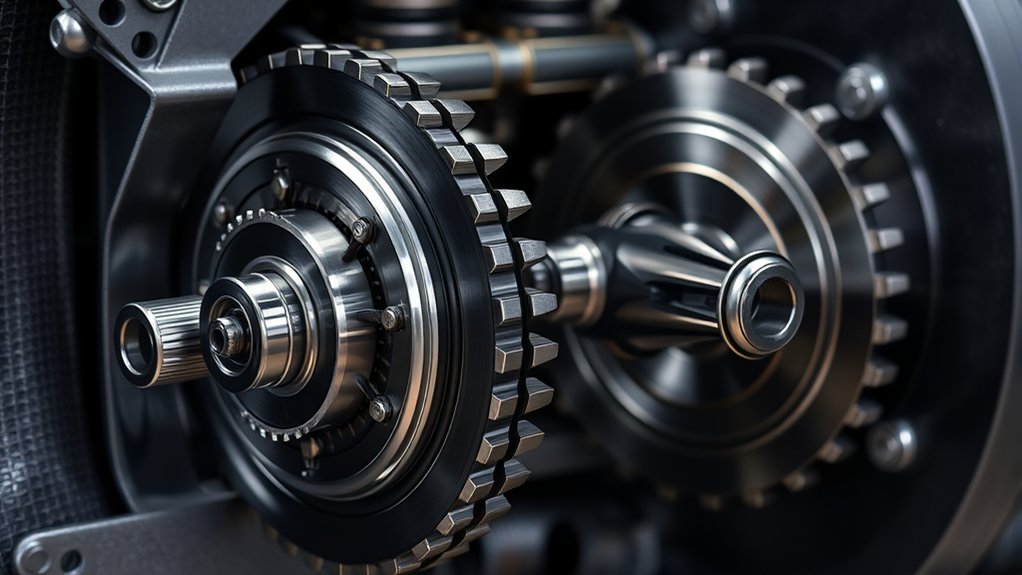
A double clutch gearbox is a sophisticated transmission system that uses two separate clutches to handle odd and even gears. This innovative design allows one gear to be engaged while the next gear is pre-selected and synchronized, enabling seamless and smooth shifting.
As a result, drivers experience near-instant gear changes without losing engine power. The system quickly swaps between clutches, maintaining continuous engine torque flow. This prevents jerks and gear grinding during shifts, enhancing both acceleration and overall driving comfort.
The double clutch gearbox is especially valued for its efficiency and performance.
If you want to understand each step of how a double clutch gearbox works and its benefits, there is much more to explore in this fascinating technology.
Key Takeaways
- Two clutches separately control odd and even gears, allowing pre-selection of the next gear while the current gear remains engaged.
- The system synchronizes gear speeds and pre-engages the next gear to ensure seamless, jerk-free shifting.
- During gear change, one clutch disengages as the other simultaneously engages, maintaining continuous power flow without interruption.
- Torque is smoothly transferred via friction between clutch plates, connecting engine rotation to the selected gear for immediate responsiveness.
- This coordinated process enables rapid, efficient gear changes that improve acceleration, reduce shift lag, and enhance driving comfort.
What Is a Double Clutch Gearbox and How It Improves Shifting
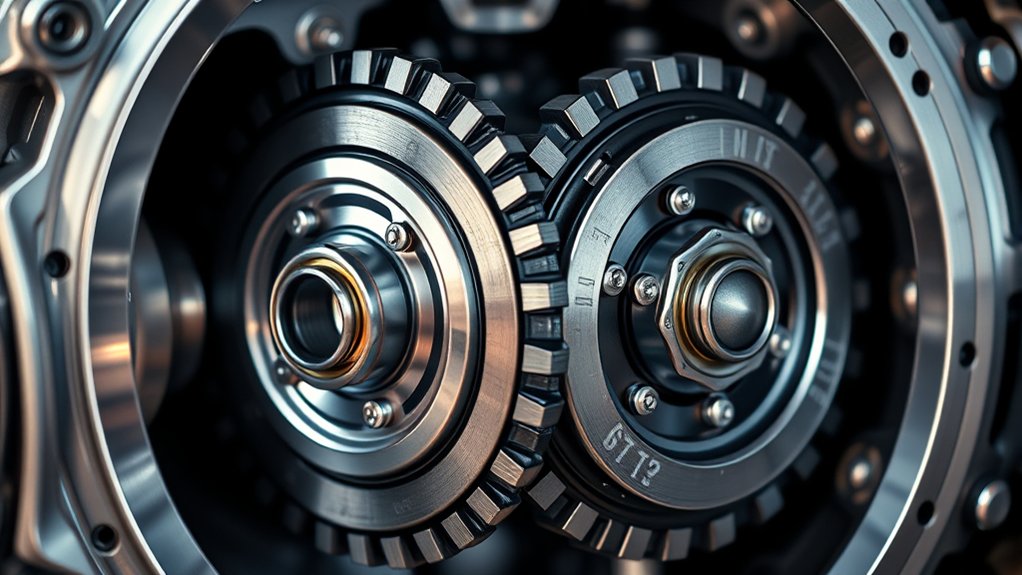
What makes a double clutch gearbox stand out is its ability to change gears quickly and smoothly. When you drive a car with this system, you’ll notice gear shifts happen almost instantly, without the typical lag or jerkiness. This gearbox uses two separate clutches for odd and even gears, allowing one gear to engage while the other prepares the next.
You don’t have to manually operate a clutch pedal, as the system automates clutch control, making your driving experience seamless. This setup improves acceleration and fuel efficiency by reducing the time and power lost during gear changes. Overall, the double clutch gearbox combines the control of a manual transmission with the convenience of an automatic, giving you the best of both worlds.
How the Two Clutches Work Together in a Double Clutch Gearbox
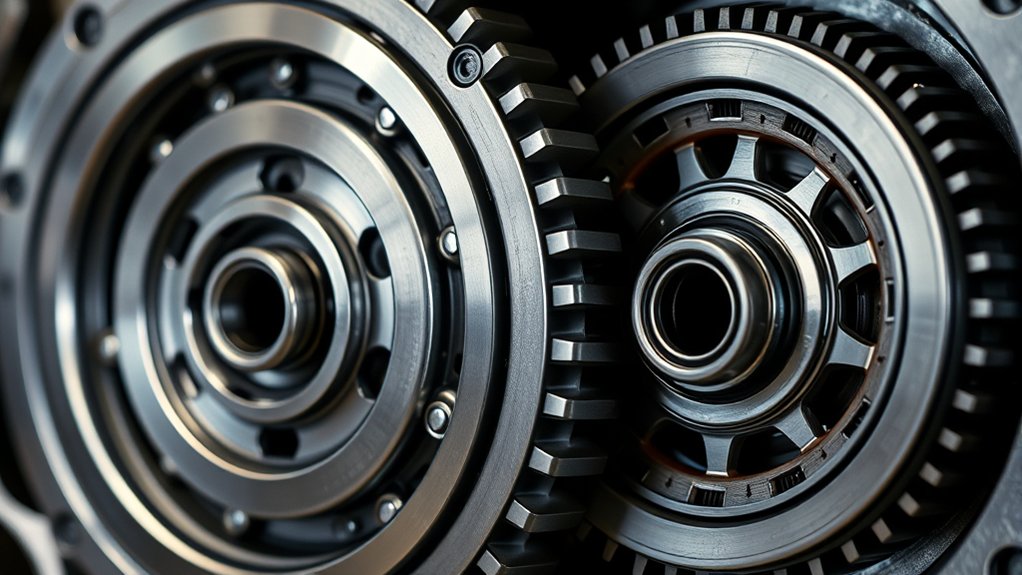
Because the two clutches operate independently, they allow for rapid gear changes without interrupting power delivery. When you’re driving, one clutch engages the current gear, transmitting power smoothly. Simultaneously, the other clutch pre-selects the next gear, ready to engage instantly.
This overlap means as soon as you shift, the second clutch takes over without any lag, while the first clutch disengages. You won’t experience the typical pause or jerkiness found in traditional gearboxes. By alternating between the clutches, the double clutch system keeps power flowing continuously, delivering seamless acceleration and improved efficiency.
This clever coordination makes your driving experience smoother and faster, especially during quick shifts or sporty driving, enhancing both performance and comfort on the road.
Step 1: How the First Clutch Engages the Current Gear
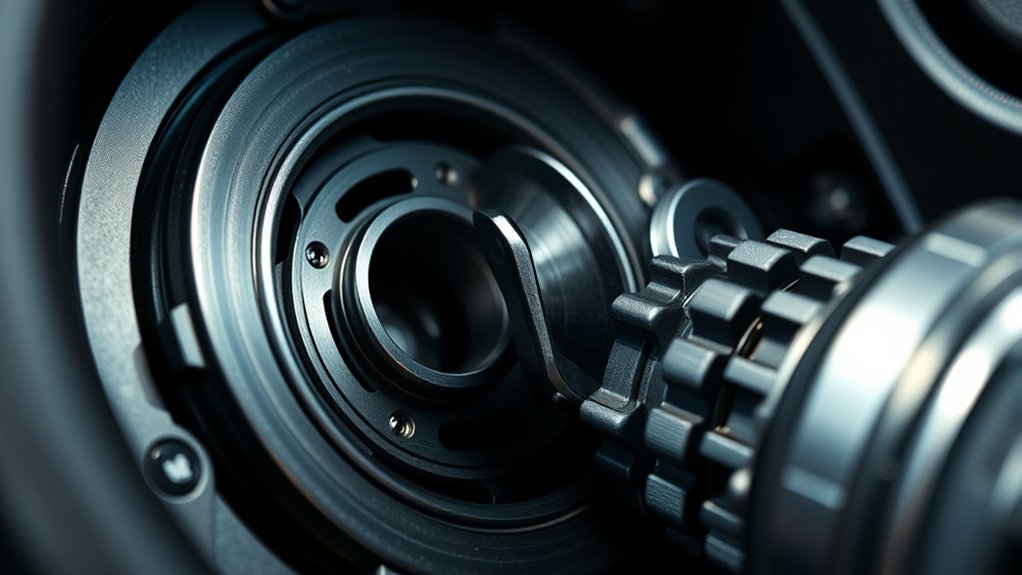
You engage the first clutch to transfer power from the engine to the current gear smoothly. This clutch controls the connection between the engine and the gearbox, allowing you to maintain or change speed without interruption.
Understanding how this engagement works is key to mastering the double clutch system.
Clutch One Activation
Although the double clutch gearbox uses two clutches, the first clutch plays a crucial role in engaging the current gear. When you press the accelerator, this clutch activates to connect the engine’s power to the transmission, allowing the vehicle to move smoothly in the selected gear.
It precisely controls how torque transfers, ensuring seamless acceleration without jerks or delays. You’ll notice its activation involves careful synchronization with the engine speed and gear position.
Key points about Clutch One Activation:
- Engages the current gear by linking engine and transmission
- Operates independently from the second clutch
- Synchronizes with engine RPM for smooth power delivery
- Allows uninterrupted driving while the next gear is prepped by the second clutch
Power Transfer Mechanics
When the first clutch engages, it directly connects the engine’s power to the current gear, allowing your vehicle to move efficiently. This clutch acts as a bridge, transmitting torque from the engine’s flywheel to the gearbox input shaft. As you press the accelerator, the clutch plates press tightly together, creating friction that guarantees power flows smoothly without slipping.
This engagement lets the selected gear receive continuous power, converting engine rotation into wheel movement. You’ll notice immediate responsiveness because the clutch’s grip controls the strength of power transfer. Meanwhile, the double clutch system prepares the next gear on the second clutch, readying for seamless shifts.
This step is vital: without a firm connection here, power delivery would falter, causing jerks or loss of momentum.
Gear Engagement Process
The first clutch doesn’t just transfer power—it actively engages the current gear to keep your vehicle moving smoothly. When you accelerate, this clutch connects the engine’s rotation to the selected gear, ensuring seamless motion. It manages torque and synchronizes the gear’s speed with the engine, preventing jerks or slips.
Here’s how the engagement unfolds:
- Clutch plates press together, creating friction to transfer power
- Gear synchronizer matches gear speed to the engine speed
- Torque flows from the engine through the engaged gear
- Power goes to the output shaft, propelling the vehicle
Step 2: How the Second Clutch Prepares the Next Gear
While the first clutch handles the gear you’re currently using, the second clutch gets ready to switch to the next gear. It pre-engages the upcoming gear, so the shift happens smoothly and quickly.
This dual clutch setup lets you change gears without interrupting power delivery.
Dual Clutch Functionality
Because one clutch engages the current gear, the second clutch can already get the next gear ready, ensuring a seamless shift. When you accelerate or decelerate, the second clutch anticipates your next move by holding the upcoming gear in standby. This dual clutch setup minimizes power loss and eliminates the lag you’d feel with a traditional manual transmission.
Here’s how the dual clutch functionality benefits you:
- Allows quick gear changes without interrupting power flow
- Reduces wear and tear on components by smooth engagement
- Improves fuel efficiency by keeping the engine in its ideal range
- Enhances driving experience with faster, more precise shifts
Gear Pre-Engagement Process
You benefit from the second clutch constantly preparing the next gear even before you signal a shift. While one clutch drives the current gear, the other pre-engages the next gear on a separate shaft. This setup means the upcoming gear is already spinning at the correct speed and ready to engage instantly.
When you decide to shift, the system simply switches clutches, cutting power from the current gear and applying it through the pre-engaged gear without delay. This seamless handover eliminates the lag and power interruption typical in traditional gearboxes.
Step 3: How Double Clutch Gearboxes Synchronize Gear Changes
Even though double clutch gearboxes use two separate clutches, they work together seamlessly to synchronize gear changes without interrupting power delivery. When you shift gears, one clutch disengages while the other engages simultaneously, allowing for smooth progression. This coordination guarantees you don’t feel any jerks or power loss.
Here’s how the synchronization happens:
- One clutch controls the current gear while the other pre-selects the next gear
- As you initiate a shift, the first clutch disengages smoothly
- Simultaneously, the second clutch engages the pre-selected gear
- This overlap maintains continuous power flow to the wheels
How Electronics Manage Gear Shift Timing in Double Clutch Gearboxes
While the mechanical design of double clutch gearboxes enables seamless shifting, electronics play an essential role in managing the precise timing of gear changes. You rely on sensors and a control unit to monitor speed, engine load, and pedal position. These inputs help the system decide exactly when to disengage one clutch and engage the other, minimizing power loss and ensuring smooth progression.
Here’s how electronics manage the timing:
| Component | Function |
|---|---|
| Sensors | Detect speed, throttle, and RPM |
| Control Unit (ECU) | Processes data, commands clutch action |
| Actuators | Execute clutch engagement and disengagement |
This coordination means the gearbox anticipates shifts, making your drive feel fluid and responsive.
Why Double Clutch Gearboxes Shift Faster Than Manual Transmissions
You’ll notice double clutch gearboxes shift faster because they use two clutches working together. While one clutch handles the current gear, the other pre-selects the next gear, cutting down shift time.
This dual clutch mechanism lets you change gears almost instantly compared to a manual transmission.
Dual Clutch Mechanism
How exactly does a dual clutch gearbox achieve faster shifts compared to a manual transmission? It uses two separate clutches—one handles odd gears, the other even gears—allowing it to pre-select the next gear while you’re still driving in the current one. This setup eliminates the delay you’d experience when manually disengaging and re-engaging a single clutch.
Here’s how the dual clutch mechanism works to speed up shifts:
- One clutch engages the current gear, transmitting power smoothly.
- The other clutch pre-selects the next gear without interrupting power flow.
- When shifting, the system quickly swaps clutches, switching gears almost instantly.
- This process happens seamlessly, keeping acceleration steady and reducing lag.
Reduced Shift Time
The dual clutch mechanism’s ability to pre-select the next gear directly cuts down the time lost during gear changes. Unlike manual transmissions, where you have to disengage the clutch, move the gear lever, and re-engage the clutch, a double clutch gearbox switches clutches almost instantly.
While one clutch is engaged, the other is already ready with the next gear, so when it’s time to shift, the system just swaps clutches. This seamless handoff eliminates the lag you’d typically experience. As a result, you get faster, smoother shifts without interrupting power delivery.
Common Problems and How Double Clutch Gearboxes Prevent Gear Grinding
Although gear grinding can frustrate many drivers, double clutch gearboxes effectively minimize this issue by managing gear shifts with precision. You won’t experience the harsh clunks or noises common in traditional manual transmissions because the system pre-selects the next gear, ensuring smooth engagement. This reduces wear on the gears and clutch components, preventing costly repairs.
Double clutch gearboxes prevent gear grinding by pre-selecting gears for smooth, precise shifts and reduced wear.
Here’s how double clutch gearboxes tackle common problems:
- Synchronize gear speeds before engagement, avoiding mismatches
- Use two clutches to separate odd and even gear sets for seamless shifts
- Eliminate the need for manual clutch timing, reducing human error
- Maintain constant power delivery to prevent jerks during shifts
How Double Clutch Gearboxes Boost Driving Performance
By preventing gear grinding and ensuring smoother shifts, double clutch gearboxes set the stage for a more responsive and engaging driving experience. You’ll notice quicker gear changes without interruption to power delivery, which means you can accelerate or decelerate more efficiently. This seamless shifting improves your control, especially during spirited driving or when navigating tight corners.
The gearbox’s ability to pre-select the next gear reduces lag, keeping the engine in its optimal power range. As a result, you get better fuel efficiency and reduced wear on components. Overall, the precise and swift gear transitions enhance your connection to the car, making every drive feel sharper and more dynamic without sacrificing comfort or reliability.
What to Expect When Driving a Car With a Double Clutch Gearbox
When you get behind the wheel of a car with a double clutch gearbox, you’ll immediately notice how effortlessly the gears shift without the usual pauses or jolts. This smooth shift enhances your driving experience, making acceleration feel seamless and responsive. You’ll also find the gearbox adapts quickly to your driving style, whether you’re cruising or pushing for performance.
Expect these key features:
- Rapid gear changes with minimal power loss
- Improved fuel efficiency compared to traditional automatics
- Reduced wear on the transmission system
- Enhanced control during sporty or dynamic driving
Frequently Asked Questions
How Much Does It Cost to Repair a Double Clutch Gearbox?
You can expect to pay between $1,000 and $5,000 to repair a double clutch gearbox, depending on the damage and labor costs. It’s pricey, but getting a professional mechanic to diagnose it first is essential.
Which Car Brands Most Commonly Use Double Clutch Gearboxes?
While luxury sedans glide smoothly, sporty hatchbacks zip with precision; brands like Audi, Volkswagen, Porsche, and Ford often use double clutch gearboxes.
You’ll notice quicker shifts and better performance in these cars you drive or admire daily.
Can a Double Clutch Gearbox Be Manually Repaired at Home?
You probably can’t manually repair a double clutch gearbox at home because it’s complex and requires specialized tools and knowledge. It’s best to leave repairs to professionals to avoid causing further damage or safety issues.
Attempting repairs without proper expertise can lead to costly mistakes. The intricate components demand precise handling. Therefore, professional intervention is highly recommended.
How Does a Double Clutch Gearbox Affect Fuel Efficiency?
Think of a double clutch gearbox as a smooth dancer; it boosts your fuel efficiency by reducing power loss during gear changes.
You’ll enjoy quicker shifts and better mileage, making every drop of fuel stretch further.
Are Double Clutch Gearboxes Suitable for Off-Road Vehicles?
Double clutch gearboxes can be suitable for off-road vehicles, but you’ll want to take into account their complexity and potential durability issues. They offer quick shifts, but traditional manuals or automatics might handle rough terrain and repairs better.
Their advanced design provides smooth and rapid gear changes, which can enhance driving performance. However, off-road conditions often demand robustness and ease of maintenance.
Considering these factors, some off-road enthusiasts prefer simpler transmission types for reliability. Still, with proper engineering, double clutch gearboxes can be adapted for off-road use.
Conclusion
Driving a car with a double clutch gearbox feels like shifting gears in the blink of an eye—these systems can cut shift times down to just 8 milliseconds. That’s faster than a human eye blink! With two clutches working seamlessly, you get smoother, quicker gear changes without the hassle of grinding.
You’ll notice improved performance and efficiency every time you accelerate, making your drive not only faster but also more enjoyable and responsive. The double clutch gearbox technology enhances driving dynamics with precise and rapid gear shifts. This advanced transmission system ensures optimal power delivery and fuel economy for a superior driving experience.

