

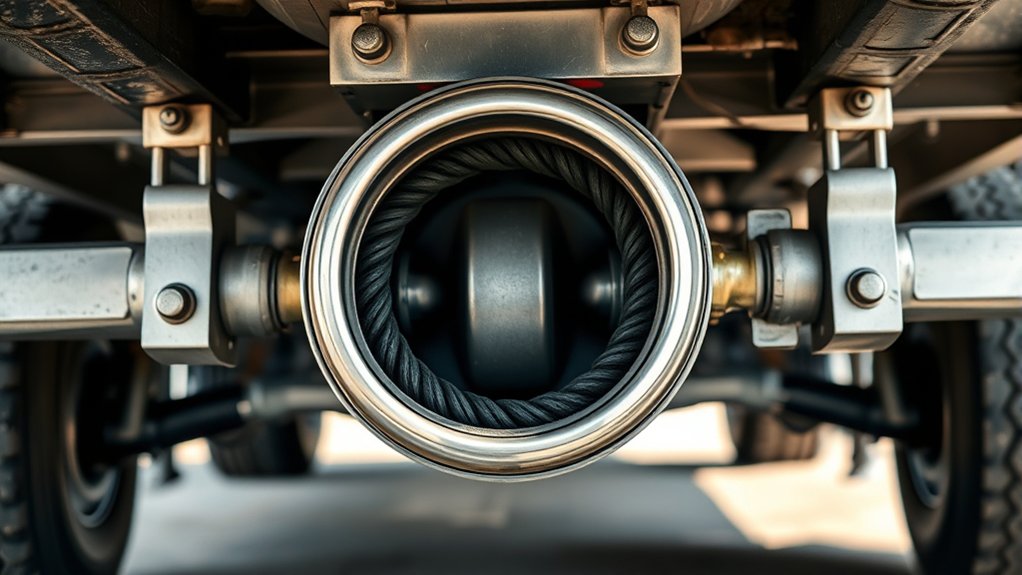
A torsion axle works by using rubber cords inside a solid steel housing to absorb shocks through twisting, providing a smoother, quieter ride compared to traditional leaf springs.
This innovative suspension system improves ride quality by flexing and twisting the rubber cords to dampen bumps and reduce vibration.
These cords help improve handling and overall comfort while the axle housing protects the internal components from damage.
It also supports even weight distribution, which contributes to the axle’s lasting durability and reliability.
If you want to understand how this design enhances ride quality and what to watch for in maintenance, there’s plenty more to explore about torsion axles and their advantages.
Key Takeaways
- A torsion axle uses rubber cords inside a solid steel housing to absorb shocks by twisting and stretching during axle movement. The rubber cords flex to dampen vibrations and convert road bumps into smooth, controlled suspension action. This system eliminates shackles and hangers, providing a compact, durable suspension that improves handling and ride comfort.
- The axle housing protects internal components and maintains proper alignment under varying loads for consistent performance. Weight is evenly distributed across the axle, supporting smooth operation and reducing noise and wear compared to leaf springs.
What Is a Torsion Axle and How Is It Different From Leaf Springs?
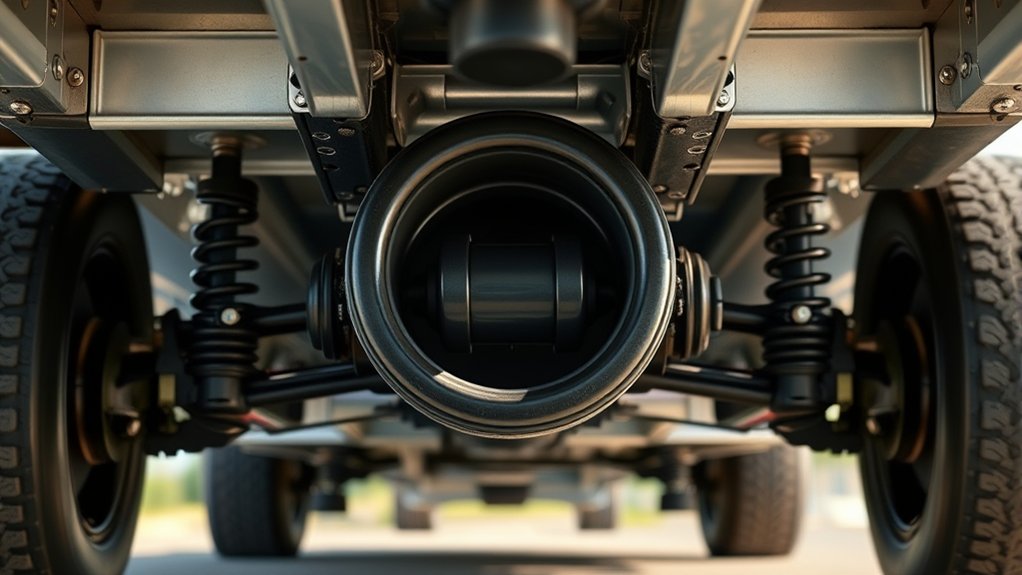
What exactly is a torsion axle, and how does it differ from traditional leaf springs? A torsion axle is a type of suspension system that uses a solid steel axle housing with rubber cords inside to absorb shocks. Unlike leaf springs, which rely on stacked metal strips flexing under load, torsion axles provide suspension through the twisting action of those rubber cords inside the axle tube.
This design lets you experience a smoother ride and better handling without the bulk and maintenance leaf springs require. Plus, torsion axles don’t need shackles or hangers, making installation simpler and reducing noise. So, when you choose a torsion axle, you’re opting for a compact, durable suspension system that responds differently and often more efficiently than traditional leaf springs.
How Do the Rubber Cords Inside a Torsion Axle Work?
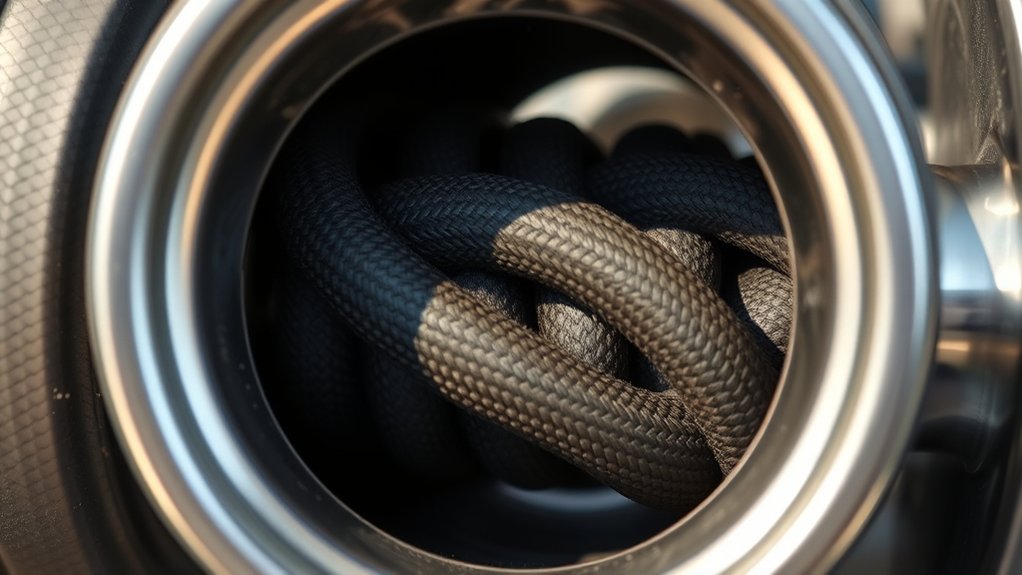
Although the rubber cords inside a torsion axle might seem simple, they play an essential role in how the suspension absorbs shocks and provides a smooth ride. When you drive over bumps, these cords twist and stretch, absorbing energy and reducing vibrations. This flexibility allows the axle to move independently, improving stability and comfort.
The cords’ tension also helps maintain proper wheel alignment under stress.
Here’s a quick look at how rubber cords function:
| Feature | Function | Benefit |
|---|---|---|
| Elasticity | Absorbs shocks | Smooth ride |
| Torsion resistance | Twists with axle motion | Stability |
| Durability | Withstands repeated stress | Long-lasting performance |
Understanding these helps you appreciate the clever design behind torsion axles.
How the Axle Housing Supports Torsion Axles
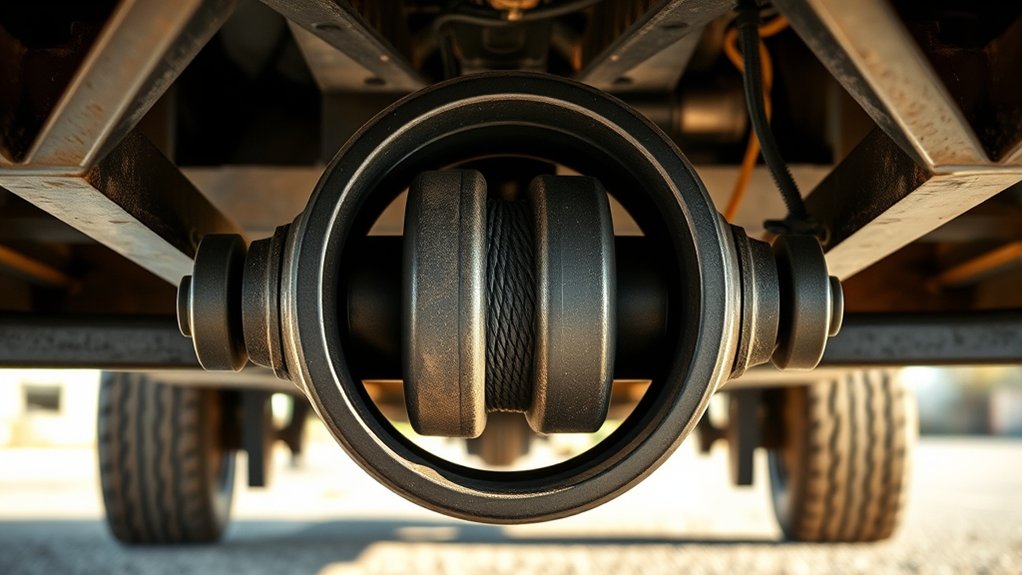
Since the axle housing encases the torsion axle’s internal components, it plays an essential role in protecting them from dirt, moisture, and damage. You rely on this sturdy shell to keep the axle’s rubber cords and spindle safe, ensuring the system works smoothly over time.
The housing also supports the axle structurally, distributing weight evenly and maintaining alignment with the trailer frame. Without proper housing, the torsion axle couldn’t perform effectively or last long.
Here’s how the axle housing supports torsion axles:
- Shields internal parts from environmental hazards
- Provides a solid mounting point for suspension components
- Maintains correct alignment to prevent uneven wear
- Distributes load evenly across the axle for stability
This support is indispensable for reliable trailer performance.
How Torsion Axles Absorb Road Shocks for a Smoother Ride
You’ll notice torsion axles use a rubber suspension mechanism that flexes under load to absorb bumps. This flexibility helps dampen vibrations before they reach your trailer or vehicle.
Understanding how this process works can show you why torsion axles provide such a smooth ride.
Rubber Suspension Mechanism
How exactly do torsion axles use rubber to soften the ride? Inside the axle, you’ll find a solid rubber cord running through a steel tube. When your trailer hits bumps, this rubber compresses and twists, absorbing shocks instead of transferring them directly to your trailer frame.
This mechanism smooths out the ride by dampening vibrations and road impacts efficiently.
Here’s what makes the rubber suspension mechanism effective:
- Rubber’s elasticity allows it to absorb and dissipate energy from bumps.
- It offers consistent performance without needing regular maintenance.
- The design reduces metal-to-metal contact, cutting down noise and wear.
- Rubber components resist corrosion, lasting longer under harsh conditions.
This clever use of rubber helps your trailer handle rough roads with more comfort and durability.
Flexibility Under Load
The rubber inside torsion axles doesn’t just absorb shocks—it also allows the axle to flex under load, adapting to uneven road surfaces. When you drive over bumps or potholes, the axle twists slightly, letting the wheels move independently without transferring harsh jolts to the trailer frame. This flexibility helps maintain tire contact with the road, improving stability and control.
Because the rubber sits inside the axle housing, it compresses and twists as needed, cushioning impacts and preventing rigid, uncomfortable rides. You’ll notice smoother handling, especially on rough terrain, since the axle adjusts dynamically to changing conditions. This adaptability means you get a more comfortable ride without sacrificing durability or strength, making torsion axles a smart choice for trailers that face varied road challenges.
Vibration Dampening Process
Although rough roads can shake your trailer, torsion axles absorb most of those vibrations before they reach the frame. They use rubber cords inside the axle housing that compress and flex when you hit bumps, turning harsh shocks into gentle movements. This process reduces wear on your trailer and gives you a smoother, quieter ride.
Here’s how it works to dampen vibrations:
- Rubber cords flex under load, absorbing energy
- Axle housing twists slightly to diffuse shocks
- No metal-on-metal contact, preventing noise
- Continuous tension maintains smooth suspension action
Why Torsion Axles Offer Quieter Operation on the Road
When you drive over rough roads, torsion axles absorb shocks more smoothly than traditional leaf springs, reducing noise inside your vehicle. They use rubber cords inside a sealed tube that flex quietly when you hit bumps, unlike metal springs that often produce creaks and clunks. This rubber suspension also isolates vibrations, preventing them from traveling into your trailer or vehicle frame, so you experience less rattling and buzzing.
Because torsion axles have fewer moving parts exposed to the elements, they avoid the squeaks and squeals common with leaf spring setups. Overall, this design means you’ll notice a quieter, more comfortable ride, especially on long trips or uneven terrain, letting you enjoy the road without constant, distracting noise.
How Torsion Axles Improve Trailer Handling and Stability
Because torsion axles flex independently on each side, you’ll experience better control and smoother cornering with your trailer. This design allows each wheel to react individually to bumps and uneven surfaces, reducing sway and improving overall stability. You’ll find it easier to maintain a steady path, especially on winding roads or rough terrain.
Additionally, torsion axles offer consistent suspension performance that adapts to varying loads, keeping your trailer balanced and safe.
Here’s how torsion axles improve handling and stability:
- Absorb shocks independently, minimizing trailer bounce
- Reduce sway by maintaining tire contact with the road
- Lower center of gravity, enhancing balance
- Provide uniform load distribution for consistent traction
With these benefits, your trailer feels more secure and responsive during travel.
What Types of Trailers Benefit Most From Torsion Axles?
The improved handling and stability that torsion axles provide make them ideal for certain types of trailers. If you own a lightweight utility trailer, boat trailer, or small camper, torsion axles can enhance your towing experience by reducing sway and delivering a smoother ride. They’re also great for cargo trailers where you need consistent performance on uneven terrain.
Because torsion axles offer independent suspension for each wheel, they handle bumps and rough roads better than traditional leaf springs. So, if you frequently tow on highways or off-road, torsion axles can keep your trailer more stable and easier to control.
Signs of Torsion Axle Wear or Failure to Watch For
If you notice unusual noises or a rougher ride while towing, it could signal torsion axle wear or failure. Ignoring these signs can lead to more serious damage and unsafe driving conditions. Keep a close eye on how your trailer handles and listen for anything out of the ordinary.
Here are some common signs to watch for:
Common signs of torsion axle issues to watch for include vibration, steering problems, and visible damage.
- Excessive vibration or shaking during travel
- Difficulty steering or pulling to one side
- Visible cracks or damage on the axle housing
- Uneven tire wear or frequent tire damage
Spotting these early helps you address issues before they worsen. If you experience any of these symptoms, it’s wise to get your torsion axle inspected promptly.
Maintaining Your Torsion Axle for Long-Lasting Performance
To keep your torsion axle running smoothly, you’ll want to lubricate it regularly and check for any signs of wear. Paying attention to how much weight you’re carrying also helps prevent unnecessary strain.
These simple steps can make a big difference in how long your axle lasts.
Regular Lubrication Importance
Regular lubrication keeps your torsion axle running smoothly and prevents premature wear. Without it, friction builds up inside the rubber cords and moving parts, causing heat and damage that reduce your axle’s lifespan. You should lubricate the torsion arm and pivot points regularly to keep everything moving freely.
Using the right grease specifically designed for torsion axles is essential, as it withstands high pressure and temperature. Here’s what you need to focus on when lubricating:
- Apply grease to the torsion arm and pivot shaft
- Use a high-quality, waterproof grease
- Lubricate at recommended intervals, typically every 12 months or 12,000 miles
- Avoid over-lubricating, which can attract dirt and grit
Following these steps helps you maintain smooth, safe towing performance.
Inspecting for Wear
Though lubrication is essential, inspecting your torsion axle for wear guarantees you catch issues before they become serious problems. Start by checking the rubber cords inside the axle for cracks or brittleness, as these indicate aging or damage. Look over the axle housing for dents, rust, or other physical damage that could affect performance.
Don’t forget to examine the mounting brackets and bolts to verify they’re tight and free from corrosion. Pay close attention to any unusual noises or vibrations while driving, as these can signal internal wear. Regularly performing these inspections helps you spot potential failures early, guaranteeing your axle stays reliable and safe.
Keep a maintenance log to track your findings and address wear promptly before it worsens.
Proper Load Management
How can you guarantee your torsion axle lasts as long as possible? Proper load management plays a vital role in extending its lifespan. Overloading or uneven weight distribution stresses the axle and can cause premature wear or failure.
To protect your torsion axle, you should:
- Always check your trailer’s Gross Vehicle Weight Rating (GVWR) and never exceed it.
- Distribute weight evenly across the axle to avoid putting too much stress on one side.
- Secure loads tightly to prevent shifting during travel, which can impact axle performance.
- Regularly inspect your tires for proper inflation and wear, as they directly affect load handling.
Key Advantages and Disadvantages of Torsion Axles
While torsion axles offer a sleek and compact suspension solution, you should weigh their key advantages and disadvantages before deciding if they suit your needs. On the plus side, torsion axles provide a smooth, quiet ride by absorbing shocks individually, which reduces wear on your trailer. They’re low maintenance since they have fewer moving parts and no grease fittings, saving you time and effort.
Plus, their compact design frees up space and reduces overall weight. However, torsion axles can be more expensive upfront compared to leaf spring alternatives. They may also have limited load capacity for heavier trailers and can be trickier to repair if damaged.
Considering these factors will help you decide if torsion axles align with your trailer’s demands.
How to Choose the Right Torsion Axle for Your Trailer
You’ll want to start by matching the torsion axle’s load capacity to your trailer’s weight to guarantee safety and performance. Next, consider the axle length and width to fit your trailer’s frame and wheel setup properly. Getting these factors right will keep your trailer balanced and stable on the road.
Load Capacity Considerations
When selecting a torsion axle for your trailer, what’s most important is understanding the load capacity requirements. You need to verify the axle can handle the total weight of your trailer plus its maximum cargo. Choosing an axle with insufficient capacity risks damaging the trailer or causing unsafe towing conditions.
Consider these key factors:
- Gross Vehicle Weight Rating (GVWR): Match the axle’s rating to or above your trailer’s GVWR.
- Cargo weight: Estimate the maximum load you’ll carry regularly.
- Trailer weight distribution: Understand how weight spreads across the trailer.
- Safety margin: Choose an axle with a capacity slightly higher than your maximum load for durability and safety.
Axle Length and Width
Since the axle length and width directly affect your trailer’s stability and handling, choosing the right dimensions is essential. You’ll want an axle length that matches your trailer’s frame width to guarantee proper fit and balance. Too short, and your wheels won’t line up correctly; too long, and you risk unnecessary stress on the frame or poor handling.
The width between the wheels, also called track width, impacts how your trailer handles turns and uneven terrain. Wider axles provide better stability but may limit maneuverability in tight spaces. Measure your trailer’s frame carefully and consider how you’ll use it—whether on highways or rugged trails—to pick an axle length and width that optimize safety and performance.
Frequently Asked Questions
Can Torsion Axles Be Retrofitted to Trailers With Leaf Springs?
Yes, you can retrofit torsion axles to trailers with leaf springs, but you’ll need to modify or remove the existing leaf spring setup. It’s a bit complex, so make sure you plan carefully and have proper tools.
Consider the impact on your trailer’s suspension and ride quality before making changes. Retrofitting requires mechanical knowledge and precision.
If unsure, consult a professional to ensure safety and proper installation.
What Is the Typical Lifespan of a Torsion Axle Under Normal Use?
Like a trusty steed, your torsion axle can last 10 to 15 years under normal use.
Just keep it well-maintained, and it’ll faithfully support your trailer’s load, mile after mile, without faltering.
How Do Temperature Changes Affect Torsion Axle Performance?
You’ll notice temperature changes can stiffen or soften the rubber inside the torsion axle, affecting ride quality and suspension performance.
In extreme cold, it gets firmer, while heat makes it more flexible, altering handling.
Are Torsion Axles Compatible With All Tire Types and Sizes?
You can’t judge a book by its cover—torsion axles aren’t compatible with all tire types and sizes.
You’ll need to check manufacturer specs to verify your tires fit properly and maintain ideal performance and safety.
What Tools Are Needed for Torsion Axle Installation or Replacement?
You’ll need a floor jack, jack stands, socket set, torque wrench, breaker bar, and a pry bar for torsion axle installation or replacement.
Don’t forget safety gear like gloves and eye protection while working on your vehicle.
Conclusion
Think of a torsion axle like the shock absorbers in your favorite pair of running shoes—they flex and adapt with every step, smoothing out the bumps so your ride stays steady.
By understanding how the rubber cords inside work and keeping an eye on wear signs, you’ll enjoy quieter, more comfortable travels.
With proper care, your torsion axle will be the silent partner that keeps your trailer rolling smoothly for miles to come. Regular maintenance and timely inspections ensure optimal performance and extend the lifespan of your torsion axle suspension system.

