

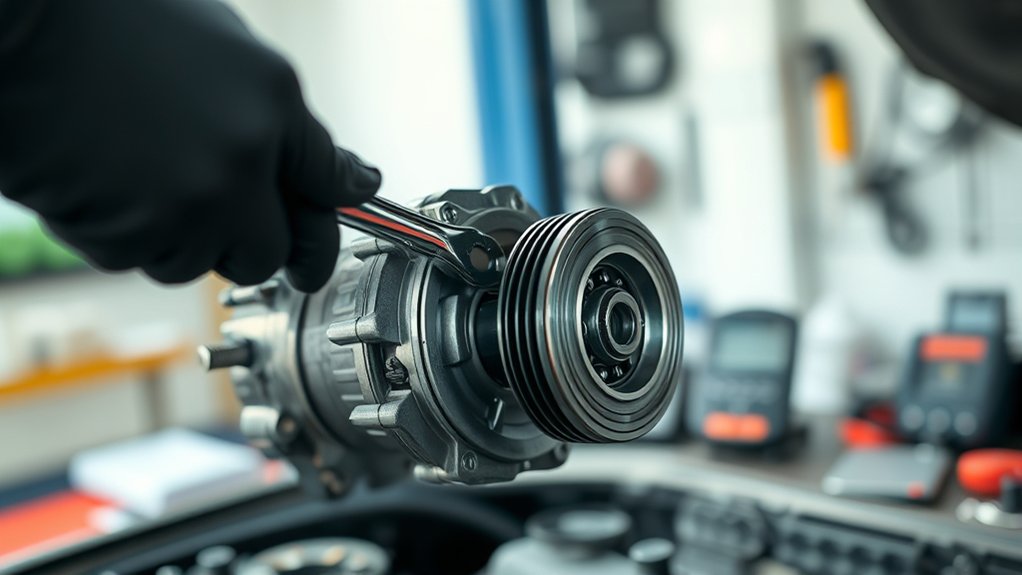
To reset your AC clutch quickly and effectively, follow these simple steps. Resetting the AC clutch is essential for restoring proper function to your vehicle’s air conditioning system. By carefully following this guide, you can avoid costly repairs and enjoy cool air again in no time.
First, disconnect your car battery for safety. Remove the AC clutch cover, then inspect the clutch plate and pulley for visible damage.
Use a reset tool or screwdriver to realign the clutch plate properly.
Reassemble everything securely, reconnect the battery, and start your car. Turn the AC to the coldest setting with high fan speed and listen for clutch engagement sounds.
Follow these steps to quickly restore AC function, and you can explore troubleshooting tips and safety advice next.
Key Takeaways
- Disconnect the car battery to ensure safety before starting the AC clutch reset process.
- Remove the AC clutch cover using the appropriate tools to access the clutch components.
- Inspect the clutch plate and pulley for visible damage or wear before attempting a reset.
- Realign the clutch plate with a reset tool or screwdriver to restore proper engagement.
- Reassemble the clutch parts, reconnect the battery, and test the AC for proper cooling and clutch engagement.
How to Identify a Faulty AC Clutch
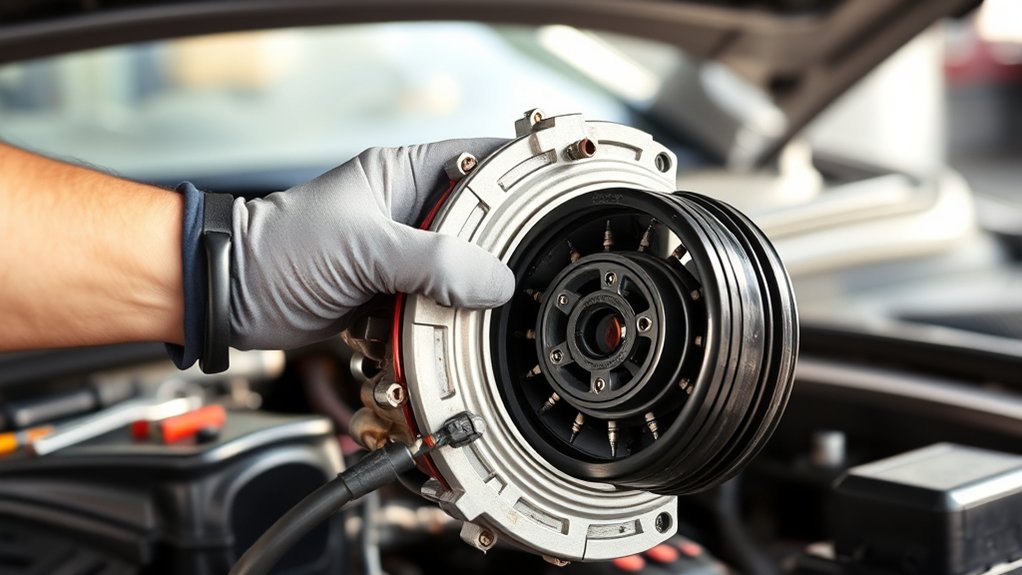
How can you tell if your AC clutch is faulty? First, listen for unusual noises when your AC is on—grinding or squealing sounds often indicate a problem. You might notice the air conditioning isn’t cooling as effectively, or it stops blowing cold air altogether.
Another sign is the AC clutch not engaging; when you look under the hood, the clutch should spin when the AC is activated. If it stays still or spins erratically, it’s likely faulty. Also, check for visible wear or damage on the clutch’s surface, such as cracks or burns.
If you experience any of these symptoms, your AC clutch needs attention before it causes further issues or leaves you without cool air on a hot day.
Tools Needed to Reset Your AC Clutch
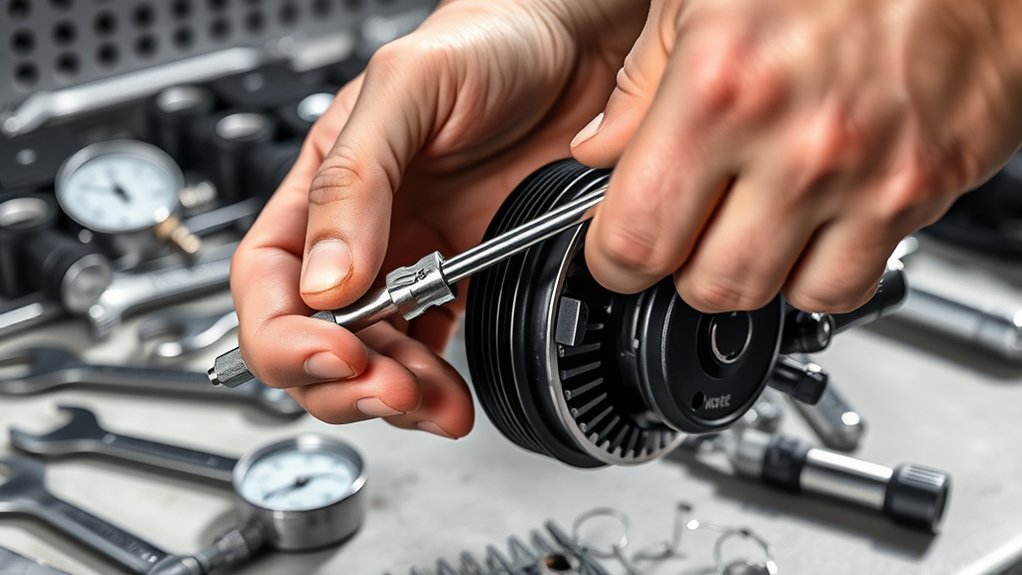
To reset your AC clutch properly, you’ll need a few essential tools and some safety gear to protect yourself. Choosing the right quality tools makes the job easier and safer.
Let’s go over what you’ll need before getting started.
Essential Tools Overview
What tools do you need to reset your AC clutch effectively? Having the right tools makes the job quicker and prevents damage. You’ll need items that help you remove, adjust, and test the clutch with ease.
Here’s a quick overview of essential tools to keep handy:
| Tool | Purpose |
|---|---|
| Socket Set | Remove bolts and screws |
| Screwdriver Set | Pry and adjust components |
| Multimeter | Check electrical connections |
| Snap Ring Pliers | Remove and install retaining rings |
| Torque Wrench | Tighten bolts to exact specs |
Make sure each tool fits your vehicle’s specifications. Using the correct tools helps you reset the AC clutch confidently and efficiently without unnecessary trial or error.
Safety Equipment Required
Although resetting your AC clutch involves mechanical work, you can’t overlook the importance of proper safety equipment. Start with safety glasses to protect your eyes from debris or refrigerant splashes. Wear durable gloves to shield your hands from sharp components and prevent burns when handling hot parts.
It’s wise to use a long-sleeve shirt to minimize skin exposure. Closed-toe shoes will protect your feet from dropped tools or parts. If you’re working in a noisy environment, ear protection helps maintain focus and prevent hearing damage.
Finally, keep a fire extinguisher nearby just in case. Using these safety items guarantees you reduce injury risks and work confidently while resetting your AC clutch. Always prioritize your safety before tackling the job.
Tool Quality and Selection
Wearing the right safety gear sets a solid foundation for working on your AC clutch, but having the proper tools guarantees the job gets done right. You’ll need a reliable set of wrenches, a clutch removal tool, and a multimeter to test electrical connections. Choose tools made from durable materials like chrome vanadium steel to avoid wear and assure precision.
Cheap or worn-out tools can slip or damage components, making your task harder and risking injury. Also, consider a clutch coil puller designed specifically for your vehicle model to simplify removal. Investing in quality tools saves time and prevents frustration.
Before you start, double-check that your tools fit your AC clutch specifications perfectly—this guarantees smooth, efficient work without surprises.
Safely Disconnecting Your Car Battery
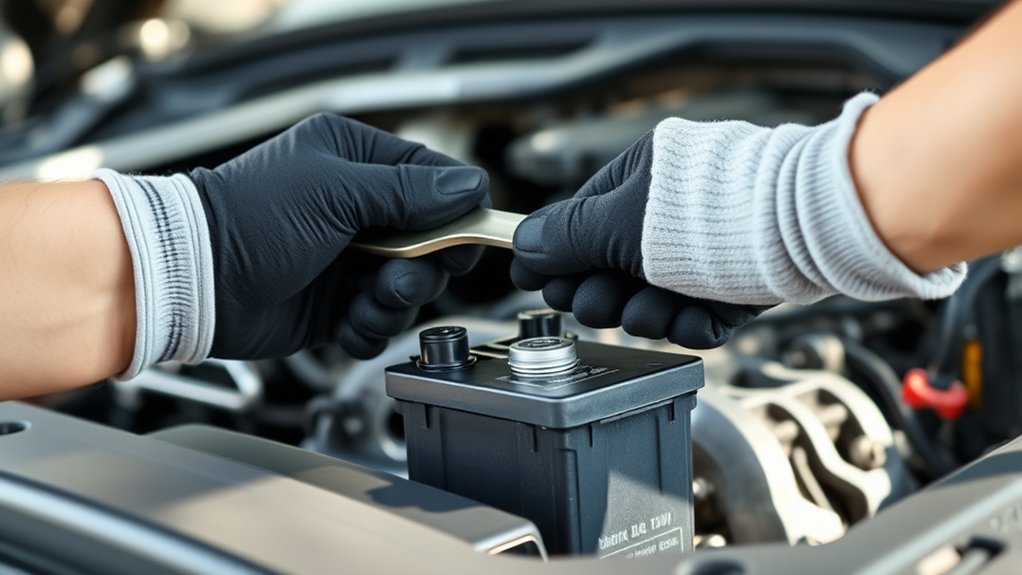
Before you start, make sure you locate the battery terminals carefully to avoid any mistakes. Always wear proper safety gear like gloves and goggles to protect yourself. Disconnecting the negative terminal first helps prevent sparks and keeps you safe.
Locate Battery Terminals
To safely disconnect your car battery, start by locating the battery terminals under the hood. Open the hood and look for a rectangular battery, usually near the front of the engine bay. You’ll find two terminals on it: one marked with a plus (+) sign and the other with a minus (−) sign.
The plus terminal is positive, and the minus terminal is negative. Identifying these correctly is essential to avoid electrical mishaps.
Keep these points in mind:
- Positive terminal usually has a red cover or cable
- Negative terminal often has a black cover or cable
- Terminals may be secured with bolts or clamps
- Clean terminals if corroded before disconnecting
- Confirm your tools don’t touch both terminals simultaneously
This step sets you up for a safe battery disconnection.
Use Proper Safety Gear
Although disconnecting a car battery might seem straightforward, you can’t skip using proper safety gear if you want to protect yourself from sparks, acid, or electrical shocks. Always wear safety goggles to shield your eyes from any unexpected splashes of battery acid. Gloves are essential to protect your hands from corrosive substances and prevent electrical contact.
Avoid loose clothing or jewelry that could get caught or cause a short circuit. Before you begin, make sure your car is off and in park. Use insulated tools to loosen the battery terminals, reducing the risk of accidental sparks.
Taking these precautions guarantees you safely disconnect the battery, which is a critical step before resetting your AC clutch. Safety gear isn’t optional—it’s necessary for your protection.
Reset Your AC Clutch in 7 Simple Steps
Wondering how to get your AC clutch working smoothly again? Resetting it is easier than you might think. Just follow these 7 simple steps to restore proper function quickly:
Wondering how to get your AC clutch working smoothly again? Resetting it is easier than you think.
- Disconnect the battery to guarantee safety before starting.
- Remove the AC clutch cover gently using the right tools.
- Inspect the clutch plate and pulley for wear or damage.
- Use a clutch reset tool or screwdriver to realign the clutch plate.
- Reassemble all parts securely and reconnect the battery.
How to Test If Your AC Clutch Reset Worked
Once you’ve completed the reset, you’ll want to verify that your AC clutch engages properly and runs smoothly. Start your vehicle and turn on the air conditioning to the coldest setting with the fan on high. Listen for a clicking sound from the AC compressor clutch—it should engage almost immediately.
Next, visually inspect the clutch while the engine is running; you should see the front plate spinning in sync with the pulley. If it doesn’t engage or spins inconsistently, the reset might not have worked. Also, check if your AC is cooling effectively.
If the airflow stays warm, the clutch may still be faulty. Testing these signs helps confirm your reset was successful before you move on or seek further help.
Troubleshooting Common AC Clutch Problems
If your AC clutch isn’t engaging or keeps slipping, you’ll need to pinpoint the issue quickly to avoid further damage. Start by checking the electrical connections for corrosion or loose wires. Next, inspect the clutch coil for signs of wear or burning.
Make sure the belt driving the AC clutch is tight and in good condition, as a worn belt can cause slipping. Additionally, verify that the refrigerant level is adequate since low pressure can prevent clutch engagement. Finally, listen for unusual noises that might indicate mechanical failure.
- Corroded or loose electrical connections
- Worn or burnt clutch coil
- Loose or damaged drive belt
- Low refrigerant pressure
- Grinding or squealing noises
Addressing these will help you troubleshoot common AC clutch problems effectively.
When to Seek Professional AC Clutch Help
Troubleshooting common AC clutch problems can often resolve minor issues, but some situations call for professional attention. If you notice persistent grinding noises, frequent clutch engagement failures, or burning smells, it’s time to call a pro.
Attempting repairs beyond basic resets might worsen the problem or cause injury. Also, if your AC system isn’t cooling despite clutch resets, a professional can properly diagnose electrical or mechanical faults.
| Symptom | Possible Cause | When to Seek Help |
|---|---|---|
| Clutch won’t engage | Electrical failure | After basic troubleshooting |
| Grinding noise | Worn bearings | Immediately |
| Burning smell | Overheating clutch | Immediately |
| AC not cooling | System or clutch issue | After reset attempts fail |
Frequently Asked Questions
What Causes an AC Clutch to Fail Initially?
You’ll find an AC clutch often fails due to electrical issues, worn-out bearings, or a damaged coil. Overheating and lack of lubrication also cause problems, so keeping your system maintained prevents early clutch failure.
Can a Bad AC Clutch Affect Fuel Efficiency?
Yes, a bad AC clutch can reduce fuel efficiency because it forces your engine to work harder. When the clutch fails, your AC system may run continuously or inefficiently, wasting fuel and lowering overall mileage.
This increased load on the engine leads to more fuel consumption. As a result, you might notice a decrease in your vehicle’s overall fuel economy. Addressing a faulty AC clutch can help restore optimal fuel efficiency.
How Long Does an AC Clutch Typically Last?
An AC clutch typically lasts between 70,000 and 100,000 miles, but your driving habits and maintenance can affect that.
If you notice slipping or noise, don’t ignore it; get it checked to avoid bigger issues.
Are There Different Types of AC Clutches?
Yes, you’ll find different types of AC clutches, like electromagnetic and hydraulic. Each works differently, so knowing which one you have helps you maintain or replace it properly.
This knowledge is important to keep your system running smoothly.
Does Resetting the AC Clutch Void Vehicle Warranty?
Just like touching a delicate clockwork, resetting your AC clutch typically won’t void your vehicle warranty if done correctly.
But if you mess up or cause damage, the manufacturer might refuse coverage, so proceed carefully and consult your manual.
Conclusion
Resetting your AC clutch might seem tricky at first, but with these simple steps, you’ve taken the bull by the horns.
Remember, your car’s AC clutch is the heart that keeps cool air flowing, so treating it right guarantees a smooth ride through hot days.
If problems persist, don’t hesitate to call in a pro—sometimes even the best need a helping hand to keep things running cool and steady.
By following this AC clutch reset guide, you ensure your air conditioning system works efficiently and reliably.
Proper maintenance and timely resetting of the AC clutch are key to enjoying cool comfort during the hottest weather.
Keep these tips in mind to extend the life of your AC clutch and maintain optimal car performance.

