

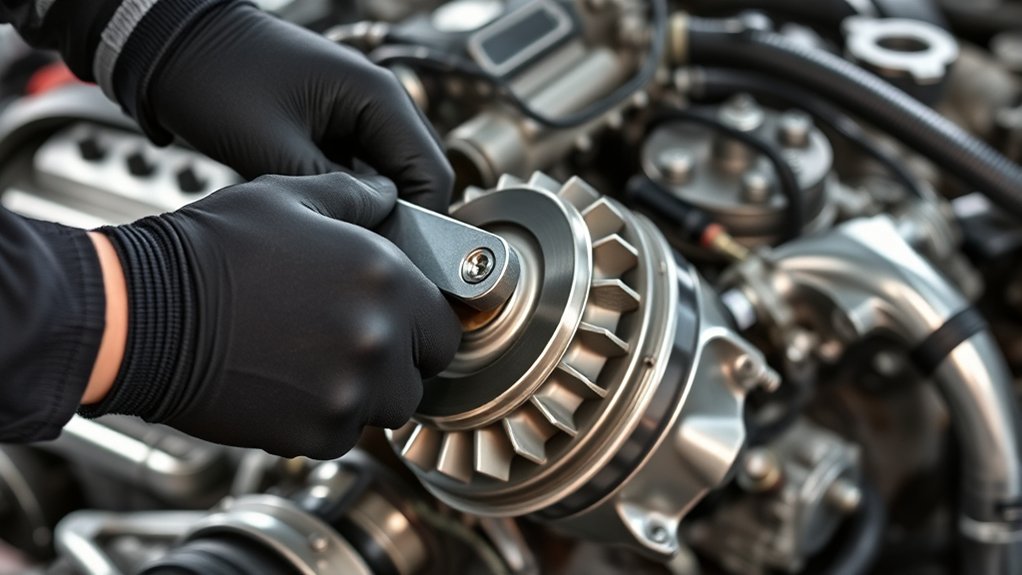
To test your fan clutch in 7 simple steps, start by gathering essential tools like a wrench, socket set, and thermometer. A properly functioning fan clutch is crucial for maintaining your engine’s temperature and preventing overheating.
By following these steps, you can quickly diagnose any issues with your fan clutch and ensure your vehicle runs smoothly.
First, inspect the clutch visually for leaks, cracks, or debris. Then, spin the fan by hand when the engine is cold to check resistance.
Warm up the engine, repeat the spin test, and watch if the fan speeds up smoothly as it heats.
If you notice stiffness, looseness, or noise, it may need replacing.
Keep going to understand what your results mean and how to maintain the clutch properly.
Key Takeaways
- Ensure the engine is cool, then visually inspect the fan clutch for leaks, cracks, and damage before testing.
- Manually spin the fan clutch to check for smooth resistance and confirm it’s neither stuck nor too loose.
- Start the engine and let it reach operating temperature, then observe if the fan speeds up smoothly as the engine warms.
- Use a cloth or glove to safely feel the fan clutch resistance when hot, ensuring it engages properly without excessive play.
- Listen for unusual noises or vibrations during operation, and inspect for debris or lubrication issues affecting clutch performance.
What Is a Fan Clutch and Why Testing Matters
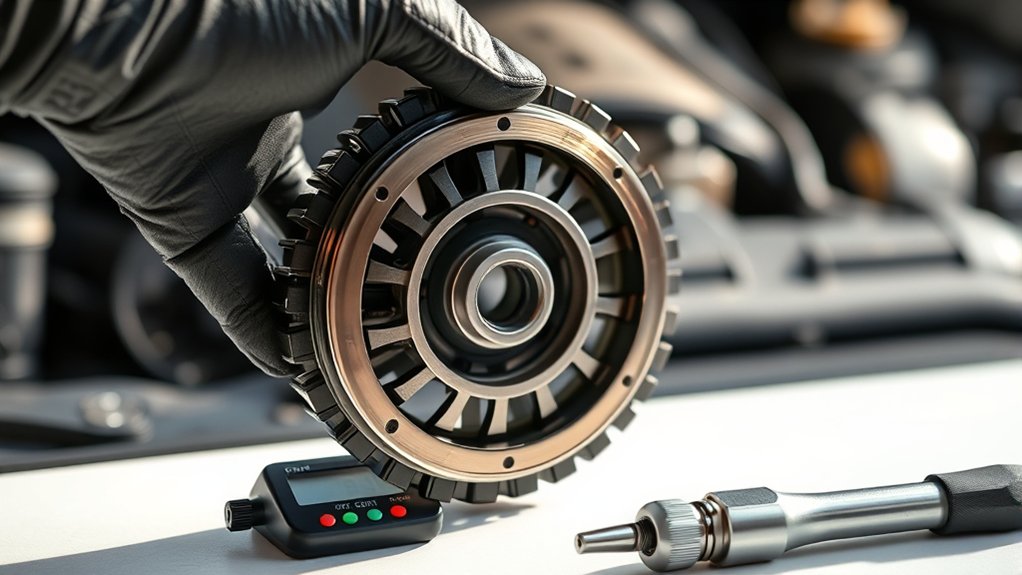
What exactly is a fan clutch, and why should you care about testing it? A fan clutch is a vital component that controls your engine’s cooling fan speed based on temperature. When the engine heats up, the clutch engages to spin the fan faster, drawing more air to cool the radiator.
When the engine’s cooler, it disengages to save energy and improve fuel efficiency. Testing your fan clutch ensures it’s working properly, preventing engine overheating or unnecessary power loss. If the clutch fails, your engine could run too hot or your fan could run constantly, wasting fuel and causing wear.
Spotting Warning Signs of a Bad Fan Clutch
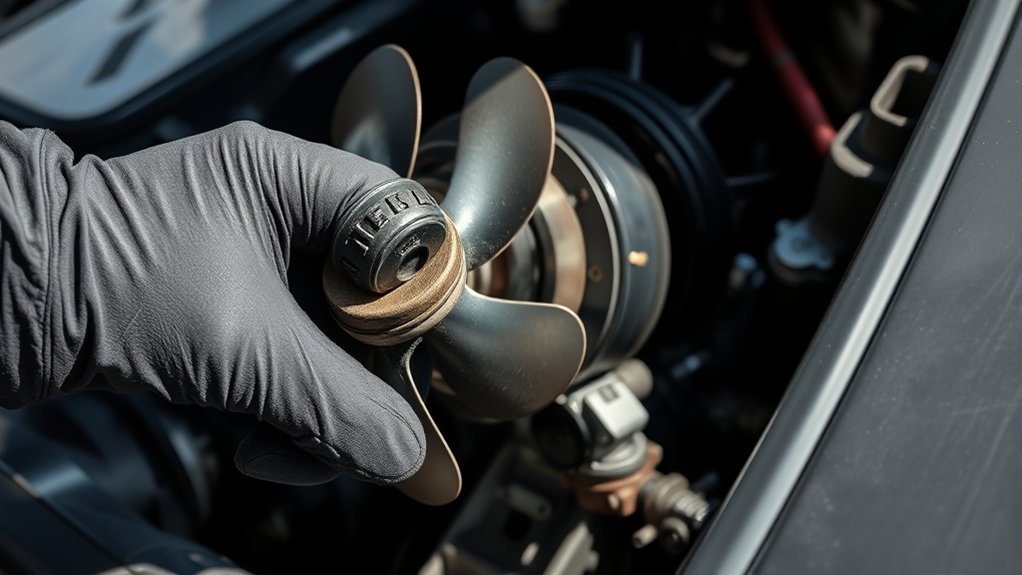
How can you tell if your fan clutch is failing before it causes serious engine trouble? Watch for signs like your engine overheating, especially in slow traffic or idle. If your cooling fan keeps spinning at full speed regardless of temperature, the clutch might be stuck engaged.
You might also notice unusual noises—a roaring or grinding sound—coming from the fan area. Another sign is reduced air conditioning performance since the fan’s improper operation can affect cooling efficiency. Additionally, if your vehicle’s engine temperature fluctuates erratically, the fan clutch could be slipping.
Catching these symptoms early helps you avoid costly repairs. Keep a close eye on these warning signs to know when it’s time to test or replace your fan clutch.
Tools You Need to Test a Fan Clutch
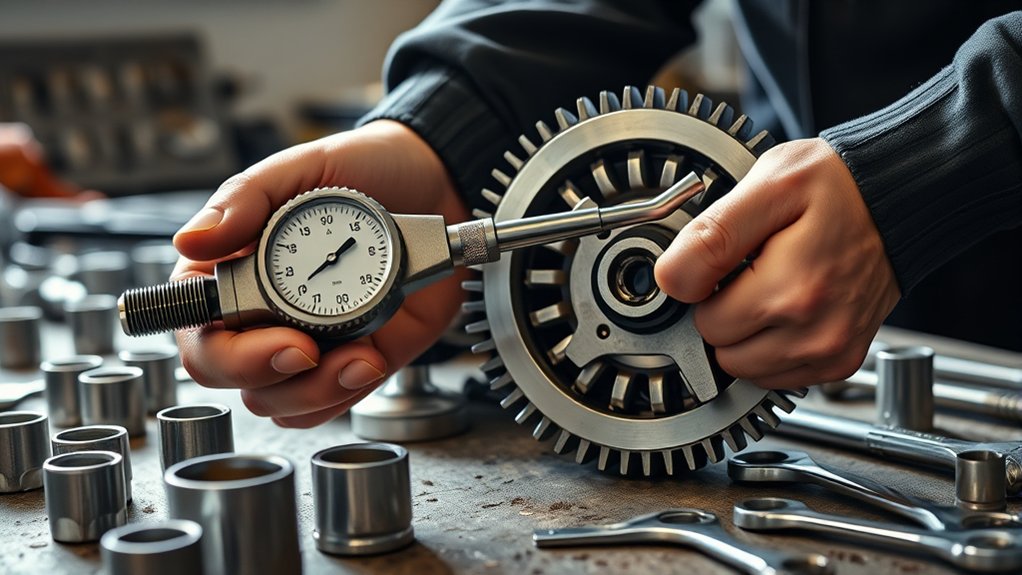
Before you begin testing your fan clutch, gather a few essential tools to make the process smoother and more accurate. You’ll need a wrench set to remove any bolts securing the fan clutch assembly. A socket set with extensions will also help you reach tight spots easily.
Keep a dial or digital thermometer handy to check engine temperature if needed. A mechanic’s stethoscope can assist in detecting unusual noises during operation. Don’t forget safety gloves to protect your hands from sharp edges and hot surfaces.
Finally, a flashlight is useful for inspecting hard-to-see areas. Having these tools ready guarantees you can efficiently and safely assess the fan clutch’s condition without unnecessary delays or complications.
Visual and Manual Checks: Inspecting the Fan Clutch
Since the fan clutch plays a crucial role in regulating engine temperature, you’ll want to start by visually inspecting it for obvious signs of wear or damage. Check for oil leaks around the clutch, as this can indicate seal failure. Look for any cracks, dents, or excessive rust on the fan blades and clutch housing.
Make sure the fan blades aren’t bent or loose, which can cause imbalance. Next, manually spin the fan clutch by hand with the engine off. It should offer some resistance but still turn smoothly.
If it spins freely without resistance or feels seized and hard to turn, the clutch likely needs replacement. This simple visual and manual check helps you spot problems early before they affect engine cooling performance.
Testing the Fan Clutch When the Engine Is Cold
When the engine is cold, start with a visual inspection to spot any obvious damage or leaks on the fan clutch. Then, try spinning the fan by hand to see if it moves smoothly without too much resistance.
You want to check that the fan clutch isn’t stuck or too loose before the engine heats up.
Visual Inspection Basics
Although the engine is cold, you can still perform a thorough visual inspection of the fan clutch to identify obvious signs of wear or damage. Start by checking for oil leaks around the clutch, which could indicate a seal failure. Inspect the fan blades for cracks, chips, or warping that might affect performance.
Make sure the fan clutch mounting bolts are tight and free of rust or corrosion. Look at the fan clutch body for dents or unusual wear patterns. Also, examine the pulley and surrounding belts for proper alignment and condition.
Catching these issues early can prevent further damage. Remember, a careful visual check sets the foundation before moving on to more hands-on tests when the engine warms up.
Spin Test Procedure
Before you start the engine, you can perform a simple spin test to check the fan clutch’s condition. Make sure the engine is completely cold to avoid injury. Grasp the fan blades firmly and try to spin them by hand.
A healthy fan clutch will offer some resistance and slow your spin, as its viscous fluid limits free movement. If the blades spin freely with little resistance or continue spinning excessively after you let go, the clutch may be worn or failing. Conversely, if the blades feel stuck or extremely hard to turn, the clutch might be seized.
This quick test helps you identify obvious issues before moving on to more detailed diagnostics. Always take safety precautions to avoid injury while handling the fan.
Check for Resistance
After performing the spin test, you’ll want to check the fan clutch for resistance with the engine cold. This helps ensure the clutch isn’t stuck or too loose before heating up. Here’s how to do it:
- Make sure the engine is completely off and cool.
- Grasp the fan blades firmly.
- Try to turn the fan by hand; it should resist turning smoothly.
- If it spins freely without resistance, the clutch may be failing.
- If it feels stiff or locked, that’s also a sign of trouble.
A healthy fan clutch offers moderate resistance when cold. Checking this helps detect issues early, preventing overheating and engine damage.
Always be cautious when working near the fan, even if the engine is off.
Testing the Fan Clutch When the Engine Is Hot
How can you accurately test a fan clutch when the engine is hot? Start by letting the vehicle idle until it reaches normal operating temperature. Once hot, carefully check the fan’s rotation resistance by spinning it by hand.
You should feel some resistance, but the fan shouldn’t be locked or spin freely. Next, observe the fan’s speed as the engine revs slightly— it should increase smoothly without lag. If the fan doesn’t speed up or feels loose, the clutch may be failing.
Always use caution as the fan and engine components will be hot. Don’t touch the blades directly; instead, use a cloth or glove to avoid burns. This hands-on check gives you a good idea of how the fan clutch behaves under real operating conditions.
Understanding Your Test Results and Next Steps
Now that you’ve tested the fan clutch, it’s time to interpret your results carefully. If the clutch shows signs of slipping or failing to engage, you’ll need to evaluate repair or replacement.
Understanding these outcomes helps you decide the best next steps to keep your engine running smoothly.
Interpreting Test Outcomes
Once you complete your fan clutch test, you’ll need to carefully analyze the results to determine if the clutch is functioning properly or requires replacement. Pay close attention to how the clutch behaves during the test—this is key to accurate interpretation. Here’s what to look for:
- Excessive resistance when spinning the clutch by hand may indicate it’s failing.
- Too little resistance suggests the clutch isn’t engaging enough.
- Noise or roughness during operation can hint at internal wear.
- Temperature differences between the clutch and engine can signal malfunction.
- Inconsistent fan speed at varying engine RPMs often points to clutch issues.
Recognizing these signs helps you decide whether the fan clutch is still reliable or if it’s time to contemplate replacement.
Recommended Repair Actions
Although interpreting your fan clutch test results can seem straightforward, deciding on the right repair action requires careful consideration. If your clutch shows signs of slipping or excessive play, replacing it is usually the best choice to prevent engine overheating. For minor stiffness or slight resistance, lubricating the clutch or checking for debris might resolve the issue.
Avoid delaying repairs, as a failing fan clutch can cause engine damage or reduced cooling efficiency. If you’re unsure about the test outcome, consult a professional mechanic for a thorough diagnosis. Remember, proper maintenance and timely replacement will keep your cooling system running smoothly and protect your engine from potential damage.
Always prioritize safety and reliability in your repair decisions.
Frequently Asked Questions
How Often Should I Replace a Fan Clutch?
You should replace your fan clutch every 50,000 to 100,000 miles or if you notice overheating, noisy operation, or poor cooling.
Regularly check it during maintenance to catch issues early and keep your engine running smoothly.
Can a Bad Fan Clutch Cause Engine Overheating?
Yes, a bad fan clutch can cause your engine to overheat because it won’t engage properly to cool the radiator. You’ll notice higher temperatures, especially in stop-and-go traffic or hot weather conditions.
The fan clutch is responsible for regulating the fan speed based on the engine’s temperature. If it fails, the fan may not spin fast enough to provide adequate cooling. This leads to increased engine heat and potential damage.
Are Fan Clutches Universal or Vehicle-Specific?
Fan clutches aren’t universal; they’re vehicle-specific. You’ll need to match the clutch to your engine’s size, type, and cooling requirements. Using the wrong one can cause overheating or poor performance, so always check compatibility first.
What Is the Average Cost to Replace a Fan Clutch?
You’ll usually pay between $200 and $400 to replace a fan clutch, including parts and labor. Costs vary by vehicle, but knowing this average helps you budget smartly before heading to the mechanic.
Can I Drive Safely With a Failing Fan Clutch?
You shouldn’t drive safely with a failing fan clutch because it can cause overheating and engine damage. Get it checked promptly to avoid costly repairs, and don’t ignore warning signs like high temperature or unusual noises.
Conclusion
Testing your fan clutch might feel like deciphering a riddle wrapped in a mystery, but with these seven simple steps, you’re closer to mastering the engine’s heartbeat. Just as Sherlock Holmes trusts his keen observation, your careful inspection and tests can reveal the truth behind your fan clutch’s performance.
Stay vigilant, trust your tools, and remember—solving this puzzle keeps your engine running smoothly, avoiding bigger problems down the road. Testing a fan clutch correctly ensures reliable cooling system function and prevents costly engine damage.
By following these steps, you maintain optimal vehicle performance and extend the lifespan of your fan clutch. Keep these tips in mind for effective fan clutch troubleshooting and repair.

