

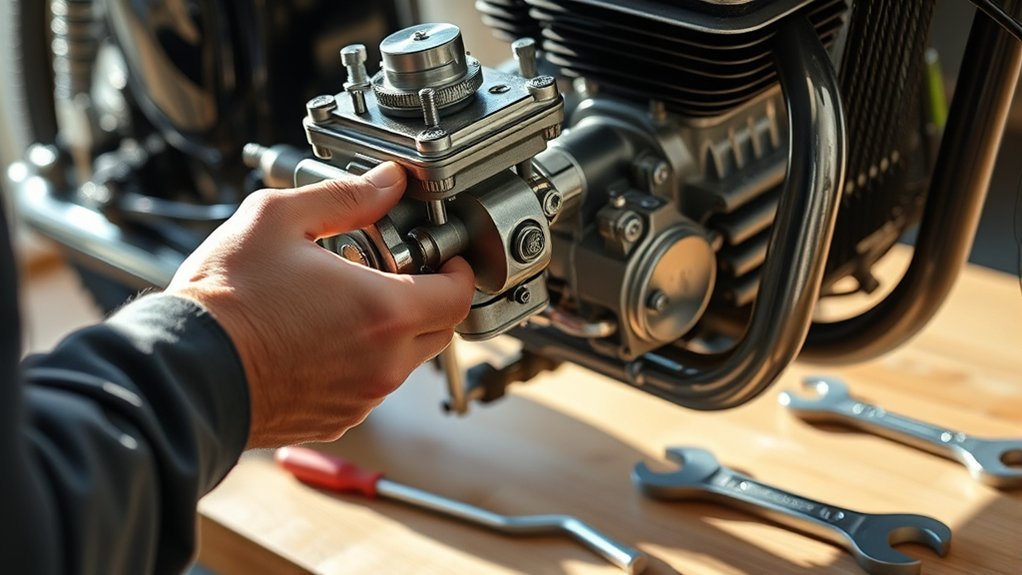
To tune your carburetor in 10 easy steps, start by warming up the engine to ensure accurate adjustments.
Gather necessary tools like screwdrivers and a tachometer to help with precise tuning. Understanding how to tune a carburetor is essential for improving engine performance and fuel efficiency.
Locate the idle mixture, speed, and main mixture screws on your carburetor. Adjust the idle speed to achieve a smooth RPM that keeps the engine running steadily.
Next, fine-tune the air-fuel mixture for a steady idle without stalling or hesitation.
Check the throttle linkage and choke settings to ensure they operate correctly.
After making all adjustments, test the vehicle’s performance on the road. Troubleshoot any issues such as rough idling or backfire to finalize the tuning process.
Keep practicing these steps to master expert tuning tips and maintain your carburetor for optimal engine function.
Key Takeaways
- Warm the engine to operating temperature and disconnect vacuum lines before starting adjustments.
- Locate and identify idle mixture, idle speed, and main mixture screws on the carburetor.
- Adjust idle mixture screws to achieve the highest steady RPM, then set idle speed to the recommended level.
- Fine-tune throttle linkage and choke settings for smooth acceleration and proper cold starts.
- Perform road tests to confirm smooth idle, steady acceleration, and adjust screws to fix hesitation or rough running.
When to Tune Your Carburetor: Signs to Watch For

How do you know when your carburetor needs tuning? Watch for rough idling, which often signals an air-fuel mixture issue. If your engine stalls frequently or hesitates during acceleration, it’s a clear sign your carburetor isn’t delivering fuel properly.
You might also notice black smoke from the exhaust—this means the engine is running too rich. On the other hand, backfiring or a lean smell points to a fuel shortage. Poor fuel economy is another clue; if you’re filling up more often, your carburetor could be out of sync.
Finally, if your engine struggles to start, especially when cold, it’s time to check the carburetor. Paying attention to these signs helps you maintain peak engine performance.
Essential Tools for Carburetor Tuning
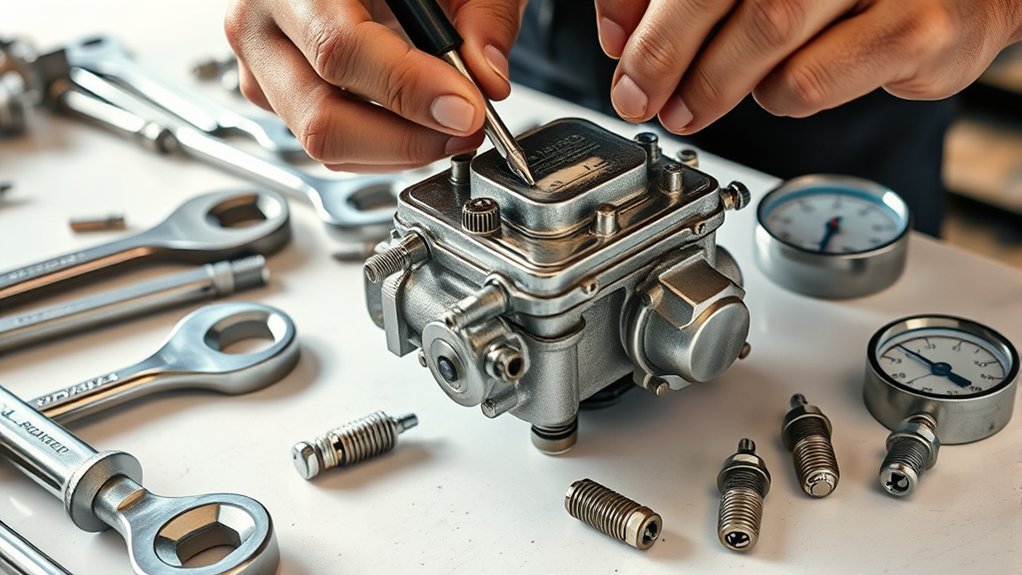
Noticing signs like rough idling or poor fuel economy means it’s time to adjust your carburetor, but you won’t get far without the right tools. Having these essentials ready makes the tuning process smoother and more accurate.
Here’s a quick list of must-have tools:
| Tool | Purpose |
|---|---|
| Screwdrivers | Adjust screws on the carburetor |
| Tachometer | Measure engine RPM |
| Vacuum gauge | Check engine vacuum levels |
With these tools, you can confidently fine-tune your carburetor’s fuel mixture and idle speed. Skipping any might lead to guesswork or poor adjustments, so make sure you’re fully equipped before you start.
Preparing Your Engine for Carburetor Tuning
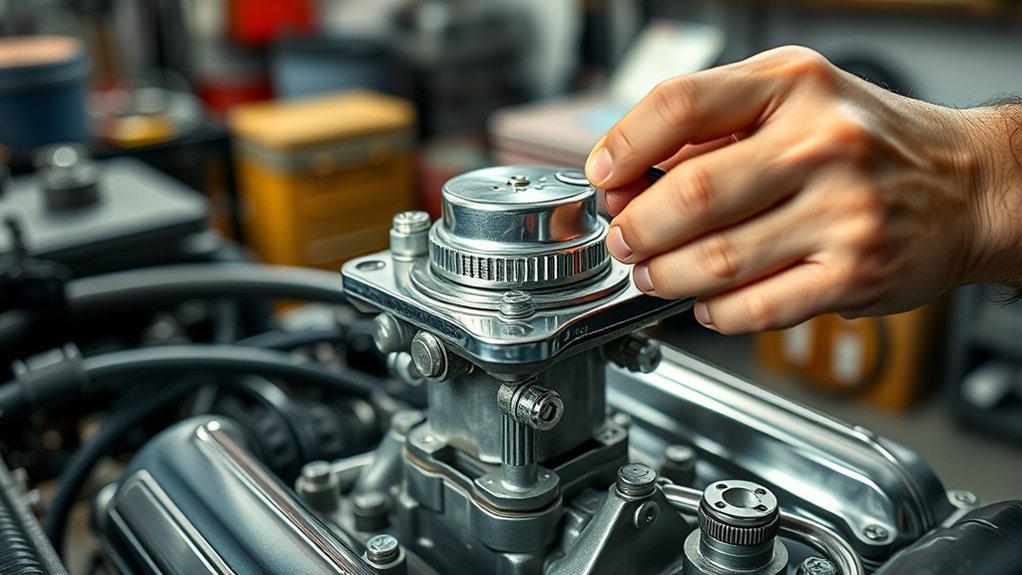
Before you start tuning, make sure your engine is warmed up to its normal operating temperature; this guarantees more accurate adjustments. Run the engine for about 10-15 minutes, allowing oil and coolant to circulate properly. Once warmed, turn off the engine and disconnect any vacuum lines attached to the carburetor to prevent interference.
Check the air filter and clean or replace it if it’s dirty, as a clogged filter can affect fuel mixture. Also, inspect spark plugs and replace them if worn—they impact combustion efficiency. Finally, confirm the throttle linkage moves smoothly without sticking.
Taking these simple steps prepares your engine for precise carburetor tuning, helping you achieve better performance and fuel efficiency.
Locate and Identify Carburetor Adjustment Screws
Once your engine is prepared, you’ll need to locate the carburetor adjustment screws to begin fine-tuning. Typically, you’ll find three main screws: the idle mixture screw, the idle speed screw, and the main mixture screw. Each controls fuel and air flow differently, so identifying them correctly is essential.
Use the table below to help you recognize each screw and its function.
| Screw Name | Location | Function |
|---|---|---|
| Idle Mixture Screw | Side of carburetor body | Adjusts fuel-to-air ratio at idle |
| Idle Speed Screw | Near throttle linkage | Controls engine idle RPM |
| Main Mixture Screw | Bottom or side (varies) | Regulates fuel mixture at mid-throttle |
| Choke Adjustment | Top or side, often knob | Adjusts choke plate position |
| Accelerator Pump Screw | Side, near pump mechanism | Controls fuel burst during acceleration |
How to Set Carburetor Idle Speed Smoothly
Although adjusting the idle speed might seem straightforward, doing it smoothly guarantees your engine runs efficiently without stalling or surging. Start by warming up your engine to normal operating temperature; cold adjustments won’t be accurate. Locate the idle speed screw, usually found near the throttle linkage.
Turn it slowly clockwise to increase RPM or counterclockwise to decrease it. Watch the tachometer as you make small adjustments—aim for the manufacturer’s recommended idle speed. Avoid rapid or large turns, as they can cause unstable idling.
Once set, listen for a steady, smooth engine sound without fluctuations. If the engine hesitates or revs inconsistently, fine-tune the screw gently until the idle stabilizes. This careful approach guarantees a balanced idle speed, improving performance and longevity.
Adjusting the Carburetor Air-Fuel Mixture
How do you know if your carburetor’s air-fuel mixture needs adjusting? If your engine runs rough, stalls, or hesitates during acceleration, the mixture is likely off. To adjust it, locate the mixture screws—usually on the carburetor’s side.
Start the engine and let it warm up. Then, turn the screws slowly, one at a time, to find the spot where the engine idles smoothly and reaches the highest RPM. Turning the screws in enriches the mixture, while turning them out leans it.
Make small adjustments and wait a few seconds for the engine to react. Avoid over-lean settings, which can cause overheating and damage. When you hit the sweet spot, your engine will run efficiently with stable idle and better throttle response.
Fine-Tune Throttle Linkage and Choke Settings
Now it’s time to fine-tune your throttle linkage to guarantee smooth acceleration and proper throttle response. You’ll also want to set the choke mechanism correctly to help your engine start easily in cold conditions.
Finally, test the idle response to confirm everything is balanced and running smoothly.
Adjusting Throttle Linkage
When you fine-tune the throttle linkage, you guarantee the carburetor responds smoothly and accurately to your accelerator input. Start by inspecting the linkage for any wear or binding, verifying all moving parts operate freely. Adjust the linkage so there’s a slight clearance between the throttle lever and the stop screw, preventing unintended throttle opening.
Use the adjustment screws or nuts to set the idle speed precisely, matching your engine’s specifications. Make sure the linkage moves through its full range without sticking or binding, which can cause poor throttle response. After adjustments, test the throttle by slowly pressing the accelerator, checking for smooth, consistent movement.
Properly adjusted throttle linkage ensures better fuel delivery control and overall engine performance.
Setting Choke Mechanism
After fine-tuning the throttle linkage, the next step is to set the choke mechanism to guarantee your engine starts easily in various conditions. The choke restricts air flow during cold starts to enrich the fuel mixture.
Here’s how you can set it properly:
- Locate the choke lever or automatic choke assembly on your carburetor.
- Ensure the choke plate closes completely when cold and opens fully as the engine warms.
- Adjust the choke linkage so it moves smoothly without binding.
- Check that the choke returns to the open position once the engine is running.
- Test the choke operation by starting the engine cold and observing the response.
Proper choke adjustment prevents flooding and stalling, making your carburetor tuning more effective.
Testing Idle Response
Although you’ve adjusted the throttle linkage and set the choke, you’ll want to test the idle response to verify your carburetor runs smoothly at low speeds. Start the engine and let it warm up to normal operating temperature. Slowly move the throttle and observe how the engine responds—any hesitation or stalling means adjustments are needed.
Fine-tune the throttle linkage to confirm it opens and closes smoothly without sticking. If the idle speed is too low or high, adjust the idle screw accordingly. Also, check the choke settings; if the choke is too tight, it can cause a rough idle, while too loose may lead to stalling.
Keep testing and tweaking these adjustments until the engine idles steadily without fluctuations or stalls.
Testing Your Carburetor Adjustments on the Road
Since fine-tuning your carburetor in the garage only gets you so far, you’ll need to take your vehicle out on the road to evaluate how it performs under real driving conditions. This step helps you confirm if your adjustments deliver smooth acceleration, consistent idle, and proper fuel mixture.
When testing on the road, focus on accelerating smoothly without hesitation or bogging down. Observe engine response at different speeds and loads. Listen for any backfiring or unusual noises.
Check for stable idle when coming to a stop. Monitor fuel efficiency on varied terrain.
Troubleshooting Common Carburetor Tuning Issues
Once you’ve tested your carburetor adjustments on the road, you might notice some issues that keep your engine from running smoothly. If your engine hesitates or stalls during acceleration, the fuel mixture might be too lean. Try enriching it slightly by turning the mixture screw counterclockwise.
Conversely, if the engine runs rough or bogs down, the mixture could be too rich—turn the screw clockwise to lean it out. If you experience idle surging or stalling, check the idle speed screw and adjust it to stabilize RPMs. Also, listen for any vacuum leaks that can disrupt tuning; inspect hoses and gaskets for cracks or looseness.
Carburetor Maintenance for Long-Term Performance
To keep your carburetor running smoothly, you’ll need to clean its components regularly and inspect the fuel lines for any damage or leaks. Don’t forget to adjust the idle settings to guarantee consistent performance.
These simple steps help prevent issues and extend your carburetor’s life.
Cleaning Carburetor Components
Although tuning adjusts your carburetor’s performance, cleaning its components guarantees it runs smoothly over time. Dirt, varnish, and debris can clog passages, causing poor fuel flow and engine hesitation.
To clean effectively, start by removing the carburetor from the engine. Then, disassemble it carefully, keeping track of all parts. Use a carburetor cleaner spray to dissolve buildup, focusing on critical areas.
Pay special attention to:
- Jets and fuel passages
- Float bowl and needle valve
- Throttle plate and shaft
- Choke mechanism
- Gaskets and seals
After cleaning, dry all components thoroughly to avoid moisture damage. Reassemble the carburetor and reinstall it securely. Regular cleaning prevents blockages, ensuring consistent fuel delivery and prolonging your engine’s life.
Inspecting Fuel Lines
Because fuel lines deliver gasoline directly to your carburetor, inspecting them regularly is essential for reliable engine performance. Start by checking for cracks, leaks, or soft spots along the lines. Fuel leaks can cause poor performance or even fire hazards, so don’t overlook any damage.
Next, verify the connections at both ends are secure and free of corrosion or buildup. Replace any brittle or damaged fuel lines with high-quality replacements designed for your engine’s fuel type. Also, inspect clamps and fittings to confirm they hold the lines firmly without restricting fuel flow.
Adjusting Idle Settings
Keeping your fuel lines in good shape guarantees a steady flow of gasoline to the carburetor, setting the stage for smooth engine operation.
Now, adjusting idle settings ensures your engine runs steadily when at rest, preventing stalling or rough idling. Here’s how you can fine-tune the idle:
- Warm up the engine to operating temperature.
- Locate the idle mixture screw and turn it slowly to find the highest steady RPM.
- Adjust the idle speed screw to set the desired RPM according to your vehicle’s specifications.
- Listen carefully for smooth engine sound; avoid overly high or low idle.
- Test by revving slightly and letting go to confirm the engine returns smoothly to idle.
This process keeps your carburetor balanced, improving performance and fuel efficiency over time.
Frequently Asked Questions
What Type of Fuel Is Best for Carbureted Engines?
You should use regular unleaded gasoline with an octane rating of 87 for most carbureted engines. Avoid ethanol blends over 10%, as they can cause issues. Always check your engine’s manual for specific fuel recommendations.
Can Carburetor Tuning Improve Fuel Efficiency Significantly?
You can definitely nudge your engine’s appetite toward thriftier habits by tuning the carburetor. While it won’t turn your ride into a fuel-saving miracle, it’ll help you squeeze noticeable mileage improvements with a bit of effort.
How Often Should the Carburetor Be Professionally Rebuilt?
You should have your carburetor professionally rebuilt every 25,000 to 30,000 miles or if you notice performance issues.
Regular maintenance helps keep your engine running smoothly and prevents costly repairs down the road.
Are There Differences in Tuning Carburetors for Two-Stroke Vs Four-Stroke Engines?
Tuning two-stroke and four-stroke carburetors is like adjusting a dance for different music styles. You’ll tweak fuel and air mixes differently because two-strokes need richer fuel for their faster rhythm, while four-strokes favor balance.
What Are the Risks of Tuning a Carburetor Incorrectly?
If you tune a carburetor incorrectly, you risk engine damage, poor performance, increased fuel consumption, and excessive emissions. You could cause overheating or stalling, so always adjust carefully and test thoroughly to avoid these problems.
Conclusion
Now that you’ve mastered tuning your carburetor in just 10 easy steps, your engine will purr like a contented lion! With a little patience and the right adjustments, you’ll boost performance and fuel efficiency effortlessly.
Remember, regular maintenance keeps your carburetor in peak shape, so don’t skip those tune-ups. Follow these steps, and you’ll never have to wrestle with a stubborn engine again—your ride will run smoother than ever before!
By following this carburetor tuning guide, you ensure optimal engine performance and improved fuel economy. Proper carburetor adjustment is key to a reliable and efficient engine, so keep these tuning tips handy for your next maintenance session.

