

You shouldn’t drive with fog lights on all the time because using fog lights improperly is illegal in many places. Fog lights are designed specifically for poor visibility conditions—such as fog, heavy rain, or snow—and help improve safety when used correctly.
However, using fog lights when visibility is clear can cause glare that blinds other drivers, which is why many laws regulate their use.
Many jurisdictions require you to turn off fog lights when visibility improves or when you are following another vehicle closely. Driving with fog lights on unnecessarily can lead to fines and penalties.
Using fog lights responsibly keeps everyone safe on the road.
Keep reading to understand when to use fog lights properly and avoid legal issues. Knowing the correct situations for fog light use ensures safer driving for you and others.
Key Takeaways
- Fog light use is generally legal only during poor visibility conditions like fog, heavy rain, snow, or dust storms. Many jurisdictions require fog lights to be mounted below headlights and restrict use in clear weather. Using fog lights in clear conditions can cause glare, impair visibility, and lead to legal penalties.
- Misuse penalties include fines ranging from $50 to $200, points on driving records, and increased insurance premiums. Always check local laws, as fog light regulations and penalties vary by state and country.
What Are Fog Lights and How Do They Differ From Headlights?
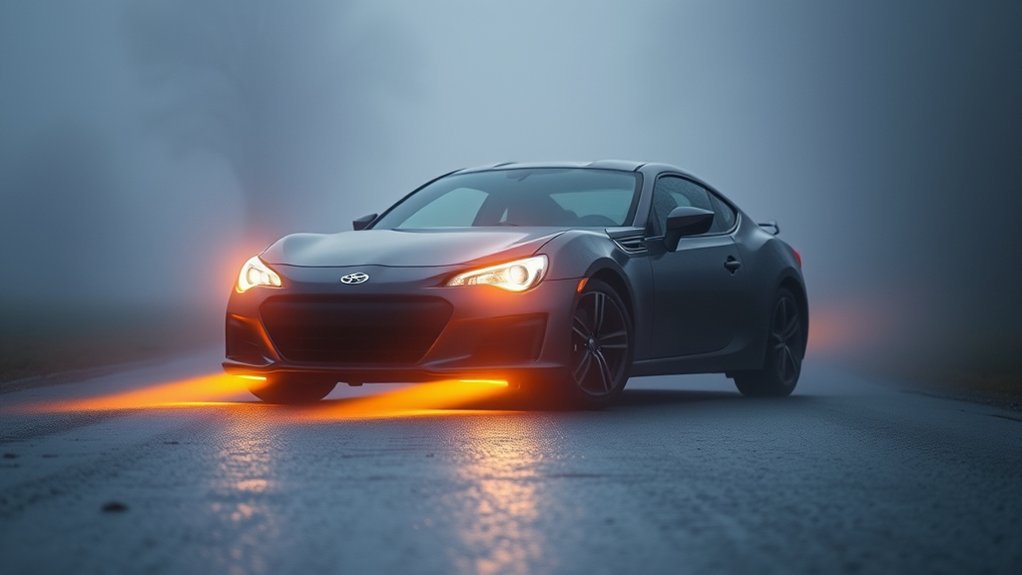
Although fog lights and headlights both help you see better while driving, they serve different purposes. Fog lights sit lower on your vehicle, aimed downward to illuminate the road directly in front of you without reflecting off fog, rain, or snow.
Headlights, on the other hand, are positioned higher and shine farther ahead to light up the road in normal conditions. While headlights provide broad, long-range visibility, fog lights offer a focused, wide beam that helps you see lane markings and edges more clearly in certain situations.
You should know that fog lights are not designed to replace headlights but to complement them. Understanding these differences helps you use each light properly and stay safe on the road.
How Fog Lights Improve Visibility in Bad Weather
When fog, rain, or snow reduces visibility, fog lights cut through the haze by casting a wide, low beam that illuminates the road right in front of you. This targeted lighting helps you see obstacles and lane markings more clearly without reflecting off the moisture in the air, unlike your regular headlights. Using fog lights enhances your ability to react quickly and drive safely in tough weather conditions.
Here’s how they improve visibility:
- Reduce glare by focusing light downward
- Highlight road edges and lane lines
- Penetrate fog and precipitation better than headlights
- Prevent light reflection that blinds you
- Improve depth perception in low-visibility situations
When to Use Fog Lights: Signs and Conditions
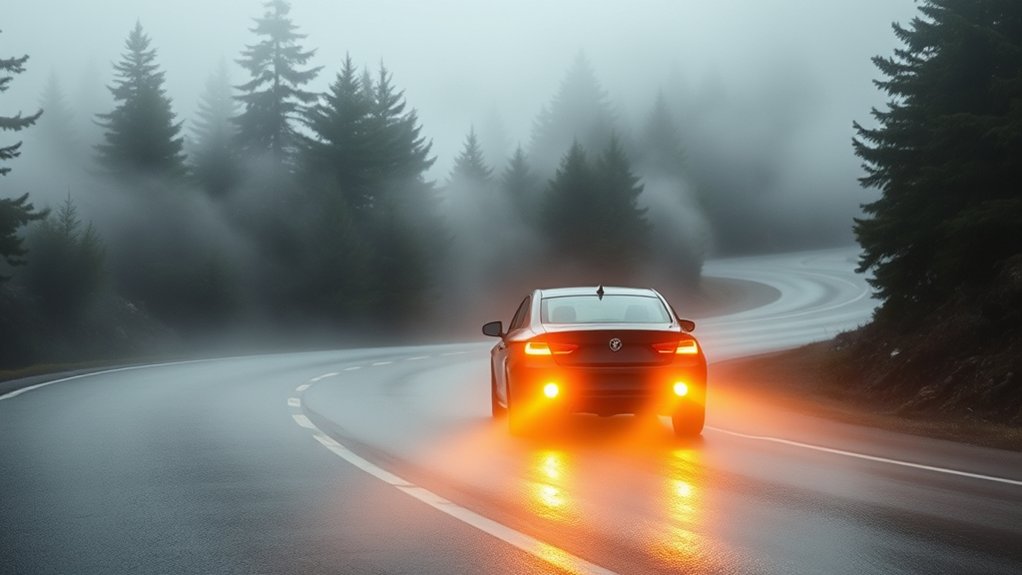
How do you know the right moments to switch on your fog lights? You should use them when visibility drops considerably—usually under 100-200 feet—due to weather conditions. Fog lights are designed to cut through fog, heavy rain, snow, or dust, helping you see the road edges better.
Avoid using them in clear conditions, as they can dazzle other drivers.
| Condition | Visibility Range | When to Use Fog Lights |
|---|---|---|
| Thick Fog | Less than 200 feet | Always |
| Heavy Rain | Less than 200 feet | Recommended |
| Snowfall | Less than 200 feet | Recommended |
| Dust Storm | Less than 200 feet | Recommended |
| Clear Weather | More than 200 feet | Avoid |
Use fog lights only in poor visibility for safe driving.
Is It Legal to Use Fog Lights All the Time?
Knowing the right conditions to use your fog lights helps you drive safely, but you might wonder if it’s legal to keep them on all the time. Generally, fog lights are designed for low visibility conditions, not regular driving. Using them constantly can cause issues such as:
- Distracting other drivers with extra brightness
- Reducing the effectiveness of your vehicle’s standard headlights
- Potentially blinding oncoming traffic
- Increasing wear on your fog light bulbs
- Possibly violating local traffic regulations
While some places don’t explicitly ban using fog lights all the time, it’s best to use them only when needed. Overusing fog lights can compromise safety for you and others on the road. So, stick to using them in fog, heavy rain, or snow to stay both legal and safe.
Fog Light Laws in Different States and Countries
You’ll find that fog light laws vary widely between states and countries, so it’s important to know the rules where you’re driving. Some places have strict regulations on when and how you can use them, while others are more lenient. Misusing fog lights can lead to fines or other penalties, so staying informed is key.
State Regulations Overview
Because fog light laws vary widely across states and countries, it’s important to understand the specific regulations that apply where you drive. In the U.S., each state sets its own rules, which can affect when and how you use fog lights. Some states allow fog lights only during fog, rain, or snow, while others permit them anytime if properly mounted.
Here are key points to keep in mind:
- Many states restrict fog light use to poor visibility conditions.
- Some require fog lights to be mounted below the headlights.
- A few states limit the number or color of fog lights.
Using fog lights incorrectly can result in fines or warnings. Always check your state’s motor vehicle code for details.
Knowing these rules helps you avoid legal issues and drive safely.
International Fog Light Rules
Fog light regulations don’t stop at state lines—they shift considerably when you cross into other countries. You need to know how fog light laws vary internationally to avoid unintentional violations. For instance, some countries restrict fog light use to foggy conditions only, while others allow them in heavy rain or snow.
Additionally, the placement and color of fog lights may differ, so it’s important to check local rules before driving abroad.
| Country | Usage Conditions | Light Color/Position |
|---|---|---|
| USA | Fog, heavy rain, snow | Front: yellow/white, rear: red |
| UK | Fog only | Front and rear: white/yellow |
| Germany | Fog or poor visibility | Front and rear: white/yellow |
| Australia | Fog, rain, dust storms | Front: white/yellow, rear: red |
Penalties for Misuse
Although fog lights can enhance visibility in poor conditions, misusing them often leads to fines or other penalties across various states and countries. You need to know your local laws to avoid trouble. Many places restrict fog light use to fog, heavy rain, or snow.
Using them on clear roads can blind other drivers and result in tickets or warnings.
Common penalties for misuse include:
- Fines ranging from $50 to $200
- Points on your driving record
- Mandatory vehicle inspections
- Possible court appearances
- Temporary suspension of fog light use
Always check your specific state or country regulations before using fog lights. Staying informed helps you drive safely and avoid unnecessary penalties.
Common Penalties for Misusing Fog Lights
If you misuse your fog lights, you could face fines or even points on your driving record. Law enforcement takes improper use seriously, and repeated offenses might lead to bigger legal problems.
Understanding these penalties helps you stay safe and avoid unnecessary trouble.
Fines for Improper Use
How much can you expect to pay if caught misusing fog lights? Fines vary depending on your location, but you can generally expect a monetary penalty that serves as a reminder to use your fog lights responsibly.
Here are some common fines for improper use:
- $50 to $150 for using fog lights when visibility is clear
- Additional fines if fog lights cause glare or distraction to other drivers
- Increased penalties if misused during daytime driving
- Possible court fees added to the base fine
- Higher fines in areas with strict lighting regulations
Points on Driving Record
When you misuse your fog lights, you might not only face fines but also receive points on your driving record. These points can accumulate and lead to increased insurance premiums or even license suspension if they reach a certain threshold. Different states assign varying point values for improper fog light use, typically ranging from one to three points.
The exact impact depends on where you drive and the severity of the violation. Keep in mind that points stay on your record for a set period, usually one to three years, which means the consequences can affect you long after the incident. To avoid these penalties, use your fog lights only as intended—during fog, heavy rain, or snow—rather than as a regular driving light.
Enforcement and Legal Risks
Why do authorities take fog light misuse seriously? Using fog lights incorrectly can blind other drivers, increasing crash risks. When you misuse them, you could face several penalties designed to keep roads safe.
Here are common consequences you might encounter:
- Fines ranging from $50 to $200
- Points added to your driving record
- Increased insurance premiums
- Mandatory traffic school in some areas
- Vehicle inspection or equipment repair orders
Law enforcement actively enforces fog light laws, especially during clear weather when fog lights aren’t needed. By following proper usage rules, you avoid these legal risks and help maintain safer driving conditions for everyone.
How to Use Fog Lights Safely Without Blinding Other Drivers
Wondering how to keep fog lights from dazzling other drivers? First, only turn them on in poor visibility, like fog, heavy rain, or snow. Using fog lights in clear conditions can blind oncoming traffic and create dangerous glare.
Adjust your speed to the reduced visibility so you don’t rely solely on your fog lights. Always switch off your fog lights when visibility improves or when you’re driving behind another vehicle to avoid reflecting light into their mirrors.
Make sure your fog lights are properly aimed and maintained; misaligned lights can easily blind others. By using fog lights thoughtfully and responsibly, you’ll improve your safety without compromising other drivers’ vision on the road.
How to Handle a Ticket for Misusing Fog Lights
Although fog light laws vary by location, receiving a ticket for misusing them can be frustrating. If you find yourself in this situation, here’s how to handle it effectively:
- Review the ticket details carefully to understand the violation.
- Check your local laws to see if the ticket is valid.
- Gather any evidence, like photos or witness statements, that support your case.
- Decide whether to pay the fine or contest the ticket in court.
- Consider consulting a traffic attorney if the penalty is severe or if you’re unsure about the legal process.
Taking these steps promptly can help you resolve the issue efficiently and avoid further penalties.
Stay informed about your local fog light regulations to prevent future tickets.
Tips for Maintaining Your Fog Lights for Best Performance
Handling a ticket for misusing fog lights is one thing, but keeping your fog lights in top shape helps prevent issues before they arise. Start by regularly cleaning the lenses to remove dirt and grime, which can reduce visibility. Check for cracks or moisture inside the housing, as these can damage the bulbs or cause electrical problems.
Replace burnt-out bulbs promptly with the correct type specified by your vehicle’s manufacturer. Inspect the wiring and connectors for corrosion or wear to avoid electrical failures. Adjust the aim of your fog lights to ensure they illuminate the road properly without blinding other drivers.
Finally, test your fog lights frequently, especially before bad weather, to confirm they work effectively when you need them most.
Why Is Using Fog Lights in Clear Weather Problematic?
Using your fog lights in clear weather can actually cause more harm than good. They can create glare that blinds other drivers and confuse them about your intentions.
Plus, relying on fog lights when conditions are clear reduces their effectiveness when you truly need them.
Glare Risks For Drivers
When you turn on fog lights in clear weather, you risk creating excessive glare that can blind other drivers. This glare reduces visibility and increases the chances of accidents, especially at night or oncoming traffic. Fog lights are designed to emit a wide, low beam that cuts through fog, not to shine brightly in clear conditions.
Here’s why using them improperly is risky:
- Glare can temporarily blind drivers, causing delayed reactions
- Bright beams distract oncoming traffic and nearby vehicles
- Unexpected light sources confuse drivers about road conditions
- Glare reduces your own visibility by causing reflections
- Other drivers may misjudge distances due to the intense light
Using fog lights wisely helps keep you and others safe on the road.
Misleading Other Motorists
Although fog lights are meant to improve visibility in poor weather, turning them on in clear conditions can confuse other motorists. When you use fog lights unnecessarily, drivers behind or ahead might misinterpret your intentions or the road conditions. This confusion can lead to unsafe driving behaviors, such as sudden braking or erratic lane changes.
Here’s why using fog lights in clear weather causes issues:
| Effect on Other Motorists | Explanation |
|---|---|
| Misjudged Distance | Bright fog lights can distort perception |
| Unclear Road Conditions | Drivers may think there’s fog or danger |
| Distracted Drivers | Unusual lights draw unnecessary attention |
To keep roads safe, it’s best to reserve fog lights for actual foggy or low-visibility situations.
Reduced Visibility Effectiveness
Even if fog lights seem bright and helpful, they actually reduce your visibility in clear weather. Fog lights are designed to cut through mist and fog by projecting a wide, low beam. When used without fog, their extra brightness and low angle can create glare, washing out your view instead of improving it.
Here’s why using fog lights in clear conditions is problematic:
- Glare reflects off dry surfaces, causing distractions
- Bright beams reduce contrast, making it harder to spot hazards
- They can create confusing light patterns for your eyes
- Over-illumination tires your vision faster
- Other drivers may get blinded or misjudge distances
Stick to regular headlights when visibility’s good to keep your view sharp and safe.
Frequently Asked Questions
Can Fog Lights Be Used as Daytime Running Lights?
No, you shouldn’t use fog lights as daytime running lights. They’re designed for low visibility conditions, not regular daytime driving.
Using them improperly can dazzle other drivers and may even be illegal in some areas.
Do Fog Lights Consume More Battery Power Than Regular Headlights?
Fog lights generally consume less power than regular headlights because they use smaller bulbs. So, you won’t drain your battery faster by using fog lights, but they’re designed for specific conditions, not as a primary light source.
Are LED Fog Lights Better Than Halogen Ones?
Yes, LED fog lights are better since they last longer, use less energy, and produce brighter, clearer light.
You’ll notice improved visibility and lower maintenance compared to halogen fog lights, making them a smart upgrade choice.
Can Fog Lights Improve Visibility on Dusty Roads?
Yes, fog lights can improve visibility on dusty roads by cutting through dust particles close to the ground.
Just make sure to use them properly, so they don’t blind other drivers or reduce your overall visibility.
How Do Fog Lights Affect Fuel Efficiency?
Fog lights use a bit more energy, but they barely affect your fuel efficiency. You’ll notice no significant change in mileage since their power draw is minimal compared to the engine’s overall consumption.
Conclusion
Using fog lights when it’s clear outside is like shining a spotlight in your neighbor’s eyes—totally unnecessary and annoying. You should only turn them on in fog, heavy rain, or snow to boost your visibility safely.
Remember, laws vary, so check your local rules before using fog lights all the time. Stick to proper use, and you’ll avoid tickets, keep other drivers happy, and make sure your fog lights work their best when you really need them.
In conclusion, driving with fog lights improperly can be illegal and may result in fines. Always use fog lights responsibly to enhance safety and comply with traffic regulations. Proper use of fog lights ensures you maintain clear visibility without causing hazards for others.

