

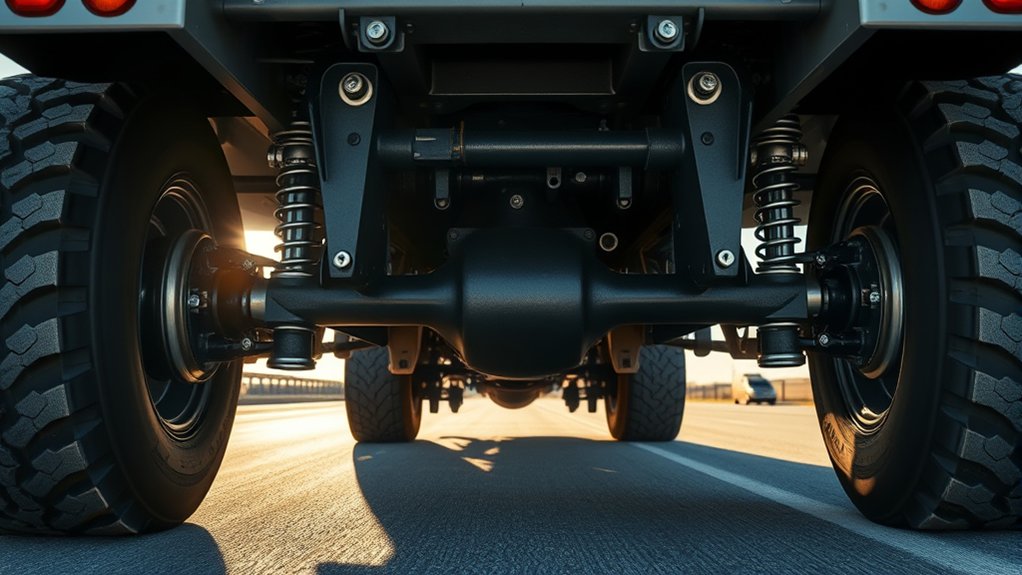
When you hear “per axle” in vehicle weight limits, it refers to the maximum weight allowed on each axle of your vehicle, not just the total weight. Understanding per axle weight limits is crucial for safe loading and maintaining vehicle balance.
This ensures your load is evenly distributed, protecting both your truck and the roads from damage.
You can find axle limits on labels inside your vehicle and by counting your axles. Staying within these limits keeps you safe, legal, and helps you avoid costly fines.
Knowing what per axle means helps you manage loads more effectively and reduces the risk of accidents or road damage.
Key Takeaways
- “Per axle” refers to the maximum legal weight allowed on each individual axle of a vehicle to ensure balanced load distribution. Axle weight limits prevent road and bridge damage caused by excessive concentrated loads on specific axles. Different axle types (single, tandem, tridem) have distinct weight limits based on their design and load capacity.
- Proper per axle weight measurement is essential for vehicle safety, handling, tire longevity, and legal compliance. Vehicle operators use scales and sensors to monitor axle weights and avoid fines, mechanical damage, and infrastructure harm.
What Does “Per Axle” Mean in Vehicle Weight?
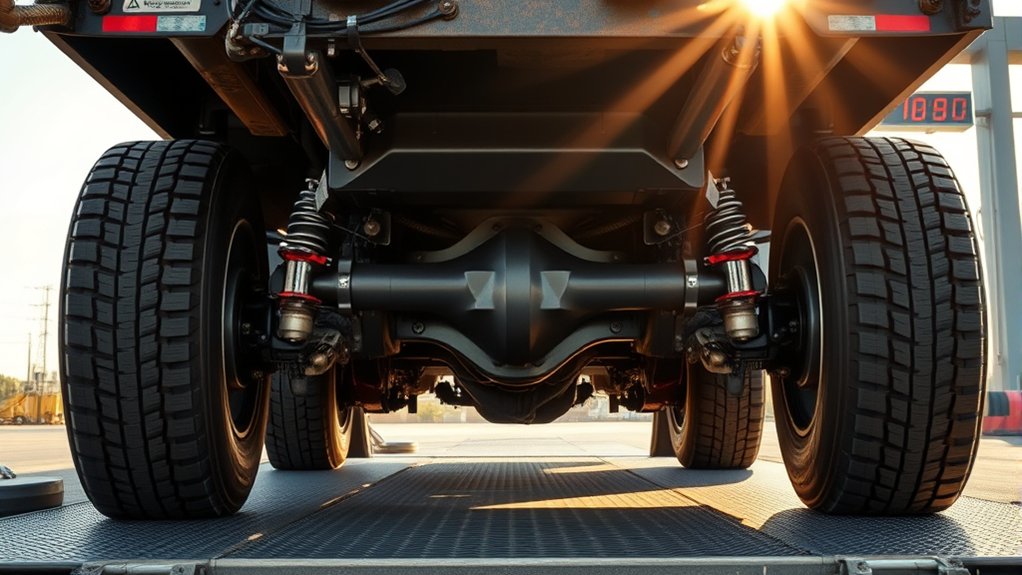
What does “per axle” really mean when it comes to vehicle weight? It refers to the maximum weight allowed on each set of wheels connected by an axle. Instead of looking at the vehicle’s total weight, you focus on how much weight each axle carries.
This helps prevent damage to roads and bridges by ensuring weight is spread properly. When you load a vehicle, you must distribute weight so no single axle bears too much. Axle weight limits vary depending on the number and type of axles your vehicle has.
Why Vehicle Weight Is Measured by Axle Load
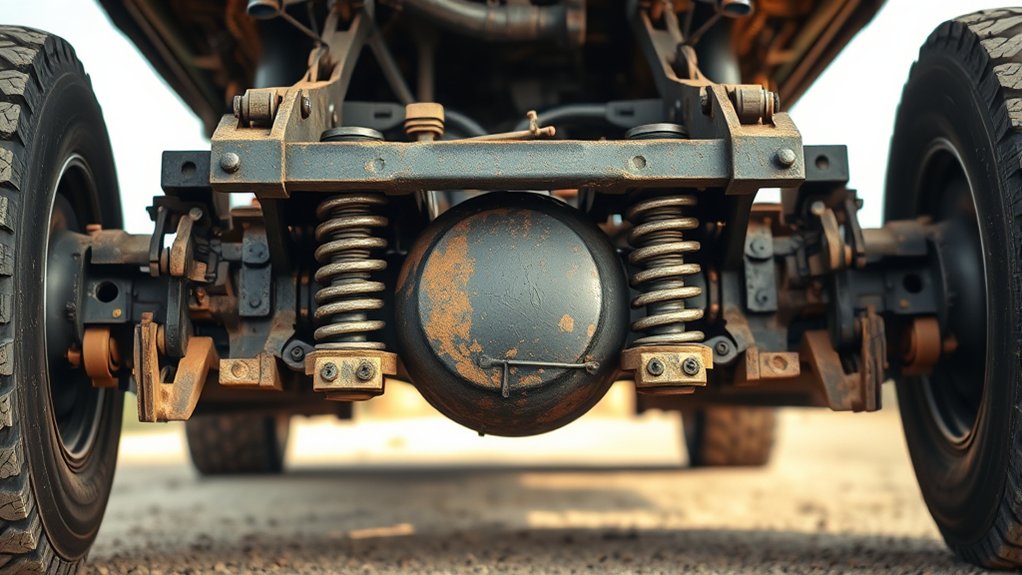
Understanding weight limits on each axle is only part of the picture—knowing why vehicle weight is measured this way helps you see the bigger impact. Axle load directly affects road safety, infrastructure, and your vehicle’s performance. When weight is distributed unevenly, it can lead to accidents or damage.
Here’s why axle load matters:
- Protects roads and bridges from excessive wear and costly repairs by limiting stress on specific points.
- Ensures your vehicle handles properly, maintaining control and reducing tire wear.
- Complies with legal regulations designed to prevent fines and keep traffic flowing smoothly.
How to Identify Your Vehicle’s Axles for Weight Limits
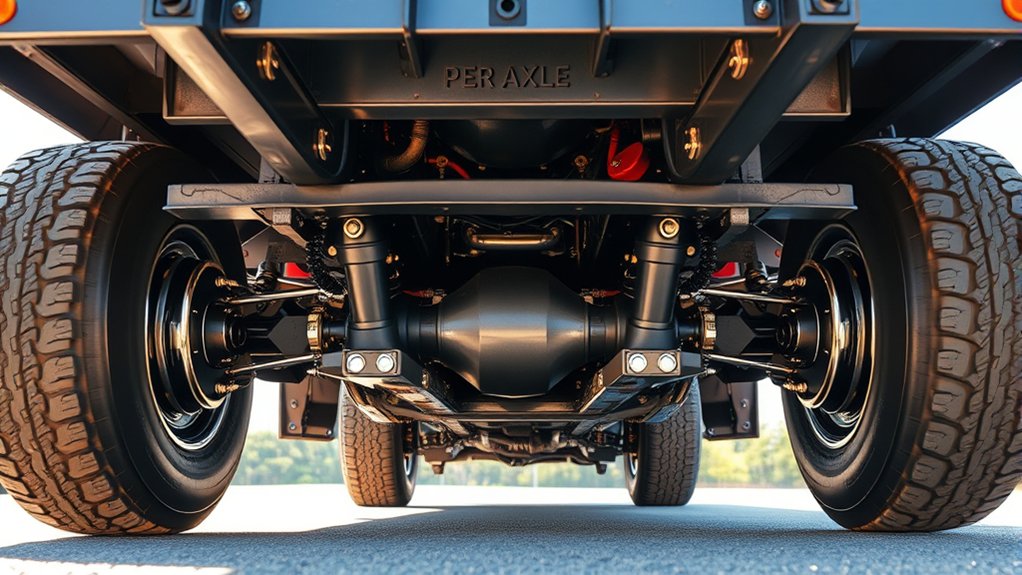
To understand your vehicle’s weight limits, start by counting the number of axles it has. Next, identify the types of axles, such as single or tandem, since they affect load distribution.
Finally, look for weight limit labels on the vehicle to confirm specific restrictions.
Counting Axle Numbers
Since axle counts determine how much weight your vehicle can carry, you’ll need to identify each axle accurately. Start by looking under your vehicle from the side to spot the wheels. Each set of wheels connected by a common beam or suspension is one axle.
Here’s how you can count them:
- Front Axle: Usually the first set of wheels, often steering wheels.
- Drive Axles: Located in the middle or rear, these power the vehicle.
- Tandem Axles: Two axles close together at the rear, counted separately.
Counting axles correctly guarantees you comply with weight limits, avoiding fines and damage. Always double-check your vehicle’s manual if you’re unsure, but visually confirming axle numbers is a quick, effective method.
Identifying Axle Types
Although counting axles is important, knowing the type of each axle is just as essential for meeting weight limits. You’ll typically encounter single, tandem, or tridem axles. A single axle has two wheels on either side, while tandem axles consist of two axles close together, and tridem axles have three.
Identifying these helps because weight limits often vary by axle type. Look under your vehicle to see how many axles are grouped and spaced. Also, check if the axles are steerable or drive axles, as that affects weight distribution.
Locating Weight Limit Labels
Knowing your vehicle’s axle types gives you a solid foundation for understanding weight limits, but the next step is finding the weight limit labels on your vehicle. These labels provide essential info about the maximum weight each axle can safely carry. To locate them, follow these steps:
- Check the driver’s side door jamb—manufacturers often place weight limit stickers here.
- Look under the hood or near the engine bay; some vehicles have labels in these areas.
- Inspect the frame or suspension components near each axle, as some trucks display limits directly on or near the axle assembly.
How to Calculate Your Vehicle’s Weight Per Axle
To calculate your vehicle’s weight per axle, start by identifying the different types of axles it has. Next, measure how the total weight distributes across each axle using a reliable scale. This helps guarantee you stay within legal weight limits and avoid potential fines.
Identify Axle Types
How can you accurately determine your vehicle’s weight per axle? First, you need to identify the types of axles your vehicle has. Different axles support different amounts of weight, so knowing what you’re working with is essential.
Here are three common axle types to look for:
- Single Axle – One set of wheels on one axle, typically found on smaller vehicles or trailers.
- Tandem Axle – Two axles close together, often on larger trucks or heavy trailers, sharing the load.
- Tridem Axle – Three axles in a row, used for extremely heavy loads.
Once you identify these, you can better calculate the weight each axle carries and verify you stay within legal limits.
Measure Weight Distribution
After identifying the types of axles on your vehicle, the next step is to measure how the weight is distributed across them. You can do this by weighing each axle separately using a commercial scale or portable axle scales. Record the weight for each axle, then compare these numbers to your vehicle’s maximum axle ratings to verify you’re within limits.
This helps prevent overload and uneven wear.
Here’s a simple way to organize your measurements:
| Axle Number | Measured Weight (lbs) | Max Allowed Weight (lbs) |
|---|---|---|
| 1 | ||
| 2 | ||
| 3 | ||
| 4 | ||
| 5 |
This table helps you track and assess weight distribution clearly.
Common Per Axle Weight Limits by Vehicle Type
What limits the weight each axle of your vehicle can carry? Different vehicle types have specific per axle weight limits to guarantee safety and road integrity. Knowing these limits helps you avoid fines and damage.
Here are common per axle weight limits by vehicle type:
- Passenger Cars: Typically, each axle can support up to 2,000 to 3,000 pounds. This keeps your vehicle stable and prevents road wear.
- Light Trucks and SUVs: These usually have per axle limits ranging from 3,500 to 5,000 pounds, allowing for heavier cargo and passengers.
- Heavy Trucks and Commercial Vehicles: Their axles can carry between 10,000 to 20,000 pounds, depending on the number of axles and vehicle configuration.
Always check your vehicle’s specifications and local regulations to stay compliant.
How Per Axle Weight Distribution Affects Vehicle Safety
You need to keep your vehicle’s weight balanced across each axle to maintain control and stability. Uneven weight distribution can affect how well your brakes perform, increasing stopping distances.
Understanding this helps you drive safer and avoid potential accidents.
Load Balance Importance
Why does load balance matter when it comes to per axle weight limits? Because uneven weight distribution can compromise your vehicle’s control and safety. When you don’t balance the load properly, you risk overloading one axle, which leads to tire wear, suspension stress, and handling problems.
Here’s why you should pay attention:
- Stability: Proper load balance keeps your vehicle stable, especially during turns or sudden maneuvers.
- Tire Longevity: Distributing weight evenly prevents excessive tire wear and blowouts.
- Legal Compliance: Staying within per axle limits helps you avoid fines and ensures safer road conditions.
Impact On Braking
How does uneven per axle weight distribution impact your vehicle’s braking performance? When one axle carries considerably more weight than another, it affects how your vehicle stops. Heavier axles require more braking force, which can lead to uneven brake wear and reduced efficiency.
This imbalance increases the risk of skidding or loss of control, especially in emergency stops or slippery conditions. You might notice your vehicle pulling to one side or longer stopping distances. Properly distributing weight per axle ensures that braking force is applied evenly, maintaining stability and control.
What Happens If You Exceed Per Axle Weight Limits
Exceeding per axle weight limits can lead to serious consequences for both your vehicle and your safety. When you overload an axle, you risk damaging critical components, reducing your vehicle’s handling and braking efficiency. Authorities also enforce these limits strictly, so you could face hefty fines or penalties.
Here are three key outcomes if you exceed axle weight limits:
- Mechanical Failure: Overloading stresses suspension, tires, and axles, increasing the chance of breakdowns or accidents.
- Legal Penalties: Law enforcement may issue fines or citations, and repeated violations can lead to more severe consequences.
- Reduced Vehicle Control: Excess weight affects steering and braking, making it harder to respond to road hazards safely.
Staying within limits protects you, your vehicle, and others on the road.
Why Per Axle Limits Matter for Road Safety and Infrastructure
Because per axle weight limits directly impact both vehicle safety and the condition of our roads, understanding and following them is essential. When you stick to these limits, you help maintain vehicle stability and control, reducing the risk of accidents caused by overloaded axles. Overloading a single axle can cause tire blowouts or brake failure, putting you and others in danger.
Additionally, excessive weight on one axle damages pavement and bridges faster, leading to costly repairs and unsafe driving conditions. By respecting per axle limits, you contribute to safer roads and longer-lasting infrastructure. Ultimately, these limits protect you, other drivers, and the roads you rely on every day, making compliance not just a legal requirement but a vital safety practice.
How Gross Vehicle Weight Differs From per Axle Limits
While gross vehicle weight (GVW) measures the total weight of your vehicle including cargo and passengers, per axle limits focus on the weight carried by each individual axle. Understanding the difference helps you avoid fines and protect roads. Here’s what you need to know:
- GVW is the sum of all weight on the vehicle, but per axle limits control how much weight each axle can safely support without damaging infrastructure.
- You can have a legal GVW but still overload an axle if weight isn’t distributed evenly.
- Per axle limits vary by axle type and spacing, so it’s not just total weight but how you load your vehicle that matters.
Knowing this helps you manage your load safely and legally.
Tips for Staying Within Per Axle Weight Regulations
If you want to avoid fines and damage to your vehicle, you need to carefully monitor how much weight each axle carries. Start by evenly distributing your load to prevent overloading a single axle. Pay attention to your cargo placement, placing heavier items closer to the center of the vehicle.
Regularly check your vehicle’s weight after loading, especially if you frequently change cargo. Adjust your load if you notice any axle nearing its weight limit. Also, stay informed about local per axle weight regulations, as they can vary by jurisdiction.
Finally, avoid sudden stops or sharp turns when heavily loaded, as uneven force can stress overloaded axles. By following these tips, you’ll keep your vehicle safe, comply with laws, and avoid costly penalties.
Best Tools to Check Your Vehicle’s Per Axle Weight Compliance
How can you quickly and accurately guarantee your vehicle stays within per axle weight limits? Using the right tools makes all the difference. Here are the top options to help you monitor and comply with regulations:
Ensure your vehicle meets axle weight limits quickly and accurately with the right monitoring tools.
- Portable Axle Scales – These compact, easy-to-use scales let you weigh each axle individually before hitting the road, ensuring accuracy on the spot.
- Onboard Weight Sensors – Installed directly on your vehicle, these sensors provide real-time weight data, alerting you if any axle exceeds limits during transit.
- Public Weight Stations – Convenient and widely available, these stations offer a quick way to verify your vehicle’s axle weights without investing in equipment.
Frequently Asked Questions
How Do Weather Conditions Impact per Axle Weight Limits?
You’ll find that bad weather like rain or snow makes roads weaker, so authorities lower per axle weight limits to prevent damage.
You should adjust your load and drive carefully to stay safe and legal.
Are per Axle Weight Limits the Same in All States?
No, per axle weight limits vary by state. You’ll need to check each state’s regulations since they set their own limits based on road conditions and infrastructure.
Don’t assume they’re the same everywhere you travel.
Can Modifications to a Vehicle Affect Its per Axle Weight Rating?
Yes, modifications like adding heavy equipment or changing suspension can increase or decrease your vehicle’s per axle weight rating.
Always check with the manufacturer or a professional to guarantee your changes stay within safe limits.
What Penalties Exist for Falsifying per Axle Weight Measurements?
Falsifying per axle weight measurements is like playing with fire—you’ll face hefty fines, license suspensions, and possible criminal charges. Don’t risk it; the consequences can burn your reputation and wallet badly.
Stay honest and safe.
How Often Should Axle Weights Be Checked for Commercial Vehicles?
You should check axle weights regularly, especially before long trips or hauling heavy loads. Frequent checks help prevent overload fines, guarantee safety, and maintain vehicle performance.
Don’t skip weighing after loading or unloading cargo.
Conclusion
Understanding per axle weight limits is essential for keeping your vehicle safe and roads in good shape. Did you know that overloading just one axle can cause road damage up to 20 times greater than evenly distributed weight? By knowing how to identify and calculate your vehicle’s axle loads, you’ll avoid costly fines and help preserve infrastructure.
Stay within these limits, and you’ll protect both your vehicle and the roads you drive on every day. Understanding what does per axle mean in vehicle weight limits is key to maintaining safety and preventing damage. Always monitor your axle weights to ensure compliance and road safety.

