

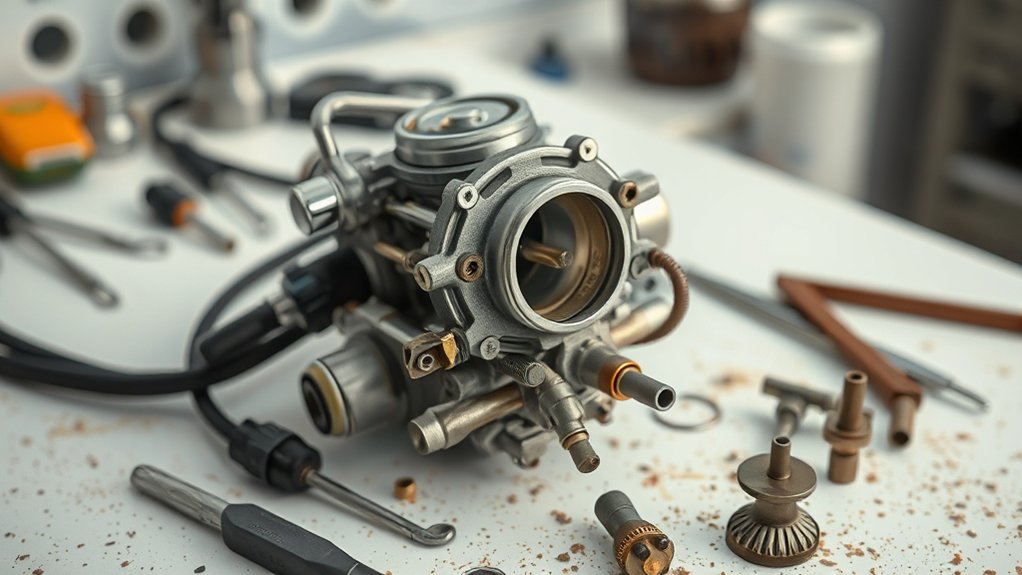
If your motorcycle carburetor is running lean, it’s often due to several common causes. Clogged jets restricting fuel flow, vacuum leaks letting in extra air, or a dirty air filter limiting airflow are typical issues.
Worn fuel delivery parts, such as cracked lines, can also create lean conditions that affect performance.
Using incorrect jet sizes or poor tuning, especially after engine modifications, can make the problem worse. Understanding these causes is essential for effective troubleshooting.
Fixing them guarantees better performance and prevents potential engine damage.
To get your bike running smoothly, you’ll want to learn more about these causes in detail. Addressing each factor ensures your motorcycle carburetor operates at its best.
Key Takeaways
- Clogged carburetor jets restrict fuel flow, causing a lean air-fuel mixture and engine overheating.
- Vacuum leaks introduce extra air, disrupting mixture balance and leading to rough idling and lean running.
- Dirty or clogged air filters limit airflow, surprisingly resulting in a lean mixture and poor engine performance.
- Worn or damaged fuel delivery components, like cracked lines or jets, reduce fuel supply and cause lean conditions.
- Incorrect carburetor jet sizing causes insufficient fuel delivery, leading to power loss, overheating, and lean operation.
How a Lean Carburetor Hurts Motorcycle Performance
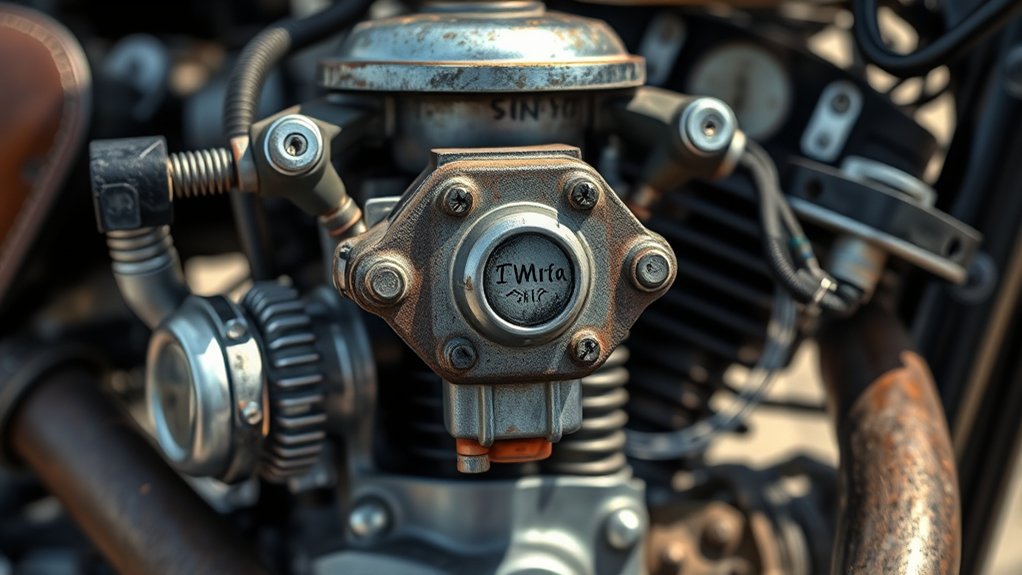
When your motorcycle’s carburetor runs lean, it doesn’t deliver enough fuel to the engine, which can cause noticeable drops in performance. You’ll likely feel a rough idle, hesitation during acceleration, or even stalling. Your engine may overheat because the lean mixture burns hotter, which can lead to serious damage over time.
You might also notice a loss of power since the engine isn’t getting the right balance of air and fuel to operate efficiently. This imbalance stresses your engine, reducing its responsiveness and smoothness. If you ignore these symptoms, you risk damaging components like valves and pistons.
Clogged Carburetor Jets Causing Lean Mixture
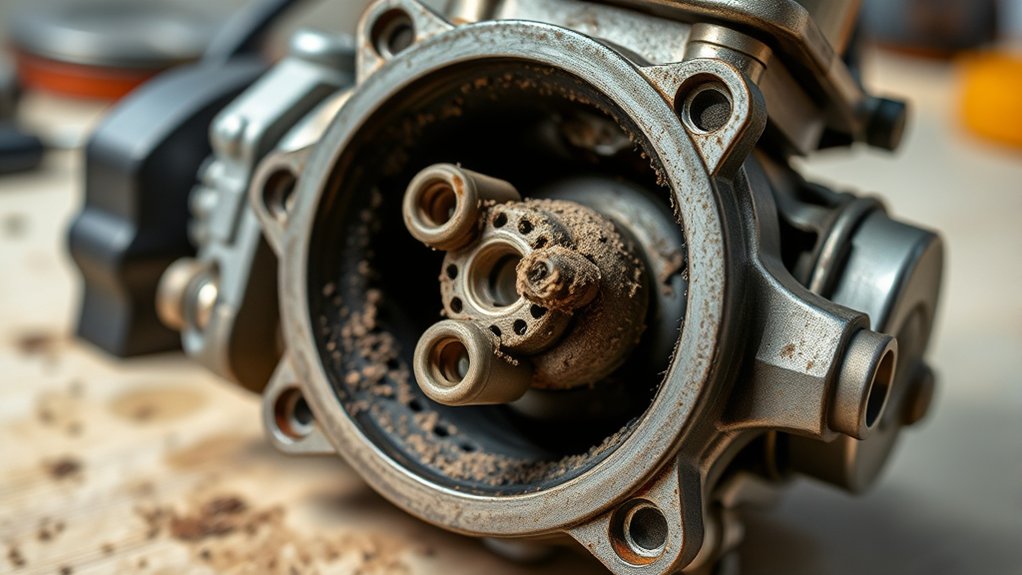
A lean carburetor mixture often traces back to clogged carburetor jets restricting fuel flow. When dirt, debris, or varnish accumulates inside the jets, it narrows the passage where fuel passes through, limiting how much fuel mixes with the incoming air. You’ll notice your motorcycle running hotter, hesitating during acceleration, or stalling frequently if jets are partially blocked.
Cleaning these jets regularly is imperative since even small blockages can upset the air-fuel ratio. You can remove the jets and soak them in a carburetor cleaner, then use compressed air or a fine wire to clear obstructions carefully. Keeping your carburetor jets clean ensures your engine receives the right fuel amount, preventing lean conditions that could damage your motorcycle’s performance and longevity.
Vacuum Leaks Affecting Carburetor Airflow
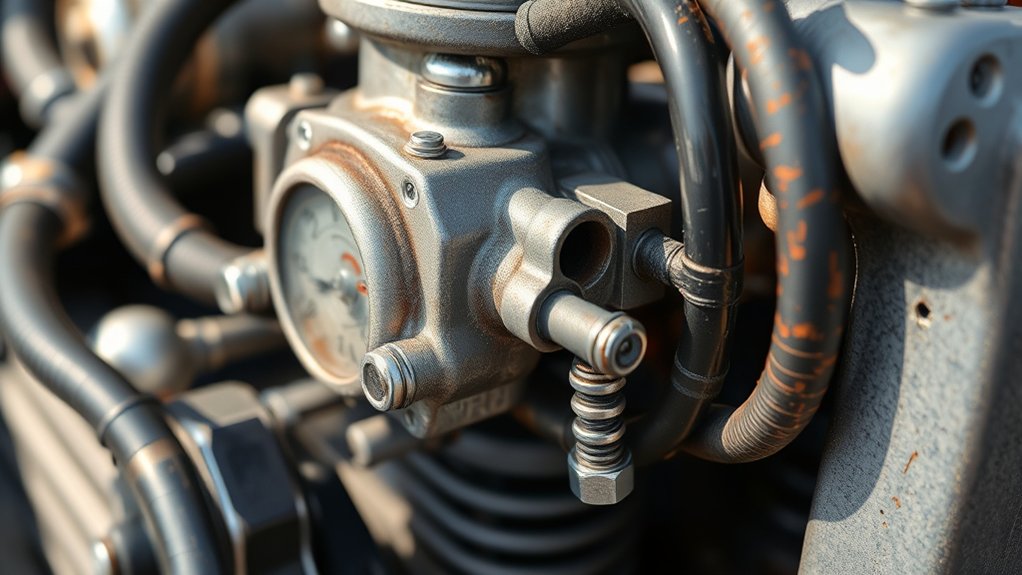
Several small vacuum leaks can disrupt the precise airflow your carburetor needs to maintain the correct fuel mixture. When air sneaks in through cracked hoses, worn gaskets, or loose fittings, it causes your carburetor to draw in extra air, leaning out the mixture. You might notice rough idling, hesitation, or decreased power as a result.
To fix this, inspect all vacuum lines, intake manifolds, and carburetor mounting points for cracks or damage. Use carburetor cleaner to help detect leaks—spraying it around suspect areas will cause engine speed to change if a leak is present. Tighten or replace faulty parts as needed.
Air Filter Problems Causing Lean Carburetor Mixture
If your air filter is clogged, it can restrict airflow and cause a lean carburetor mixture. You might notice symptoms like rough idling or poor acceleration when this happens.
Keeping the filter clean guarantees your engine gets the right air-fuel balance.
Clogged Air Filter Effects
How does a clogged air filter affect your motorcycle’s carburetor? When the air filter gets clogged with dirt and debris, it restricts the airflow entering the carburetor. You might think this would cause a rich mixture, but it actually leads to a lean condition.
That’s because the carburetor’s fuel delivery is calibrated for a specific air volume. With less air passing through, the fuel amount doesn’t adjust quickly enough, resulting in a higher air-to-fuel ratio. This lean mixture can cause your engine to run hotter and perform poorly.
If you notice your bike sputtering or losing power, check the air filter. Keeping it clean guarantees the carburetor receives the right airflow, maintaining proper fuel balance and engine efficiency.
Airflow Restriction Symptoms
When your air filter restricts airflow, your motorcycle’s carburetor struggles to maintain the proper fuel mixture. You’ll notice symptoms like rough idling, hesitation during acceleration, and a drop in overall performance.
Your engine might feel underpowered, especially when you twist the throttle. You could also experience increased engine temperature because the lean mixture burns hotter. If you smell a strong exhaust odor or see black smoke, that’s another sign your carburetor’s running lean due to airflow restriction.
Addressing the air filter problem quickly prevents engine damage and restores smooth operation. Regularly inspect and clean or replace your air filter to keep airflow steady and your carburetor’s mixture balanced. This simple step helps your motorcycle run efficiently and reliably.
Worn Fuel Delivery Parts Leading to Lean Running
If your fuel jets are damaged or clogged, they won’t supply enough fuel, causing a lean mixture. Cracked fuel lines can also restrict flow or allow air in, disrupting the fuel delivery.
You’ll want to inspect these parts closely to keep your carburetor running smoothly.
Damaged Fuel Jets
One common cause of a lean-running carburetor is damaged fuel jets, which wear down over time and restrict fuel flow. When the jets erode or get clogged, they can’t deliver the proper amount of fuel your engine needs, causing a lean mixture. You might notice your motorcycle running hotter than usual or experiencing hesitation during acceleration.
To fix this, you’ll need to inspect the jets closely for signs of wear, corrosion, or blockage. Cleaning them with a carburetor cleaner can sometimes restore proper function, but if the damage is severe, replacing the jets is often necessary.
Keeping your fuel clean and regularly maintaining your carburetor will help prevent jet damage and assure your engine runs smoothly and efficiently.
Cracked Fuel Lines
Although fuel lines may seem like simple components, cracked or worn lines can severely restrict fuel flow and cause your carburetor to run lean. When fuel can’t flow properly, your engine doesn’t get enough fuel, leading to poor performance and potential damage.
You should regularly inspect your fuel lines for cracks, brittleness, or leaks. Replacing old or damaged fuel lines is an easy fix that prevents lean running and keeps your bike running smoothly.
| Symptom | Cause | Solution |
|---|---|---|
| Engine sputtering | Cracked fuel line | Replace fuel line |
| Poor acceleration | Restricted fuel flow | Inspect regularly |
| Overheating | Lean mixture | Use quality lines |
Stay proactive to avoid lean running caused by fuel line issues.
Using the Wrong Carburetor Jets for Your Bike
Choosing the wrong carburetor jets can quickly throw off your bike’s air-fuel mixture, causing it to run lean. Jets control how much fuel mixes with the air entering the engine, so size matters. If the jets are too small, not enough fuel reaches the combustion chamber, leading to lean running conditions.
Here’s what happens if you use the wrong jets:
- Reduced engine power and poor throttle response
- Overheating due to insufficient fuel cooling
- Engine knocking or pinging during acceleration
- Difficulty starting or stalling at idle
- Increased risk of internal engine damage over time
Always match jets to your bike’s specifications. Using the wrong size disrupts performance and could cause costly repairs if ignored.
Carburetor Tuning for Common Engine Modifications
When you upgrade your motorcycle’s engine—whether by installing a high-performance exhaust, increasing displacement, or adding a turbo—your carburetor needs retuning to match the new airflow and fuel demands. You’ll want to adjust jet sizes, needle positions, and air-fuel mixtures to prevent running lean. For example, a freer-flowing exhaust usually calls for larger main jets to supply more fuel.
Increasing displacement often demands richer settings throughout the throttle range, while forced induction like a turbo requires careful fuel enrichment to avoid engine damage. Don’t forget to sync the carburetor and check idle settings after modifications. Proper tuning guarantees your bike runs smoothly, maximizes power, and protects your engine from lean conditions that cause overheating and wear.
Frequently Asked Questions
How Often Should I Clean My Motorcycle Carburetor?
You should clean your motorcycle carburetor every 6 to 12 months or after 3,000 to 5,000 miles, especially if you ride in dusty conditions.
Regular cleaning keeps your bike running smoothly and prevents performance issues.
Can Ethanol Fuel Cause a Lean Running Carburetor?
Yes, ethanol fuel can cause your carburetor to run lean because it absorbs water and can corrode parts, leading to improper fuel flow. You’ll want to monitor and maintain your carb carefully when using ethanol blends.
Ethanol’s tendency to attract moisture can dilute the fuel mixture, affecting combustion. Corrosion from ethanol can damage jets and passages inside the carburetor.
Regular inspection and cleaning help prevent lean running conditions caused by ethanol fuel.
What Tools Do I Need to Adjust Carburetor Settings?
You’ll need a flathead screwdriver, a Phillips screwdriver, and possibly a socket wrench set. A carburetor adjustment tool can help, plus a tachometer or vacuum gauge for precise tuning.
Gloves and safety glasses are smart too.
How Does Altitude Affect Carburetor Tuning?
You climb higher, you breathe thinner, you ride leaner. Altitude reduces air density, so you’ll need to adjust your carburetor jets richer to keep your engine running smoothly and prevent power loss or overheating at elevation.
Can a Dirty Spark Plug Mimic Lean Carburetor Symptoms?
Yes, a dirty spark plug can mimic lean carburetor symptoms by causing misfires and poor combustion. You’ll notice rough idling, hesitation, or reduced power, similar to what happens when the carburetor runs too lean.
These symptoms occur because the spark plug is not firing properly, leading to incomplete combustion. This incomplete combustion can feel like the engine is starved of fuel, which is characteristic of a lean condition.
Therefore, it’s important to check the spark plugs when diagnosing lean carburetor issues to rule out a dirty or faulty plug as the cause.
Conclusion
To keep your motorcycle running right, you’ve got to tackle those tricky triggers of a lean carburetor. Whether it’s clogged jets, vacuum leaks, or worn parts, don’t dismiss these damaging details. Diligent diagnosis and dedicated maintenance deliver dependable performance and durability.
By battling bad airflow and bad fuel delivery, you’ll boost your bike’s balance and breathing. Remember, smart tuning and selecting the suitable jets safeguard smooth, spirited rides every time. Stay sharp and steady!
Understanding the causes of a lean carburetor is key to ensuring optimal engine function. Properly addressing issues like clogged jets, vacuum leaks, and worn components will prevent lean running conditions. Consistent maintenance and timely adjustments keep your motorcycle performing at its best.

