

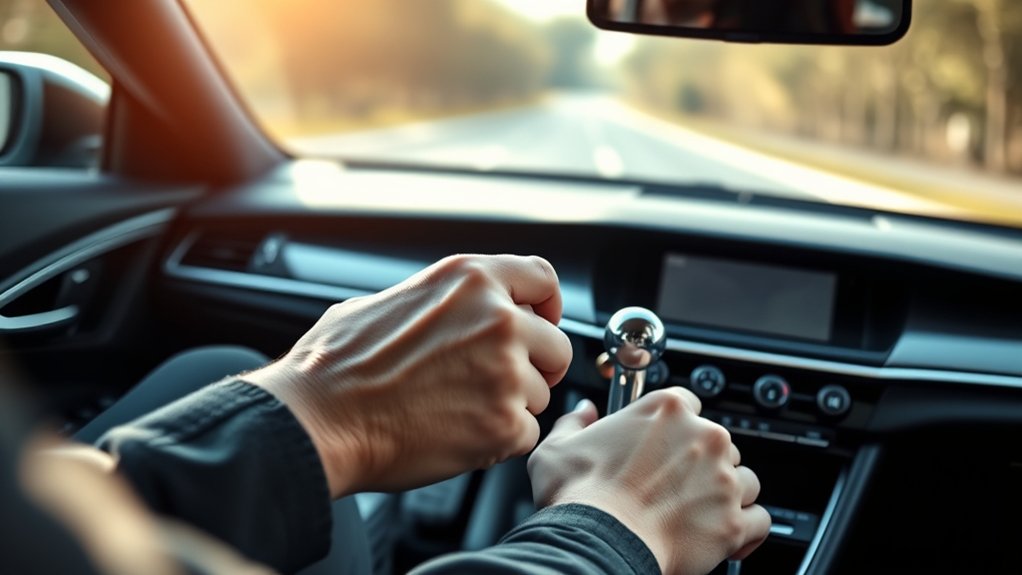
Double clutching is a driving technique that involves pressing the clutch twice during a gear change. This method is essential for matching engine speed to the transmission, which reduces gear clash and results in smoother shifts.
It is particularly beneficial in older cars or heavy vehicles that lack synchronized gearboxes.
The process starts by shifting to neutral and releasing the clutch. Then, you press the clutch again to shift into the next gear.
Mastering double clutching improves vehicle control and helps protect the transmission from wear and damage.
If you want to understand when and how to use double clutching effectively, there is more to explore about this valuable driving skill.
Key Takeaways
- Double clutching means pressing the clutch twice during a gear shift to match engine and transmission speeds manually.
- It helps reduce gear clash and provides smoother, quieter downshifts in manual transmissions.
- The technique is especially useful for older or non-synchronized gearboxes lacking modern synchronizers.
- Double clutching involves shifting to neutral, rev-matching engine speed, then engaging the next gear.
- This method improves control, reduces transmission wear, and extends gearbox lifespan when done correctly.
What Does Double Clutch Mean in Driving?
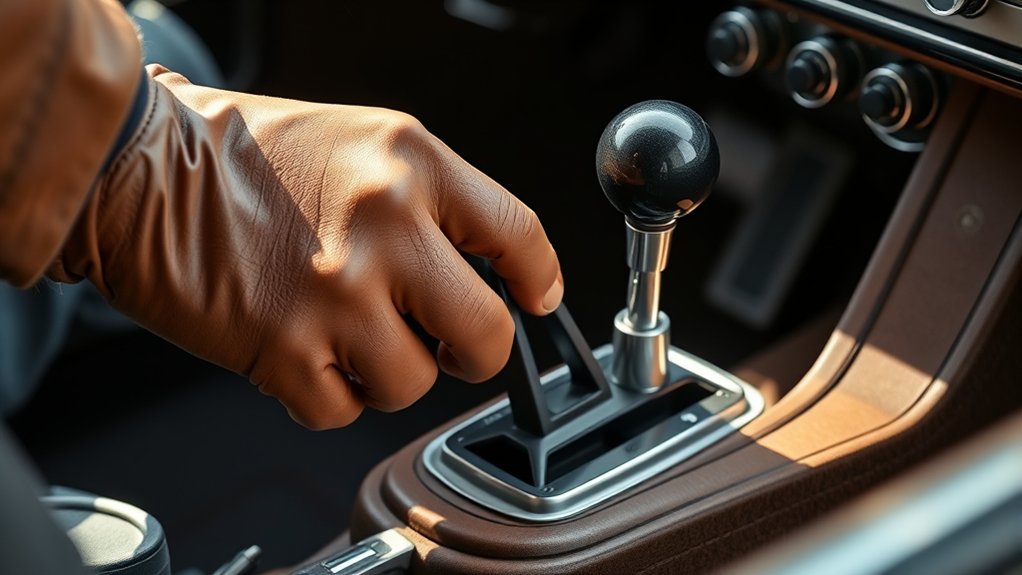
What exactly does double clutch mean in driving? When you double clutch, you press the clutch pedal twice during a gear change. First, you push the clutch to shift from one gear into neutral.
Then, you release the clutch while the transmission is in neutral. Next, you press the clutch again to shift into the next gear. This technique helps match the engine speed to the transmission speed, making gear changes smoother.
Double clutching is mainly used in vehicles with manual transmissions, especially older models without synchronized gearboxes. It requires timing and coordination but can improve your control over the car’s mechanics. By mastering double clutching, you can reduce wear on the transmission and experience more precise shifting.
Why Use Double Clutching for Gear Changes
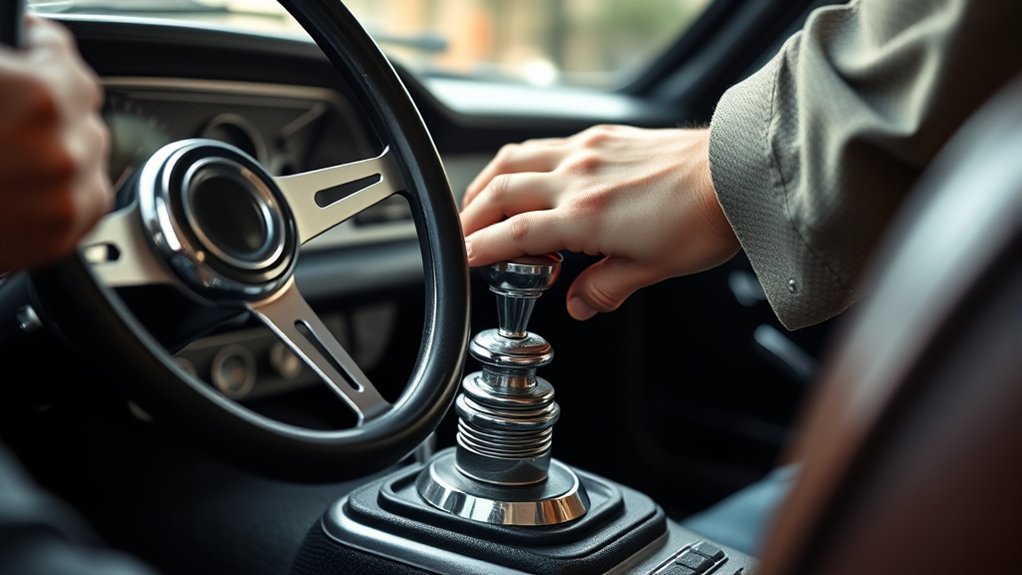
You use double clutching to make gear changes smoother and more precise. It helps match engine and transmission speeds, reducing wear on your transmission.
Smoother Gear Transitions
Although modern transmissions have improved, mastering double clutching still helps you achieve smoother gear shifts. When you double clutch, you match the engine speed to the transmission input shaft speed precisely. This synchronization reduces the jarring sensation you might feel during gear changes.
Instead of the gears clashing or grinding, your shifts become fluid and seamless. You’ll notice less resistance and a more controlled shift between gears, which is especially helpful when downshifting. Double clutching gives you better control over the vehicle’s power delivery, making acceleration and deceleration feel natural.
Reducing Transmission Wear
Since double clutching carefully matches engine and transmission speeds, it considerably reduces the stress placed on your vehicle’s transmission components. When you double clutch, you avoid forcing gears to mesh at mismatched speeds, which can cause grinding and wear on the gear teeth. This technique lessens the shock load on synchronizers and gears, extending their lifespan.
Over time, consistent double clutching helps prevent costly transmission repairs by minimizing mechanical strain. It’s especially useful in older vehicles or those with unsynchronized transmissions, where gear wear happens faster. By taking the extra step to double clutch, you protect your transmission’s integrity, ensuring smoother operation and greater durability.
In short, double clutching isn’t just about smoother shifts—it’s about preserving your transmission for the long haul.
How Double Clutching Works in Manual Cars
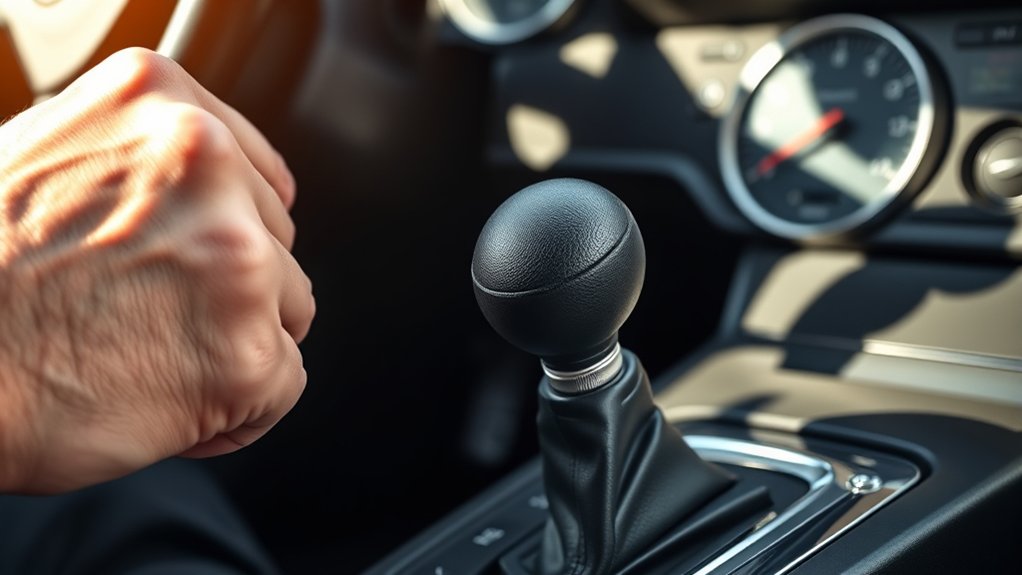
To double clutch effectively, you need to understand its purpose and follow a clear step-by-step process.
You’ll learn how this technique helps match engine and transmission speeds for smoother gear shifts.
Let’s break down how double clutching works and why it benefits your driving experience.
Purpose of Double Clutching
Why does double clutching matter when driving a manual car? It helps you match the engine speed to the transmission speed for smoother gear changes. When you double clutch, you reduce wear on the synchronizers inside the gearbox, which means your transmission lasts longer.
This technique also prevents grinding gears, especially when downshifting, making your shifts feel more precise and controlled. By syncing speeds, you maintain better control over your car’s power delivery, which is vital during spirited driving or when towing heavy loads.
Fundamentally, double clutching improves the drivetrain’s longevity and driving experience by minimizing mechanical stress and ensuring seamless gear engagement every time you shift. It’s a skill that benefits both you and your vehicle.
Step-by-Step Process
Although double clutching might seem complicated at first, you can master it by following a clear sequence of steps. Here’s how you do it in a manual car:
- Press the clutch and shift into neutral, then release the clutch.
- Rev the engine to match the speed of the next gear while in neutral.
- Press the clutch again and shift into the desired gear.
- Release the clutch smoothly to engage the gear.
This process helps synchronize the engine and transmission speeds for smoother gear shifts. Practice these steps slowly until they become second nature, and you’ll handle manual transmissions with greater control and confidence.
Benefits for Gear Shifting
When you double clutch, you reduce the wear on your transmission by matching engine and gear speeds more precisely. This technique helps your gears mesh smoothly, preventing grinding and prolonging the life of your synchros. You’ll notice shifts feel more fluid and controlled, especially when downshifting.
Double clutching also gives you better control over your vehicle’s speed and engine response, making driving more enjoyable and efficient. It’s particularly useful in older cars without modern synchronizers or when driving on slippery surfaces where smooth power delivery matters. By mastering double clutching, you protect your transmission while enhancing your shifting performance.
Ultimately, this saves you money on repairs and improves overall driving confidence. It’s a skill that pays off with every gear change.
When Should You Use Double Clutching While Driving?
If you drive a vehicle with a non-synchronized manual transmission or want to preserve your clutch’s longevity, you’ll find double clutching especially useful. It helps you shift gears smoothly without grinding and reduces wear on your transmission.
Here are four key situations when you should use double clutching:
- Downshifting on older trucks or race cars with unsynchronized gearboxes.
- Driving vintage or heavy-duty vehicles that don’t have modern synchronized transmissions.
- When trying to avoid gear grinding during aggressive or high-speed driving.
- To extend the life of your clutch and gearbox by minimizing mechanical stress during shifts.
Using double clutching in these cases improves control and helps maintain your vehicle’s mechanical integrity over time.
How to Double Clutch: Step-by-Step Guide
Mastering double clutching takes practice, but once you get the hang of it, you’ll shift gears more smoothly and protect your transmission.
Here’s a step-by-step guide to help you:
| Step | Action | Tip |
|---|---|---|
| 1 | Press clutch and shift to neutral | Fully depress the clutch pedal |
| 2 | Release clutch and rev engine | Match revs to next gear speed |
| 3 | Press clutch again and shift gear | Shift smoothly without force |
| 4 | Release clutch gradually | Avoid sudden release to prevent jerks |
Practice these steps slowly. Focus on matching engine RPMs during the revving phase.
Over time, your gear changes will feel seamless, especially when downshifting or driving older manual transmissions. Double clutching enhances control and driving comfort.
How Double Clutching Protects Your Gearbox
Although double clutching might seem old-fashioned, it plays a crucial role in protecting your gearbox by reducing wear and tear on the synchronizers. When you double clutch, you’re matching the engine speed to the transmission speed, which lessens the strain on the gear teeth and synchronizers.
Here’s how it helps protect your gearbox:
- Prevents grinding by syncing shaft speeds.
- Reduces stress on synchronizer rings.
- Minimizes premature gearbox wear.
- Extends overall transmission lifespan.
How Double Clutching Improves Driving Smoothness
By syncing engine and transmission speeds, double clutching doesn’t just protect your gearbox—it also makes your shifts feel much smoother. When you double clutch, you momentarily disengage the transmission, rev the engine to match the next gear’s speed, then re-engage the clutch. This reduces the jarring sensation you’d normally feel when gears clash.
Instead of a sudden shift, the process allows the gears to mesh seamlessly. You’ll notice less noise, fewer vibrations, and a more fluid progression between gears. This technique is especially helpful during downshifts, where mismatched speeds can cause harsh jolts.
With practice, double clutching lets you maintain control and confidence, making your driving experience more comfortable for both you and your passengers.
Double Clutching vs. Normal Shifting: Key Differences
When you double clutch, you use the clutch pedal twice to match gear speeds, unlike normal shifting where you press it once. This method helps synchronize the gears more precisely, reducing wear on the transmission.
Understanding these differences can improve your shifting technique and vehicle control.
Clutch Usage Explained
Understanding how the clutch works differently in double clutching compared to normal shifting helps you drive more smoothly and protect your transmission. When you double clutch, you engage and release the clutch twice to match engine and gear speeds, while normal shifting uses a single clutch action.
Here’s how clutch usage differs:
- Normal Shifting: Press clutch once to disengage, shift gears, then release clutch.
- Double Clutching: Press clutch, shift to neutral, release clutch, rev engine, press clutch again, shift to desired gear, release clutch.
- Clutch Timing: Double clutching requires precise timing to sync speeds.
- Wear and Tear: Double clutching reduces gear grinding and wear on synchros.
Mastering this helps you maintain smoother control and extends your transmission’s life.
Gear Synchronization Methods
Although both double clutching and normal shifting aim to change gears smoothly, they rely on different synchronization techniques to match engine and transmission speeds. When you double clutch, you manually synchronize gear speeds by pressing and releasing the clutch twice—once to shift into neutral and again to engage the next gear. This method helps older transmissions without synchronizers avoid gear grinding.
On the other hand, normal shifting depends on built-in synchronizers inside the gearbox to automatically match speeds when you press the clutch once and shift directly. These synchronizers reduce the need for your precise timing and rev-matching, making gear changes easier. Understanding these differences helps you adapt your shifting style, especially if you drive vintage cars or want to improve manual transmission control.
Common Double Clutching Mistakes
Mastering double clutching takes practice, but many drivers stumble by mistiming their gear shifts or failing to match engine revs properly. If you want to avoid common pitfalls, watch out for these mistakes:
Mastering double clutching requires practice, as many drivers struggle with timing and matching engine revs correctly.
- Rushing the process – Not pausing long enough between clutch presses disrupts smooth gear engagement.
- Improper rev matching – Failing to raise the engine speed to the right RPM can cause grinding or jerky shifts.
- Clutch control errors – Releasing the clutch too quickly or too slowly throws off synchronization.
- Ignoring vehicle feedback – Not listening to engine sounds or feeling the gear resistance leads to repeated errors.
Pay close attention to these areas to improve your double clutching technique and gain better control over your manual transmission.
How to Fix Gear Shifting Problems With Double Clutching
When you experience gear shifting problems, double clutching can help you regain smooth control by synchronizing engine and transmission speeds. First, press the clutch pedal and shift into neutral. Release the clutch, then gently rev the engine to match the speed needed for the next gear.
Press the clutch again and shift into the desired gear before releasing it smoothly. This technique reduces grinding and wear by aligning internal components. If you notice resistance or noise during shifts, double clutching can correct mismatched speeds, making transitions seamless.
Remember to time your revs accurately; too high or too low can cause issues. By practicing double clutching, you’ll fix shifting problems and extend your transmission’s life effectively.
How to Practice Double Clutching Safely on the Road
Double clutching can solve gear shifting problems, but practicing it safely on the road requires focus and control. To master this technique without risking safety, follow these steps:
Double clutching improves gear shifting but demands focus and control for safe practice on the road.
- Choose a low-traffic area where you can practice without distractions or pressure.
- Start slow by getting comfortable with the rhythm of pressing and releasing the clutch twice.
- Stay aware of your surroundings and avoid practicing on hills or in heavy traffic.
- Keep your hands on the wheel and eyes on the road, ensuring full control at all times.
Which Manual Vehicles Need Double Clutching Most
Although many modern manual vehicles have synchronized gearboxes that reduce the need for double clutching, some older or specialized vehicles still require this technique to shift smoothly.
If you drive vintage cars, trucks, or racing vehicles with non-synchronized transmissions, double clutching becomes essential to avoid gear grinding.
You’ll also find it useful in heavy-duty commercial trucks, where gear synchronization is minimal or absent.
Here’s a quick look at vehicles that need double clutching most:
| Vehicle Type | Transmission Type | Why Double Clutch? |
|---|---|---|
| Classic Cars | Non-synchronized | Prevent gear damage |
| Heavy Trucks | Non-synchronized | Handle heavy load shifts |
| Racing Vehicles | Sequential/manual | Smooth, fast gear changes |
Knowing this helps you shift confidently in the right vehicle.
Tips for Mastering Double Clutching Faster
Mastering double clutching takes practice, but focusing on timing and smooth pedal coordination will speed up your progress. To get better faster, concentrate on these key tips:
- Listen to the engine: Match the engine speed to the transmission speed during shifts for smoother transitions.
- Practice rev-matching: Use the throttle to raise RPMs when shifting to a lower gear, making downshifts seamless.
- Use the clutch pedals smoothly: Avoid abrupt clutch releases; gentle pedal work reduces wear and improves control.
- Start slow: Practice in an empty parking lot or quiet street to build confidence without distractions.
Frequently Asked Questions
Can Double Clutching Damage Modern Car Transmissions?
No, double clutching won’t damage modern car transmissions since they’re designed with synchronized gears. However, it’s unnecessary for most drivers today, as your transmission handles gear changes smoothly without extra clutching.
Modern transmissions are built to manage shifts efficiently on their own. Double clutching was more relevant in older vehicles without synchronizers.
Today, it’s mostly used by enthusiasts or in specific driving scenarios. For everyday driving, your transmission does the job perfectly well without it.
Is Double Clutching Necessary for Automatic Transmissions?
No, you don’t need to double clutch with automatic transmissions since they handle gear changes automatically.
Double clutching is mainly for manual transmissions to match engine and gear speeds, ensuring smoother shifts.
How Does Double Clutching Affect Fuel Efficiency?
Double clutching can improve fuel efficiency by ensuring smoother gear shifts and reducing engine strain. When you use it correctly, you minimize power loss, helping your vehicle run more efficiently and potentially saving fuel over time.
This technique allows the engine to match the speed of the transmission, preventing unnecessary jerks and wear. Over time, these small improvements can add up to better fuel economy.
Are There Alternatives to Double Clutching for Smooth Shifting?
Think of shifting as a dance; instead of double clutching, you can glide smoothly using rev-matching or synchronized transmissions. These moves keep your car’s rhythm seamless, letting you flow through gears without missing a beat.
Does Double Clutching Require Special Pedals or Modifications?
No, you don’t need special pedals or modifications to double clutch. It’s a technique you perform using the standard clutch and gear shifter in a manual transmission car to achieve smoother gear changes and reduce wear.
Conclusion
Mastering double clutching might seem like a bit of a dance with your car’s gears, but it’s a subtle art that elevates your driving skills. By easing the strain on your transmission, you’re not just shifting gears—you’re whispering to your vehicle, ensuring smoother rides and longer-lasting performance.
Embrace this gentle technique, and you’ll find yourself steering manual driving with a confidence that’s both graceful and practical. Double clutching helps synchronize the engine speed with the transmission, reducing wear and tear.
Incorporating double clutch into your driving routine means smoother gear changes and enhanced control, making your overall driving experience more enjoyable and efficient.

