

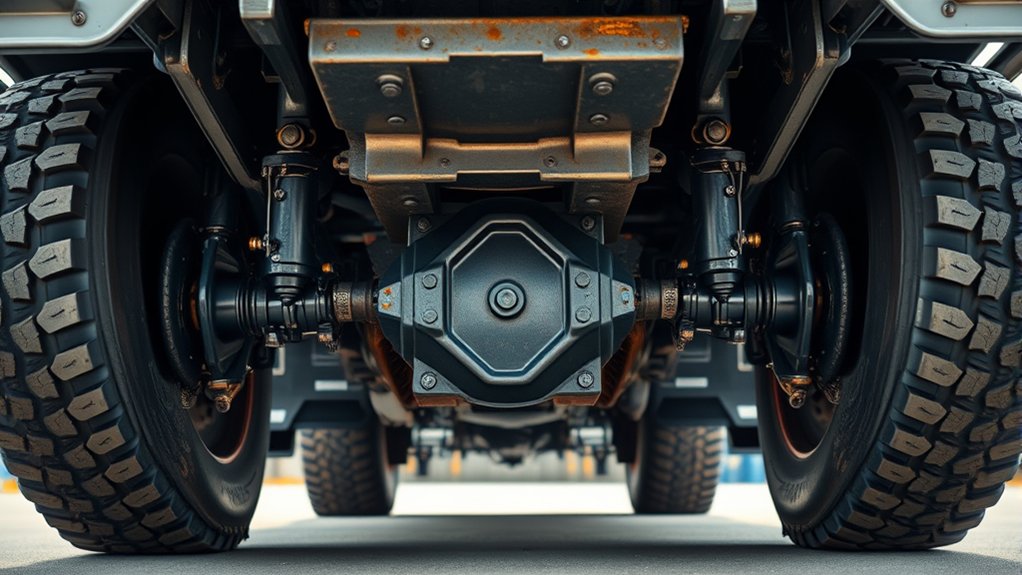
To identify the drive axle on a semi, look for the axle connected to the differential and driveshaft that transfers power from the engine to the wheels. The drive axle is a crucial component in the drivetrain system, responsible for propelling the vehicle forward.
It’s usually located at the rear, near tandem or tridem axles, making it distinguishable by its position and structure.
This axle features a bulky differential housing with half-shafts extending to the wheels, which helps distribute engine power. You can also check for uneven tire wear or listen for drivetrain noise during acceleration, both of which can indicate the drive axle.
Another method is to decode the VIN and consult the vehicle’s specs for confirmation.
By understanding these signs and following exact inspection steps, you can accurately identify the drive axle on a semi truck. Keep exploring to gain a comprehensive understanding of this important component.
Key Takeaways
- The drive axle is usually located near the rear of the tractor or on the powered trailer lift axle.
- It connects to the differential housing and has visible drive shafts extending to the wheels.
- Look for a larger, bulkier differential casing with gear oil fill and drain plugs on the axle housing.
- Inspect tire wear patterns on powered wheels; uneven wear often indicates the drive axle.
- Verify axle type and configuration using the vehicle’s VIN and manufacturer specifications.
What Is a Drive Axle and Why It Matters
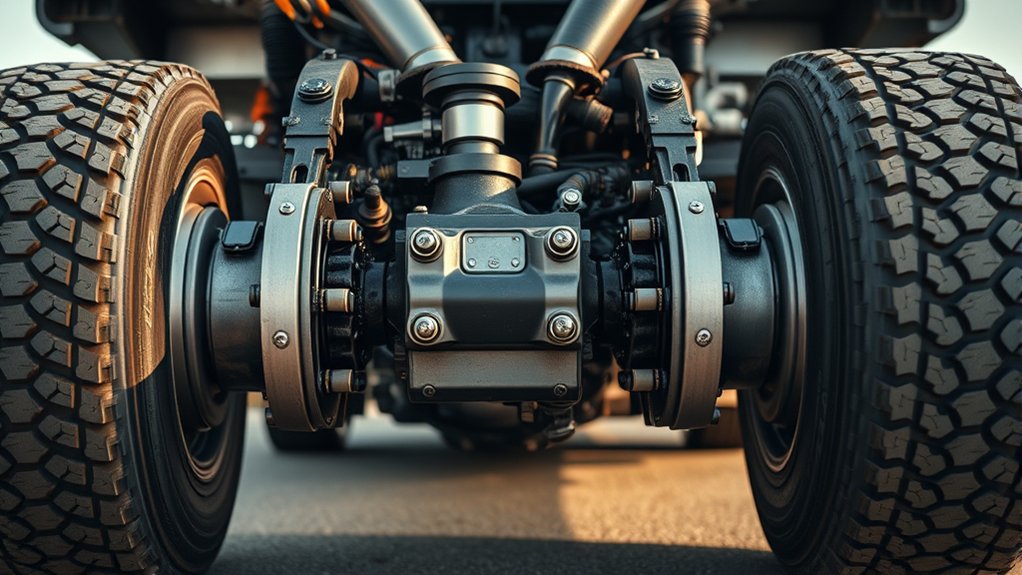
What exactly is a drive axle, and why should you care about it? The drive axle is the component that transfers power from the engine to the wheels, enabling the semi to move. Without it, the truck wouldn’t be able to propel forward or backward.
Knowing which axle drives the vehicle helps you understand how power is distributed, affecting traction, handling, and maintenance needs. When you identify the drive axle, you can better diagnose issues like uneven tire wear or slipping. It also guides you in performing inspections and repairs more efficiently.
In short, the drive axle plays a vital role in your semi’s operation, safety, and performance, so recognizing it is essential for any driver or mechanic.
Which Axles Usually Drive on Common Semi Configurations
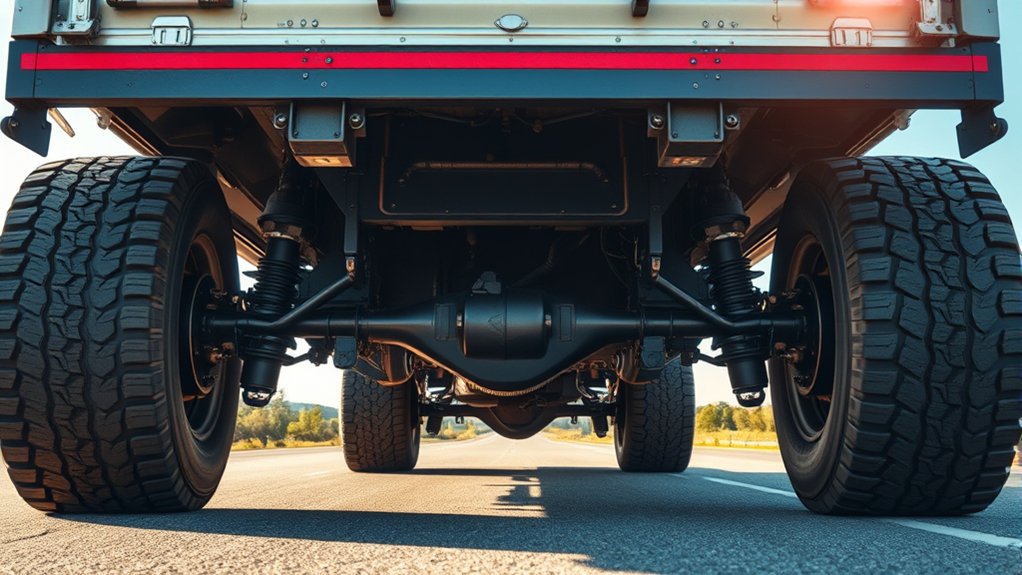
You’ll often find the drive axle located on the rear of the tractor, but its exact position can vary depending on the semi’s setup. Common configurations like 4×2, 6×4, or 6×2 each have typical drive axle arrangements you should recognize. Understanding these setups helps you quickly identify which axles provide power.
Typical Drive Axle Locations
Although semi trucks come in various configurations, the drive axle typically occupies specific positions depending on the setup. You’ll often find the drive axle located where it can best provide traction and support the truck’s power delivery. Recognizing these common locations helps you quickly identify the drive axle on most semis.
Here are typical drive axle locations you might see:
- Single rear axle on the tractor in a day cab
- Rear-most axle in tandem axle tractor setups
- The first axle in a tandem setup when the second is a tag axle
- Middle axle in a triple axle configuration for weight distribution
- Rear axle on the trailer if it’s a powered lift axle
Knowing these spots makes spotting the drive axle straightforward.
Common Semi Axle Setups
When examining common semi axle setups, understanding which axles usually drive can help you quickly identify the power sources on different configurations. Most semis have specific drive axle patterns depending on their use and weight requirements. Recognizing these will make spotting the drive axle easier.
| Semi Configuration | Drive Axle(s) |
|---|---|
| Single Rear Axle | Rear axle only |
| Tandem Rear Axles | Both rear axles |
| Tridem Axles | Usually middle axle |
| Steer-Tandem | Tandem rear axles |
| Tractor-Trailer | Tractor’s rear axles |
Knowing these setups lets you pinpoint which axle gets power and traction, aiding in maintenance and troubleshooting tasks.
How to Visually Spot the Drive Axle on Your Truck
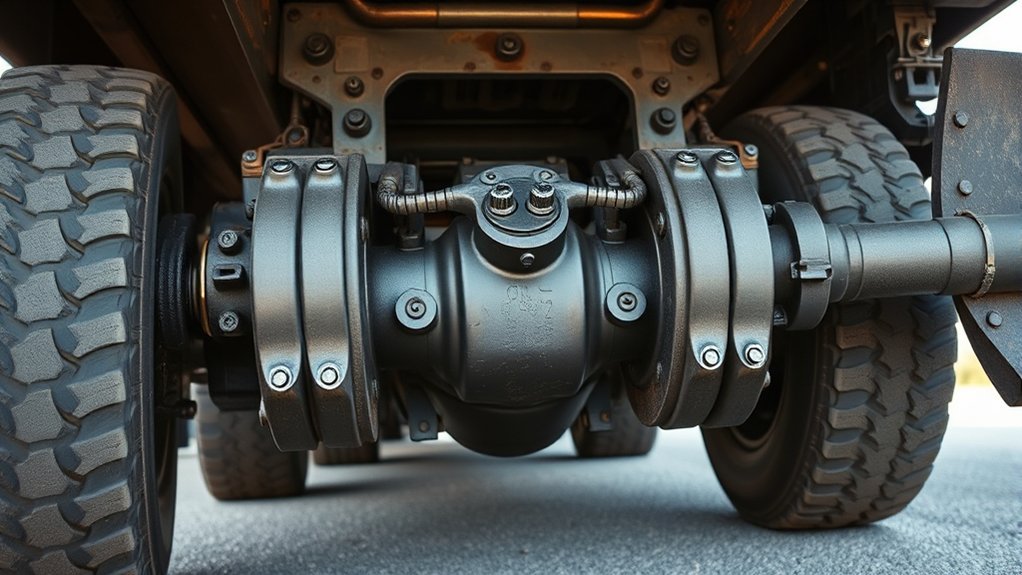
To spot the drive axle on your truck, start by checking the rear axles closest to the engine. Look for thicker components like the differential housing and drive shafts connected to those axles. These visual cues help you quickly identify which axle actually powers your semi.
Location Of Drive Axle
Wondering where to find the drive axle on your semi? It’s usually located near the rear of the truck, attached to the transmission system. The drive axle transfers power from the engine to the wheels, so you’ll want to focus on the axles connected to the differential and driveshaft.
Here’s how to picture it:
- Positioned behind the front steering axle(s)
- Connected to the large, central differential housing
- Linked directly to the driveshaft coming from the transmission
- Often found on the tandem axle setup at the rear
- Wheels on this axle receive engine power, making them the “drive wheels”
Visual Characteristics To Check
Although drive axles can look similar to other axles at first glance, you can spot them by focusing on specific visual cues that distinguish their function and structure. First, check for the presence of a differential housing—it’s usually bulkier and centered on the axle, connecting the wheels and transmitting power.
You’ll also notice drive axles have visible drive shafts or half shafts extending from the differential to each wheel, which non-drive axles lack. Inspect the wheels, too; drive axles often have heavy-duty tires designed for traction. Additionally, look for air or mechanical differentials linked to the axle.
How to Identify the Drive Axle by Its Differential and Parts
How can you quickly spot the drive axle when looking at a semi’s undercarriage? Focus on the differential and its components. The drive axle stands out because its differential is larger and more robust than those on non-drive axles.
It houses the gears that transfer engine power to the wheels. Here’s what to look for:
- A bulky, central differential casing with a pronounced dome shape
- Visible axle shafts extending from the differential to the wheels
- Heavy-duty suspension parts attached near the axle
- Presence of a drive shaft connected to the differential’s front
- Gear oil fill and drain plugs on the differential housing
How to Use the Truck’s VIN and Specs to Confirm the Drive Axle
When you want to confirm the drive axle on a semi, the truck’s VIN and specifications provide reliable information. The VIN encodes critical details about the truck’s build, including axle configuration. You can decode the VIN through manufacturer resources or online tools to find the drive axle position.
Additionally, the truck’s spec sheet lists axle types, ratios, and drive capabilities, helping you verify your findings quickly.
| VIN Section | Description | Info to Check |
|---|---|---|
| 4th-8th | Vehicle Attributes | Axle type, drive setup |
| 9th | Check Digit | Validates VIN accuracy |
| Manufacturer | Specs Sheet Reference | Specific axle specs |
Use these details to cross-reference the drive axle confidently before any physical inspection.
How to Check Which Axle Delivers Power
Wondering which axle actually delivers power on your semi? You can check this by observing the drivetrain components and their connections. Start by looking underneath your truck while it’s safely parked and the engine is running.
Focus on the axles and observe which one links directly to the driveshaft coming from the transmission. The drive axle will have visible moving parts when you gently rev the engine in neutral.
Here’s how to identify it:
- Locate the driveshaft running from the transmission.
- Follow the driveshaft to the axle it connects with.
- Observe the axle shafts turning when you lightly rev the engine.
- Check for differential housing attached to that axle.
- Feel for vibration or rotation in the axle hub.
This hands-on check confirms which axle delivers power.
Signs of Drive Axle Wear and Why Identification Helps Maintenance
Since the drive axle endures significant stress from transmitting power to the wheels, signs of wear can quickly affect your semi’s performance and safety. You might notice unusual noises like clunking or grinding, vibrations, or uneven tire wear—all indicators the drive axle needs attention. Identifying which axle is the drive axle helps you focus your maintenance efforts where they matter most.
Regular inspections let you catch issues early, preventing costly breakdowns and ensuring smooth operation. Knowing the drive axle’s condition also guides timely lubrication and component replacements, extending its lifespan. By pinpointing wear signs on the drive axle, you protect your vehicle’s drivetrain and maintain safe handling, keeping your semi reliable on the road.
Troubleshooting When You’re Unsure Which Axle Is the Drive Axle
If you’re unsure which axle drives your semi, don’t worry—there are straightforward ways to figure it out. First, check for visual cues like differential size or connected driveshafts. Then, observe the tires for signs of wear that indicate power delivery.
You can also listen for noise differences when accelerating. If you have access to a lift, inspect the axle for connected half-shafts. Finally, consult your truck’s manual or manufacturer specs for exact details.
Here’s a quick checklist to help you troubleshoot:
- Look for the axle with a large differential housing
- Check for driveshaft connections leading to the axle
- Notice uneven tire wear on powered wheels
- Listen for distinct sounds during acceleration
- Refer to your semi’s service manual for diagrams
These steps should clear up any confusion.
Frequently Asked Questions
Can I Switch the Drive Axle to a Different Axle on My Semi?
You can’t simply switch the drive axle to a different axle on your semi because it’s specifically designed for power transmission. Changing it requires significant modifications, so consult a professional mechanic before attempting any axle adjustments.
Do Drive Axles Affect Fuel Efficiency on Long Hauls?
You’re cruising down endless highways, and yes, your drive axles impact fuel efficiency by affecting traction and power delivery.
Keeping them well-maintained reduces rolling resistance, helping you save fuel on those long hauls without extra effort.
Are There Special Tires Required for the Drive Axle?
Yes, you’ll need special tires for the drive axle, designed to handle torque and traction. These tires usually have deeper treads and stronger sidewalls to improve grip and durability under heavy loads and rough conditions.
How Does Axle Drive Type Impact Trailer Compatibility?
Think of your axle drive type as a puzzle piece; it must fit the trailer’s design. You’ll find certain trailers only connect smoothly with specific drives, so matching them guarantees safer, efficient hauls without mechanical hiccups.
What Are the Legal Regulations Regarding Drive Axle Modifications?
You can’t modify drive axles without following strict DOT regulations. Any changes must meet safety standards, maintain load ratings, and get proper inspections.
Otherwise, you risk fines, failed inspections, or voided warranties. Always check local laws first.
Conclusion
Think of your semi’s drive axle like the engine’s handshake—it’s where the power truly connects to the road. I once helped a driver confused about his truck’s axle setup; identifying the drive axle saved him from costly maintenance down the line.
Knowing which axle drives your semi isn’t just mechanic talk—it’s how you keep your rig rolling strong and avoid surprises. So, trust your eyes, VIN, and those telltale parts to find that vital power link every time.
By understanding how to identify the drive axle on a semi, you ensure better vehicle performance and prevent unexpected breakdowns. Remember, recognizing the drive axle is key to effective maintenance and long-lasting truck health.

