

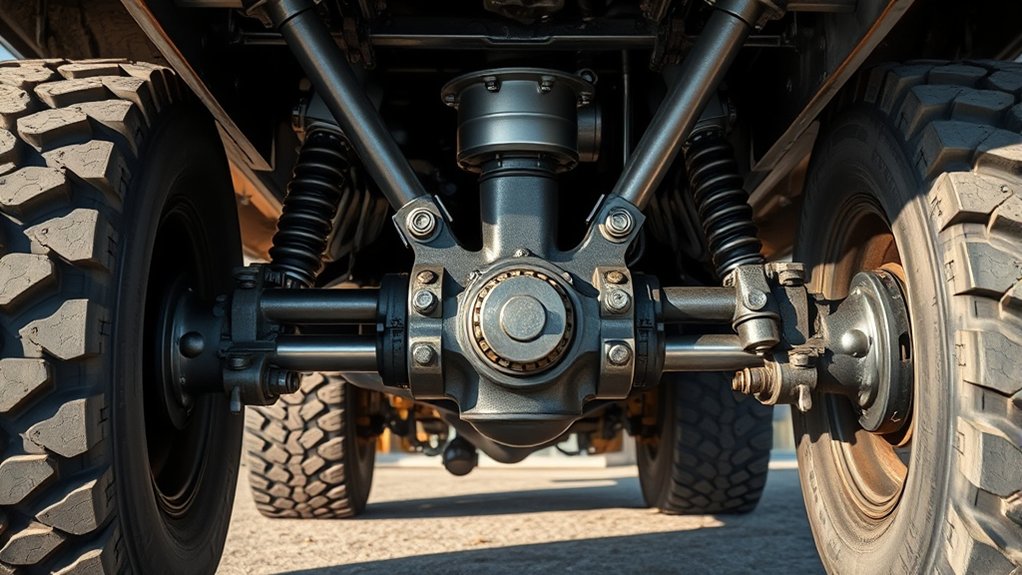
You can identify the drive axle on a truck by looking under the vehicle for the axle connected to the engine via the driveshaft. This drive axle plays a crucial role in transferring power from the engine to the wheels, enabling movement.
It usually has a larger, more robust differential housing at its center that distributes power evenly to the wheels.
On single rear axle trucks, the drive axle is the only rear axle present. For tandem axle trucks, check which axle has the bigger differential housing, as that typically indicates the drive axle.
In front-wheel drive trucks, the drive axle is located at the front.
Spotting these details helps you maintain your truck effectively. Understanding the drive axle’s role and differences is essential for proper vehicle care and performance.
Key Takeaways
- Locate the differential housing at the center of the axle, indicating it as the drive axle transmitting engine power to the wheels.
- Follow the driveshaft from the transmission or engine to the axle, confirming it as the powered drive axle.
- Identify heavier, more robust axle components with universal or CV joints, distinguishing drive axles from non-powered support axles.
- Check if the axle is positioned at the rear for most trucks, or at the front in front-wheel-drive models.
- Look for signs like tire tread wear patterns and differential fluid seals to confirm the drive axle’s function and maintenance needs.
What Is a Drive Axle and Why It Matters on Your Truck
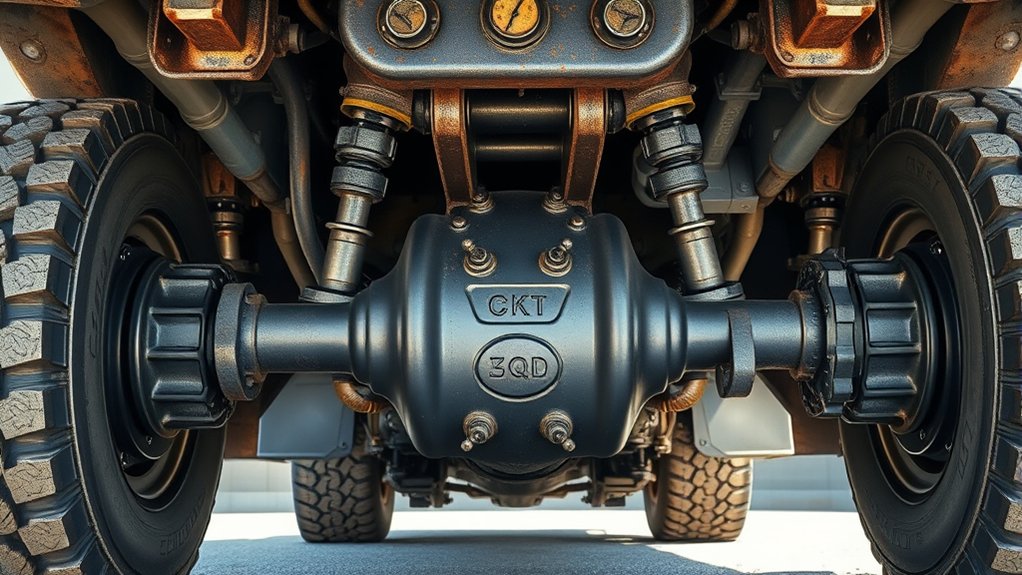
Although it might seem like just another part of your truck, the drive axle plays a crucial role in transferring power from the engine to the wheels. Without it, your truck wouldn’t move forward or backward effectively. The drive axle connects to the differential, which distributes engine torque to the wheels, enabling traction and movement.
It also supports the weight of the truck and withstands the stresses of driving over different terrains. Knowing the importance of the drive axle helps you appreciate its role in your vehicle’s performance and safety. Keeping it in good condition ensures smooth handling, prevents uneven tire wear, and avoids costly repairs.
Understanding this component is essential for maintaining your truck’s reliability.
How to Locate the Drive Axle on Different Truck Types
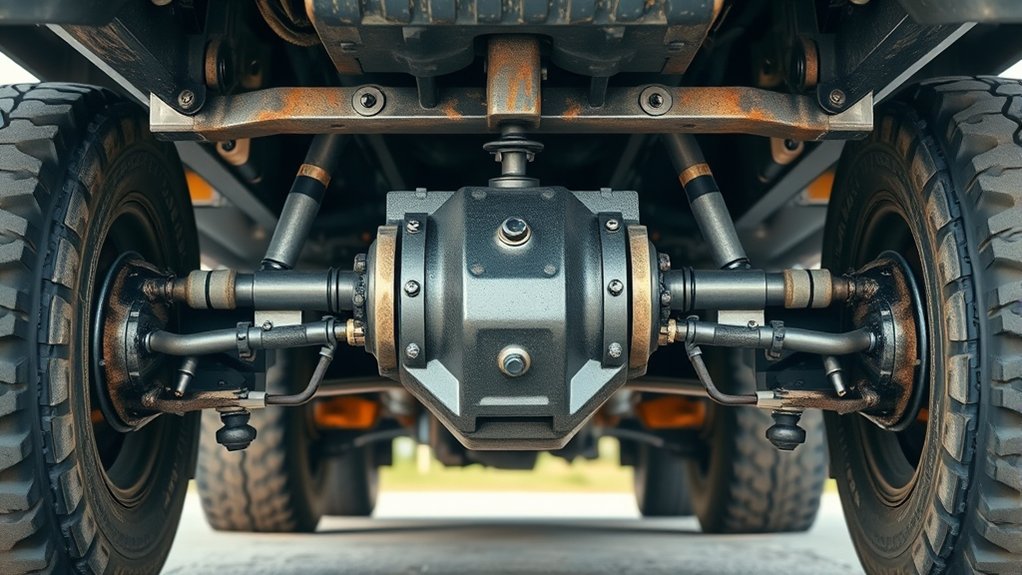
To find the drive axle on your truck, start by checking if it has a single rear axle or tandem axles, as these setups affect its location. On single rear axle trucks, the drive axle is usually the rear one, while tandem axle trucks often have one or both rear axles powered.
Don’t forget that front wheel drive trucks have the drive axle at the front, which changes how you identify it.
Single Rear Axle Trucks
Where exactly is the drive axle on a single rear axle truck? It’s the one and only rear axle that connects directly to the engine via the driveshaft. Unlike trucks with multiple rear axles, single rear axle trucks rely on this single axle to deliver power to the wheels.
To identify it, look underneath the truck behind the transmission; you’ll see a driveshaft running back to the rear axle. This axle will have differential housing at its center, which distributes power to the wheels. Since there’s only one rear axle, it’s the drive axle by default.
Knowing this helps you quickly pinpoint the drive axle on these trucks without confusion, making inspections and maintenance more straightforward.
Tandem Axle Configurations
How can you quickly identify the drive axle on trucks with tandem axle configurations? Look for the pair of rear axles located close together, typically behind the cab. In most cases, the drive axle is the one connected to the drivetrain.
You can tell this by spotting the differential housing, which is larger and more robust on the drive axle. Sometimes, both axles in a tandem setup are drive axles, known as dual-drive tandem, meaning both receive power. If only one axle is powered, it’s usually the rear-most axle in the tandem.
Check for drive shafts or axle shafts linking the differential to the wheels—that confirms the drive axle. Observing these features helps you accurately identify the drive axle on trucks with tandem axle configurations.
Front Wheel Drive Trucks
Wondering how to spot the drive axle on front wheel drive trucks? It’s simpler than you might think. Unlike rear or tandem axle trucks, front wheel drive trucks have the drive axle clearly positioned at the front.
Here’s how to identify it:
- Look under the front wheels for the axle connected to the engine via the transmission.
- Notice the CV joints or constant velocity joints near the wheels—these are common in front wheel drive setups.
- Check for the absence of a drive shaft running to the rear axle; front wheel drive trucks don’t have one.
- Observe the steering mechanism linked directly to the drive axle, which helps in turning the truck.
Key Features to Identify a Drive Axle
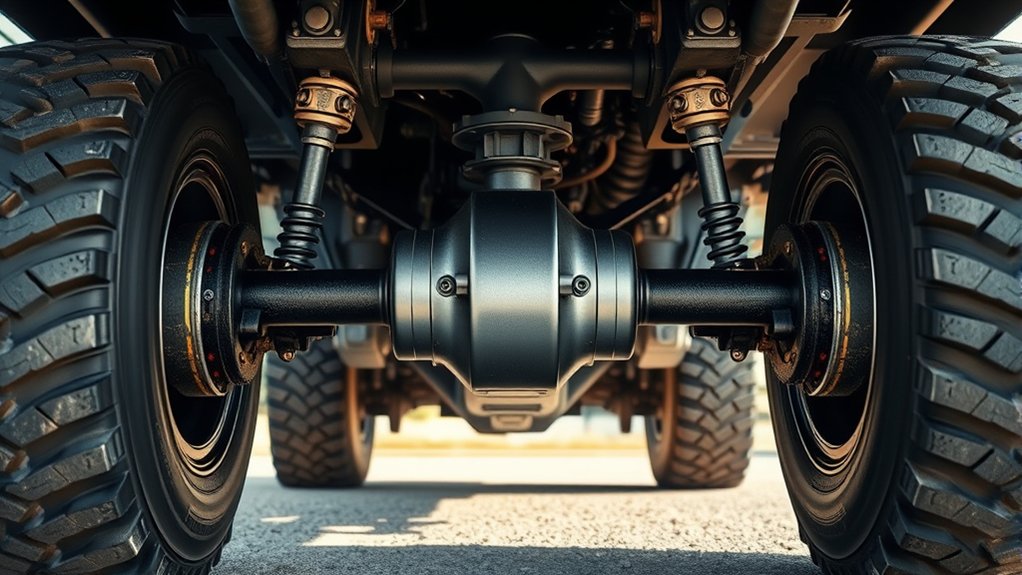
Although drive axles can look similar to other axles at first glance, you can spot key features that set them apart. For instance, drive axles usually have a differential housing in the center, which helps transfer power to the wheels. You’ll also notice axle shafts that connect directly to the wheels, transmitting torque.
Additionally, drive axles often have heavier and more robust components to handle the engine’s power. Finally, look for universal joints or CV joints on the axle ends, allowing flexibility during turns.
| Feature | Description |
|---|---|
| Differential Housing | Central gear system for power distribution |
| Axle Shafts | Connect wheels to transfer torque |
| Robust Construction | Stronger parts to handle engine power |
| Universal/CV Joints | Provide axle flexibility during movement |
How to Tell a Drive Axle From a Non-Drive Axle
While drive axles and non-drive axles might look similar, you can quickly tell them apart by focusing on their function and key components.
Here’s how to identify each:
- Power Transmission: Drive axles connect to the engine via the driveshaft, transmitting power to the wheels; non-drive axles don’t.
- Differential Presence: Drive axles have a differential housing, allowing wheels to rotate at different speeds; non-drive axles lack this.
- Axle Shaft Design: Drive axles feature splined axle shafts that transfer torque; non-drive axles have simpler shafts without splines.
- Location on Vehicle: Drive axles are usually on the rear or front of trucks with engine power routed to them; non-drive axles often serve as steering or support axles.
How to Tell if Your Drive Axle Is Engaged
Knowing whether your drive axle is engaged helps you understand how power is being delivered to your truck’s wheels, which can affect traction and performance. To tell if your drive axle is engaged, pay attention to how your truck responds when you accelerate or navigate slippery surfaces. If power transfers to the drive axle, you’ll notice increased traction and the wheels on that axle will actively rotate.
In many trucks, especially those with selectable four-wheel drive, you can often feel or hear a slight clunk or engagement noise when the axle locks in. Additionally, if your truck has an indicator light or dashboard notification, it will confirm engagement. Being aware of these signs ensures you know when your drive axle is working to provide power where it’s needed most.
Tools and Techniques to Inspect Your Drive Axle
Before you start inspecting your drive axle, gather the right tools to make the process smoother and more accurate. You’ll need a few essentials to check everything thoroughly without guesswork. Here’s what to have on hand:
- Flashlight – to illuminate dark areas around the axle and spot leaks or damages.
- Jack and jack stands – to safely lift and support the truck for a closer look underneath.
- Creeper or mat – so you can comfortably slide under the truck during inspection.
- Wrenches and sockets – for loosening bolts if you need to remove axle components or covers.
With these tools ready, you can confidently inspect seals, bearings, and the axle housing for any signs of wear or damage.
Common Signs of Drive Axle Problems to Watch For
You’ll want to keep an ear out for unusual noises coming from the drive axle, like grinding or clunking sounds. Also, check for visible leaks around the axle seals, which can indicate worn components.
Catching these signs early can help you avoid bigger issues down the road.
Unusual Noises
How can you tell if your truck’s drive axle is having issues? One of the clearest signs is unusual noises coming from the axle area. Pay close attention when you drive, especially during turns or acceleration.
Here are four common noises to watch for:
- Clunking sounds when shifting or turning, indicating worn universal joints.
- Grinding noises that may signal damaged bearings or gears.
- Whining or humming sounds, often caused by low or contaminated differential fluid.
- Clicking noises during turns, which could mean axle shaft issues.
If you notice any of these sounds, don’t ignore them. Addressing unusual noises early can prevent costly repairs and keep your truck running smoothly.
Visible Leaks
Unusual noises can be a clear signal that something’s wrong with your truck’s drive axle, but visible leaks provide another obvious warning sign. If you notice oil or grease dripping from the axle housing or seals, don’t ignore it. These leaks often indicate worn or damaged seals, which can lead to lubrication loss and accelerate wear on internal components.
Check under your truck for puddles or wet spots around the axle area regularly. Also, inspect the axle boots and joints for cracks or tears. Catching leaks early helps you avoid costly repairs and keeps your truck running smoothly.
If you spot any leaks, get your axle inspected and serviced promptly to maintain safety and reliability.
Front vs. Rear Drive Axles: What’s the Difference?
Although both front and rear drive axles serve to transfer power from the engine to the wheels, they differ considerably in location, function, and impact on vehicle handling. To help you spot the differences, here are four key points:
- Location: Front drive axles are connected to the front wheels, while rear drive axles connect to the rear wheels.
- Function: Front axles often handle steering and power delivery simultaneously; rear axles mainly focus on power transfer.
- Handling: Front drive axles improve traction in slippery conditions, whereas rear drive axles offer better stability during acceleration.
- Design: Front axles are typically more complex due to steering components, while rear axles are simpler and sturdier.
Understanding these differences helps you identify the drive axle quickly and accurately.
Why Identifying the Drive Axle Matters for Maintenance
Because your truck’s performance and safety depend heavily on its drive axle, knowing which one it is helps you stay on top of essential maintenance tasks. The drive axle handles the power transfer from the engine to the wheels, so it experiences significant wear. By identifying it correctly, you can monitor components like differential fluid, axle seals, and U-joints to prevent costly breakdowns.
Regular inspections and timely servicing of the drive axle improve your truck’s handling and extend its lifespan. Plus, addressing issues early helps avoid unexpected failures that could compromise safety on the road. Understanding which axle drives your truck lets you focus your maintenance efforts where they matter most, keeping your vehicle reliable and safe for every journey.
Quick Drive Axle Identification Tips for Used Truck Buyers
When you’re shopping for a used truck, quickly identifying the drive axle can save you time and prevent costly mistakes. Here are four quick tips to help you spot it:
- Look under the truck for the axle connected to the engine via the driveshaft—that’s the drive axle.
- Check if the axle has a differential housing, which distributes power to the wheels.
- Identify if the axle is linked to powered wheels; in most trucks, the rear axle is the drive axle.
- Examine the tire tread wear; drive axles often show more wear due to power delivery.
Using these tips will help you verify the truck’s drivetrain setup efficiently and avoid buying a vehicle with unexpected drivetrain issues.
Frequently Asked Questions
How Does a Drive Axle Impact Fuel Efficiency?
A drive axle impacts fuel efficiency by affecting how power transfers to the wheels. If it’s well-maintained and properly aligned, you’ll get smoother power delivery and better mileage.
However, worn axles can lower efficiency considerably.
Can a Drive Axle Be Replaced Without Removing the Entire Axle Assembly?
You can’t have your cake and eat it too; usually, replacing a drive axle means removing the entire axle assembly. However, sometimes you can swap certain components without full removal, depending on the truck’s design and accessibility.
What Types of Lubricants Are Best for Drive Axles?
You’ll want to use gear oil with the right viscosity, typically SAE 75W-90 or 80W-90. Synthetic oils work great for extreme temperatures, and always check your truck’s manual to match the lubricant specifications exactly.
How Often Should Drive Axle Fluid Be Changed?
Think of your drive axle fluid like the lifeblood of your truck—it should be changed every 30,000 to 60,000 miles.
Check your manual, but don’t let it run dry; regular changes keep things running smooth.
Are There Differences in Drive Axles for Electric Trucks?
Yes, electric trucks use different drive axles because they often integrate electric motors directly with the axle.
You’ll notice they’re designed for efficiency and handle torque differently compared to traditional combustion engine trucks.
Conclusion
Now that you know how to spot the drive axle on your truck, you’re ready to keep it in top shape—no horse-drawn carriage needed! Identifying the drive axle helps you catch issues early and guarantees smooth rides, whether you drive a big rig or a smaller truck.
Keep these tips handy, and you’ll avoid costly repairs down the road. Remember, paying attention to your drive axle is key to your truck’s performance and longevity. Proper maintenance of the drive axle ensures your vehicle runs efficiently and safely.

