

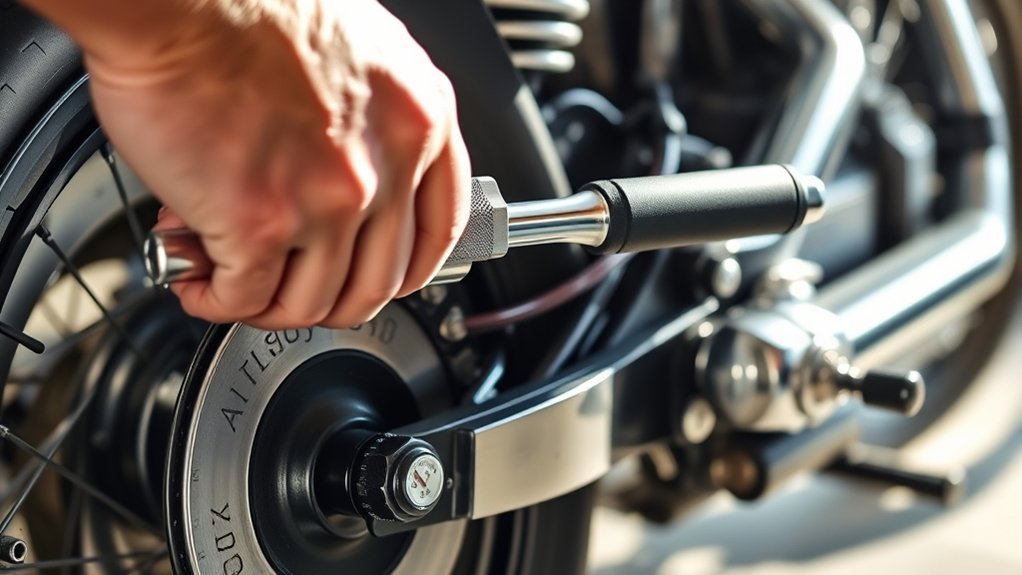
To torque your Harley axle bolts correctly, it’s essential to follow precise steps for safety and optimal performance. Proper torque ensures that the axle bolts are securely fastened, preventing loosening and potential damage while riding your Harley. This process involves cleaning, securing, and tightening the bolts to the manufacturer’s specifications.
Start by cleaning the bolts and threads thoroughly. Secure your bike on a stable stand, then hand-tighten the bolts before using a calibrated torque wrench set to your model’s specs—typically 30–40 ft-lb for the front and 80–100 ft-lb for the rear.
Tighten evenly, alternating sides for balance, and recheck after initial rides or rough conditions. Following these steps guarantees safety and longevity, plus there’s more to know on maintaining proper torque over time.
Key Takeaways
- Clean axle threads and surrounding areas thoroughly before torquing to ensure accurate and damage-free bolt tightening.
- Use a calibrated click-type torque wrench set to the manufacturer’s specified torque values for front (30–40 ft-lb) and rear (80–100 ft-lb) axle bolts.
- Hand-tighten bolts first, then tighten alternately on opposite sides until the torque wrench clicks for balanced tension.
- Recheck torque after the first 100 miles and perform regular inspections every 3,000–5,000 miles or seasonally for safety.
- Replace any bolts showing wear, corrosion, or damage, and consider using thread locker to prevent loosening from vibrations.
Why Correct Torque Matters for Harley Wheels
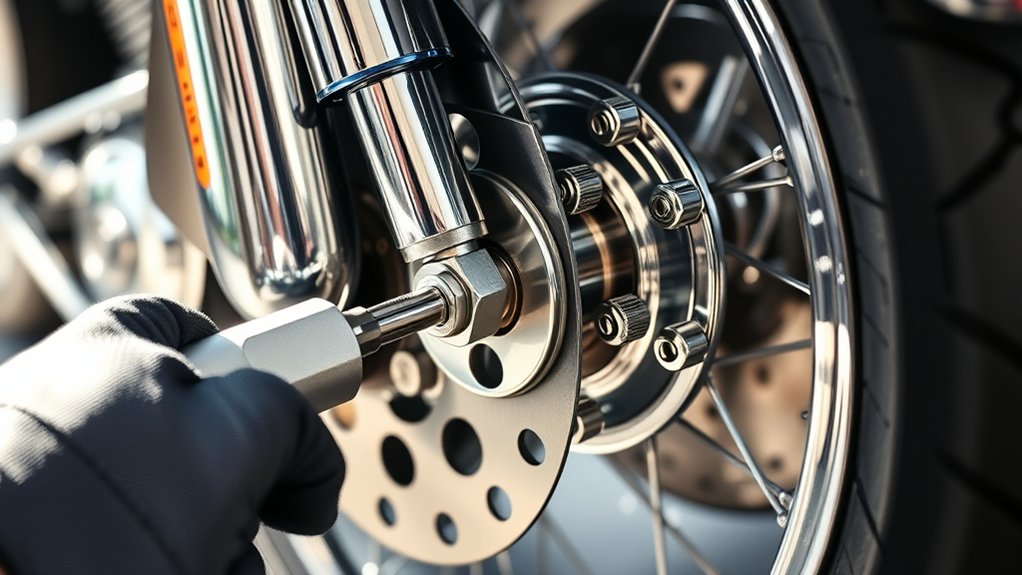
Although it may seem like a small detail, applying the correct torque to your Harley axle bolts is vital for both safety and performance. If you don’t tighten them properly, your wheel could wobble, affecting stability and control. Over-tightening can strip threads or stress the bolts, risking sudden failure.
Under-tightening might cause the axle to loosen during rides, which is dangerous. Correct torque guarantees the axle stays secure, maintaining smooth wheel rotation and even wear. It also helps prevent damage to the hub and fork.
What Torque Specs Do Harley Axle Bolts Require?
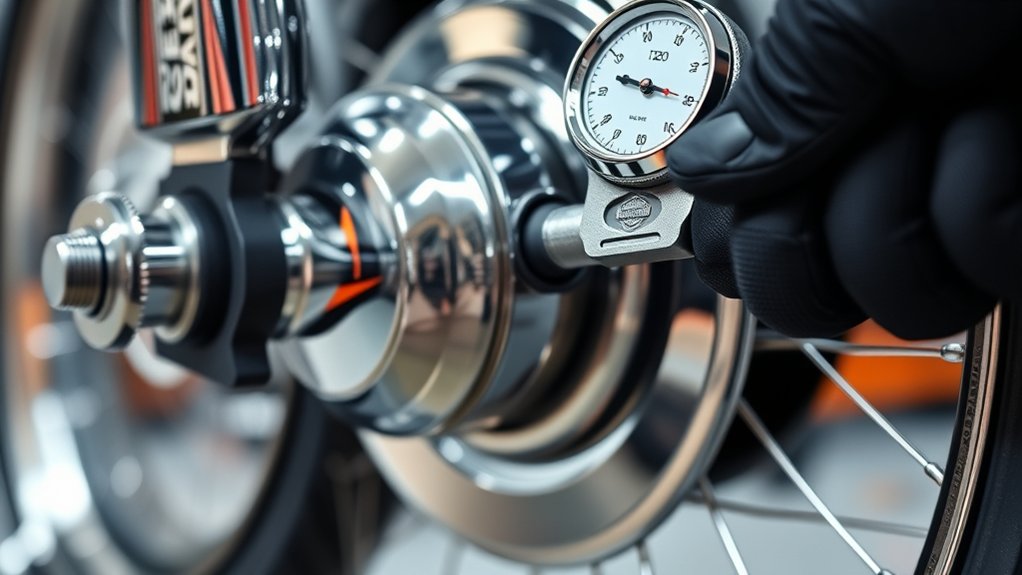
When working on your Harley, knowing the exact torque specifications for axle bolts guarantees you tighten them just right—neither too loose nor too tight. For most Harley models, front axle bolts typically require around 30 to 40 foot-pounds of torque, while rear axle bolts usually need between 80 and 100 foot-pounds. However, these values can vary depending on the specific model and year, so always check your owner’s manual or service guide for precise numbers.
Applying the correct torque ensures proper wheel alignment, prevents bolt damage, and maintains safety. Over-tightening risks stripping threads or damaging components, while under-tightening might cause loosening during rides. By sticking to the recommended torque specs, you maintain your Harley’s reliability and performance on the road.
Tools Needed to Torque Harley Axle Bolts
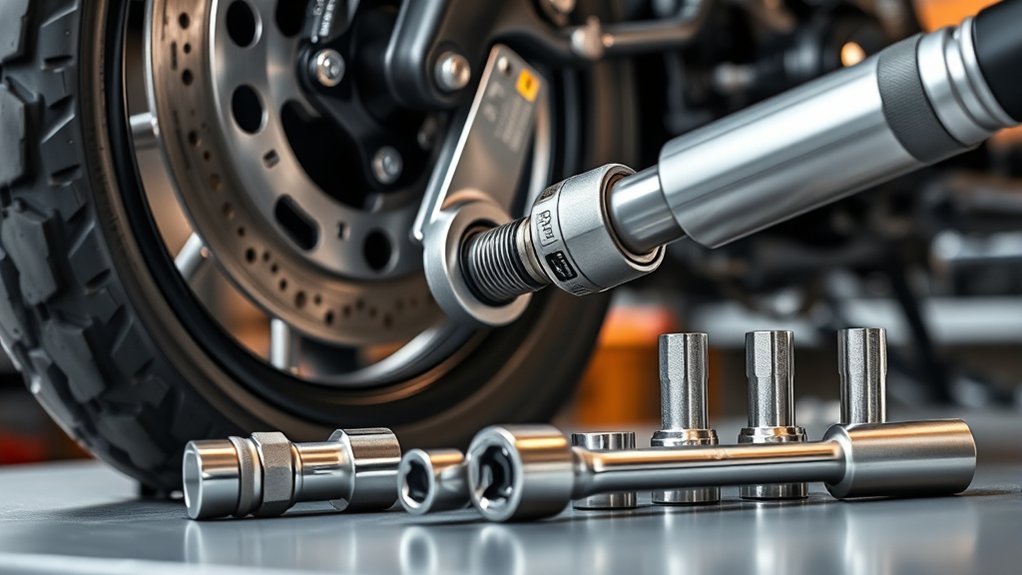
To properly torque your Harley axle bolts, you’ll need the right tools to guarantee accuracy and safety. A quality torque wrench is essential, along with the correct sockets that fit your specific bolts.
Knowing the recommended torque specifications will help you apply the exact amount of force needed without risking damage.
Essential Torque Tools
Before you start torquing your Harley axle bolts, you’ll need the right tools to guarantee accuracy and safety. A reliable torque wrench is essential—it lets you apply the exact amount of torque without over-tightening or under-tightening. Choose a click-type torque wrench for consistent results.
You’ll also need the correct size socket that fits your axle bolts snugly to avoid rounding them off. A breaker bar can help loosen stubborn bolts before torquing, but avoid using it when tightening to prevent inaccurate torque readings.
Additionally, a clean rag or brush helps remove debris from the bolt and threads, ensuring proper torque application. Having these essential tools ensures your Harley’s axle bolts are secured precisely as they should be.
Recommended Torque Specifications
Although having the right tools is essential, knowing the exact torque specifications for your Harley axle bolts is equally important to guarantee safety and performance. Most Harley models require axle bolts torqued between 50 and 70 ft-lbs, but always check your specific model’s manual for precise values. Over-tightening can strip threads or damage components, while under-tightening risks axle slippage.
Use a calibrated torque wrench to apply the recommended torque evenly and steadily. Remember, some Harley axles may need a torque angle specification, so follow the manufacturer’s procedure closely. By adhering to these torque specs, you assure your axle bolts hold securely, preserving your bike’s integrity and your safety on the road.
Don’t guess—always confirm the correct torque for your Harley model.
How to Prepare Your Harley Before Torqueing Axle Bolts
Before you start torqueing the axle bolts, make sure to clean the axle and surrounding areas to remove any dirt or grease. You’ll also want to secure your Harley on a stable stand to prevent any movement.
Taking these steps guarantees a safe and accurate torque process.
Clean Axle And Surroundings
Since dirt and grime can interfere with proper torque readings, you’ll want to thoroughly clean the axle and its surroundings before tightening the bolts. Start by wiping down the axle with a clean rag to remove loose dirt. Use a degreaser or brake cleaner to dissolve stubborn grease and grime.
Make sure to clean the axle threads and bolt holes carefully, as debris here can cause inaccurate torque measurements or damage threads. After applying cleaner, rinse the area with water or wipe it down again to remove residues.
Finally, dry the axle and surrounding parts completely with a lint-free cloth to prevent contamination. Taking these steps guarantees you get accurate torque readings and helps maintain the integrity of your Harley’s axle assembly.
Secure Motorcycle Stability
After cleaning the axle and its surroundings thoroughly, you’ll need to make certain your Harley is stable before torqueing the axle bolts. Stability prevents movement that might cause uneven torque or improper bolt seating. Use a sturdy motorcycle stand or lift to keep your bike upright and secure.
Engage the parking brake or wheel chocks for added safety. Double-check that the bike won’t rock or shift under pressure.
| Step | Tip |
|---|---|
| Use a solid stand | Preferably a center or rear stand |
| Position wheel chocks | Block wheels on both sides |
| Check brake engagement | Ensure parking brake is set |
| Test bike stability | Gently rock to confirm steadiness |
How to Torque Harley Axle Bolts Step-by-Step
When you torque Harley axle bolts, applying the correct amount of force is crucial to guarantee safety and proper wheel alignment. First, clean the bolts and threads to remove dirt or grease. Next, hand-tighten the axle bolts to ensure they’re seated properly.
Then, set your torque wrench to the manufacturer’s specified torque value, usually found in your Harley’s manual. Position the wrench on the bolt head and tighten slowly, applying steady pressure until the wrench clicks or signals the set torque is reached. Avoid sudden or jerky movements.
Finally, repeat the process on the opposite axle bolt for balanced tension. This step-by-step method ensures your axle bolts are torqued correctly, maintaining your Harley’s stability and performance.
Checking If Your Axle Bolts Are Tightened Correctly
Although you’ve torqued your Harley axle bolts to the recommended settings, you still need to verify they’re tightened correctly to guarantee safety. Start by visually inspecting the bolts for any gaps or misalignment.
Then, use a torque wrench to double-check the torque value. If it feels off, retighten to the exact specification.
Here’s a quick checklist to confirm your axle bolts are secure:
| Checkpoint | What to Look For |
|---|---|
| Visual inspection | No gaps or loose threads |
| Torque verification | Matches manufacturer specs |
| Bolt condition | No rust or damage |
| Wheel alignment | Properly centered and secured |
Following these steps helps prevent wheel issues and keeps your ride safe.
Common Mistakes When Torqueing Your Harley’s Axle Bolts
Double-checking your Harley axle bolts is a smart step, but it’s just as important to prevent common mistakes during the torquing process itself. One frequent error is not using a calibrated torque wrench, which can lead to over- or under-tightening.
Another mistake is applying torque unevenly—tighten bolts gradually in a crisscross pattern to ensure even pressure. Avoid rushing; turning the wrench too quickly or exceeding the recommended torque can damage threads or the axle.
Also, don’t skip cleaning the threads before torquing; dirt or debris affects accuracy. Finally, never guess the torque specs—always follow your Harley’s manual guidelines precisely. Avoiding these pitfalls helps secure your axle bolts safely and prevents costly repairs down the road.
How Often Should You Torque Your Harley Axle Bolts?
Since your Harley’s axle bolts endure constant stress and vibration, you should torque them regularly to maintain safety and performance. It’s best to check and retorque the axle bolts after your first 100 miles following any removal or adjustment.
After that, get into the habit of inspecting and torquing them during routine maintenance intervals, such as every 3,000 to 5,000 miles or at least once a season. If you ride frequently, more often checks won’t hurt. Always use a calibrated torque wrench to guarantee accuracy.
Keeping up with this schedule prevents bolt loosening, which can lead to wheel misalignment or unsafe handling. By staying consistent with torquing, you protect both yourself and your Harley on every ride.
How Weather and Riding Conditions Affect Axle Bolt Torque
Regularly torquing your Harley axle bolts helps keep them secure, but weather and riding conditions can still affect their tightness over time. Exposure to moisture and temperature changes can cause metal to expand or contract, slightly loosening or tightening the bolts. Riding in wet or salty environments increases the risk of corrosion, which can weaken bolt threads and reduce torque effectiveness.
Rough roads and aggressive riding put extra stress on the axle bolts, potentially causing them to shift or loosen. To maintain ideal torque, check your bolts more frequently if you often ride in harsh weather or challenging conditions. Adjust your maintenance routine based on your typical riding environment to ensure safety and prevent unexpected issues on the road.
When to Replace Harley Axle Bolts Instead of Reusing Them
Although it might be tempting to reuse Harley axle bolts to save time and money, you should replace them whenever you notice signs of wear or damage. Check for stripped threads, cracks, corrosion, or any bending, as these weaken the bolt’s integrity and can lead to failure.
If the bolt doesn’t tighten smoothly or if it feels loose after torquing, it’s time to swap it out. Also, avoid reusing bolts that have been stretched or deformed from previous over-tightening. Using new bolts ensures a secure fit and maintains proper torque settings, which is essential for your safety and your bike’s performance.
Don’t take chances by reusing compromised bolts—invest in replacements to keep your Harley running safely and reliably.
Tips for Maintaining Harley Axle Bolt Torque Over Time
To keep your Harley axle bolts secure, you need to check their torque periodically, especially after long rides or rough terrain. Vibrations and impacts can loosen bolts over time, so use a reliable torque wrench to verify tightness regularly. Always follow the manufacturer’s recommended torque specs to avoid over- or under-tightening.
Applying a thread locker designed for axle bolts can help maintain torque by preventing loosening due to vibrations. Inspect the bolts and surrounding components for signs of wear or damage that could affect torque retention. If you notice any issues, replace the bolts promptly.
Finally, clean bolt threads and mating surfaces before re-torquing to ensure accurate settings and prevent contamination from affecting the bolt’s grip.
Frequently Asked Questions
Can Improper Axle Bolt Torque Affect Harley Suspension Performance?
Yes, improper axle bolt torque can affect your Harley’s suspension performance. You’ll experience instability, uneven tire wear, and compromised handling.
Always torque bolts correctly to keep your ride safe, smooth, and responsive on the road.
Are There Differences in Torque Specs Between Harley Models?
Yes, torque specs vary between Harley models due to differences in axle size, materials, and suspension design. You should always check your specific model’s manual to guarantee you apply the correct torque and avoid damage or safety issues.
How Does Axle Bolt Torque Influence Harley Wheel Alignment?
You’ll find that axle bolt torque gently guides your Harley’s wheel alignment; too loose, and it wanders, too tight, and it resists.
Getting it just right keeps your ride smooth, safe, and confidently on track.
What Are the Risks of Using Aftermarket Axle Bolts?
Using aftermarket axle bolts can risk improper fit, weaker materials, and inconsistent threading, which might cause wheel misalignment, loosening, or even failure.
You’ll compromise safety and performance if you don’t choose quality, OEM-spec parts.
Can Axle Bolt Torque Impact Harley Braking Efficiency?
Yes, axle bolt torque can impact your Harley’s braking efficiency. If you don’t tighten them properly, it can cause wheel misalignment or looseness, reducing braking stability and safety.
Always use the correct torque specs to avoid issues.
Conclusion
Taking care of your Harley’s axle bolts isn’t just about tightening them; it’s about ensuring your ride stays smooth and safe. By following the right torque specs and regularly checking your bolts, you’re giving your bike the gentle reminder it needs to perform at its best.
Remember, a little attention goes a long way in keeping your Harley feeling confident and ready for the road ahead. Properly torquing your Harley axle bolts helps prevent damage and enhances overall safety. Keep up the good work—you and your bike deserve it for maintaining optimal torque and reliability.

