

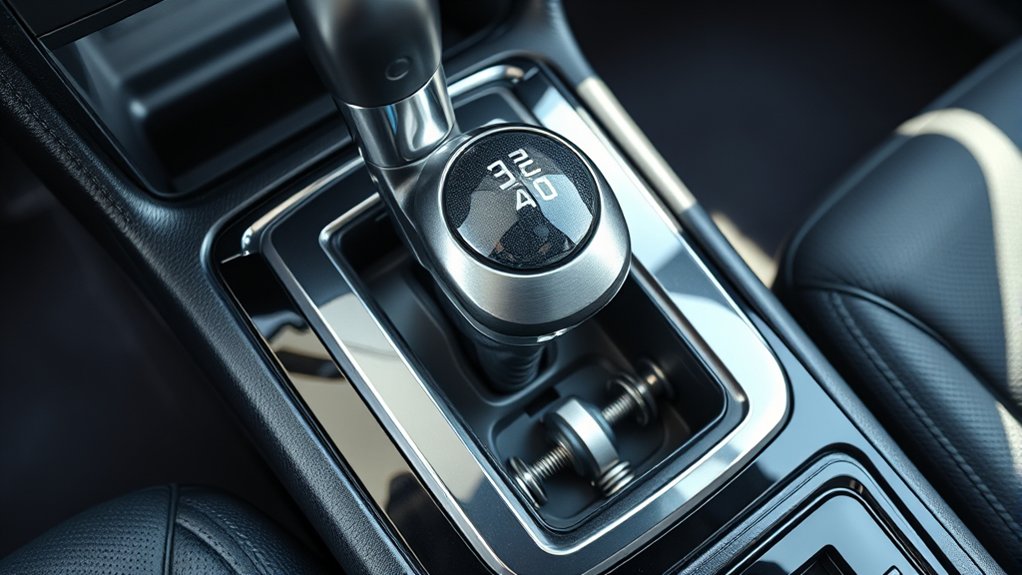
A gear shifter is an essential component that lets you control your car’s speed and power by selecting the right gear for driving. Whether you have a manual or automatic transmission, understanding how a gear shifter works is key to maintaining your vehicle’s performance.
It relies on mechanical rods, cables, or electronic signals to move transmission components and engage gears like park, reverse, or drive.
Proper use of the gear shifter helps your engine run smoothly and extends your vehicle’s life. Manual and automatic shifters depend on precise linkages or advanced electronics to ensure smooth, safe shifts.
There’s much to learn about how these systems keep your drive efficient and reliable.
Key Takeaways
- A gear shifter controls the transmission by selecting gears like park, reverse, neutral, and drive for appropriate driving conditions. Mechanical linkages or cables connect the shifter to the transmission, moving components to engage the chosen gear. Manual shifters use direct mechanical movement to slide gears, while automatic shifters rely on electronic sensors and hydraulic systems.
- Proper adjustment and smooth operation of linkages ensure precise and reliable gear changes, preventing wear and damage. Advanced electronic shifters use signals and haptic feedback instead of mechanical linkages for faster, smoother, and safer shifting.
What Is a Gear Shifter and Why It’s Important
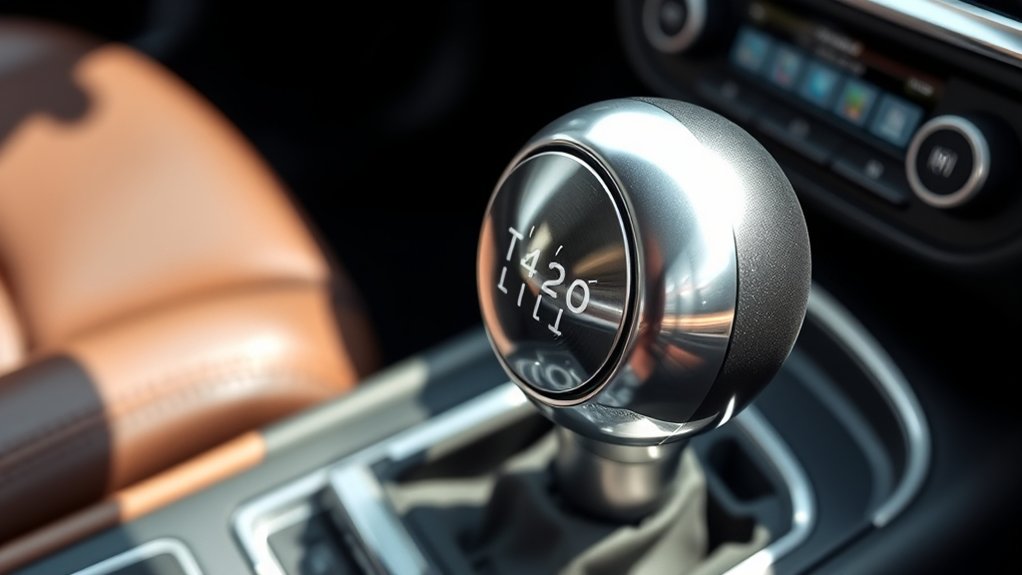
What exactly does a gear shifter do in your vehicle? It lets you control the transmission, choosing the right gear for your driving needs. Whether you’re starting, accelerating, or cruising, the gear shifter helps the engine deliver power efficiently to the wheels.
Without it, you couldn’t switch between park, reverse, neutral, or drive modes. This control is essential because it affects your car’s performance, fuel efficiency, and safety. When you shift gears properly, you reduce engine strain and wear, helping your vehicle last longer.
How Linkages and Cables Help Gear Shifters Work
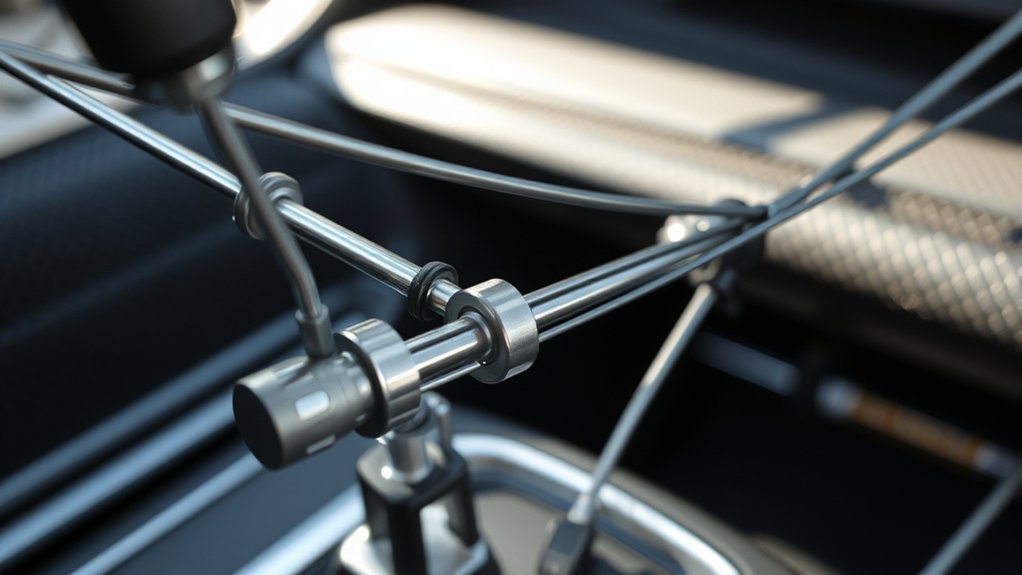
When you shift gears, linkages and cables work together to move the transmission into the right position. Different types of linkages handle this movement, while cables transfer your input smoothly and accurately.
Keeping these parts properly adjusted is key to making sure your gear shifter works without a hitch.
Types Of Gear Linkages
How exactly do gear shifters connect to the transmission inside your vehicle? They use different types of gear linkages, primarily mechanical rods, cables, or a combination of both. Mechanical linkages use solid rods or levers to directly transfer your gear shifts to the transmission, offering a very tactile and responsive feel.
Cable linkages, on the other hand, rely on flexible cables, allowing for smoother movement and easier routing through tight spaces. Some vehicles combine these methods to balance precision and flexibility. Each type has its advantages: rods provide sturdiness and immediate feedback, while cables offer versatility and reduced vibration.
Understanding these linkage types helps you appreciate how your gear shifter physically interacts with the transmission to change gears efficiently and reliably.
Cable Mechanism Functions
Why do cable mechanisms play such a crucial role in gear shifters? They act as the direct link between your gear lever and the transmission, allowing smooth and precise gear changes. When you move the shifter, the cable pulls or releases, transmitting that motion to the transmission’s selector forks.
This mechanism ensures your input translates efficiently into gear engagement without requiring complex hydraulic or electronic systems. Cables also offer flexibility in routing, so manufacturers can design compact and ergonomic shifter setups. Because they’re relatively simple and durable, cables reduce maintenance needs while maintaining reliable performance.
In short, cable mechanisms help you control gear shifts accurately and effortlessly, making your driving experience smoother and more responsive.
Linkage Adjustment Importance
Although cables transmit your gear shifts, linkages play an equally essential role by guaranteeing those movements align correctly with the transmission’s components. If linkages aren’t properly adjusted, your gear shifter may feel loose, imprecise, or even fail to engage the desired gear. Proper linkage adjustment ensures smooth, accurate shifting and prevents premature wear on transmission parts.
Here’s why linkage adjustment matters:
- Maintains accurate gear selection by aligning shifter movements with transmission inputs.
- Prevents gear slipping or difficulty when changing gears.
- Reduces stress on transmission components, extending their lifespan.
- Enhances your overall driving experience with smoother and more responsive shifts.
Paying attention to linkage adjustment keeps your gear shifter working reliably and efficiently.
How Manual Gear Shifters Control Your Car’s Transmission
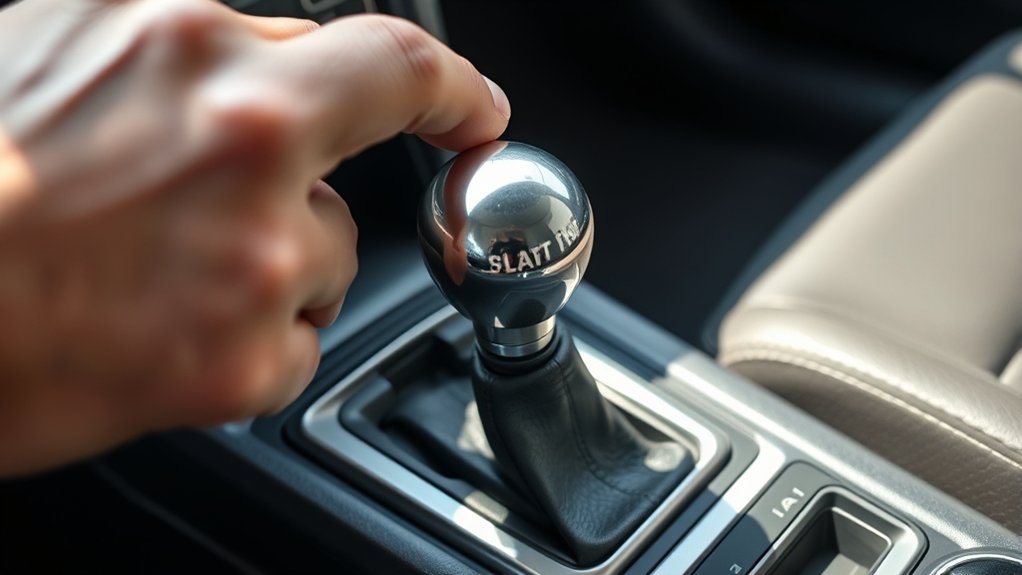
When you move the gear shifter in a manual car, you’re directly controlling the transmission’s gear selection. The shifter connects to the transmission through a series of linkages or cables. When you push, pull, or slide the shifter, these linkages move corresponding forks inside the transmission.
These forks engage different gears by sliding them along shafts, changing how power flows from the engine to the wheels. You control gear engagement precisely by feeling the shifter’s resistance and movement. This feedback helps you avoid grinding gears or mis-shifting.
Because you manually choose when to change gears, you have greater control over engine power and vehicle speed. This direct mechanical connection guarantees your input translates immediately into the transmission’s response, making driving a manual both engaging and skillful.
How Automatic Gear Shifters Work Behind the Scenes
When you shift gears in an automatic car, electronic control systems take charge of selecting the right gear for you. These systems work closely with a hydraulic transmission mechanism to smoothly change gears without any input from you.
Understanding how these parts function together will show you what really happens behind the scenes.
Electronic Control Systems
Since today’s automatic gear shifters rely heavily on electronic control systems, understanding how these systems work is crucial to grasping the full picture. You interact with a gear selector that sends signals to a Transmission Control Unit (TCU), which acts as the brain. The TCU processes inputs like vehicle speed, engine load, and throttle position, then decides the most suitable gear.
This system enhances shifting accuracy and responsiveness without you feeling any delay.
Here’s what happens behind the scenes:
- Sensors collect real-time data from the engine and wheels.
- The TCU analyzes this data and determines gear changes.
- Electronic actuators receive commands from the TCU to engage gears.
- Feedback loops ensure shifts happen smoothly and efficiently.
You get seamless, smart shifting with these electronic controls.
Hydraulic Transmission Mechanism
While electronic control systems direct gear changes with precision, the actual shifting in an automatic transmission depends on a hydraulic mechanism working quietly beneath the surface. You rely on hydraulic fluid, pressurized by a pump, to activate various clutches and bands inside the transmission. These components engage and disengage specific gear sets, enabling smooth changeovers.
When you select a gear, valves control fluid flow to apply the right pressure at the right time, moving pistons that shift gears seamlessly. This system responds instantly to commands from the electronic controls, translating signals into mechanical action. Without this hydraulic network, your transmission couldn’t perform gear changes automatically, making it a crucial link between your input and the car’s movement.
Gear Shifter Problems That Affect Performance
Although gear shifters are designed to operate smoothly, issues can arise that directly impact your vehicle’s performance. When your gear shifter isn’t working right, you might notice problems that reduce driving efficiency or cause unsafe conditions.
Here are four common gear shifter problems that affect performance:
- Stiff or Hard Shifting – This can make changing gears difficult and strain the transmission.
- Gear Slippage – The shifter jumps out of gear unexpectedly, risking loss of control.
- Delayed Gear Engagement – Your vehicle hesitates before moving after shifting, causing a jerky ride.
- Loose or Wobbly Shifter – This reduces your precision in selecting gears and might indicate worn components.
Addressing these issues quickly helps maintain smooth, reliable gear changes and keeps your vehicle running safely.
Using a Gear Shifter Smoothly for Better Driving
Mastering smooth gear shifting improves your driving experience and extends your vehicle’s lifespan. To shift gears smoothly, first, make sure you fully depress the clutch pedal before moving the gear shifter. This prevents grinding and reduces wear on transmission components.
When you change gears, move the shifter confidently but gently—avoid forcing it, which can cause damage. Pay attention to engine speed and match it to the appropriate gear; this helps maintain control and reduces strain. Practice anticipating gear changes so you can shift proactively instead of reactively.
Finally, avoid resting your hand on the gear shifter while driving, as this can cause unnecessary pressure and premature wear. By being deliberate and attentive, you’ll enjoy a smoother ride and keep your transmission healthier longer.
Future Trends and Innovations in Gear Shifters and Controls
As technology advances, gear shifters and controls are evolving to enhance both convenience and performance. You’ll notice new designs focusing on user experience and smarter integration with vehicle systems. Here are some trends shaping the future:
- Haptic Feedback: You’ll feel subtle vibrations or resistance to confirm gear changes without looking.
- Gesture Controls: Imagine shifting gears with simple hand movements, reducing physical effort.
- Adaptive Shifting: Systems learn your driving habits and adjust shifting patterns for efficiency and comfort.
- Compact Designs: Space-saving electronic shifters free up cabin room and offer sleek aesthetics.
These innovations aim to make your driving smoother, safer, and more intuitive, blending technology seamlessly with traditional controls.
How Modern Electronic Gear Shifters Differ From Traditional Ones
When you shift gears in a modern car, you’ll notice that electronic gear shifters operate quite differently from traditional mechanical ones. Instead of physically moving linkages, electronic shifters send signals to the transmission, offering smoother, quicker shifts and freeing up space in the cabin.
You’ll also find safety features like automatic return to park when the engine turns off.
| Feature | Traditional Shifters |
|---|---|
| Operation | Mechanical linkages |
| Feedback | Physical resistance |
| Space requirement | Larger, fixed lever |
| Safety features | Limited, manual |
| Feature | Electronic Shifters |
| Operation | Electronic signals |
| Feedback | Haptic or simulated |
| Space requirement | Compact, flexible design |
| Safety features | Automatic park, shift lock |
Frequently Asked Questions
Can I Install a Gear Shifter Myself at Home?
Yes, you can install a gear shifter yourself at home if you have basic mechanical skills and proper tools. Just follow the instructions carefully, take your time, and don’t hesitate to watch tutorial videos for guidance.
What Materials Are Gear Shifters Typically Made From?
Gear shifters are typically made from durable materials like steel, aluminum, and reinforced plastics. You’ll find leather or rubber grips for comfort, too. These materials guarantee strength, smooth operation, and a good feel when you shift gears.
How Does Temperature Affect Gear Shifter Performance?
Temperature can make your gear shifter feel like it’s stuck in a frozen tundra or melting desert. Extreme cold stiffens components, while heat can cause expansion, making shifting sluggish or imprecise until things normalize.
These changes affect the smoothness and accuracy of your gear changes. When cold, lubricants thicken, increasing resistance. In heat, parts may expand slightly, disrupting precise movements.
Are There Gear Shifters Designed Specifically for Racing Cars?
Yes, you’ll find gear shifters designed specifically for racing cars. They’re built for quick, precise shifts, often featuring paddle shifters or sequential designs. These help you change gears faster and maintain better control on the track.
How Do Gear Shifters Vary Between Different Vehicle Brands?
You’ll notice gear shifters differ by brand in design, feel, and shifting mechanism. Some use traditional sticks, others paddle shifters or electronic selectors. Each offers unique feedback tailored to the vehicle’s style and performance goals.
Conclusion
Now that you know how a gear shifter works, you see it’s the heartbeat of your driving experience. Whether manual, automatic, or electronic, it connects you to your car’s power, making every shift feel like a dance between you and the machine.
Keep it smooth, understand its quirks, and you’ll turn every drive into a seamless journey. After all, mastering your gear shifter is like holding the keys to effortless control.
By understanding how a gear shifter works, you gain confidence and precision in every shift. This knowledge enhances your driving skills and ensures a safer, more enjoyable ride. Embrace the power of your gear shifter and experience the true joy of driving.

