

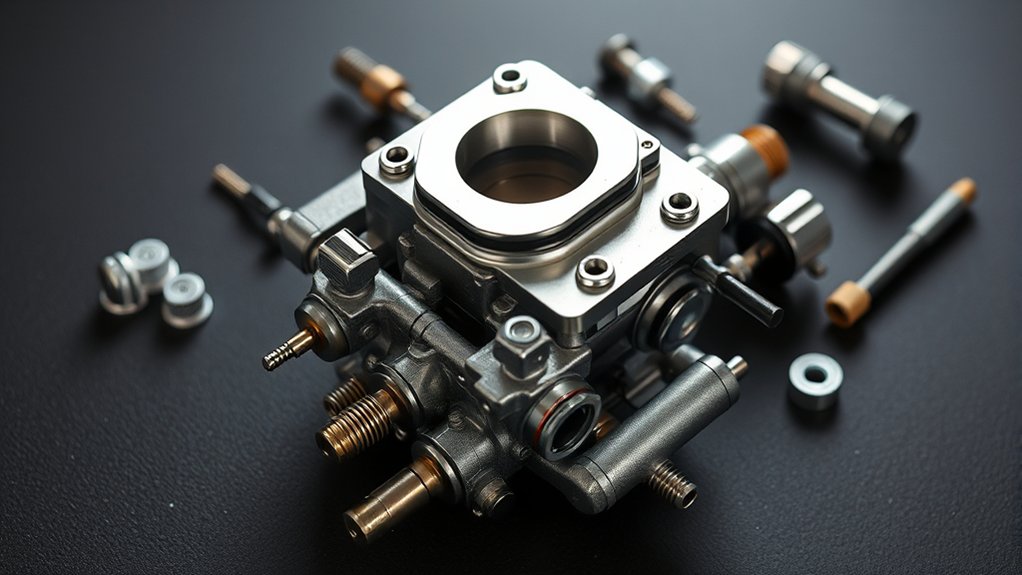
You start by drawing in air through the filter, where it speeds up through the venturi, creating a vacuum that pulls fuel from the float chamber.
The float keeps fuel levels steady by opening or closing a valve.
Jets control fuel flow based on engine speed, while the throttle adjusts airflow and fuel intake.
The choke enriches the mix during cold starts.
Proper tuning and maintenance guarantee smooth performance.
Keep exploring to understand common issues and fine-tuning tips.
Key Takeaways
- Air enters through the air filter, speeds up in the venturi, creating a vacuum that draws fuel from the float chamber into the airstream.
- The float chamber regulates fuel level by controlling the needle valve to maintain steady fuel delivery and prevent overflow or starvation.
- Jets control fuel flow: the idle jet supplies fuel at low speeds, while the main jet handles higher speeds, with choke enriching fuel during cold starts.
- The throttle valve adjusts airflow and fuel intake based on driver input, with an accelerator pump adding extra fuel during sudden acceleration.
- Regular maintenance and tuning involve cleaning jets, adjusting idle and mixture screws, and inspecting components to ensure smooth engine performance.
What Is a Carburetor and Why Does It Matter?
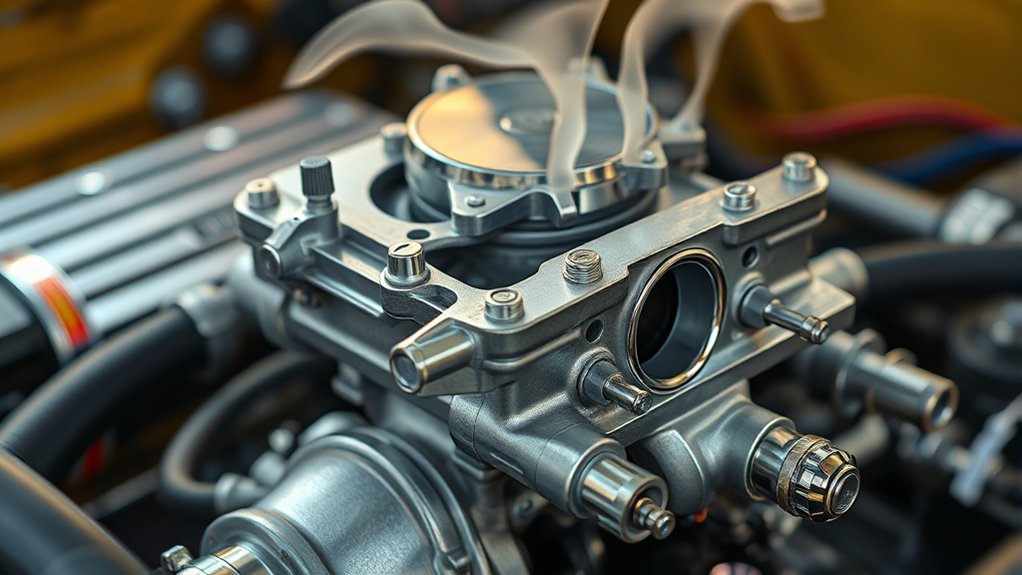
Although modern engines often rely on fuel injection, understanding a carburetor is essential because it’s the device that mixes air and fuel to power many older vehicles. You’ll find a carburetor sitting atop the engine, working to blend the right amount of gasoline with air before sending it into the combustion chamber. This mixture fuels the engine, making it run smoothly and efficiently.
Without a properly functioning carburetor, your engine might stall, run rough, or waste fuel. Knowing what a carburetor does helps you appreciate how your vehicle converts fuel into motion. Even if you don’t work on cars yourself, understanding this basic part can make troubleshooting and maintenance easier when dealing with older engines.
How Air and Fuel Enter the Carburetor
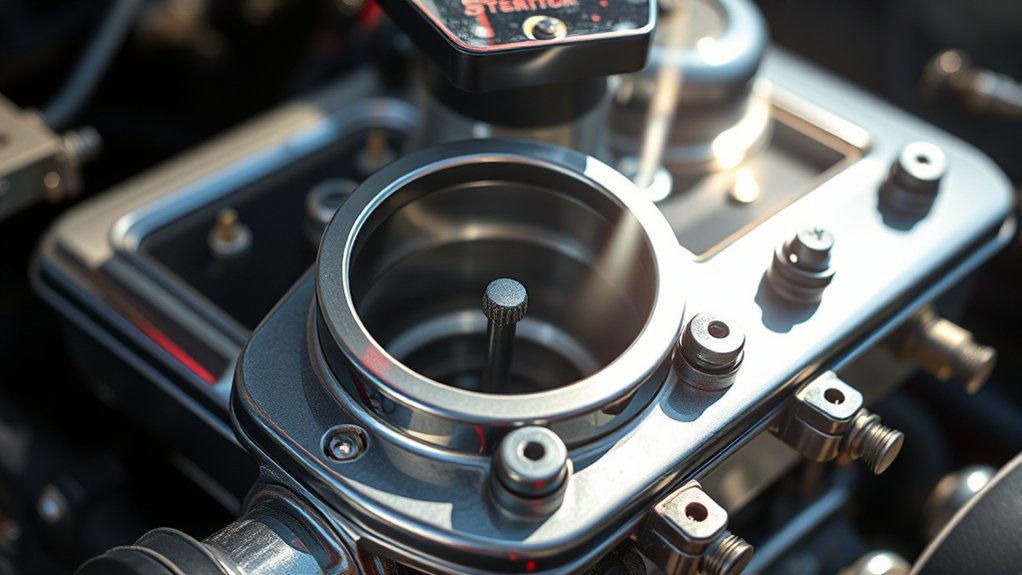
You’ll see how air gets pulled into the carburetor through the air intake process. Then, fuel joins the airflow via the fuel delivery mechanism.
Finally, they mix together to create the right blend for your engine to run smoothly.
Air Intake Process
How exactly does air enter the carburetor to mix with fuel? As you start the engine, air is drawn through the air filter, which traps dirt and debris to keep the carburetor clean. This filtered air then flows into the carburetor’s intake, where it speeds up through a narrow section called the venturi.
The venturi’s constriction causes a drop in air pressure, which helps draw fuel into the airflow (more on that soon). You’ll notice the airflow is smooth and controlled, ensuring the right amount of air mixes with fuel for efficient combustion. By regulating air intake, the carburetor helps your engine run smoothly under different conditions, whether idling or accelerating.
This airflow process is vital before fuel even enters the mix.
Fuel Delivery Mechanism
Where does the fuel come from once the air enters the carburetor? It flows from the fuel tank through the fuel line, reaching the carburetor’s float chamber. Inside this chamber, a float regulates fuel level, guaranteeing a consistent supply.
As the float rises or falls with the fuel level, it opens or closes a needle valve, preventing overflow or starvation. The fuel then travels through jets—small passages that control the amount delivered. These jets release fuel into the carburetor throat, ready to mix with incoming air.
This delivery mechanism assures fuel is available precisely when the engine needs it, maintaining smooth operation. You’ll see how this system keeps fuel flowing steadily before the air and fuel mix further down the line.
Mixing Air And Fuel
When exactly do air and fuel combine inside the carburetor? They mix right at the venturi, a narrow section where air speeds up, creating a vacuum that pulls fuel from the float chamber. This suction draws fuel into the airstream, atomizing it for efficient combustion.
Here’s how air and fuel enter the carburetor:
| Step | Description |
|---|---|
| 1. Air Intake | Air enters through the air filter |
| 2. Venturi Effect | Air speeds up, lowering pressure |
| 3. Fuel Draw | Vacuum pulls fuel from the float chamber |
| 4. Mixing | Fuel atomizes and blends with incoming air |
You’ll see this precise interaction guarantees the engine gets the right mix for smooth running.
How the Venturi Creates the Right Air-Fuel Mix
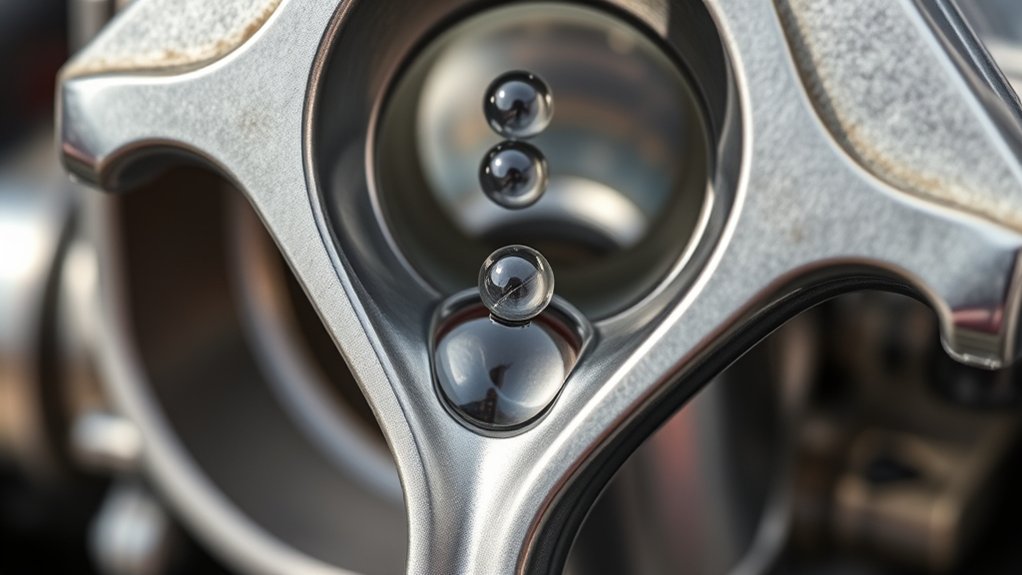
Why does the Venturi play such a crucial role in a carburetor? It’s all about controlling airflow speed and pressure to mix fuel and air perfectly. As air flows through the narrow Venturi tube, it speeds up, causing pressure to drop.
This pressure drop sucks fuel from the jet into the airstream. You’ll notice this creates a fine mist of fuel, which mixes thoroughly with the incoming air. This precise mixture ensures your engine runs efficiently, delivering power without wasting fuel or producing excess emissions.
The Venturi’s shape and size are carefully designed to balance airflow and fuel delivery, so your engine gets the right air-fuel ratio under different conditions. Without the Venturi, that perfect mix just wouldn’t happen.
How the Float Chamber Regulates Fuel Levels
You’ll see that the float chamber plays a key role in keeping fuel at the right level inside the carburetor. It controls how much fuel flows into the chamber, making sure the engine gets a steady supply.
Let’s look at how this simple mechanism keeps everything balanced.
Float Chamber Functionality
Although it might seem simple, the float chamber plays a crucial role in maintaining the right fuel level inside the carburetor. As fuel enters the chamber, a float rises with the fuel level. When the float reaches a certain height, it pushes a needle valve to close the fuel inlet, stopping more fuel from entering.
When fuel is drawn out to mix with air, the float drops, opening the valve and allowing more fuel in. This constant adjustment guarantees the fuel stays at an ideal level, preventing overflow or starvation. By keeping fuel steady, the float chamber ensures the carburetor can deliver the proper fuel-air mixture for smooth engine performance.
You rely on this mechanism for consistent operation every time you start your car.
Fuel Level Control
The float chamber doesn’t just hold fuel—it actively manages its level to keep your engine running smoothly. Inside, a float rises and falls with the fuel level. When fuel drops, the float lowers, opening a valve that lets more fuel in from the tank.
As fuel fills the chamber, the float rises and pushes the valve closed, stopping the flow. This precise balance guarantees the carburetor always has the right amount of fuel ready to mix with air. If the level’s too low, your engine starves; too high, and fuel floods the system.
How Idle and Main Jets Control Carburetor Fuel Delivery
When you adjust the idle and main jets, you directly control how much fuel mixes with air at different engine speeds. The idle jet manages fuel flow when the engine runs at low speeds or idle. It meters a small, precise amount of fuel to keep the engine steady without stalling.
As you increase throttle, the main jet takes over, supplying more fuel for higher engine speeds and loads. Both jets work by restricting fuel flow through calibrated openings—larger jets let more fuel through, enriching the mixture, while smaller jets lean it out. Proper jet sizing ensures the engine runs smoothly, avoids hesitation, and maintains fuel efficiency.
Understanding these jets helps you tune your carburetor for peak performance across all driving conditions.
How the Throttle Valve Controls Fuel Flow
How exactly does the throttle valve influence fuel flow in your carburetor? The throttle valve acts like a gate, controlling how much air enters the engine. When you press the accelerator, the valve opens wider, allowing more air to rush in.
This increase in airflow lowers pressure in the carburetor’s venturi, which in turn draws more fuel through the jets into the air stream. As a result, the fuel mixture becomes richer, providing the engine with the power it needs. When you ease off the accelerator, the throttle valve narrows, restricting airflow and reducing fuel flow accordingly.
This precise control ensures your engine runs smoothly across all speeds and loads, balancing fuel efficiency and performance seamlessly.
How the Choke Boosts Fuel for Easy Starting
Opening the throttle valve lets in more air and fuel, but starting a cold engine requires a richer mixture than normal. That’s where the choke comes in. When you engage the choke, it partially closes the carburetor’s air intake, reducing airflow.
This restriction increases the vacuum inside the carburetor, drawing more fuel through the jets. The result is a fuel-rich mixture that helps the engine start easily when cold. Without enough fuel, the engine struggles or stalls during startup.
As the engine warms up, you gradually open the choke, allowing more air in and leaning out the mixture to normal levels. Understanding how the choke boosts fuel helps you appreciate its role in smooth cold starts and prevents flooding or stalling.
How the Carburetor Responds to Engine Load and Speed
As you accelerate or carry heavier loads, the carburetor adjusts the air-fuel mixture to match the engine’s demands. It senses changes in throttle position, allowing more air to flow in. This increased airflow lowers the pressure in the venturi, drawing more fuel through the jets.
The carburetor’s accelerator pump quickly adds extra fuel to prevent hesitation during sudden acceleration. At higher engine speeds, the carburetor supplies a richer mixture to maintain power and prevent knocking. Conversely, at idle or low speeds, it leans the mixture to save fuel and reduce emissions.
This balance guarantees your engine runs smoothly across various conditions, providing the power you need without wasting fuel or overloading the system.
Common Carburetor Problems and How They Affect Performance
When your carburetor starts acting up, you’ll notice changes in your engine’s performance almost immediately. Common problems like clogged jets, vacuum leaks, or worn throttle shafts can cause rough idling, poor acceleration, or stalling. These issues disrupt the air-fuel mixture, leading to inefficient combustion and reduced power.
Understanding these problems helps you diagnose issues faster and keep your engine running smoothly.
| Problem | Cause | Effect on Performance |
|---|---|---|
| Clogged Jets | Dirt or debris buildup | Rough idling, hesitation |
| Vacuum Leaks | Cracked hoses | High idle, poor fuel economy |
| Worn Throttle Shaft | Loose fit | Unstable idle, stalling |
| Float Issues | Improper fuel level | Flooding or fuel starvation |
| Dirty Choke | Sticking mechanism | Hard starts, poor cold running |
How to Maintain Your Carburetor for Best Results
Maintaining your carburetor regularly guarantees your engine runs smoothly and efficiently. Start by inspecting the air filter and replacing it if it’s dirty, as a clogged filter restricts airflow and affects carburetor performance.
Next, clean the exterior and interior parts with a carburetor cleaner to remove dirt and varnish buildup. Check the fuel lines for cracks or leaks and replace them if necessary to prevent fuel delivery issues. Also, drain the float bowl periodically to remove accumulated water and sediment.
Tighten all mounting bolts and inspect the throttle linkage for proper movement. By performing these simple maintenance steps, you’ll prevent common carburetor problems and extend its lifespan, keeping your engine responsive without the need for frequent repairs.
How to Tune a Carburetor for Smooth Engine Performance
After keeping your carburetor clean and well-maintained, tuning it properly will help your engine run even smoother. Start by adjusting the idle speed screw to set the engine’s idle RPM within the manufacturer’s recommended range. Next, fine-tune the air-fuel mixture screws; turning them in or out changes the fuel flow, so adjust slowly while listening to engine response.
Aim for the highest, smoothest idle without hesitation or stalling. Once you find that balance, recheck the idle speed and adjust if necessary. Finally, test drive your car to ensure smooth acceleration and consistent performance.
Frequently Asked Questions
Can a Carburetor Be Used With Modern Fuel Injection Systems?
No, you can’t use a carburetor with modern fuel injection systems because they operate differently. Fuel injection precisely controls fuel delivery electronically, while carburetors rely on airflow and mechanical processes, making them incompatible in the same system.
What Materials Are Carburetors Typically Made From?
Carburetors are typically made from aluminum, zinc, or die-cast alloys because they’re lightweight and resist corrosion. You’ll also find brass and steel parts for durability in specific components like jets and screws.
How Does Altitude Affect Carburetor Performance?
Think of your carburetor as a chef adjusting seasoning; at higher altitudes, thinner air means less oxygen, so your carburetor must enrich the fuel mix.
If it doesn’t, your engine will run weak and sputter.
Are Carburetors Environmentally Friendly Compared to Fuel Injectors?
You won’t find carburetors as environmentally friendly as fuel injectors since they’re less precise, causing higher emissions. Fuel injectors control fuel better, reducing waste and pollution, so they’re the cleaner, more efficient choice for your engine.
Can Carburetors Be Converted to Run on Alternative Fuels?
Like a wizard adapting spells, you can convert carburetors to run on alternative fuels like ethanol or propane. It takes adjustments and tuning, but you’ll breathe new life into your engine, embracing greener energy options.
Conclusion
Now that you know how a carburetor works, you’re basically a fuel-mixing wizard! This tiny device controls your engine’s entire performance—without it, your car wouldn’t even cough to life.
Mastering its parts and tuning it right means you’re in total command, turning chaos into smooth, powerful rides. Ignore it, and you might as well be driving a lawnmower.
So get hands-on, keep it clean, and watch your engine roar like never before! Understanding how a carburetor works is key to maintaining optimal engine performance and fuel efficiency.

