

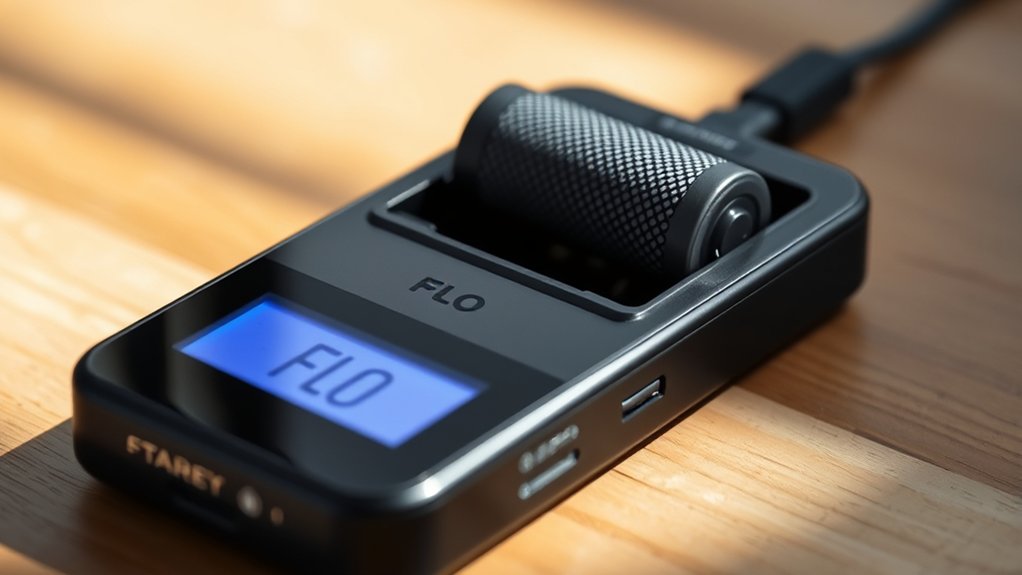
When you see FLO on your battery charger, it indicates a low-flow mode designed to optimize charging. This mode reduces the current as your battery approaches full capacity, ensuring safer and more efficient power delivery.
FLO helps prevent overheating by adjusting the charging speed automatically. It delivers just the right amount of power, which extends your battery’s life. This smart feature balances safety and efficiency during the charging process.
If you want to learn how FLO protects your battery and improves charging performance, keep exploring the details behind this innovative mode. It’s a key factor in preserving your battery’s overall function and durability.
Key Takeaways
- FLO on a battery charger indicates low flow or reduced current during charging, usually when the battery is nearly full.
- FLO mode helps prevent overheating and battery damage by adjusting power delivery based on battery needs.
- It signals the charger is in maintenance or float mode, keeping the battery safely topped off.
- FLO is often shown by icons, text labels like “Float,” or color-coded indicators on the charger display.
- This mode ensures safer, more efficient charging by reducing current as the battery reaches full capacity.
What Does FLO Mean on a Battery Charger?
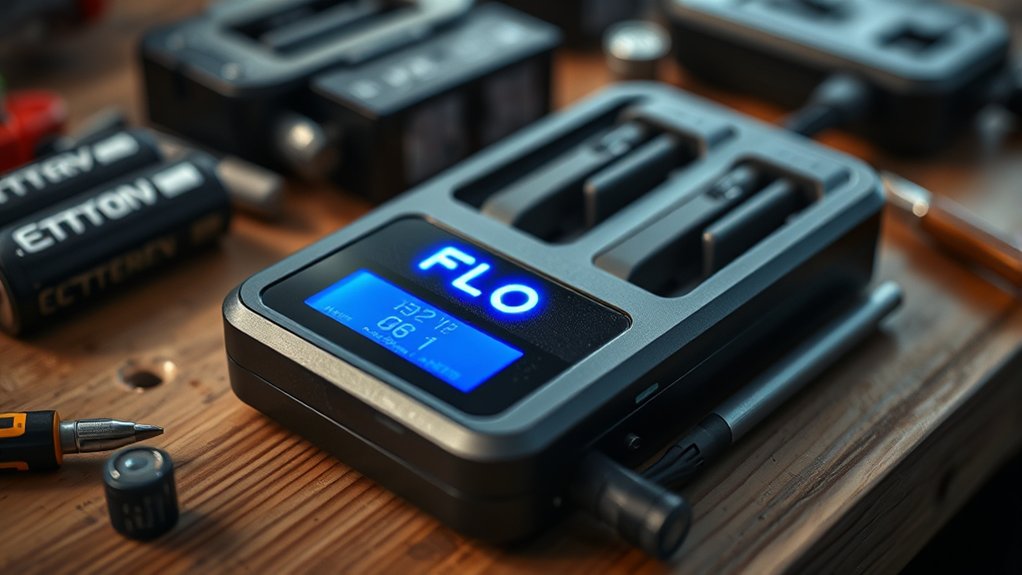
When you see FLO on a battery charger, it usually indicates a low flow or low current state in the charging process. This means the charger is delivering a reduced amount of current to the battery, often because the battery is nearly full or its condition limits the charging rate. You might notice this when the battery is almost charged and the charger shifts to a trickle or maintenance mode to avoid overcharging.
FLO mode helps prevent overheating and protects the battery from damage by lowering the current flow. If you see FLO, it’s a sign your charger is adjusting to the battery’s needs, ensuring a safer and more efficient charge without pushing too much power at once.
Why FLO Mode Helps Your Battery Last Longer
Because FLO mode reduces the charging current as your battery nears full capacity, it helps prevent overheating and excessive wear. This gentle approach keeps your battery healthier over time, extending its usable life.
Instead of pushing a full current continuously, FLO mode trickles the charge, maintaining ideal battery conditions.
Here’s how FLO mode benefits your battery:
| Charging Phase | Current Level | Battery Impact |
|---|---|---|
| Initial Charging | High | Quick energy input |
| Mid Charging | Moderate | Balanced charging |
| Near Full Capacity | Low | Prevents overheating |
| Maintenance | Minimal | Keeps battery topped |
How FLO Charging Is Different From Standard Charging
You’ll notice that FLO charging manages speed differently than standard chargers, often prioritizing battery health over quick fills.
It also uses energy more efficiently, reducing waste during the charging process. Let’s explore how these differences impact your battery and overall charging experience.
Charging Speed Comparison
How quickly your device charges can make all the difference in your daily routine. FLO charging speeds up the process by intelligently adjusting power flow to your battery. Unlike standard charging, which often delivers a steady but slower current, FLO ramps up charging when the battery can safely handle it.
This means you’ll see your battery percentage climb faster, especially during the initial phase of charging. As the battery nears full capacity, FLO tapers the power to prevent damage, balancing speed with safety. So, when you use a FLO charger, you get a quicker charge without compromising battery health.
In contrast, standard chargers don’t optimize power delivery, resulting in longer wait times before your device is ready to go.
Energy Efficiency Differences
What makes FLO charging stand out regarding energy efficiency? Unlike standard chargers that often waste power by continuously supplying current even after the battery’s nearly full, FLO chargers adjust their output dynamically. They monitor the battery’s condition and reduce energy flow as the charge nears completion, preventing overcharging and minimizing heat loss.
This smart regulation means you use less electricity overall, saving energy and extending your battery’s lifespan. When you choose FLO charging, you’re opting for a method that maximizes power use without unnecessary waste. Standard chargers, by contrast, can be less precise, leading to higher energy consumption and potential battery wear.
How to Identify FLO Mode on Different Battery Chargers
You can spot FLO mode on most chargers by looking for specific indicators like unique icons or text on the display. Different brands may show FLO mode in various ways, so it helps to familiarize yourself with your charger’s screen.
Knowing these display variations will make it easier to confirm when FLO charging is active.
Common FLO Indicators
Although battery chargers vary widely, most include specific indicators that show when they enter FLO mode. You’ll often notice a dedicated FLO light or icon on the charger’s front panel. This indicator might glow steady or blink to confirm the charger is applying a float charge to maintain battery health.
Some models use color codes—green or blue lights usually signal FLO mode, while others might display “FLO” or “Float” on a small screen. In many cases, the charger’s LED pattern changes distinctly from the bulk or fast-charging phase, helping you recognize when it has shifted to a gentler, maintenance charge.
Charger Display Variations
Recognizing FLO mode can vary depending on the charger’s design and display features. Some chargers show “FLO” directly on an LCD screen, making it easy to spot. Others use indicator lights or symbols, like a blinking battery icon or a specific color pattern, to signal FLO mode.
On simpler chargers, you might see a steady green light when FLO mode is active. In more advanced models, the display might cycle through multiple charging stages, with FLO appearing as one of the labeled steps. If you’re unsure, check your charger’s manual or look for online guides that explain your model’s display.
Being familiar with these variations helps you quickly confirm when your battery has reached the float charge stage.
Which Battery Chargers Feature FLO Mode?
When choosing a battery charger, it’s important to know which models include FLO mode, as this feature optimizes charging efficiency and extends battery life. FLO mode is commonly found in smart chargers designed for lead-acid and lithium-ion batteries. These chargers adjust current flow dynamically to prevent overcharging and overheating.
Here are four types of battery chargers that often feature FLO mode:
- Smart automotive chargers – Ideal for car and motorcycle batteries.
- Multi-stage chargers – Designed for different battery chemistries.
- Portable USB battery chargers – For smaller rechargeable batteries.
- Industrial-grade chargers – Used in heavy machinery and equipment.
Choosing a charger with FLO mode assists in maintaining battery health and ensures safer charging cycles.
When Should You Use FLO Mode on Your Charger?
You should use FLO mode when your battery is in prime condition and ready for efficient charging. This mode helps maintain the battery’s health by preventing overcharging and maximizing charging speed.
Understanding when to switch to FLO mode can improve your charger’s performance and extend your battery’s lifespan.
Optimal Battery Conditions
How do you know the best time to switch your charger to FLO mode? You want to use FLO mode when your battery is in specific conditions that benefit from a gentle, steady charge. FLO mode prevents overcharging and is perfect for maintaining battery health.
Here are four optimal battery conditions for using FLO mode:
- When your battery is partially discharged but not completely dead.
- If your battery is older and more sensitive to high-current charging.
- When storing your battery for long periods and you want to maintain its charge.
- If your battery tends to overheat during fast charging.
Using FLO mode in these situations helps extend battery life and ensures a safer charge.
Charging Efficiency Tips
Knowing the right moment to switch your charger to FLO mode can markedly improve charging efficiency. You should use FLO mode when your battery is nearly full but still needs a gentle charge to reach 100%. This mode delivers a low, steady current, preventing overcharging and excessive heat buildup.
It’s perfect for maintaining battery health during the final charging phase. Avoid using FLO mode for dead or deeply discharged batteries, as it won’t provide enough power to revive them quickly. Instead, start with a standard or bulk charge mode, then switch to FLO as the battery approaches full capacity.
The Benefits of FLO Charging for Battery Longevity
Although many battery chargers provide quick power, FLO charging stands out by extending battery life considerably. When you use FLO charging, you help your battery avoid stress and overheating, which are major causes of premature wear. This gentle charging method balances power delivery, ensuring your battery maintains peak health over time.
FLO charging protects your battery from stress and overheating, promoting longer-lasting, healthier performance.
Here’s what FLO charging does for you:
- Prevents overcharging by automatically adjusting current flow.
- Minimizes heat buildup to protect battery cells.
- Extends the number of charge cycles your battery can handle.
- Maintains consistent voltage, reducing chemical degradation inside the battery.
Troubleshooting Common Issues With FLO Charging
While FLO charging offers many advantages for battery health, you might occasionally run into some issues that can interrupt its smooth operation. To troubleshoot effectively, start by checking your charger’s connections and ensure the battery is compatible with FLO mode.
If the charger displays an error or doesn’t switch to FLO, resetting the device often helps. Also, make sure the battery terminals are clean and free from corrosion.
| Issue | Possible Cause | Solution |
|---|---|---|
| Charger not starting | Loose connections | Check and tighten connections |
| No FLO indication | Battery incompatibility | Confirm battery supports FLO |
| Error code displayed | Software glitch | Reset or update charger firmware |
| Slow charging | Dirty terminals | Clean battery terminals |
| Charger overheating | Overuse or ventilation | Allow cool down and improve airflow |
Does FLO Mode Save Energy and Charge Faster?
If you want to save energy and cut down charging time, FLO mode can be a smart choice. FLO adjusts the charging current based on your battery’s condition, optimizing power use and efficiency. This means you won’t waste energy with excessive charging or overheating.
Plus, it speeds up charging by delivering just the right amount of juice when your battery needs it most. Here’s what happens when you use FLO mode:
- Your charger senses battery status in real-time.
- It reduces power during full or near-full charge stages.
- Charging current ramps up when the battery is low.
- It prevents overcharging, extending battery life and saving energy.
With FLO mode, you get faster, smarter charging that’s kinder to your battery and your electric bill.
Tips to Charge Your Battery Better With FLO Mode
Using FLO mode effectively can make a big difference in how well your battery charges and lasts. First, always start with a battery that’s clean and dry to guarantee proper contact. Then, connect your charger securely before activating FLO mode to avoid interruptions.
Make sure your environment is cool and well-ventilated, as excessive heat can reduce charging efficiency. Avoid using the device while charging in FLO mode, so the charger can maintain a steady flow without interruption.
Finally, monitor the charging process occasionally; FLO mode adjusts current flow to protect your battery, but it’s good to confirm everything runs smoothly. By following these tips, you’ll get the most out of FLO mode and extend your battery’s lifespan.
Frequently Asked Questions
Can FLO Mode Damage Non-Rechargeable Batteries?
Yes, FLO mode can damage non-rechargeable batteries because it applies charging current. You shouldn’t use it with those batteries, as they aren’t designed to handle recharging and may leak, overheat, or even explode.
Is FLO Mode Compatible With All Battery Chemistries?
You can’t fit a square peg in a round hole—FLO mode isn’t compatible with all battery chemistries. It’s designed mainly for lead-acid types, so using it on lithium or NiMH batteries could cause trouble or damage.
How Does Temperature Affect FLO Charging Efficiency?
You’ll find that temperature directly impacts FLO charging efficiency; high temperatures can reduce efficiency and damage batteries, while cold temps slow the chemical reactions, making charging less effective.
Always charge within recommended temperature ranges.
Can FLO Mode Be Used for Fast Charging Electric Vehicles?
Think of FLO mode like a gentle jog, not a sprint. You can’t use it for fast charging electric vehicles because it prioritizes battery health over speed, ensuring your battery stays in shape for the long haul.
Does FLO Mode Require Special Maintenance for the Charger?
No, you don’t need special maintenance for Flo mode. Just keep your charger clean, check cables regularly, and follow the manufacturer’s guidelines.
Flo mode operates normally, so standard care is enough to keep it running smoothly.
Conclusion
Just like a skilled gardener tends to plants with care, using FLO mode on your battery charger nurtures your battery’s health, helping it last longer and perform better. By choosing FLO charging, you’re not just powering up—you’re giving your battery the gentle touch it needs to thrive.
So, embrace FLO mode and watch your battery flourish. This mode helps maintain optimal battery condition, saving you time, energy, and frustration in the long run. Understanding what FLO means on a battery charger ensures you get the most out of your device.

