

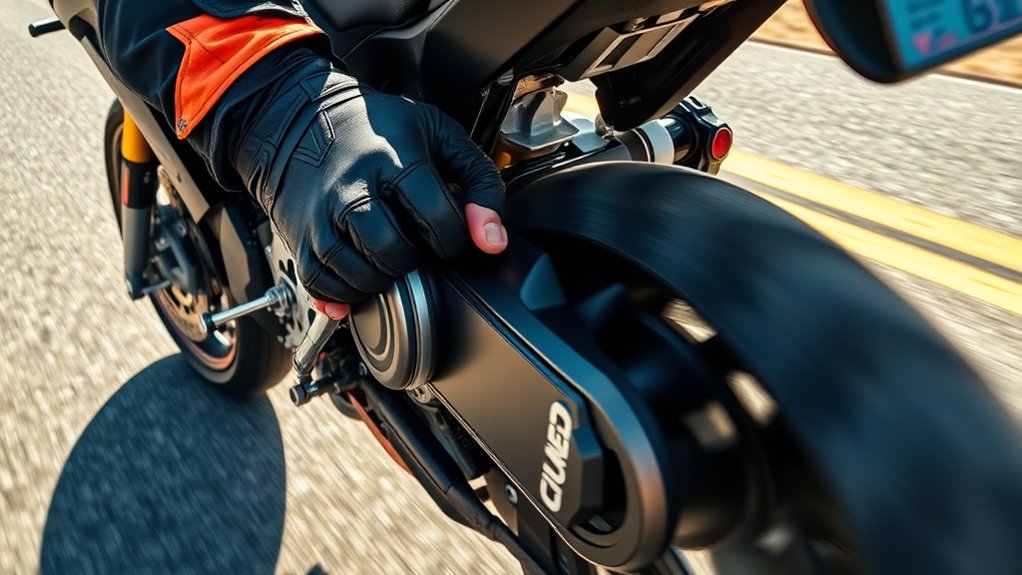
When you dump the clutch, you quickly release the clutch lever all at once to transfer engine power instantly to the rear wheel, causing a rapid, often dramatic acceleration. This motorcycle riding technique is commonly used to launch quickly or gain traction on surfaces like dirt or pavement.
Mastering the timing and throttle control involved in dumping the clutch is essential for smooth and effective execution.
You start by holding the clutch fully, revving the engine to the right RPM, then swiftly releasing the lever while smoothly applying throttle to avoid stalling or wheel spin.
This technique helps produce a powerful start and is often seen in racing or off-road riding.
Understanding the full process and safety tips will improve your riding skills and prevent damage to your bike.
Key Takeaways
- Quickly release the clutch lever fully to transfer engine power immediately to the rear wheel for rapid acceleration.
- Apply throttle gently while beginning to lift the clutch to avoid stalling and find the engagement “sweet spot.”
- Rev the engine to an ideal RPM range (typically 3,000–4,000) before releasing the clutch to ensure smooth power delivery.
- Release the clutch swiftly but controlled to prevent wheel spin or jolts and maximize traction.
- Practice the timing and throttle coordination in safe conditions to develop smooth, confident clutch dumping skills.
What Does Dump the Clutch Mean on a Motorcycle
What does it mean to dump the clutch on a motorcycle? When you dump the clutch, you quickly release the clutch lever all at once instead of easing it out gradually. This action suddenly engages the engine with the rear wheel, causing a rapid transfer of power.
You’ll often hear a loud pop or feel a sudden jerk as the bike lunges forward. It’s a technique used to launch quickly from a stop or to create wheel spin intentionally. Dumping the clutch requires precise throttle control, or you risk stalling the engine or losing traction.
While it’s exciting, you should understand the mechanics behind it before trying it. Mastering this move helps you control your bike better in specific riding situations.
When to Dump the Clutch
Although dumping the clutch can be thrilling, you should only use this technique in specific situations where quick acceleration is essential, such as launching from a stoplight or during certain off-road maneuvers.
You’ll want to dump the clutch when you need an immediate burst of power to get moving quickly or overcome slippery terrain. Avoid using it in normal riding conditions to prevent excessive wear on your clutch and drivetrain.
Also, be mindful of your surroundings—dumping the clutch in heavy traffic or wet conditions can cause loss of control. Practice this skill in safe, controlled environments until you’re confident.
Why Dump the Clutch
You dump the clutch to transfer power quickly from the engine to the wheels, giving you better acceleration control. It helps you launch smoothly without stalling the engine. Understanding why you dump the clutch can improve your driving performance and prevent mechanical issues.
Quick Power Transfer
Why does dumping the clutch provide such an immediate burst of power? When you dump the clutch, you quickly connect the engine’s power to the wheels without the gradual slip that normally happens when you release the clutch slowly. This sudden engagement transfers maximum torque instantly, propelling your vehicle forward with force.
You’re fundamentally bypassing the usual gradual friction phase, allowing the engine’s full power to hit the drivetrain all at once. This quick power transfer is especially useful when you want rapid acceleration from a standstill, like during a drag race or when launching a motorcycle. Just be aware that this technique demands precise timing and control to avoid stalling or damaging your clutch components.
Dumping the clutch lets you release power immediately, making your launch more aggressive and effective.
Enhanced Acceleration Control
Dumping the clutch doesn’t just deliver a burst of power—it also gives you greater control over acceleration. When you quickly release the clutch, you effectively manage how your engine’s power reaches the wheels. This technique allows you to accelerate more responsively, especially when launching from a standstill or during performance driving.
You can adjust the timing and force of your clutch release to tailor acceleration to your specific needs, whether it’s for a quick getaway or maneuvering tricky terrain. By mastering clutch dumping, you avoid sluggish starts and gain the ability to react swiftly to changing driving conditions.
This enhanced control lets you harness your vehicle’s potential with precision, making acceleration smoother and more predictable.
Preventing Engine Stall
How can you keep your engine running smoothly when starting off? Dumping the clutch correctly helps prevent engine stall, especially during slow starts or on inclines. When you dump the clutch too quickly or without enough throttle, the engine may struggle, causing it to stall.
To avoid this, follow these steps:
- Press the clutch pedal fully and shift into first gear.
- Gradually release the clutch until you feel the bite point.
- Apply steady throttle to keep the engine revving enough.
- Quickly release the clutch fully once you have enough power to move forward.
Mastering this balance keeps your engine running and prevents stalling, giving you a smoother driving experience.
Essential Gear and Safety for Dumping the Clutch
Before you attempt to dump the clutch, you need to equip yourself with the right gear to stay safe and in control. Always wear a certified helmet to protect your head in case of a fall. Gloves provide better grip and shield your hands from burns or abrasions.
Invest in a sturdy jacket with armor inserts and durable pants to protect your body. Proper riding boots give you ankle support and protect your feet. Make sure your gear fits well and is comfortable for quick movements.
Additionally, check that your motorcycle is in good working condition—especially the clutch, brakes, and tires. Ensuring these safety measures minimizes risks, so you can focus confidently on mastering the technique without worrying about injury or mechanical failure.
Positioning Your Hands and Feet
To dump the clutch smoothly, you need to place your hands correctly on the handlebars and position your feet with precision. Your grip should be firm but relaxed, while your foot placement allows quick clutch control.
Let’s break down the proper hand and foot positioning techniques to get you started.
Proper Hand Placement
Although mastering the clutch requires coordination, positioning your hands and feet correctly sets the foundation for smooth control. When it comes to your hands, focus on these key points to maintain steady control and readiness:
- Grip the handlebars firmly but not too tight to avoid fatigue.
- Keep your right hand ready on the throttle for quick acceleration.
- Position your left hand on the clutch lever with fingers relaxed and ready to pull.
- Avoid overreaching; your hands should rest naturally for easy access to controls.
Proper hand placement ensures you respond quickly when dumping the clutch, improving your overall riding performance. This setup keeps you balanced and prepared, making the clutch action smoother and more effective every time.
Foot Positioning Technique
When you position your feet correctly, you gain better control over the clutch and brakes, which is essential for executing a smooth dump-the-clutch technique. Place your left foot firmly on the clutch pedal, ensuring your heel rests on the floor for stability. This allows you to quickly release the clutch without losing balance.
Your right foot should be over the brake pedal, ready to modulate pressure as needed. Keep your toes near the gas pedal, allowing swift throttle adjustments once you dump the clutch. Avoid hovering or tensing your feet; stay relaxed to react smoothly.
Proper foot positioning helps you coordinate clutch release and throttle input, preventing stalling or unwanted jerks. Mastering this setup lets you confidently control your bike or car during aggressive starts.
Pull in the Clutch Lever Fully
Before you can dump the clutch, you’ve got to pull in the clutch lever fully. This action disengages the engine from the transmission, allowing you to shift gears or prepare for a sudden release. Here’s how to do it right:
- Grip the clutch lever firmly with your left hand.
- Pull the lever smoothly all the way toward the handlebar until it stops.
- Keep the lever fully pulled in to prevent any power from reaching the rear wheel.
- Maintain this position steadily before you move on to the next step.
Mastering this guarantees a clean break between the engine and transmission, which is essential for dumping the clutch effectively and avoiding stalling or jerky starts.
Rev the Engine to the Right RPM
You need to find the ideal RPM range before you dump the clutch to guarantee smooth power delivery. Keep your throttle steady to balance engine speed without overrevving. This control helps prevent engine damage and gives you a clean launch every time.
Finding Ideal RPM Range
Although it might seem straightforward, finding the ideal RPM range is essential for a smooth and effective clutch dump. Too low, and your engine could stall; too high, and you risk damaging your drivetrain.
Here’s how you find that sweet spot:
- Consult Your Vehicle’s Manual: Check for recommended RPM ranges during acceleration.
- Start in the Mid-Range: Begin revving around 3,000 to 4,000 RPM as a general baseline.
- Adjust Based on Response: If the engine bogs down or stalls, increase the RPM slightly.
- Practice for Consistency: Repeat the process to develop a feel for your vehicle’s power band.
Mastering this step guarantees you’re ready for the clutch release without compromising control or safety.
Balancing Throttle Control
How do you maintain just the right RPM while dumping the clutch? You need to balance throttle control precisely. Too little throttle, and the engine stalls; too much, and you risk losing traction.
Your goal is to rev the engine enough to engage the clutch smoothly and quickly.
Use the table below to guide your throttle input as you prepare to dump the clutch:
| Throttle Input | RPM Effect |
|---|---|
| Light | Low RPM, stalling |
| Moderate | Ideal RPM, smooth |
| Firm | High RPM, quick |
| Too Firm | Excess RPM, risky |
Practice matching your throttle input to the ideal RPM range. This balance helps you dump the clutch confidently without damaging your engine or drivetrain.
Avoiding Engine Overrevving
When revving the engine before dumping the clutch, hitting the right RPM is essential to prevent overrevving that can damage your engine. You want enough power to launch smoothly without pushing the engine beyond its limits.
Follow these steps to avoid overrevving:
- Know your RPM range: Check your vehicle’s manual for the ideal RPM for launching.
- Gradually increase throttle: Don’t floor it instantly; ease into the revs.
- Listen to the engine sound: A high-pitched whine signals you’re close to overrevving.
- Watch the tachometer: Keep the needle below the redline to stay safe.
Release the Clutch Lever Quickly
If you want to achieve a smooth and powerful start, you’ve got to release the clutch lever quickly but with control. Letting go too slowly can cause the bike to bog down, while letting go too fast might result in a sudden jolt or wheel spin.
You need to find the right balance to maximize acceleration without losing traction. Focus on a swift, confident release that matches your bike’s power and road conditions.
| Action | Effect | Tip |
|---|---|---|
| Slow release | Engine bogs | Avoid to maintain momentum |
| Fast release | Wheel spin/jolt | Use with caution |
| Controlled release | Smooth acceleration | Practice timing and feel |
Mastering this step sets you up perfectly for controlling throttle and clutch together next.
Controlling the Throttle and Clutch Together
Now that you’ve got a feel for releasing the clutch lever with control, it’s time to coordinate your throttle input with the clutch. This balance is key to a smooth and powerful launch. Here’s how to control both together effectively:
- Start by gently rolling on the throttle as you begin to release the clutch lever.
- Increase throttle input steadily while continuing to lift the clutch to avoid stalling.
- Find the sweet spot where the engine responds without bogging down or jerking.
- Fully release the clutch once you feel the bike moving forward confidently, then smoothly roll on more throttle to gain speed.
Mastering this coordination lets you “dump the clutch” with precision and control.
Common Mistakes When Dumping the Clutch
Although dumping the clutch can deliver a powerful launch, many riders make common mistakes that compromise control and safety. One frequent error is releasing the clutch too abruptly without proper throttle control, causing the bike to jerk or wheelie unexpectedly. Another mistake is not revving the engine enough before dumping the clutch, which leads to stalling or a weak launch.
You might also hold the clutch in too long, losing momentum or overheating the clutch plates. Additionally, dumping the clutch on slippery or uneven surfaces can cause loss of traction and falls. To avoid these pitfalls, practice smooth throttle application, time your clutch release carefully, and always assess the road conditions before attempting to dump the clutch.
This way, you’ll stay in control and ride safely.
When Not to Dump the Clutch and Alternatives to Try
Mastering when not to dump the clutch can save you from losing control or damaging your bike. Avoid dumping the clutch in wet or slippery conditions, when your tires lack traction, or if your engine isn’t warmed up.
Knowing when not to dump the clutch prevents loss of control and protects your bike in tricky conditions.
Instead, try these alternatives:
- Gradually release the clutch for smoother engagement.
- Use the throttle gently to control power delivery.
- Practice slipping the clutch to balance power and control.
- Shift at lower RPMs to reduce sudden torque spikes.
Frequently Asked Questions
How Does Dumping the Clutch Affect Motorcycle Maintenance?
Dumping the clutch puts extra strain on your motorcycle’s drivetrain, causing faster wear on the clutch plates and chain.
You’ll need to check and replace these parts more often to keep your bike running smoothly.
Can Dumping the Clutch Cause Transmission Damage?
Yes, dumping the clutch can cause transmission damage if you do it frequently or aggressively. You’ll stress the gears and clutch plates, leading to wear or failure, so it’s best to use this technique sparingly and carefully.
What Type of Motorcycles Are Best for Dumping the Clutch?
If you ride a dirt bike like a KTM 450 SX-F, you’ll find it’s ideal for dumping the clutch because of its lightweight design and responsive power delivery.
This makes quick starts and aggressive launches easier and more controlled.
Does Dumping the Clutch Improve Race Performance?
Yes, dumping the clutch can improve your race performance by giving you a quicker, more aggressive launch. However, it requires skill to avoid wheel spin or stalling, so practicing control is key to maximizing its benefits.
How to Practice Dumping the Clutch Safely at Home?
You can practice dumping the clutch safely by finding an open, flat area with no obstacles. Start slowly, revving the engine moderately, and release the clutch smoothly to avoid stalling or damaging your vehicle.
Conclusion
Dumping the clutch demands daring determination and delicate control. When you want a quick start or need to conquer challenging terrain, this technique delivers dynamic results. But don’t leap in without the right gear or guidance—gear up, get grounded, and grip your handlebars with confidence.
Avoid awkward actions and always aim for accuracy. Mastering this move means mixing muscle with mindfulness, making your motorcycle moments more memorable and mighty. With practice, you’ll understand exactly what does dump the clutch mean and how it can transform your riding experience.

