

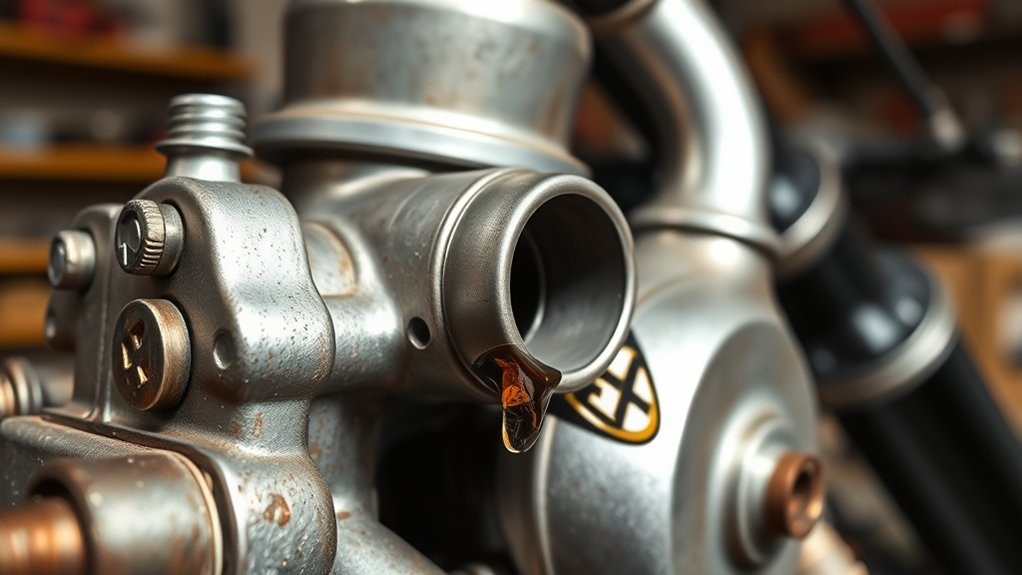
Your carburetor is likely leaking gas due to common issues such as worn gaskets, faulty float valves, or clogged jets. These problems cause fuel to escape rather than flow properly through the carburetor.
Dirt and debris can worsen the situation by causing seals to fail or float valves to stick. This leads to overflow and leaks that can affect engine performance.
Additionally, damaged fuel lines might be contributing to the fuel leakage. Fuel quality and storage conditions also play a significant role in preventing or causing leaks.
If you want to understand the causes better and learn how to fix or prevent leaks, there’s more useful information ahead.
Key Takeaways
- Worn or damaged gaskets and seals cause fuel to leak at joints and connections in the carburetor.
- Faulty or stuck float valves lead to fuel overflow and carburetor flooding.
- Clogged jets increase internal pressure, causing fuel to spill and leak.
- Dirt and debris prevent proper sealing of float valves and gaskets, resulting in leaks.
- Cracked or loose fuel lines and fittings near the carburetor can cause visible fuel leaks.
How to Tell If Your Carburetor Is Leaking Gas
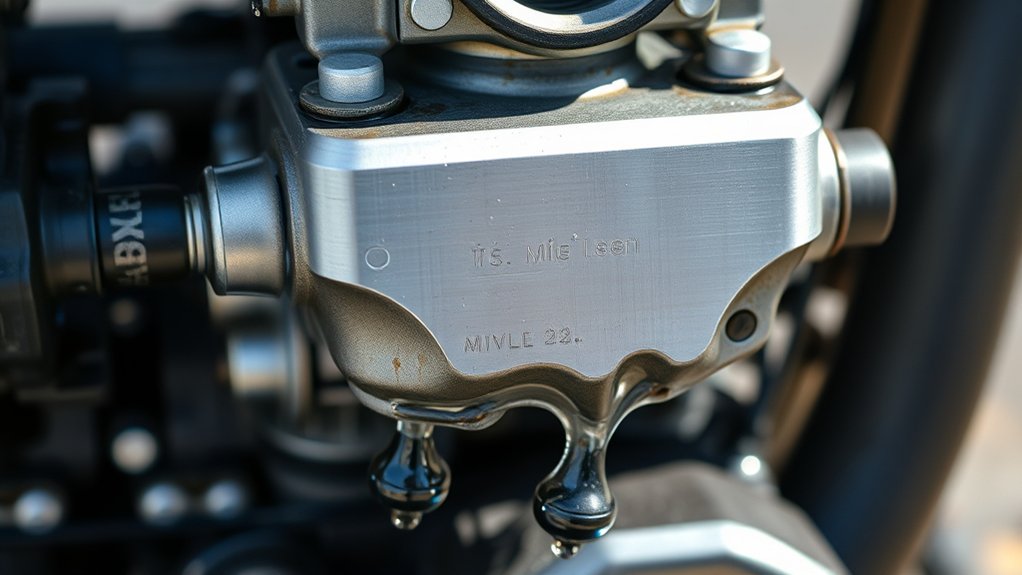
Although you might not notice it right away, spotting a leaking carburetor is essential to prevent engine damage and safety hazards. You’ll want to check for visible signs like fuel dripping or pooling under your engine. If you smell gasoline while your vehicle is off or running, that’s a strong indicator of a leak.
You might also notice poor engine performance, such as rough idling or stalling, since excess fuel can disrupt combustion. Inspect the carburetor for wet spots or corrosion around the fuel lines and gaskets. Additionally, if your fuel efficiency suddenly drops without other reasons, a leak could be the culprit.
When Should You Replace or Repair a Leaking Carburetor?
Recognizing the signs of a leaking carburetor is only the first step; knowing when to repair or replace it can save you time and money. You’ll want to repair the carburetor if the leak is minor and caused by a worn gasket or loose component.
Spotting a leaking carburetor is just the start; deciding to repair or replace saves time and money.
However, if the carburetor is severely corroded, cracked, or repeatedly leaks despite repairs, replacement is necessary.
Consider these points to decide:
- Cost vs. Benefit: Repair is cheaper short-term, but frequent fixes add up.
- Performance Impact: If leaks cause poor engine performance or safety risks, replace it immediately.
- Age and Condition: Older carburetors with multiple issues often warrant replacement for reliability.
Trust your instincts—don’t ignore leaks, as they can lead to bigger problems quickly.
What Causes Carburetor Gaskets to Fail and Leak Fuel
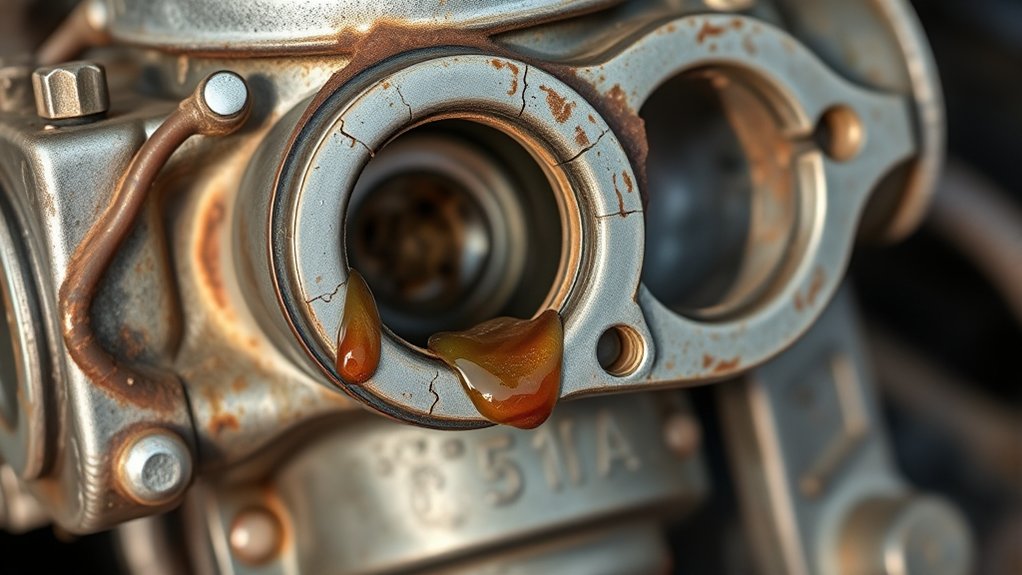
You need to understand that carburetor gaskets are usually made from materials like cork, rubber, or composite, which can degrade over time. Heat exposure speeds up this wear, causing the gaskets to crack or shrink.
Plus, poor fuel quality can eat away at the gasket, making leaks more likely.
Common Gasket Materials
Since carburetor gaskets form the seal between various engine parts, their material quality directly affects their durability and ability to prevent fuel leaks. You need to know the common gasket materials and how they impact performance:
- Rubber – Flexible and resistant to fuel, but it can crack or shrink over time, leading to leaks that frustrate you and damage your engine.
- Cork – Compressible and affordable, cork gaskets wear out faster and may crumble, causing annoying fuel seepage.
- Composite – Made from layers of materials like fiber and rubber, these gaskets offer a balance of durability and flexibility, reducing your risk of leaks.
Choosing the right gasket material helps you avoid unexpected fuel leaks and keeps your carburetor running smoothly.
Effects of Heat Exposure
The choice of gasket material plays a big role in preventing leaks, but even the best materials can fail under extreme conditions. When your carburetor faces prolonged heat exposure, the gasket can become brittle, shrink, or warp. This deterioration breaks the seal, allowing fuel to leak.
Heat accelerates the aging process of rubber and composite gaskets, making them less flexible and more prone to cracking. If you notice a fuel smell or wet spots around your carburetor, heat damage could be the cause. To avoid this, keep your engine cooling system in good shape and replace gaskets regularly, especially if you ride or drive in hot climates.
Don’t ignore overheating—it directly impacts gasket integrity and your carburetor’s performance.
Impact of Fuel Quality
How does fuel quality affect your carburetor’s gasket performance? Poor fuel can wreak havoc on your gaskets, causing them to fail and leak gas. When fuel contains impurities or ethanol, it can degrade the rubber and materials in the gasket, making them brittle and prone to cracks.
If you don’t use high-quality or properly stored fuel, you’re inviting damage that leads to leaks.
Here are three reasons why fuel quality matters:
- Ethanol in fuel absorbs moisture, swelling and weakening the gasket material.
- Impurities clog passages, increasing pressure and stressing gaskets.
- Old or contaminated fuel accelerates gasket deterioration, causing premature failure.
Why Faulty Float Valves Cause Carburetor Fuel Leaks
If your carburetor is leaking gas, a faulty float valve might be the culprit. You’ll notice symptoms like fuel overflowing or flooding because the valve isn’t regulating fuel flow properly.
Understanding how this valve works can help you pinpoint why gas is leaking and fix the problem quickly.
Float Valve Malfunction Symptoms
When a float valve malfunctions, you’ll often notice fuel leaking from your carburetor because the valve can’t properly regulate fuel flow. This failure can cause several clear symptoms that you shouldn’t ignore.
Here are three common signs you might experience:
- Fuel Smell or Visible Leaks – You’ll often smell gas or see liquid pooling under your vehicle, which signals the valve isn’t sealing correctly.
- Engine Flooding – The engine may flood easily, making it hard to start or causing rough idling.
- Poor Fuel Efficiency – Excess fuel wastes gas and lowers your engine’s performance, leading to more frequent fill-ups.
If you spot any of these symptoms, it’s essential to inspect or replace the float valve to prevent further damage or safety hazards.
Impact on Fuel Flow
Why does a faulty float valve cause your carburetor to leak fuel? The float valve controls the fuel entering the carburetor bowl, maintaining the right fuel level. When it malfunctions, it fails to shut off fuel flow properly, causing fuel to overflow.
This overflow leads directly to fuel leaks. As fuel floods the carburetor, your engine may run rich, wasting gas and reducing efficiency. You might also notice strong fuel odors or wet spots around the carburetor.
How Clogged Jets Lead to Fuel Leaks in Carburetors
Though clogged jets might seem like a minor issue, they can cause your carburetor to leak fuel by disrupting the proper flow and pressure inside the system. When jets get blocked, fuel can’t flow smoothly, causing pressure to build up and forcing fuel out where it shouldn’t. This can leave you frustrated and worried about safety.
Clogged jets disrupt fuel flow and pressure, causing leaks that can lead to frustration and safety concerns.
Here’s why clogged jets lead to leaks:
- Fuel overflow: Blocked jets cause fuel to back up and spill out.
- Uneven pressure: Pressure imbalances strain seals and gaskets, causing leaks.
- Engine performance issues: Hesitation and stalling increase the chance of fuel pooling and leaks.
If you notice any of these signs, it’s vital to clean or replace the jets promptly to prevent costly damage.
How Incorrect Carburetor Adjustments Cause Fuel Leaks
If you don’t adjust your carburetor correctly, you risk causing fuel leaks that can damage your engine and create safety hazards. When you set the float level too high, excess fuel flows into the carburetor bowl and may overflow, leaking out. On the other hand, if the needle valve isn’t seated properly during adjustment, it won’t shut off fuel flow, causing continuous leaking.
Overly rich fuel mixture settings can also increase pressure inside the carburetor, forcing fuel past seals or gaskets. Additionally, improper idle speed adjustment may leave the throttle slightly open, allowing more fuel to enter than necessary, which can spill out. By carefully following manufacturer guidelines and using precise tools, you can avoid these mistakes and keep your carburetor leak-free.
How Dirt and Debris Cause Carburetor Fuel Leaks
When dirt and debris build up inside your carburetor, they can block tiny passages and interfere with the proper sealing of valves and gaskets. This buildup causes fuel to escape where it shouldn’t, leading to leaks that can frustrate you and damage your engine. You might feel overwhelmed, but understanding the impact helps you act fast.
Here’s why dirt and debris cause leaks:
- Clogged jets restrict fuel flow, causing pressure to build and force leaks.
- Particles get stuck under gaskets, preventing a tight seal and allowing gas to seep out.
- Deposits on float valves stop them from closing fully, letting fuel overflow.
Keeping your carburetor clean protects your engine and saves you from costly repairs.
How Old or Damaged Seals Increase Carburetor Fuel Leaks
Because seals in your carburetor wear out over time, they can no longer keep fuel contained effectively. Old or damaged seals crack, shrink, or become brittle, allowing gas to leak from joints and fittings. You might notice fuel pooling or a strong smell of gasoline near the carburetor.
Checking seal condition regularly helps prevent leaks and guarantees smooth engine performance.
| Seal Type | Common Damage | Leak Risk Level |
|---|---|---|
| Float Bowl Gasket | Cracking, Shrinking | High |
| Throttle Shaft | Wear, Hardening | Medium |
| Accelerator Pump | Drying Out | High |
| Choke Shaft | Cracking | Low |
| Main Body Gasket | Compression Set | Medium |
Replacing worn seals stops leaks and protects your carburetor’s function.
How Fuel Line Issues Cause Carburetor Fuel Leaks
Although fuel lines may seem simple, issues with them often cause carburetor fuel leaks that are easy to overlook. When your fuel lines crack, become brittle, or loosen, gas can seep out, creating leaks that not only waste fuel but pose a serious fire hazard.
You might not immediately connect the leak to the fuel line since it’s not directly on the carburetor. Here are three common fuel line problems that cause leaks:
- Cracks or splits from age or exposure to heat.
- Loose connections where clamps fail or fittings aren’t tight.
- Blocked or kinked lines that increase pressure and force fuel out.
Check your fuel lines regularly to catch these issues before leaks worsen.
Tips to Prevent Carburetor Leaks
To keep your carburetor from leaking gas, you need to perform regular maintenance checks and inspect all parts carefully. You should also store fuel properly to avoid contamination or damage.
Taking these simple steps will help you prevent leaks before they start.
Regular Maintenance Checks
If you want to keep your carburetor from leaking gas, you need to perform regular maintenance checks. Staying proactive prevents costly repairs and guarantees your engine runs smoothly. Don’t wait for a leak to show up—catch issues early by inspecting your carburetor often.
Here are three essential maintenance tasks to focus on:
- Check for cracks or wear: Even small damages can cause leaks and affect performance.
- Clean the carburetor thoroughly: Dirt and debris buildup can clog passages and cause fuel overflow.
- Inspect gaskets and seals: Worn or damaged seals allow gas to escape and create safety hazards.
Proper Fuel Storage
Where you store your fuel plays a crucial role in preventing carburetor leaks. Storing fuel improperly can cause deterioration or contamination, leading to clogs or leaks. Keep your fuel in a cool, dry place away from direct sunlight to maintain its quality.
Use approved containers and avoid old or rusty cans that may corrode and contaminate the fuel. Also, try to use fuel within a month to prevent stale gas buildup.
Here are some quick tips for proper fuel storage:
| Do’s | Don’ts |
|---|---|
| Store in airtight containers | Use rusty or damaged cans |
| Keep away from heat sources | Leave fuel exposed to sunlight |
| Use fresh fuel regularly | Store fuel for long periods |
| Label containers clearly | Mix old and new fuel |
Frequently Asked Questions
Can Using the Wrong Fuel Type Cause Carburetor Leaks?
Yes, using the wrong fuel type can cause carburetor leaks. It can damage seals and gaskets, causing them to deteriorate or swell. You’ll want to always use the recommended fuel to avoid these issues.
How Often Should Carburetor Fuel Lines Be Inspected?
You might think checking fuel lines is a hassle, but you should inspect them at least every three months. Regular checks help you catch cracks or leaks early, keeping your carburetor running smoothly and safely.
Frequent inspections prevent potential fuel leaks that could lead to engine problems or safety hazards.
Does Altitude Affect Carburetor Fuel Leakage?
Yes, altitude can affect carburetor fuel leakage because thinner air changes fuel mixture and pressure. You might notice leaks if the carburetor isn’t properly adjusted for high altitudes, so always tune it accordingly to prevent issues.
Can Carburetor Leaks Impact Engine Performance?
Yes, carburetor leaks can impact your engine’s performance. You’ll likely notice rough idling, poor acceleration, or stalling.
Fixing leaks helps maintain proper fuel mixture and guarantees your engine runs smoothly and efficiently.
Are There Specific Brands Known for Leak-Prone Carburetors?
You’ll find some older or budget carburetor brands more prone to leaks, especially if they use lower-quality materials. Stick with reputable names like Holley or Edelbrock to reduce leak risks and guarantee better durability.
Conclusion
Think of your carburetor like a leaky faucet—ignoring small drips can flood your whole kitchen. Just as a single worn-out washer causes water to leak, a faulty gasket or float valve lets fuel escape. Fixing these issues early prevents bigger problems and keeps your engine running smoothly.
Remember, a little maintenance now saves you from a costly repair later—don’t let a small leak turn into a flood under your hood. Addressing carburetor leaks promptly is essential for preventing fuel wastage and ensuring optimal engine performance. By understanding why your carburetor is leaking gas, you can take the right steps to fix the problem before it worsens.

