

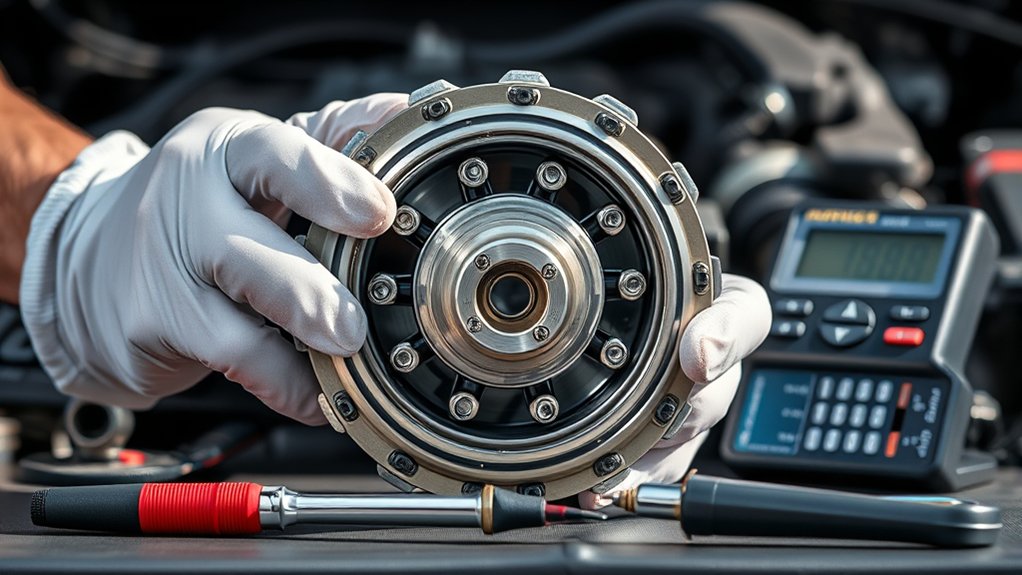
To test your AC compressor clutch in 7 easy steps, start by locating the clutch near your engine and checking the fuse and power at its connector. This initial inspection helps ensure that the electrical system is supplying power correctly to the clutch.
Next, inspect the clutch surface for any visible damage or wear that might affect its operation.
After the visual inspection, measure the air gap between the clutch and pulley to confirm it meets the manufacturer’s specifications.
Then, use a multimeter to test the coil’s electrical continuity, which indicates whether the clutch coil is functioning properly.
Next, run the AC system and listen for the clutch’s distinct “click,” signaling that it is engaging.
Observe the clutch’s movement closely along with any changes in engine load.
By following these steps, you can quickly identify any issues with your AC compressor clutch and determine the best course of action.
Key Takeaways
- Locate the AC compressor clutch near the engine and visually inspect for damage or wear on the clutch surface.
- Use a multimeter to check electrical continuity and voltage at the clutch connector and inspect the fuse.
- Measure the air gap between the clutch plate and pulley to ensure proper clearance for engagement.
- Start the AC system and listen for a clear clicking sound indicating clutch engagement and smooth spinning.
- Observe clutch operation at different engine speeds, noting any grinding, squealing, or lack of engagement for diagnosis.
What Is an AC Compressor Clutch and Why It Matters
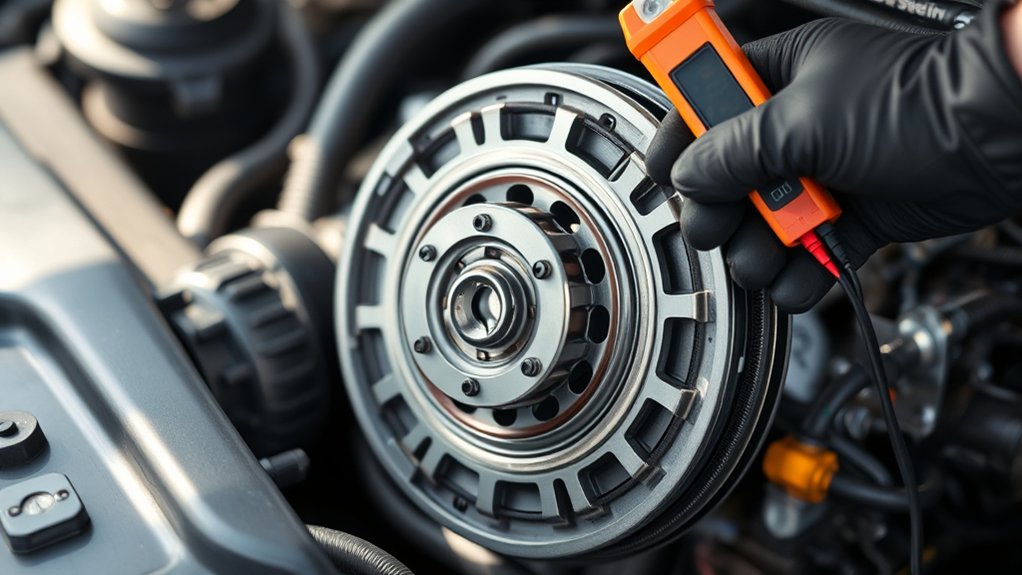
Although it might seem like a small part, the AC compressor clutch plays a crucial role in your vehicle’s air conditioning system. You rely on it to engage and disengage the compressor, controlling when the AC circulates refrigerant to cool your car’s interior. When the clutch activates, it connects the compressor to the engine power, allowing it to compress refrigerant and generate cold air.
If the clutch fails, your AC won’t function properly, leaving you without cool air on hot days. Understanding how this clutch works helps you identify issues early and maintain a comfortable driving experience. So, knowing why the AC compressor clutch matters is the first step before you test its performance and guarantee your AC system runs smoothly.
Tools You’ll Need to Test Your AC Compressor Clutch
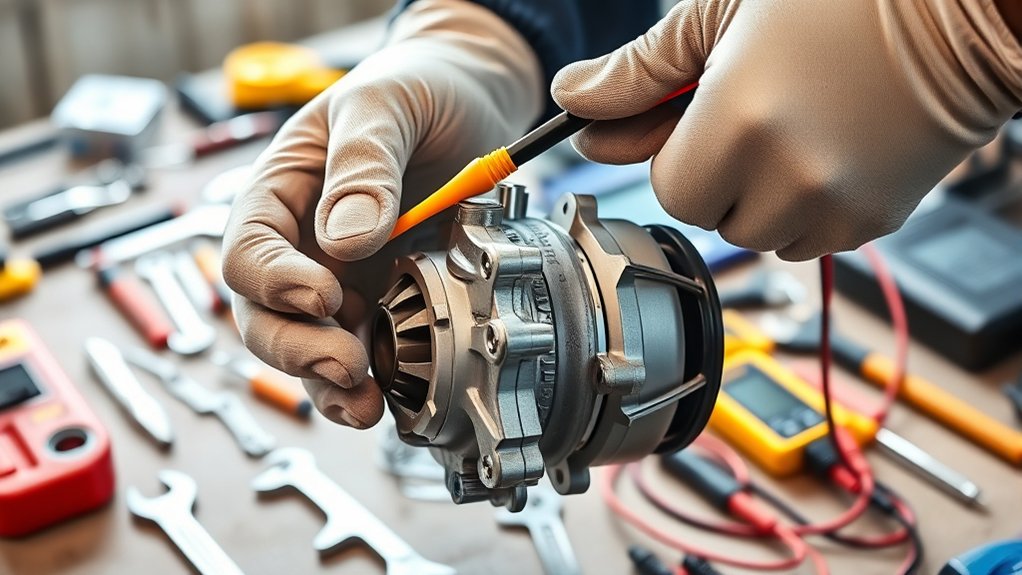
Knowing how the AC compressor clutch functions helps you recognize when it might not be working properly. To test it effectively, you’ll need a few essential tools. First, a multimeter is vital for checking electrical continuity and voltage at the clutch coil.
You’ll also want a set of basic hand tools, like wrenches and screwdrivers, to access the clutch and remove any covers safely. Additionally, a clamp meter can help measure current draw, confirming if the clutch is engaging as it should.
Finally, safety gloves and eye protection keep you safe while working near moving parts and electrical components. Having these tools ready ensures you can quickly diagnose clutch issues without unnecessary delays or guesswork.
How to Locate the AC Compressor Clutch in Your Car
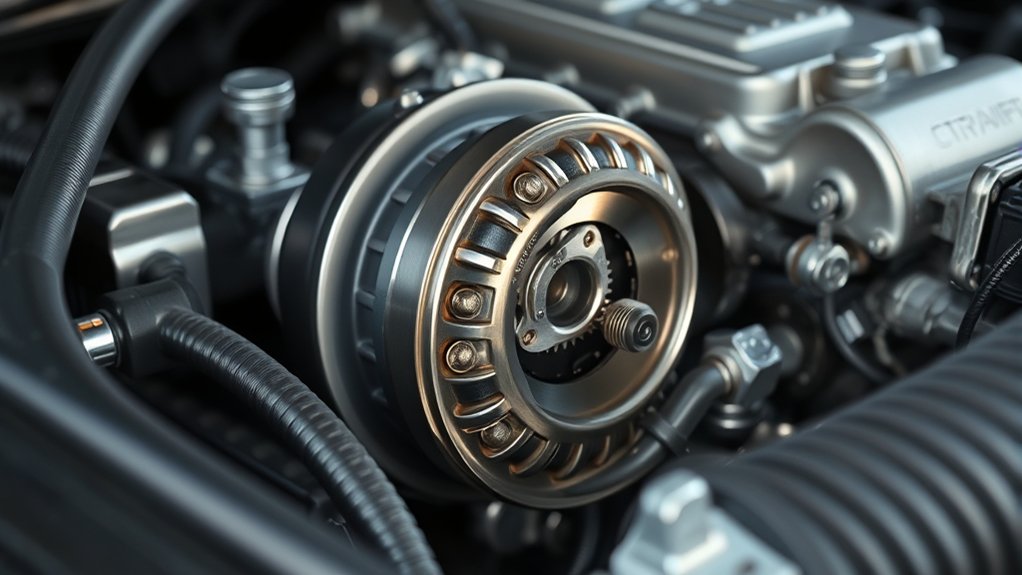
To find the AC compressor clutch, open your hood and locate the AC compressor, usually mounted near the engine’s front. Look for a pulley attached to the compressor with a visible clutch plate in the center. Recognizing these components will help you identify the clutch before testing it.
Identifying Compressor Location
When you open your car’s hood, you’ll usually find the AC compressor mounted near the front of the engine, often driven by the serpentine belt. It’s typically a round, metal component with a pulley attached. Look for a part connected to several hoses, as these carry refrigerant to and from the compressor.
The clutch is located on the front face of the compressor and is distinct because it engages and disengages to control operation. If you’re unsure, check near the bottom or side of the engine bay, depending on your car’s layout. Identifying the compressor quickly helps you focus on testing the clutch properly.
Checking Under The Hood
Although locating the AC compressor clutch may seem tricky at first, focusing on the front of the compressor will guide you right to it. Open your hood and find the AC compressor, usually mounted on the engine block. Look for a pulley connected to the engine by a serpentine belt.
The clutch is the part attached to this pulley’s front face. You’ll notice it as a smaller, circular metal plate that engages and disengages when the AC is turned on or off. Make sure the engine is off and cool before you touch anything under the hood.
Once you identify this front section of the compressor, you’ll have successfully located the clutch, setting you up for the next step in testing its function.
Recognizing Clutch Components
Now that you’ve found the front of the AC compressor and identified the clutch’s general location, it’s easier to spot its individual parts. Recognizing these components helps you test the clutch effectively.
Focus on these three key parts:
- Pulley – This is the outer ring that spins freely when the AC is off. It’s connected to the engine belt.
- Clutch Plate – Located inside the pulley, this plate engages with the pulley to drive the compressor when activated.
- Electromagnetic Coil – Positioned behind the pulley, it generates the magnetic force to pull the clutch plate towards the pulley.
Step 1: Check AC Compressor Clutch Power and Fuse
Before testing the AC compressor clutch itself, you’ll want to make certain it’s receiving power and that the fuse is intact. Begin by locating the fuse box, usually found under the hood or inside the cabin. Check the AC compressor fuse using a fuse puller or pliers, inspecting it for any signs of damage or a blown filament.
If the fuse looks good, next use a multimeter to verify there’s voltage at the clutch’s electrical connector when the AC is turned on. Connect the multimeter’s probes to the clutch connector terminals, then switch on the ignition and AC. If you find no power or a blown fuse, replace the fuse and recheck.
Ensuring proper power and a good fuse is the essential first step before further testing.
Step 2: Inspect the Clutch for Damage and Wear
Since the AC compressor clutch endures constant engagement and disengagement, you should carefully inspect it for visible signs of damage or wear. Begin by cleaning the clutch surface to get a clear view. Look for cracks, chips, or any uneven wear that could affect its operation.
Also, check the air gap between the clutch plate and pulley; it should be consistent and within manufacturer specifications. Finally, examine the clutch coil for any burnt marks or damage.
Here’s what to focus on:
- Clutch face – verify it’s smooth and free from cracks.
- Air gap – measure it accurately for proper engagement.
- Clutch coil – inspect for visual damage or overheating.
Thorough inspection helps prevent future failures and ensures reliable AC performance.
Step 3: Test the Clutch With a Multimeter
Although visual inspection can reveal obvious issues, testing the clutch with a multimeter lets you check its electrical integrity and confirm the coil functions properly. First, set your multimeter to the ohms (Ω) setting. Disconnect the clutch coil connector and touch the multimeter leads to the coil terminals.
A typical reading should be between 3 to 5 ohms; a markedly higher or lower reading indicates a faulty coil. Also, check for continuity by ensuring the multimeter shows a closed circuit. If it reads infinite resistance or no continuity, the coil is likely damaged.
Avoid testing while the coil is connected to the vehicle’s electrical system to prevent inaccurate readings and potential damage to your meter. This step confirms the clutch coil is electrically sound before proceeding further.
Step 4: Run the AC and Confirm Clutch Engagement
Start your AC system and watch the compressor clutch closely. You should see the clutch engage and spin when the AC kicks on.
Listen carefully for any clicking or grinding sounds that might indicate a problem.
Start The AC System
How can you tell if the AC compressor clutch is working properly? The key step is to start the AC system and check for clutch engagement. Here’s how you do it:
- Turn on your vehicle and set the AC to the coldest setting with the fan on high.
- Listen closely for a distinct “click” sound from the compressor area, indicating the clutch is engaging.
- Feel for a slight change in engine load or RPM drop, which often happens when the compressor clutch kicks in.
Observe Clutch Movement
Once you’ve turned on the AC system, watch the compressor clutch closely to confirm it’s engaging properly. The clutch should spin smoothly and consistently without hesitation. If it doesn’t move at all, it’s likely not receiving power or may be stuck.
A delayed or intermittent engagement might indicate electrical issues or a weak clutch coil. Make sure the engine is running at normal idle speed, as low RPMs can affect clutch operation. Also, check that the clutch plate aligns with the pulley and spins in sync.
If you see any wobbling, slipping, or unusual pauses, that’s a sign something’s wrong. Observing these movements carefully helps you pinpoint whether the clutch is functioning as it should before moving to further diagnostics.
Listen For Engagement Sounds
After observing the clutch movement, pay close attention to the sounds it makes when the AC system engages. These sounds can tell you a lot about the condition of the compressor clutch. Here’s what to listen for:
- Clicking sound – A clear, sharp click usually means the clutch is engaging properly.
- Grinding or squealing – These noises could indicate worn bearings or a slipping clutch.
- No sound at all – If you don’t hear anything, the clutch might not be receiving power or could be faulty.
Make sure you run the AC at different speeds to catch any inconsistent sounds. This step helps you confirm if the clutch is functioning smoothly or if further inspection and repairs are needed.
Frequently Asked Questions
How Often Should I Replace the AC Compressor Clutch?
You should replace the AC compressor clutch only when it shows signs of failure like slipping, noise, or not engaging. Regular inspections help, but typically it lasts many years unless damaged or worn out.
Can a Faulty AC Clutch Cause Engine Overheating?
Oh sure, your AC clutch loves to overheat your engine—that’s just its hidden superpower. But seriously, a faulty AC clutch can strain the engine and cooling system, potentially causing overheating if left unchecked.
If the clutch locks up, it forces the engine to work harder, increasing heat. This extra load can lead to higher engine temperatures. Over time, this may result in overheating issues.
What Are Common Symptoms of a Bad AC Compressor Clutch?
You’ll notice the AC not cooling properly, hear grinding or squealing noises, or feel the clutch slipping.
Sometimes, the compressor won’t engage at all, causing your AC to blow warm air instead of cold.
Is It Safe to Drive With a Malfunctioning AC Clutch?
You can drive with a malfunctioning AC clutch, but it’s not ideal. It may cause engine strain or overheating.
Get it fixed soon to avoid further damage and keep your AC system working efficiently.
Can I Test the AC Clutch Without Removing It From the Car?
Yes, you can check the AC clutch without removal. Connect a multimeter to measure voltage, listen for the clutch’s click, or watch for spinning when the AC’s on.
These simple steps swiftly signal clutch status.
Conclusion
Now that you’ve tested your AC compressor clutch, you might wonder if it’s really worth the effort. The truth? A smoothly working clutch saves you from costly repairs and keeps your car cool when it matters most. Don’t just take my word for it—try these steps yourself.
You’ll see how a little hands-on testing can reveal hidden issues before they turn into big problems. Proper AC compressor clutch testing ensures your vehicle’s air conditioning system runs efficiently. Your car (and wallet) will thank you for maintaining a reliable AC compressor clutch.

