

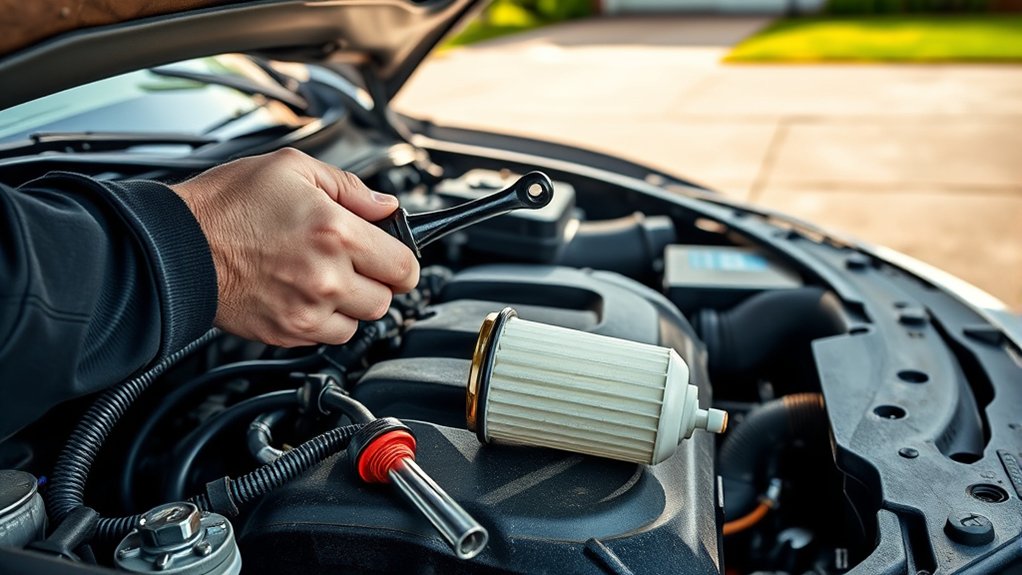
If your car won’t start due to a bad fuel filter, it’s important to troubleshoot the issue methodically. A clogged or damaged fuel filter can restrict fuel flow, preventing the engine from starting.
Start by checking your battery and spark plugs to rule out other common problems.
Next, relieve fuel system pressure by removing the pump fuse and running the engine until it stalls. This step ensures safety when working on the fuel system.
Then, manually prime the fuel system using a pump or override the fuel pump relay to guarantee steady fuel flow.
Try starting the car while minimizing electrical load to reduce strain on the system.
For detailed steps on troubleshooting and safe driving, you can explore more guidance ahead. Following these steps will help you start a car with a bad fuel filter effectively.
Key Takeaways
- Relieve fuel pressure by removing the fuel pump fuse and running the engine until it stalls.
- Manually prime the fuel system using the fuel pump bulb or lever near the filter to build fuel pressure.
- Turn the ignition to “on” without starting to allow fuel flow and check for fuel delivery.
- Use a fuel pump relay override by jumpering terminals to force continuous fuel pump operation if needed.
- Attempt to start the car while avoiding rapid acceleration; replace the fuel filter promptly for reliable performance.
Why a Bad Fuel Filter Makes Your Car Hard to Start
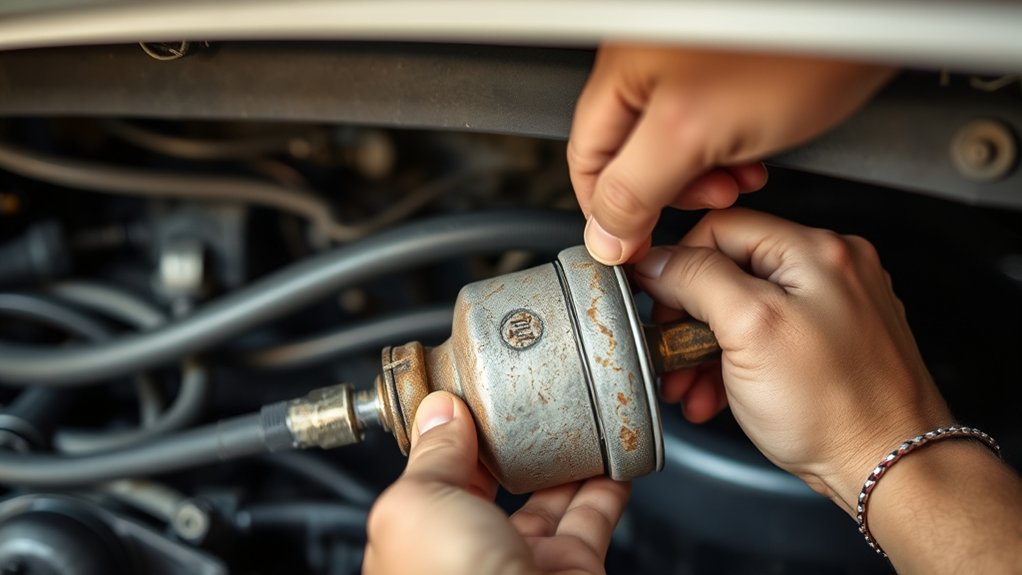
Because your fuel filter traps dirt and debris, it can become clogged over time, restricting the flow of fuel to your engine. When this happens, your engine doesn’t get the fuel it needs to start and run smoothly. You’ll notice your car struggles to turn over or may stall right after starting.
This happens because the clogged filter reduces fuel pressure, making it harder for the engine to ignite the fuel-air mixture properly. Without an adequate fuel supply, your spark plugs can’t do their job efficiently, causing misfires or rough idling.
In short, a bad fuel filter interrupts the essential fuel delivery system, making your car hard to start and unreliable until you address the problem.
How to Check If Your Fuel Filter Is Clogged
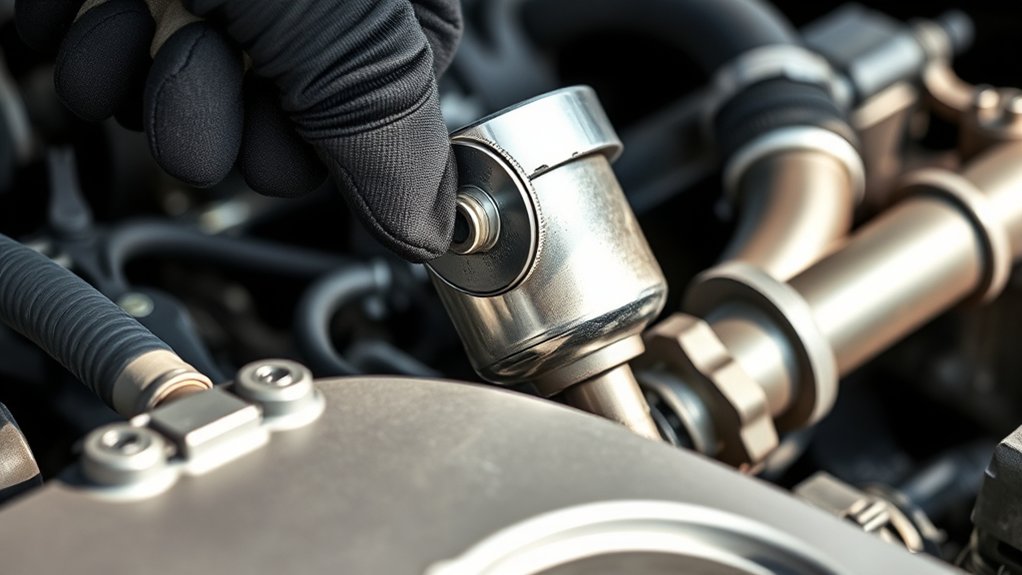
You’ll want to watch for signs like engine sputtering, stalling, or slow acceleration, which can point to a clogged fuel filter.
Next, testing the fuel flow helps confirm if the filter is restricting fuel delivery.
These steps will guide you in identifying whether your fuel filter needs attention.
Signs Of Fuel Blockage
How can you tell if your fuel filter is clogged? Recognizing the signs early helps prevent more serious engine trouble. Here are four common indicators of fuel blockage:
- Engine Stalling or Hesitation: Your car might sputter or stall, especially during acceleration or under load.
- Difficulty Starting: It takes longer to start the engine, or it won’t start at all due to limited fuel flow.
- Reduced Engine Power: You’ll notice sluggish acceleration or poor overall performance as fuel delivery decreases.
- Unusual Engine Noises: The engine might run rough or produce knocking sounds when the fuel supply is inconsistent.
If you spot these symptoms, your fuel filter is likely restricting fuel flow and needs attention.
Testing Fuel Flow
Although a clogged fuel filter can cause noticeable symptoms, the best way to confirm the blockage is by testing the fuel flow directly. First, relieve the fuel system pressure by removing the fuel pump fuse and running the engine until it stalls.
Then, locate the fuel line leading to the engine and disconnect it carefully. Place a container under the line and turn the ignition to the “on” position without starting the engine. You should see fuel flow steadily into the container.
If the flow is weak or nonexistent, your fuel filter is likely clogged. Reconnect everything securely after the test. This straightforward check helps you avoid unnecessary parts replacement and guarantees your starting issue relates to fuel delivery.
Essential Steps to Prepare Your Car for Starting
Before attempting to start your car with a bad fuel filter, verify the engine is properly prepared to minimize strain and potential damage. Taking a few essential steps ensures you don’t worsen the issue or leave yourself stranded.
- Check the battery charge – A strong battery ensures the starter motor can turn the engine over without hesitation.
- Inspect spark plugs – Clean and properly gapped plugs provide consistent ignition despite fuel delivery issues.
- Turn off all accessories – Switch off the radio, lights, and AC to conserve battery power for starting.
- Ensure proper engine temperature – Starting a warm engine reduces stress on components and improves combustion.
Following these steps sets the stage for a smoother start, even with a compromised fuel filter.
How Fuel Additives Can Help Clear a Clogged Filter
If your fuel filter is clogged, fuel additives can often help break down deposits and restore flow. These additives contain detergents and solvents that dissolve varnish, rust, and debris blocking the filter. You simply pour the recommended amount into your fuel tank before filling up.
Once mixed with the fuel, it works its way through the system, loosening buildup that restricts fuel flow. While fuel additives won’t fix a severely clogged filter, they can improve engine performance and make starting easier if the blockage is mild. Use additives regularly as a preventive measure, especially if you use low-quality fuel.
Just remember, additives are a temporary solution; eventually, you’ll need to replace the fuel filter for reliable, long-term results.
How to Prime the Fuel System Manually
To prime the fuel system manually, start by locating the fuel pump relay in your car’s fuse box. Then, use the manual fuel pump or cycle the ignition to push fuel through the lines.
Finally, check the fuel pressure gauge to guarantee proper fuel flow before attempting to start the engine.
Locate Fuel Pump Relay
Since the fuel pump relay controls the flow of electricity to the fuel pump, locating it allows you to manually prime the fuel system. You’ll typically find the relay in the fuse box under the hood or inside the cabin.
To locate it:
- Open the fuse box cover and check the diagram on the underside or in your owner’s manual.
- Identify the fuel pump relay by name or symbol—it often looks like a small square or rectangle.
- If you’re unsure, use a multimeter or test light to confirm which relay activates the fuel pump.
- Once found, you can remove or tap the relay to manually trigger the pump, helping to push fuel through a clogged filter.
This step sets you up to prime the fuel system effectively before attempting to start the car.
Use Manual Fuel Pump
Although the fuel pump relay helps control fuel flow, you can also manually prime the fuel system using the manual fuel pump. To do this, locate the manual pump—often a bulb or lever—on the fuel line near the fuel filter. Pump it steadily to build pressure and push fuel past the clogged filter.
You’ll feel resistance as fuel moves through the system.
Here’s what you can expect during this process:
| Action | Result |
|---|---|
| Locate manual pump | Found near fuel filter |
| Pump gently | Fuel moves through filter |
| Notice resistance | Indicates pressure building |
| Repeat as needed | Fuel system primed |
| Try starting engine | Should fire up more easily |
Priming this way helps get fuel flowing despite the bad filter.
Check Fuel Pressure Gauge
How can you tell if your fuel system is properly primed? Checking the fuel pressure gauge is the best way to confirm. Here’s how you do it manually:
- Attach the fuel pressure gauge to the fuel rail’s test port.
- Turn the ignition key to the “on” position without starting the engine to activate the fuel pump.
- Observe the gauge; a steady reading within the manufacturer’s specified range means the system is primed.
- If the pressure is low or fluctuates, use the manual fuel pump again or inspect for leaks.
This process ensures fuel reaches the engine despite a bad fuel filter, helping you start your car reliably. Always follow safety precautions when working with fuel systems.
Start Your Car Using a Fuel Pump Override
When your car struggles to start due to a clogged fuel filter, you can bypass the issue by using a fuel pump override. First, locate the fuel pump relay or fuse in your vehicle’s fuse box, usually found under the hood or inside the cabin.
Remove the relay or fuse and use a jumper wire or paperclip to connect the relay’s power and output terminals temporarily. This forces the fuel pump to run continuously, allowing fuel to reach the engine despite the filter problem.
Turn the ignition key to the “on” position, but don’t start the engine immediately. Let the fuel pump run for a few seconds to build pressure. Once pressure builds, try starting your car.
Troubleshooting Steps When Your Car Won’t Start
If your car still won’t start after trying the fuel pump override, it’s time to check other common causes. Start by examining the battery—make sure it’s fully charged and the terminals are clean.
Next, inspect the ignition system; faulty spark plugs or wires can prevent ignition. Also, verify the starter motor is engaging properly.
Finally, check the fuel lines for clogs or leaks beyond the filter.
- Test battery voltage and clean terminals.
- Inspect spark plugs and ignition wires for damage.
- Listen for starter motor sounds when turning the key.
- Look for fuel line blockages or leaks past the fuel filter.
Following these steps will help you identify the issue before seeking professional help.
Drive Safely With a Bad Fuel Filter
Although a bad fuel filter can cause serious engine issues, you can still drive cautiously to minimize damage until you get it replaced. Avoid rapid acceleration and high speeds, as these put extra strain on your engine and fuel system. Keep your RPMs low to reduce the risk of stalling or sputtering.
Pay close attention to any unusual engine noises or hesitation, and pull over safely if the car starts to lose power. Avoid heavy loads or towing, which demand more fuel flow and can worsen the problem. Plan shorter trips to avoid prolonged strain.
When and How to Replace Your Fuel Filter
Since a clogged fuel filter can severely impact your car’s performance, you’ll want to replace it as soon as you notice persistent symptoms like engine hesitation or difficulty starting. Regular maintenance, usually every 20,000 to 40,000 miles, helps prevent issues.
A clogged fuel filter harms performance; replace it promptly at signs like hesitation or hard starts.
When replacing it yourself, follow these steps carefully to avoid fuel leaks or damage.
- Relieve fuel system pressure by disconnecting the fuel pump fuse and running the engine until it stalls.
- Locate the fuel filter—typically along the fuel line under the car or in the engine bay.
- Use the correct wrenches to disconnect the fuel lines, being ready with a container to catch fuel.
- Install the new filter, ensuring the flow arrow points toward the engine, then reconnect lines and the fuse.
Replace promptly to keep your car running smoothly.
Frequently Asked Questions
Can a Bad Fuel Filter Damage the Fuel Injectors?
Yes, a bad fuel filter can damage fuel injectors by allowing dirt and debris to pass through, clogging or wearing them out. You should replace the filter promptly to protect your injectors and maintain engine performance.
A clogged or dirty fuel filter reduces fuel flow, which can cause the injectors to work harder and potentially fail. Regular maintenance of the fuel filter helps ensure clean fuel reaches the injectors.
This, in turn, prolongs the life of your fuel injectors and keeps your engine running smoothly. Neglecting the fuel filter can lead to costly repairs down the line.
How Long Does It Take to Replace a Fuel Filter?
Don’t worry—it usually takes about 30 to 60 minutes to replace a fuel filter. You won’t need a full afternoon.
Just grab the right tools, follow safety steps, and you’ll have it done quickly.
Are Fuel Filters the Same for All Car Models?
No, fuel filters aren’t the same for all car models. You’ll need to check your vehicle’s specifications to find the right one. Using the wrong filter can cause performance issues or damage your engine.
Can a Dirty Fuel Filter Affect Fuel Economy?
Yes, a dirty fuel filter can lower your fuel economy by restricting fuel flow, making your engine work harder. You’ll notice reduced performance and increased fuel consumption, so it’s important to replace it regularly to keep things efficient.
Is It Safe to Drive a Car With a Clogged Fuel Filter?
It’s not safe to drive with a clogged fuel filter because it can cause engine stalling or damage. You should replace it promptly to avoid breakdowns and guarantee your car runs smoothly and efficiently.
Conclusion
Imagine turning the key, feeling the engine roar to life despite a stubborn, clogged fuel filter. With the right steps—checking, priming, and using fuel additives—you can breathe life into your car and hit the road confidently.
Just remember, this is a temporary fix; the fuel filter is your car’s lifeline, so replace it soon to keep your drive smooth and worry-free. Proper maintenance and timely replacement of the fuel filter ensure optimal engine performance and prevent further issues.
Your car deserves a fresh start, just like you. Starting a car with a bad fuel filter requires careful attention, but with these tips, you can manage until a full fuel filter replacement.

