

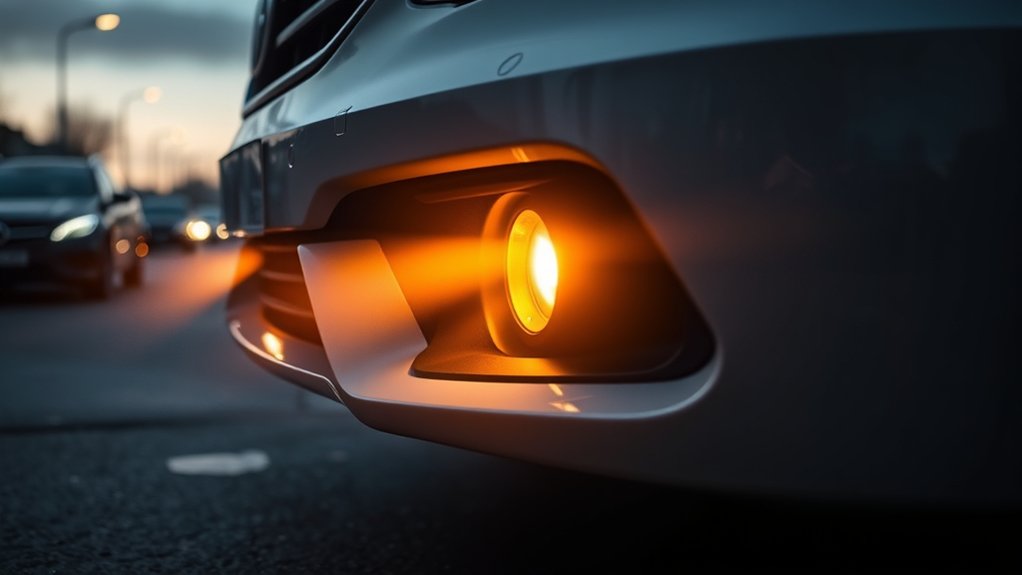
Not all cars come with fog lights; they’re typically found on SUVs, trucks, and mid- to luxury-range vehicles. Fog lights are essential for enhancing visibility in challenging weather conditions. Using fog lights correctly can significantly improve your safety on the road.
You should use fog lights in poor visibility conditions like fog, heavy rain, or snow. They help improve your view of the road and make your vehicle more visible to others.
Always remember to turn them off in clear weather to avoid blinding other drivers.
Proper use and maintenance keep fog lights effective when needed. Understanding how to use and care for these helpful lights ensures your safety.
Stick around to discover the best practices for using and maintaining fog lights safely.
Key Takeaways
- Not all cars have fog lights; they are common on SUVs, trucks, luxury sedans, and often absent on compact or economy models. Fog lights are designed to improve visibility in fog, rain, snow, and other low-visibility conditions by casting a wide, low beam. Use fog lights only in poor weather conditions and usually in combination with low-beam headlights to avoid glare and comply with laws.
- Avoid using fog lights in clear weather to prevent blinding other drivers and unnecessary battery drain. Regularly inspect and maintain fog lights to ensure proper alignment, functionality, and safe operation when needed.
What Are Fog Lights and How Do They Work
Although fog lights might seem like just another set of headlights, they serve a very specific purpose. You’ll find they’re designed to improve visibility in fog, heavy rain, or snow by casting a wide, low beam that cuts through the haze without reflecting back into your eyes. Unlike your regular headlights, fog lights sit lower on the vehicle, aiming light downward to illuminate the road surface directly ahead.
This placement helps reduce glare and highlights lane markings or edges. When you switch them on, they complement—not replace—your standard headlights, giving you an extra edge in poor weather conditions. Understanding how fog lights work lets you use them effectively and drive safer when visibility drops.
Cars That Usually Have Fog Lights
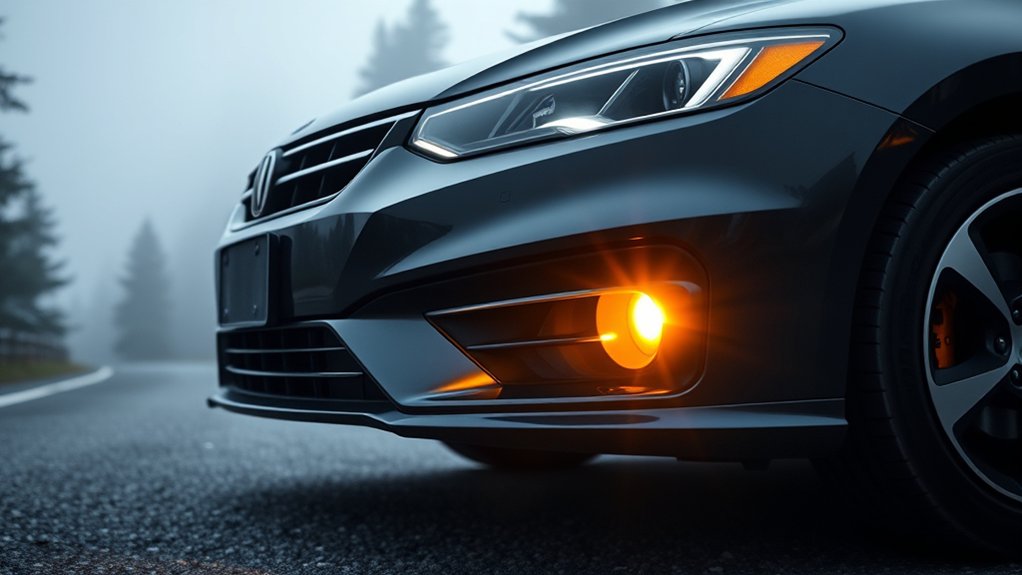
You’ll often find fog lights on SUVs, trucks, and some sedans designed for all-weather driving. These vehicles usually come with standard fog light features to improve visibility in poor conditions.
Understanding which cars have them can help you know when and how to use fog lights effectively.
Common Vehicle Types
Which vehicles are most likely to come equipped with fog lights? You’ll often find them on SUVs, trucks, and crossover vehicles because these types tend to be driven in varied and challenging weather conditions. Many mid-range and luxury sedans also include fog lights as part of their standard or optional packages, enhancing visibility in fog, heavy rain, or snow.
Sports cars sometimes have fog lights, too, but it’s less common since their design focuses more on aerodynamics and style. If you drive a compact car or an economy model, you might not have fog lights unless you opt for a higher trim level or aftermarket installation. Knowing your vehicle type helps you understand whether fog lights are likely part of your setup.
Standard Fog Light Features
Vehicles like SUVs, trucks, and many mid-range or luxury sedans usually come equipped with fog lights designed to improve visibility in poor weather. These lights sit low on the front bumper, casting a wide, bar-shaped beam that cuts through fog, rain, or snow without reflecting back into your eyes.
If your car has fog lights, you’ll often find a dedicated switch or button on the dashboard or stalk. They typically use yellow or white bulbs, as these colors reduce glare better than standard headlights in foggy conditions.
Keep in mind, fog lights aren’t meant for regular use; they’re an extra safety feature for specific weather challenges. So, when you spot thick fog, turn them on to see and be seen more clearly.
How Fog Lights Improve Visibility
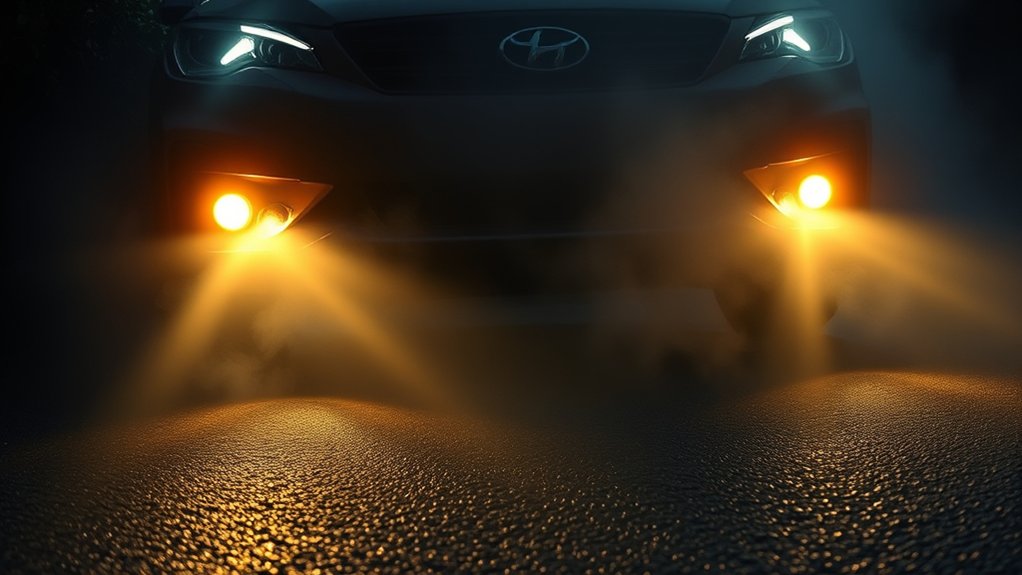
How exactly do fog lights boost your visibility when conditions turn harsh? Fog lights sit lower on your vehicle, aiming a wide, flat beam just above the road surface. This design cuts through fog, rain, and snow by illuminating the ground directly in front of you without reflecting off water droplets, unlike your regular headlights.
You’ll notice the improved contrast helps you spot lane markings, edges, and obstacles more clearly. Because the light spreads horizontally and stays low, it reduces glare that could blind you or other drivers. When you switch on your fog lights, you get better visibility close to your car, allowing you to drive more confidently and safely in poor weather.
They’re a smart addition that complements your standard headlights perfectly.
When Should You Turn On Your Fog Lights?
You should turn on your fog lights only in specific weather conditions like heavy fog, rain, or snow to improve visibility. It’s important to follow legal guidelines since using fog lights improperly can be illegal and distracting to other drivers.
Knowing when to use them helps you stay safe and avoid fines.
Ideal Weather Conditions
When should you turn on your fog lights? You should activate them only in weather conditions where visibility drops notably, such as dense fog, heavy rain, or snow. Fog lights are designed to cut through low-lying mist, illuminating the road close to your vehicle without reflecting off water droplets and causing glare.
If the weather’s clear or visibility is good, keep them off to avoid blinding other drivers. Use fog lights during early morning fog, thick smog, or dust storms when standard headlights don’t provide enough clarity. Remember, fog lights work best in close-range, poor-visibility situations, so relying on them in normal weather won’t improve your vision and might distract others.
Use them smartly to stay safe and visible.
Legal Usage Guidelines
Proper use of fog lights doesn’t just depend on weather conditions; legal regulations play a key role in determining when you should switch them on. Many states and countries restrict fog light usage to situations with low visibility, such as fog, heavy rain, snow, or dust storms. Turning them on in clear conditions can dazzle other drivers and may lead to fines.
Always check your local laws because some places require you to use fog lights only alongside low beam headlights, while others have specific rules about brightness and placement. To stay safe and avoid penalties, only activate your fog lights when visibility drops markedly below normal driving conditions. This ensures you’re both compliant and considerate on the road.
How to Use Fog Lights Safely and Effectively
Although fog lights are designed to improve visibility in low-visibility conditions, using them incorrectly can cause glare and confusion for other drivers. You should only turn on your fog lights when visibility drops considerably due to fog, heavy rain, snow, or dust. Avoid using them in clear weather, as their low, wide beam can blind oncoming traffic.
When you activate your fog lights, pair them with your low-beam headlights—not high beams—to reduce glare. Keep your speed moderate and maintain a safe distance from other vehicles since fog lights enhance your view but don’t eliminate all hazards. Also, remember to turn off fog lights once conditions improve to avoid distracting others.
Using fog lights properly helps you stay safe and considerate on the road.
Fog Light Laws: Are They Required?
Since fog lights can considerably improve visibility in poor weather, many drivers wonder if they’re legally required on all vehicles. The truth is, fog light laws vary by location. In most places, manufacturers aren’t required to install fog lights on every car, so not all vehicles come equipped with them.
However, some states or countries regulate how and when you can use fog lights to prevent misuse or glare. Usually, you’re allowed to turn them on only during fog, heavy rain, or snow. Using fog lights in clear conditions might be illegal and can blind other drivers.
It’s important to check your local traffic laws to understand both the requirements and restrictions surrounding fog light use to stay safe and compliant on the road.
Can You Add Fog Lights to a Car That Doesn’t Have Them?
Wondering if you can add fog lights to a car that doesn’t have them? Yes, you can. Many aftermarket kits are available that make installation straightforward, even if your vehicle wasn’t originally equipped with fog lights.
You can easily add fog lights to your car with available aftermarket kits, even if it didn’t come with them.
You’ll need to select a kit compatible with your car’s make and model, ensuring proper fit and electrical connections. Installing fog lights typically involves mounting the lights, wiring them to your car’s electrical system, and integrating a switch inside your cabin.
If you’re comfortable with basic wiring and tools, you can handle this yourself; otherwise, a professional installer can do it efficiently. Just remember to check local regulations about fog light usage and placement before you add them.
Adding fog lights can improve visibility in poor weather, making your drives safer.
Common Fog Light Mistakes to Avoid
Adding fog lights can boost your visibility in tough weather, but using them incorrectly can cause more harm than good. One common mistake is leaving fog lights on in clear conditions, which can blind other drivers and drain your battery unnecessarily. Don’t confuse fog lights with high beams; fog lights sit low and spread light wide to cut through fog, while high beams shine straight ahead and cause glare.
Another error is failing to switch off fog lights when visibility improves, reducing their effectiveness and increasing glare risk. Avoid installing fog lights too high or misaligned, as this defeats their purpose. Use fog lights only in fog, heavy rain, or snow to maximize safety and avoid distracting others on the road.
How to Maintain and Replace Fog Lights
Although fog lights are designed to withstand harsh conditions, you still need to check them regularly to make sure they work properly. Start by inspecting the lenses for cracks or cloudiness, and clean them with a soft cloth and mild detergent. Check the bulbs by turning on the fog lights and looking for dimness or flickering.
If a bulb is out, replace it promptly to maintain visibility in foggy conditions. To replace a fog light bulb, consult your vehicle’s manual for the correct type. Usually, you’ll access the bulb from underneath the bumper or behind the headlight assembly.
Carefully remove the old bulb without touching the glass of the new one—oil from your fingers can shorten its life. Finally, test the new bulb before reassembling everything. Regular maintenance keeps your fog lights reliable and effective.
Frequently Asked Questions
Do Fog Lights Affect My Car’s Fuel Efficiency?
Fog lights have a minimal effect on your car’s fuel efficiency since they use low wattage bulbs. Using them won’t considerably impact fuel consumption, but it’s best to switch them off when they’re not needed to save energy.
Can Fog Lights Be Used as Daytime Running Lights?
Like a flashlight cutting through thick fog, fog lights aren’t designed as daytime running lights. You shouldn’t use them that way since they can blind other drivers and aren’t as visible in daylight conditions.
Are LED Fog Lights Better Than Halogen Ones?
You’ll find LED fog lights better than halogen ones because they’re brighter, last longer, and use less energy.
They also provide clearer visibility in foggy conditions, helping you drive safer and with more confidence.
How Do Fog Lights Impact Insurance Premiums?
Fog lights usually don’t impact your insurance premiums directly. However, if they improve your visibility and reduce accident risk, some insurers might offer discounts.
Always check with your provider to see if fog lights affect your rates.
Do Fog Lights Reduce Glare for Oncoming Drivers?
You know what they say, “Don’t shine your light in someone’s eyes.” Fog lights don’t reduce glare for oncoming drivers; instead, they’re aimed low to improve your visibility without blinding others on the road.
Conclusion
Not all cars come with fog lights, but having them can drastically improve your visibility in poor weather. Did you know fog lights can cut glare by up to 50%, making those foggy drives much safer? By using them correctly and maintaining them well, you’ll boost your confidence on the road.
So, if your car doesn’t have fog lights, consider adding them—it could make a big difference when the weather turns nasty. Installing fog lights enhances safety by improving visibility during fog, rain, or snow. Remember, proper use of fog lights is essential for maximizing their benefits and ensuring safer driving conditions.

